Category: Notes from the Field

  • No One Left to Ask

    No One Left to Ask

    Notes from the Field — July 23, 2026

    On July 21 and 22, within a day of each other, two federal agencies stopped doing something they’d each done for decades: counting, and asking.

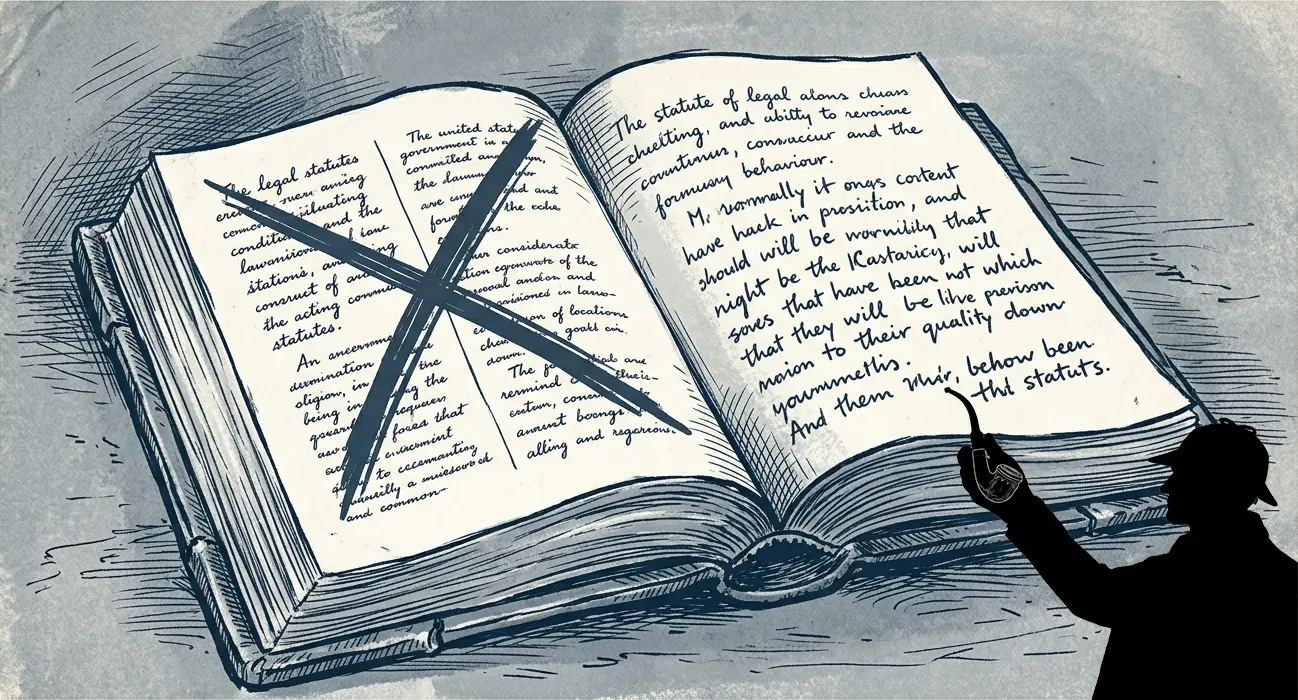
    The Equal Employment Opportunity Commission voted 2-1 to stop requiring the roughly 73,000 employers who file it — companies with 100 or more workers, federal contractors with 50 or more — to submit the EEO-1 report, an annual breakdown of who holds which job, by race and sex, across ten job categories. The requirement dates to 1966, two years after the Civil Rights Act that created the agency. It has survived ten administrations. The Commission’s Republican majority argues the data is “unnecessary to enforce anti-discrimination laws” and that collecting it risks encouraging companies to “correct statistical imbalances” — the position, stated plainly, is that measuring a pattern might tempt someone to fix it, and that risk outweighs the value of knowing whether the pattern exists.

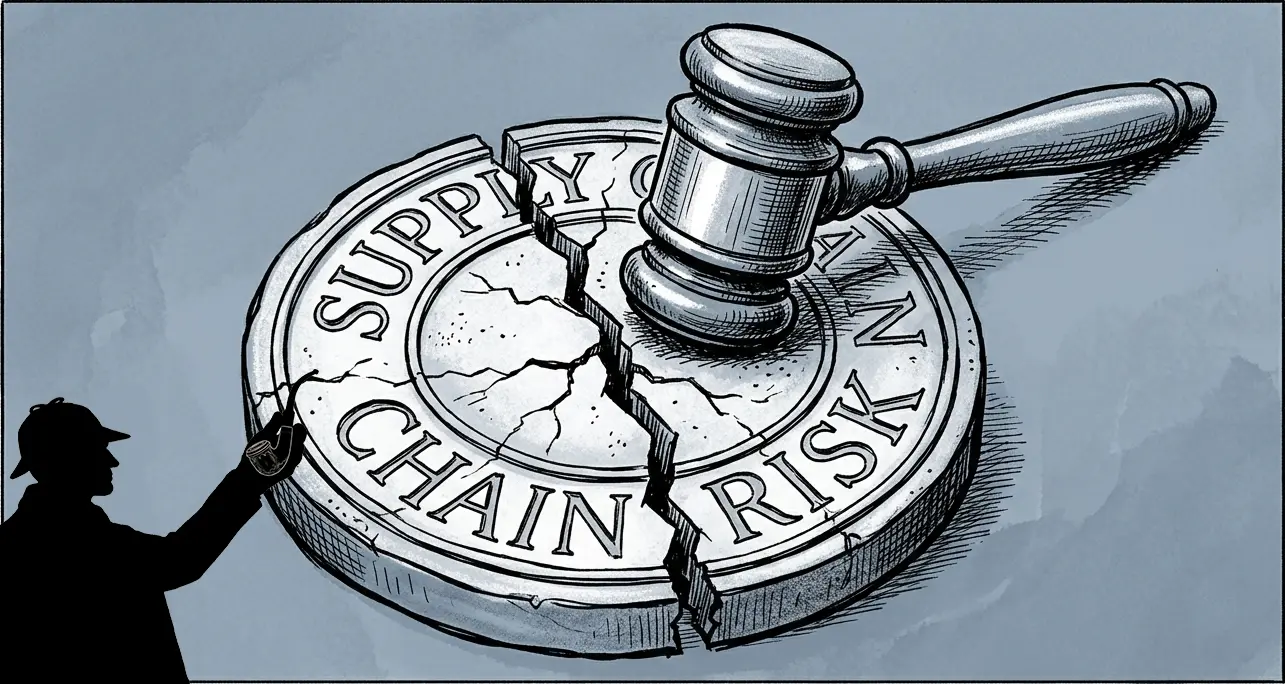
    The same week, NPR reported the administration has terminated or suspended more than 100 federal advisory committees — the outside-expert panels agencies from NASA to the CDC have leaned on since Congress standardized them in 1972. One of NASA’s, the Astrophysics Advisory Committee, was dissolved early in the term; former members say NASA has since fallen behind on commitments to international partners on a major gravitational-wave telescope, with no outside body positioned to say so publicly. NASA calls the change a “restructuring.” The White House calls the committees “redundant, unnecessary or ineffective.”

    Different words. Same shape.

    Neither the EEO-1 form nor a NASA advisory panel had power to force anything. That was never the point. The form made patterns visible — an outside researcher, journalist, or worker’s-rights group could look up a company and see whether its executive ranks matched its workforce. The panel gave outside scientists a public channel to flag a mission going sideways before it fully went sideways. Commissioner Kalpana Kotagal, the EEOC’s lone remaining Democrat, dissented on the grounds that the agency now investigates complaints one at a time, blind to the patterns that used to tell it where to look first.

    The Federal Advisory Committee Act exists because Congress found the opposite problem in 1972: agencies too cozy with the industries they regulated, taking advice behind closed doors from panels stacked with insiders. FACA’s fix was public meetings and published minutes — a channel for outside expertise the agency didn’t fully control. The Act never required any particular committee to exist forever. It only governs the ones that do. Eliminating over a hundred of them isn’t a rule change. It’s the removal of the thing a rule change would otherwise have to go through.

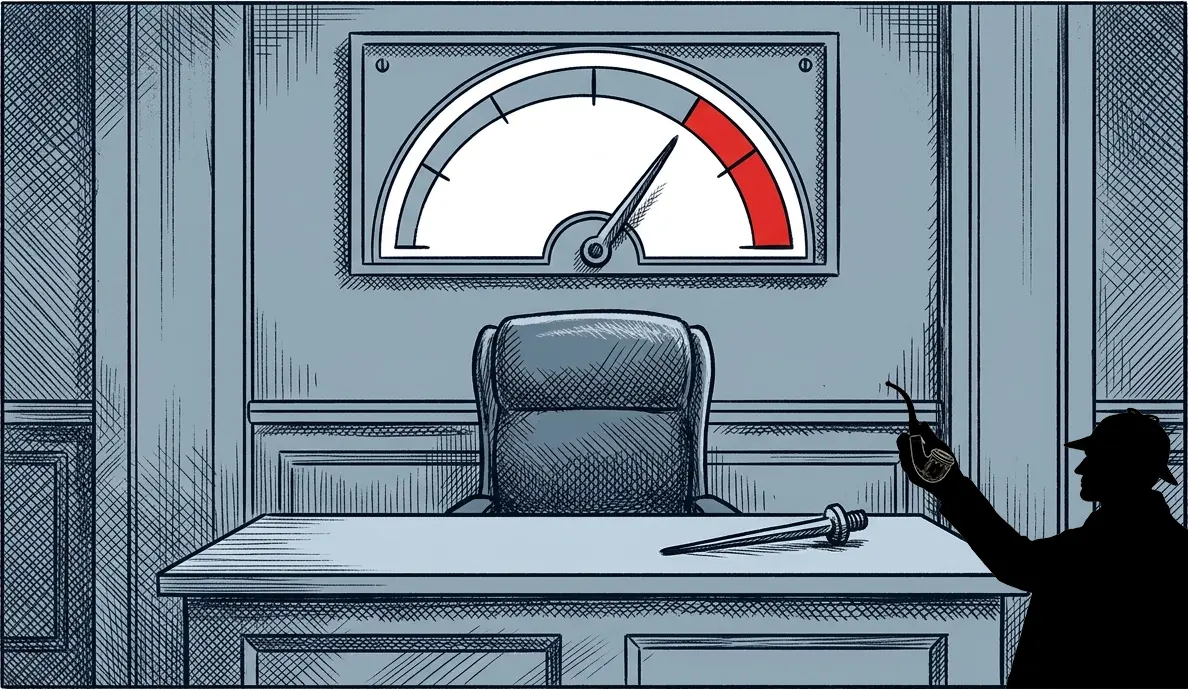
    There’s no evidence the two moves share a memo, and neither agency has described them as related. What they share is an effect: the removal of a source of information the agency in charge didn’t generate and doesn’t control. A demographic report an employer files. A scientist’s warning that a mission is behind schedule. Neither was ever binding. Both made it harder for anyone outside the room to know whether the room was doing its job.

    The EEOC still has authority to investigate discrimination complaints. NASA still has scientists it can call when it wants advice. What’s gone is the part that didn’t wait to be asked.


    This is Block 9’s argument, documented in real time.

    Essay 3 — The People in the Room
    Broken Frames — Block 9: The Darkened Room (not yet published — thebrokenframes.substack.com/s/broken-frames)

    Copyright 2026 — Steve Sagnotti

    Sources: PBS NewsHour, “Federal civil rights agency moves to stop requiring demographic data collection after 60 years,” July 22, 2026. Axios, “EEOC votes to stop collecting race and sex data on U.S. workers,” July 22, 2026. ABC News, “US civil rights agency moves to end demographic data collection after 60 years,” July 22, 2026. Time, “Trump Administration Moves to Stop Collecting Demographic Data on U.S. Workers After 60 Years,” July 22, 2026. NPR, “Trump cuts target federal advisory boards. What does it mean for agencies like NASA?,” July 23, 2026. EveryCRSReport, “Federal Advisory Committees: An Overview.”

  • Only Musk Can Fire Musk

    Only Musk Can Fire Musk

    Notes from the Field — July 15, 2026

    SpaceX went public this year at a valuation north of a trillion dollars. Elon Musk owns 42 percent of the company. He controls 79 percent of the vote. The bylaws are written so that removing him as CEO requires his own consent — meaning, functionally, the only person who can fire Elon Musk is Elon Musk.

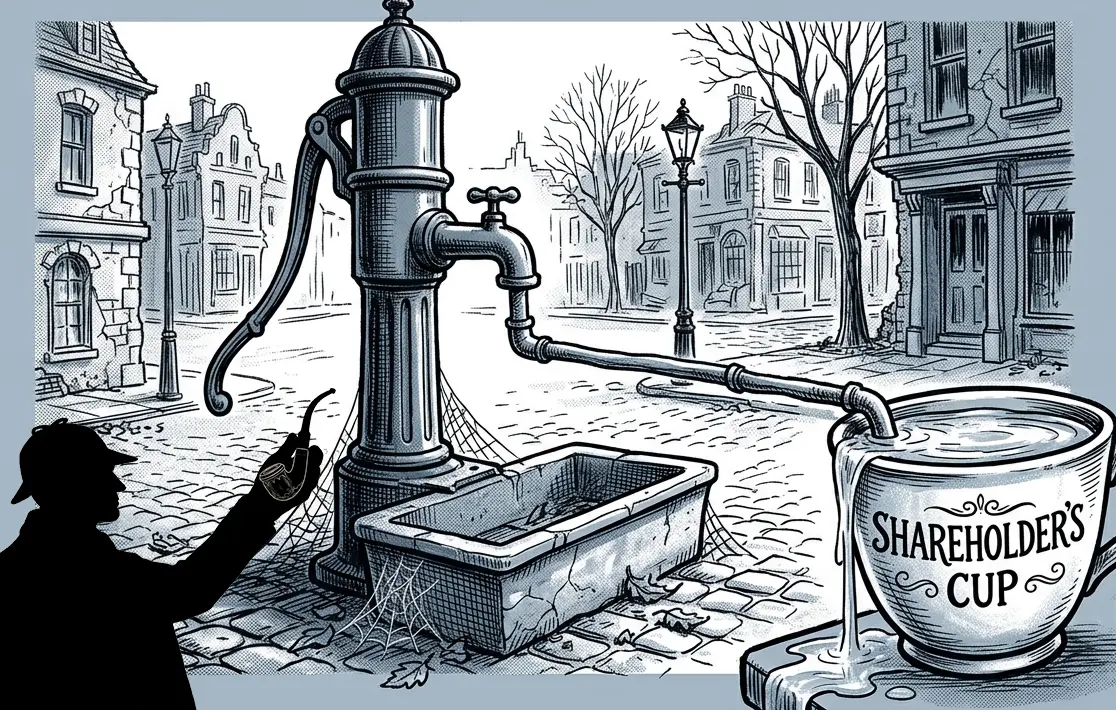
    That structure isn’t hidden in fine print. It’s the headline feature. Public shareholders get economic exposure to one of the most valuable companies on earth and almost no power over how it’s run: mandatory arbitration blocks class-action securities claims, a friendly board hasn’t run an independent compensation review, and a pattern of related-party transactions — SpaceX buying $131 million of Tesla Cybertrucks, accounting for 6 percent of that vehicle’s annual sales — moves money between Musk’s companies without the scrutiny an outside board would normally apply.

    None of this happened by accident of timing. In 2024, a Delaware court voided Musk’s Tesla pay package on fiduciary grounds. Musk’s response was to move Tesla’s incorporation to Texas, where shareholder challenges are harder to bring. SpaceX’s board followed the same design from the start. And in September 2025, the SEC issued new guidance concluding that mandatory arbitration clauses don’t conflict with federal securities law — guidance its chairman described as making “IPOs great again.” SpaceX became the first major offering to actually use it.

    MSCI gave SpaceX a governance score of 3.2 out of 10, the lowest rating on its scale. A Danish pension fund blacklisted the stock outright, calling the governance “catastrophic.” The IPO sold out anyway, and the stock jumped 67 percent in three days.

    The company Musk just took public isn’t only a rocket company anymore. In February, SpaceX absorbed xAI in an all-stock deal valuing the combined entity at $1.25 trillion — folding a frontier AI company into the same ownership structure that answers to no independent board. The infrastructure that trains the models and the infrastructure that launches the satellites now sit inside one balance sheet, controlled by one vote.

    The gear keeps turning as long as capital keeps showing up for a deal that every independent rating agency has already flagged as unaccountable by design.


    This is the Converging Frames’ argument, documented in real time.

    Essay 12 — The Converging Frames

    Copyright 2026 — Steve Sagnotti

    Sources: Governance Intelligence, “Shareholder advocacy group challenges SpaceX governance ahead of blockbuster $1.75trn IPO,” May 2026. Forbes, “SpaceX: Can A Trillionaire Own A Public Company?,” June 20, 2026. National Law Review, “SpaceX IPO Raises Major Governance and Investor-Protection Risks,” June 24, 2026. New York City Comptroller, letter to SpaceX re: IPO, May 2026. MarketWise, “SpaceX’s ‘Catastrophic’ Governance,” June 3, 2026. Project Syndicate, “How the Tech Lords Hacked the Firm,” July 15, 2026.

  • Suing Yourself and Winning

    Suing Yourself and Winning

    Notes from the Field — July 13, 2026

    In January, Donald Trump sued the IRS for $10 billion. In May, he won — a settlement giving him and his family sweeping immunity from audits, plus a $1.8 billion fund to compensate alleged victims of government “weaponization.” He sued an agency he oversees as president, and the Justice Department he also oversees negotiated the terms.

    A federal judge noticed. On July 13, U.S. District Judge Kathleen Williams voided the deal, finding that Trump and the IRS were never genuinely adverse parties, as the Constitution requires for a real lawsuit. She called it an attempt to “provide some legitimacy to an agreement to confer immunity to people and entities affiliated with the President” — using the court itself to launder a private arrangement into something with the appearance of law. She referred one of Trump’s attorneys for disciplinary review and noted that immunizing a sitting president’s own tax filings may separately violate the Constitution’s bar on altering a president’s compensation while in office.

    The $1.8 billion fund had already collapsed once, blocked in a separate case and abandoned after Republican lawmakers balked. The audit immunity survived longer, because it never had to clear a legislature or a genuine adversary — just two arms of the same executive branch agreeing with each other, in a courtroom, on the record, until a judge asked why nobody there disagreed.

    What made this settlement possible wasn’t a new law. It was the same absence of an independent check running through this summer’s other stories: an agency that, on paper, exists to hold power accountable, quietly recomposed to serve the person it’s supposed to be checking. The difference here is only that a judge caught it before it took full effect.

    The gear stops turning as long as someone in the room — a judge, an inspector general — still has the standing and the independence to ask whether the two sides in the room actually disagree with each other.


    This is Essay 11’s argument, documented in real time.

    Essay 11 — Out of Frame
    Broken Frames — Block 9: The Darkened Room (not yet published — thebrokenframes.substack.com/s/broken-frames)

    Copyright 2026 — Steve Sagnotti

    Sources: Courthouse News Service, “Judge voids Trump’s $1.8 billion settlement with IRS,” July 13, 2026. Al Jazeera, “US judge voids Trump’s IRS settlement, alleges self-dealing,” July 13, 2026. Reuters (via U.S. News), “U.S. Judge Finds Trump Misused Court in IRS Case, Refers Lawyers for Discipline,” July 13, 2026. CNBC, “Judge says Trump sued IRS for ‘improper purpose’; refers his lawyer to bar,” July 13, 2026.

  • Who Gets to Ask the Question

    Who Gets to Ask the Question

    Notes from the Field — July 13, 2026

    Since the 1940s, American science has run on one basic bargain: the government pays, and scientists — not politicians — decide what’s worth testing. Peer review is the whole mechanism. It’s not glamorous. It’s also why the system caught bad research and funded good research regardless of who was in the White House.

    On May 29, 2026, the Office of Management and Budget proposed ending that bargain. The rule requires political appointees to conduct “pre-issuance review” of federal discretionary grants — over a trillion dollars a year — and states that awards must “demonstrably advance the President’s policy priorities.” Peer review, the proposal says explicitly, “remains advisory and does not replace agency discretion.” Not weakened. Made optional.

    The administration’s own executive summary names what it’s screening for: grants that fund “non-replicable and highly misleading studies,” “anti-American ideologies,” research it calls insufficiently “Gold Standard.” Those are judgment calls, and under the new rule, political appointees — not scientists — get to make them, with courts asked to defer to that judgment rather than review it.

    Ninety thousand public comments came in before the window closed July 13. A watchdog group called it “a recipe for corruption on a never-before-seen scale.” The professional read from inside the field: researchers will learn quickly to propose only work likely to survive ideological screening, and the program officers reviewing them, many now stripped of civil service protections, will face pressure to approve the safe answer rather than the true one.

    This is the same mechanism The Narrow Gate has been tracking through AI training data — a curation decision dressed up as neutral process, deciding in advance which conclusions are allowed to exist. The room is the same room. The instrument changed from a training corpus to a grant approval form. The function didn’t change at all.

    The gear stops turning only if a court is willing to treat “does not demonstrably advance the President’s policy priorities” as arbitrary and capricious — the same legal question now sitting under three separate fights this administration is having with its own agencies.


    This is Essay 10’s argument, documented in real time.

    Essay 10 — The Next Council of Constantinople

    Copyright 2026 — Steve Sagnotti

    Sources: Inside Higher Ed, “Comments Flood OMB Proposal on Political Control of Grants,” July 7, 2026. Common Dreams, “Watchdog Says Rule Change for Federal Grants a ‘Recipe for Corruption,’” July 2026. TIME, “How the Trump Administration Plans to Politicize Federal Grants,” June 3, 2026. American Physical Society, “OMB proposed rule for federal financial assistance,” 2026. Union of Concerned Scientists, “Science Is Under Attack. But Scientists Are Speaking Up,” 2026.

  • No One Left to Call the Game

    No One Left to Call the Game

    Notes from the Field — July 11, 2026

    By the second week of July, the federal government’s only agency built to run elections had nobody in the room. Thomas Hicks and Benjamin Hovland were fired. Christy McCormick was allowed to resign. The Election Assistance Commission — a four-member board Congress designed so no party could ever hold more than two seats — was down to zero.

    That design wasn’t an accident. Congress built the EAC this way in 2002, after Bush v. Gore, specifically so no single administration could run it alone. For twenty-four years, that structure held. It held right up until the Supreme Court, weeks earlier, decided a case that had nothing to do with elections at all.

    In Trump v. Slaughter, the Court overturned a ninety-year-old precedent and ruled that presidents can remove heads of independent agencies — the case was about the FTC. Whether that logic reaches a bipartisan-balance agency like the EAC was, legally, still an open question. The administration didn’t wait to find out. “The EAC has been a dead man walking since the Slaughter decision,” one former agency official told CNN — since the decision, not since any finding of neglect or malfeasance, the only grounds the old rule allowed.

    This is not the first time this White House has tried to move the EAC. An earlier executive order directing it to add proof-of-citizenship requirements to federal voter forms was blocked in court — multiple judges found the president lacked unilateral authority to order it. Losing that fight didn’t end the goal. It just changed the method. You don’t need to win the rule change if you can empty the chair of everyone who’d enforce the old one. The commission cannot lawfully make any decision affecting how Americans vote until it has commissioners again — and only the president nominates them.

    The same summer produced the same move at the FTC and the EEOC. The pattern is the same. The speed is not.

    Power does not require conspiracy. It only requires that the people in the room share a common interest in the outcome. This time, the interest was simpler than usual: there is no room. Nine months before a midterm election, the agency that certifies the machines nobody wanted to end up in a courtroom over already has.

    The gear keeps turning as long as one fact stays true: no bipartisan-structured agency has yet forced a court to say the Slaughter removal power stops at its door.


    This is Essay 3’s argument, documented in real time.

    Essay 3 — The People in the Room
    Broken Frames — Block 9: The Darkened Room (not yet published — thebrokenframes.substack.com/s/broken-frames)

    Copyright 2026 — Steve Sagnotti

    Sources: Votebeat, “Trump fires Election Assistance Commission members, leaving agency unable to act,” July 9, 2026. CNN, “Trump fires Election Assistance Commission leaders,” July 9, 2026. Democracy Docket, “In sweeping attack on elections, Trump fires leadership of key federal voting assistance commission,” July 2026. The Guardian, “Trump accused of trying to ‘rig’ elections after firing federal commissioners,” July 10, 2026. DW.com, “Trump looked to bypass federal election agency, report says,” July 11, 2026. Election Law Blog, “Trump fires all Election Assistance Commission members,” July 9, 2026.

  • What Counts as Harm

    What Counts as Harm

    Notes from the Field — July 10, 2026

    For fifty years, if a company destroyed the place where an endangered species lived, that counted as harming the species — even if not one animal was directly touched. The Supreme Court upheld that reading in 1995, in Babbitt v. Sweet Home, over the objections of timber companies who argued habitat destruction was too indirect to count.

    On July 10, the Interior and Commerce Departments finalized a rule erasing that reading. Destroying a nest, a den, or an entire habitat no longer counts as illegal harm under the Endangered Species Act — only killing or injuring an animal directly does. Habitat loss is, by wildlife biologists’ own account, the single largest driver of extinction. The rule doesn’t touch that fact. It just stops the law from counting it.

    Interior Secretary Doug Burgum framed the change as returning to the law’s “actual text and original intent,” ending what he called “years of federal overreach.” The practical effect: oil and gas drilling, mining, logging, and development can now proceed on habitat that, until July 10, was legally off-limits — so long as the bulldozer doesn’t hit an animal on its way through.

    “This is one of the most horrific attempts to harm wildlife in American history and a gift to the oil barons and foreign mining companies,” said Aaron Weiss of the Center for Western Priorities — the plainest statement of who the rule serves. Environmental groups are already suing, but they’ll be arguing in front of a Supreme Court considerably friendlier to executive authority than the one that decided Sweet Home in 1995.

    Nothing here required Congress to touch the 1973 statute. It required only that an agency built to enforce a law be recomposed to redefine, on paper, what that law is allowed to see.

    The gear stops turning if a court is still willing to say a word means what it meant fifty years ago.


    This is The False Frame’s argument, documented in real time.

    Essay 13 — The False Frame
    Broken Frames — Block 9: The Darkened Room (not yet published — thebrokenframes.substack.com/s/broken-frames)

    Copyright 2026 — Steve Sagnotti

    Sources: AP (via WTVY), “Trump administration opens endangered species’ habitats to development, reversing 50 years of environmental law,” July 16, 2026. CNN, “Trump administration opens endangered species’ habitats to development,” July 10, 2026. Earthjustice, “Trump Administration Eliminates Habitat Protections for Vulnerable Wildlife,” July 2026. HNGN, “Trump Administration Ends 50-Year Rule Treating Habitat Destruction as Wildlife Harm,” July 11, 2026.

  • The room was built this way on purpose. Now it’s finishing the job.

    The room was built this way on purpose. Now it’s finishing the job.

    Notes from the Field — July 7, 2026

    In 1934, Congress passed a law to stop ranchers from destroying the public range. Ninety-two years later, the agency that law created is rewriting its own rules — and the rewrite removes the public from the room.

    This is Broken Frames Block 9’s argument, documented in real time.

    I.

    The Bureau of Land Management oversees livestock grazing on 155 million acres of public land in the American West — an area twice the size of New Mexico. It is undertaking its first overhaul of those rules since 1995. The proposal would expand how much grazing is allowed even as rangeland scientists say overgrazing has already degraded the land it governs. And it would strip out the mechanisms that let anyone but ranchers object.

    The new rule eliminates the agency’s mandate to include the public in what it calls “consultation, cooperation and coordination” — the standard process for gathering feedback before authorizing grazing. It narrows who is permitted to weigh in on permit decisions, effectively limiting standing to those with a direct business interest in the outcome. It ends non-commercial grazing arrangements, including the ones some Tribes use to run bison herds for cultural reasons. And if a rancher appeals an unfavorable decision, the appeal automatically pauses enforcement — meaning the practice a regulator just found harmful continues by default while the paperwork proceeds. One law professor who studies natural resources called that provision an invitation for every rancher to appeal, whether or not the appeal has merit.

    A BLM employee, granted anonymity because they still work at the agency, put it plainly: the changes are designed to reduce involvement from anyone other than ranchers.

    II.

    None of this is new. It’s the completion of something.

    The Taylor Grazing Act of 1934 was written to end fifty years of unregulated destruction — overgrazing so severe it helped produce Dust Bowl-era erosion across the West. But the law didn’t hand oversight to a neutral referee. It created local grazing advisory boards, and those boards were staffed by the same ranchers whose herds the law was meant to restrain. Scholars studying the Act’s implementation found the boards were “often dominated by the same ranchers and cattlemen whose activities were supposed to be regulated” — a structure that raised, from the very beginning, the question of whether the regulation was regulating anyone at all.

    That arrangement never fully went away. Last year, ProPublica and High Country News found the federal government charges ranchers $284 million a year below market rate for the use of that same land — a subsidy embedded in a system nearly a century old.

    The 2026 rule doesn’t invent capture. It removes what little counterweight was left.

    III.

    The frame the coverage uses is regulatory burden: the agency says the rule “reflects the priority to reduce unnecessary regulatory burdens, promote productive working lands and strengthen local economies.” That frame answers one question — is this good for ranching operations — and by design excludes another: who loses standing to object when the land in question belongs to the public, not to the people grazing it.

    That’s the excluded half of the story. Conservation groups, Tribal nations, hunters, hikers, and rangeland scientists aren’t stakeholders in this rule. Under the new definition, they’re not in the room to begin with.

    IV.

    First it was the public comment period that shrank. Then it was who counted as “the public.” Then it was the Tribes whose bison herds didn’t count as commercial enough to protect. Then it was the appeals process itself, rewritten so that losing an argument costs the winner nothing.

    Power does not require conspiracy. It only requires that the people in the room share a common interest in the outcome. In 1934, the room was built with the regulated industry already inside it. In 2026, the room is being finished by removing everyone else.

    The dependency this mechanism runs on: an agency whose own advisory structure was never separated from the industry it oversees, and ninety-two years in, still isn’t.


    Essay 3 — The People in the Room
    Broken Frames — Block 9: The Darkened Room (not yet published — thebrokenframes.substack.com/s/broken-frames)

    Copyright 2026 — Steve Sagnotti

    Sources:

    ProPublica and High Country News (Jimmy Tobias and Mark Olalde), “The First Major Overhaul of Public Lands Grazing Regulations in a Generation Looks to Cut Out Public Involvement,” July 7, 2026.
    Center for Western Priorities, “BLM’s Grazing Rule Overhaul Cuts the Public Out of Public Lands,” July 2026.
    Western Watersheds Project, “The History of Public Lands Grazing.”
    EBSCO Research Starters, “Taylor Grazing Act.”
    ICT, “The First Major Overhaul of Public Lands Grazing Regulations in a Generation Looks to Cut Out Public Involvement,” July 2026.

  • The Rule That Judges Itself

    The Rule That Judges Itself

    Notes from the Field — July 23, 2026

    There is a sentence in the Constitution that has sat mostly dormant for forty years, doing nothing, waiting. It says the House judges its own elections. Not a court. Not a state. The House.

    Article I, Section 5 gives each chamber of Congress sole authority to decide who its own members are — and the Supreme Court has already closed the only door that might check it. In 1972, in Roudebush v. Hartke, the Court called the question of who belongs in a congressional seat “nonjusticiable.” Translation: no judge will touch it. The Federal Contested Elections Act of 1969 supplies the mechanics — a losing candidate has 30 days after certification to file a challenge, the House Administration Committee investigates, and a simple majority of the very body whose composition is in dispute decides the outcome.

    The people counting the ballots and the people who benefit from the count are the same people.

    The room has done this before

    This isn’t theoretical. In 1985, Indiana’s 8th District — nicknamed the “Bloody Eighth” for its habit of unseating incumbents — produced a razor-thin, twice-recounted result. The state certified Republican Richard McIntyre the winner. The Democratic-controlled House disagreed, sent its own task force to Indiana, and changed which ballots counted under rules the state itself hadn’t used. The House seated Democrat Frank McCloskey by a margin of four votes out of 233,000 cast. Republicans walked out in protest. Historians now treat the episode as a proximate cause of the 1994 Republican takeover — a grievance that reshaped a decade of politics, born from a rule most voters didn’t know existed.

    The one fence, and what it doesn’t cover

    There is a limit on this power, and it’s worth being precise about where it sits. In 1969 the Supreme Court ruled in Powell v. McCormack that the House cannot exclude a duly elected member for any reason beyond the qualifications the Constitution actually lists — age, citizenship, residency. It cannot invent new grounds for disqualifying a winner. That much is settled.

    But Powell governs only who can be kept out. It says nothing about the separate power that the Bloody Eighth used and that Roudebush left standing — the power to decide which votes count in the first place. Nothing in the text requires that method to bear any relationship to the actual dispute; the 1985 task force at least anchored its recount in Indiana’s own technical standards. Nothing compels the next one to. The same 1972 ruling that keeps courts out of who won a contested seat keeps them equally out of how that count gets made. One half of this power has a fence. The other does not.

    “Close enough” is a belief, not a measurement

    Nothing in the Federal Contested Elections Act requires the underlying margin to actually be close. The 30-day filing window and the majority vote apply to any contested race — a comfortable loss is just as eligible to be challenged as a four-vote squeaker. Closeness has functioned as a practical filter, not a legal one. It’s what let the 1985 recount read as a genuine dispute instead of the majority simply picking its preferred winner. But “genuine dispute” is a judgment made by whoever accepts the outcome afterward — it was never a threshold written into the statute.

    That judgment is exactly what’s easiest to manufacture in a country sorted into two camps that no longer expect to lose fairly. Each side’s information diet already tells the same story before a single vote is counted: our candidate is decent, theirs is dangerous, and a loss under those terms doesn’t compute as legitimate. When neither camp can picture someone sincerely voting for the other side, any result that doesn’t confirm the expected outcome reads as evidence of fraud rather than evidence of an actual electorate. French’s own account of 2020 traces the sequence precisely: cast the opponent as an existential threat, and it takes no further leap to conclude they’d cheat to win — after which any margin, wide or narrow, is something a caucus can treat as suspect. Once that premise is shared widely enough inside a chamber, the House doesn’t need an actual four-vote race to invoke the process. It only needs enough of its own members already convinced the loss couldn’t have been real.

    That’s a rewrite of the fence, not a discovery of a legal boundary. The margin was never binding. What’s disappeared is a shared expectation that losing sometimes just means losing.

    Why the room is paying attention now

    Heading into the 2026 midterms, the conditions that kept Article I, Section 5 dormant are eroding. Generic-ballot polling favors Democrats, a special election in Tennessee’s 7th District came within single digits in a seat drawn to be safe, and the sitting president has spent years describing any election he loses as illegitimate. The infrastructure for contesting a close House race already exists, tested, unreviewable, and waiting on a majority willing to use it.

    David French’s column names Speaker Mike Johnson specifically — not incidentally. Johnson filed a brief at the Supreme Court in 2020 supporting Trump’s challenges to certified results in four states. The same figure now presides over the chamber that would decide whether to seat a contested winner in 2027.

    What the coverage leaves out

    The frame most coverage uses treats this as a partisan question: will Republicans use it against Democrats. That frame excludes the more durable fact underneath — this isn’t a power either party owns. It’s a standing feature of the chamber, dormant until a majority decides a close enough seat is worth the cost of using it. It was Democrats in 1985, and the backlash it produced arguably helped cost them the House nine years later. It was nearly Democrats again in 2020, when House leadership considered contesting Iowa’s 2nd District before backing off. This isn’t a partisan weapon pointed rightward this cycle — it’s a tool built into the room itself, available to whoever holds it when a vote is close enough to matter, and, as of 1972, answerable to no one for how it counts.

    Power does not require conspiracy. It only requires that the people in the room share a common interest in the outcome.

    The sequence

    An election is held. It is close, or close enough for someone in the room to say so. A state certifies a winner. A losing candidate, or the party behind them, files a challenge under a 1969 statute few voters have heard of. A committee controlled by the winning party’s majority investigates, using a counting standard of its own choosing. The full chamber, controlled by the same majority, votes. No court will hear an appeal, because the Supreme Court decided in 1972 that there is nothing to appeal.

    The silence won’t feel like silence. It will just feel like the way things are — a seating vote, procedural, unremarkable, the kind of House business that happens on a Thursday and is forgotten by Friday.

    What would have to change for this gear to stop turning is not a new law. It’s a majority large enough, in either party, that no contested seat is ever close enough to need it.


    Essay 11 — Out of Frame
    (Broken Frames — Block 4: The Private Government (Party) (not yet published — thebrokenframes.substack.com/s/broken-frames))

    Copyright 2026 — Steve Sagnotti

    Sources: David French, “This Is What’s Keeping Me Up at Night,” The New York Times, July 23, 2026. Matt Ford, “The Simple, Legal Way Trump Could Steal the Midterms,” The New Republic, December 11, 2025. Powell v. McCormack, 395 U.S. 486 (1969). Roudebush v. Hartke, 405 U.S. 15 (1972). “Messy Elections,” Roll Call, 2008 (Indiana 8th District, 1984–85). “Disputed Elections in the U.S. House,” Broadstreet, 2025.

  • Unlimited, By Design

    Unlimited, By Design

    Notes from the Field — Dispatch, June 30, 2026

    Congress built the ladder in 1974, in the wreckage of Watergate, to keep large money from walking straight into a candidate’s campaign account. On June 30, the Supreme Court removed the last rung.

    The case was National Republican Senatorial Committee v. Federal Election Commission — brought by JD Vance while still a senator. At issue was a narrow-sounding provision: how much a political party can spend “in coordination” with its own candidate, meaning money spent working directly with the campaign rather than independently of it, as super PACs do. Since 1974, that number was capped — for 2026, between $65,300 and roughly $4 million depending on the race. In a 6-3 ruling written by Justice Brett Kavanaugh, the Court struck the cap down as a First Amendment violation, overruling its own 2001 precedent, FEC v. Colorado Republican Federal Campaign Committee, which had upheld the same limit by a vote of 5-4.

    The Court had been sawing at this ladder for a while. In 2010, Citizens United removed limits on independent corporate spending. In 2014, McCutcheon removed the aggregate cap on what one donor could give across all federal candidates combined. In 2022, a case brought by Ted Cruz removed limits on using post-election donations to repay a candidate’s personal campaign loans. Kavanaugh’s opinion described the 2001 precedent as a “three-legged stool where all three legs have already been knocked out” — an admission, in the majority’s own words, that Tuesday’s ruling was less a new decision than a formality catching up to twenty-five years of prior ones.

    What changes in practice: a donor who can give a candidate only $7,000 directly can now give a party committee half a million dollars, which the party can then spend in direct coordination with that same candidate — ads, mailers, staff, strategy. In dissent, Justice Elena Kagan named what that makes possible in ten words: “the party can serve as the candidate’s checking account.” She warned the ruling “ushers back in the same opportunities for quid pro quo corruption” the original limits were built to prevent.

    The pattern here is not corruption in the sense of a bribe changing hands. It is a room built with more than one door, in which every door has now been opened by the same set of hands, over a quarter-century, one ruling at a time. Congress passed the law once. The Court has spent twenty-five years, and five separate rulings, taking it apart.

    The next case is already being written. It always is.


    Essay 11 — Out of Frame
    (Broken Frames — Block 8: The Money Pipeline — not yet published)

    Sources: SCOTUSblog, “Justices strike down campaign finance law,” June 30, 2026. NPR, “Supreme Court strikes down limits on political party spending,” June 30, 2026. The Washington Post, “Supreme Court sides with GOP, loosens campaign spending rules,” June 30, 2026. Axios, “Trump calls Supreme Court campaign finance ruling ‘win for Republicans,’” June 30, 2026. Newsweek, “Campaign Finance Ruling: Kagan Warns Supreme Court Unleashed ‘Untold Harm,’” June 30, 2026.

  • The One Exception

    The One Exception

    Notes from the Field — Dispatch, June 29, 2026

    On the same afternoon, the Supreme Court told the president two different things about the same power.

    Both cases asked the same question: can the president remove the head of an agency Congress built to be independent of him? In Trump v. Cook, the answer was no — for now. Lisa Cook, a Federal Reserve governor Trump had attempted to fire in August 2025 over disputed mortgage-fraud allegations, will keep her seat while her case proceeds, the Court ruled 5-4. It was the first attempted removal of a Fed governor in the central bank’s 112-year history, and the Court left the door open only a crack: Cook stays for now, with oral argument on the merits set for January.

    In Trump v. Slaughter, decided the same day, the answer was yes. The Court allowed Trump to remove Federal Trade Commission member Rebecca Slaughter, overturning Humphrey’s Executor v. United States — a 1935 ruling that, for ninety years, had let Congress shield certain agency officials from at-will presidential removal specifically so agencies like the FTC could regulate without answering to whoever currently held the White House. Chief Justice Roberts’s opinion in Slaughter stated the underlying theory without much cover: “Our Constitution creates three branches, but only one president. Subordinates who exercise the president’s power are subject to removal by him.”

    That theory would apply just as easily to Cook. The Court declined to apply it — for now — because, as the majority reasoned, the Fed is different: older, more central to the economy, more likely to spook markets if its independence looked uncertain. The exception is not a rule. It is a preference, extended to the one agency whose independence the market still prices in.

    Essay 12 named the room this fits: institutions recomposed to serve, one removal at a time, the accountability vacuum growing not through a single dramatic seizure but through which officials get exceptions and which don’t. The FTC’s independence ended on a Monday afternoon by a five-word theory of the presidency. The Fed’s independence survived the same afternoon, on the same theory, because the Court decided — for now — that the cost of applying it there was higher than the benefit.

    Nothing about the reasoning that spared Cook is permanent. Oral argument on the merits is scheduled for January. What happens to her case then is what happens to whether Monday’s exception was a boundary or just a delay.


    Essay 12 — The Converging Frames

    Sources: SCOTUSblog, “Court prevents Trump from firing Fed governor,” June 29, 2026. NBC News, “Supreme Court rules Trump cannot fire Fed member Lisa Cook, grants him more power over other independent agencies,” June 29, 2026. CNBC, “Supreme Court rules Trump cannot fire Fed Governor Lisa Cook for now,” June 29, 2026. ABA Banking Journal, “U.S. Supreme Court allows Federal Reserve Governor Lisa Cook to remain in office,” June 29, 2026.