Notes from the Field — September 9, 2026
A 230-year-old word just got a “best reading.”
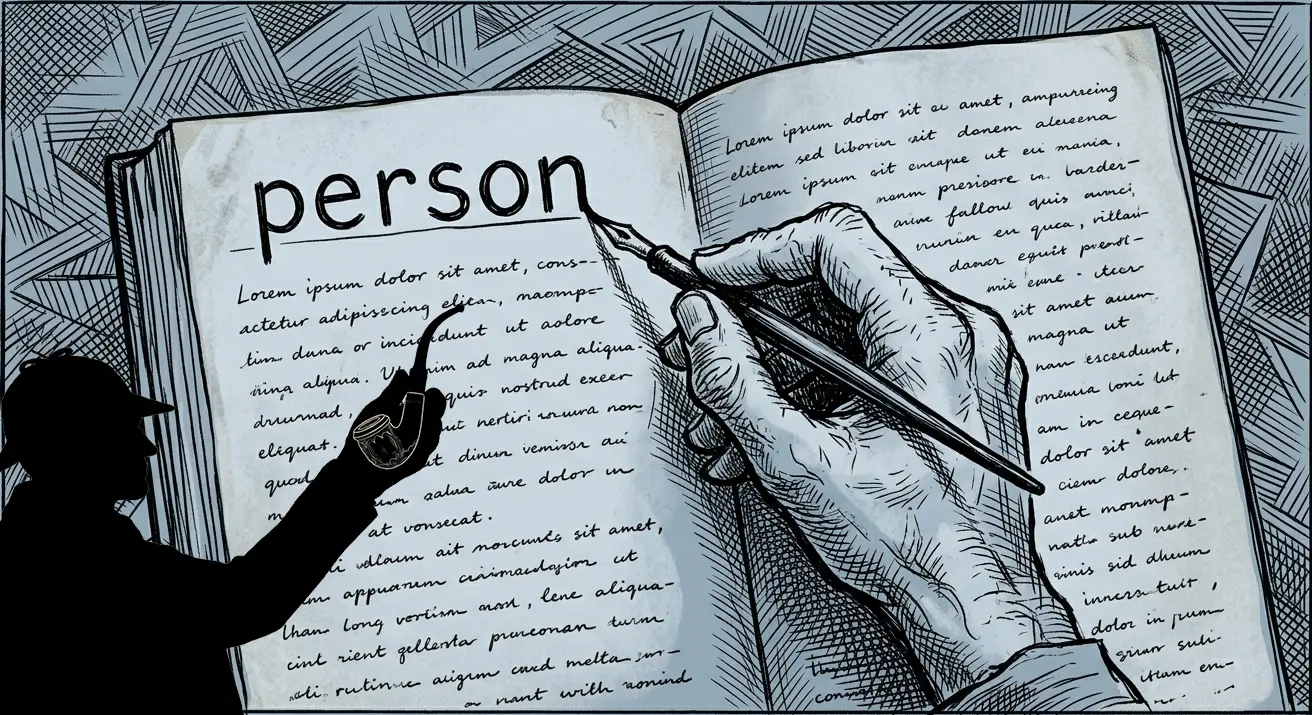
Every ten years since 1790, the United States has counted the same thing: everyone living here. Not everyone who can vote. Not everyone born here. Everyone. The Constitution says so in language that doesn’t leave much room to negotiate — Representatives are apportioned by “the whole number of persons in each state.” Not citizens. Persons.
On September 10, the Trump administration proposed changing what that word means.
The plan, filed in the Federal Register, would strip non-citizens without a green card out of the 2030 census count used to divide up House seats, Electoral College votes, and federal funding. It would also drop the census’s race and ethnicity questions and bar any question about sexual orientation. The administration’s own filing calls this the “best reading” of the Constitution — arguing the framers never meant “persons” to include people without legal status.
That’s not a new argument. It’s the same one that has lost, over and over, for a century.
What the rule was built to stop
Congress has tried to narrow who counts in the apportionment base since at least the 1920s. Every attempt has failed for the same reason: the Constitution’s language doesn’t change just because someone finds it inconvenient. The three-fifths compromise — the ugliest version of this fight, in which enslaved people were counted as partial persons to inflate the political power of the states that held them — was erased by actual constitutional amendment, not by administrative reinterpretation. The exclusion of “Indians not taxed” quietly disappeared from practice before the 1940 count. In both cases, the document itself moved. Nobody just decided the word meant something new.
Trump tried the workaround version of this in his first term — a presidential memo, issued in July 2020, ordering the Census Bureau to drop unauthorized immigrants from the apportionment count. A three-judge federal panel struck it down within weeks. Their language wasn’t cautious: “The merits of the parties’ dispute are not particularly close or complicated.” The Constitution requires counting the whole number of persons. Undocumented immigrants are persons. That was the entire ruling.
What’s different this time
This proposal doesn’t repeat that mistake. It doesn’t issue an order and dare a court to strike it down after the fact. It runs through the Federal Register, gathering public comments through mid-October before a final rule — building a paper trail that argues the word itself always meant something narrower than 230 years of practice assumed. The rule doesn’t touch the text of the 14th Amendment. It touches what “persons” is allowed to mean underneath that text.
That’s the tell. A safeguard doesn’t get repealed when the people who want around it have tried repeal and lost. It gets redefined instead — the rule stays exactly where it was, and the door underneath it gets quietly widened or narrowed to let through only what the room now wants let through. The census has never once, since the first count, left out a resident because of immigration status. This proposal would be the first time the word “persons” did that work instead of a vote or an amendment doing it.
The stakes aren’t abstract. States with large immigrant populations — Texas, California, Florida — stand to lose House seats and Electoral College votes to states with fewer immigrants. Federal funding formulas built on population counts shift with them. And the same filing that reinterprets “persons” also proposes dropping the census’s race and ethnicity questions — the data set civil rights lawyers use to prove a district was drawn to dilute a specific community’s vote in the first place. Remove the count, and the tool for proving the harm disappears along with the harm.
Whether this version survives the courts any better than the 2020 memo did is genuinely not yet known — it hasn’t been ruled on, and the administration built this one differently enough from the last one that the outcome isn’t a foregone conclusion either way. What is known is the shape of the move: not a new rule, but an old rule wearing a new definition, filed by an administration that already lost once trying the more honest version of the same request.
Nobody amended anything. Nobody had to. The word did the work the vote couldn’t.
The Mountain That Isn’t — Broken Frames (Same Rule, Reversed) (not yet published — confirm URL before posting)
Copyright 2026 — Steve Sagnotti
Sources: Hansi Lo Wang, “Trump officials propose sweeping changes to the census that would reshape voting maps,” NPR, September 9–10, 2026. Roll Call, “Census overhaul proposed by Trump administration could reshape Congress,” September 9, 2026. The Guardian, “Trump officials push to exclude undocumented immigrants from US census,” September 9, 2026. NPR, “Trump’s Census Bid To Omit Undocumented Immigrants Had Ties To FAIR,” February 15, 2021 (three-judge panel ruling, 2020 memo). New York Attorney General’s office and Massachusetts Attorney General’s office, litigation records, 2020.
Leave a Reply