Notes from the Field — August 29, 2026
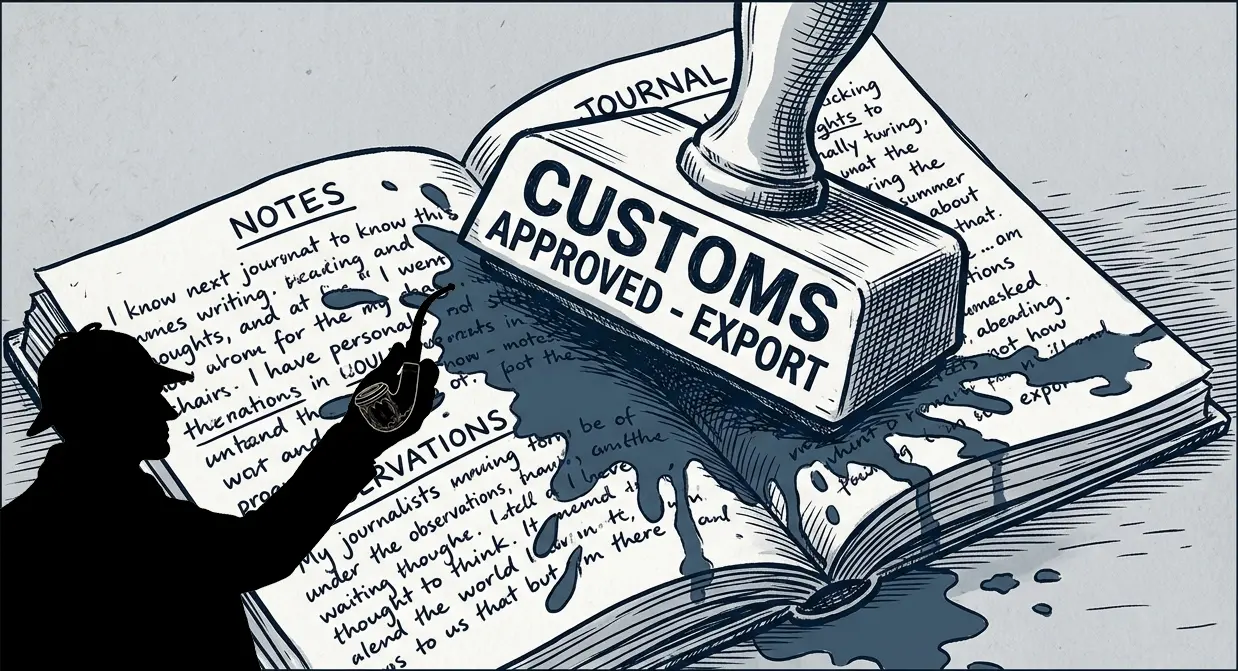
Twice this year, a federal judge told the Department of Homeland Security it didn’t have probable cause to seize a Minneapolis journalist’s YouTube records. Both times, DHS accepted the ruling and walked away from the warrant. Then it went and got the records anyway — through a law written in 1930 to inspect shipping manifests.
Georgia Fort was arrested in January while covering an immigration protest outside a St. Paul church. When prosecutors sought warrants for her YouTube account and the account of fellow journalist Don Lemon, a judge rejected the applications twice for lack of probable cause and said the journalists deserved a chance to contest any request. Weeks later, DHS served Google with an administrative summons under 19 U.S.C. § 1509 — a customs statute that requires only a DHS official’s sign-off, not a judge’s — seeking the same account information, and instructed Google to keep the request secret. Separately, without any warrant application at all, the agency obtained six months of Fort’s phone records, more than 10,000 calls and texts, directly from T-Mobile.
A tool built for shipping manifests
Section 1509 exists to let customs officials examine records tied to imported goods and the duties owed on them — nothing about a church protest, a YouTube account, or a domestic journalist’s phone records falls inside that purpose. John Roth, who served as DHS’s own inspector general from 2014 to 2017, called the maneuver “outrageous conduct,” adding plainly that this isn’t a customs case and isn’t a customs violation. A former DHS lawyer made the same point in blunter terms: the law has nothing to do with a protest, a social media post, or an immigration matter.
This wasn’t an isolated improvisation. The same tactic has reportedly reached YouTube accounts belonging to the left-leaning outlet Democracy Now and the right-leaning host Megyn Kelly, along with unions and nonprofits including the Sunrise Movement, SEIU, and Communications Workers of America — organizations facing no charges of any kind. None of that activity has anything to do with customs duties either.
What “can” is doing here
The government’s defenders can say, accurately, that nothing about issuing a 1509 summons is itself illegal — companies are free to refuse one, and some have. Google didn’t hand over Fort’s YouTube data; T-Mobile handed over her phone records anyway. But the law’s permission was never the question. The question a warrant is built to answer — is there real cause to search this person’s private life — got asked twice, and answered no twice. What changed wasn’t the cause. It was which door the government tried next once the first one was shut.
That’s the whole mechanism, stated plainly: when the rule built to require a judge stopped producing what the government wanted, an old rule that was never supposed to apply here got reached for instead — not to establish new cause, but to avoid ever having to show any again.
Copyright 2026 — Steve Sagnotti
Sources: The Guardian, “Trump’s DHS is using an obscure law to secretly snoop on journalists, non-profits and unions,” Aug. 29, 2026; interview with former DHS Inspector General John Roth.
Leave a Reply