Notes from the Field — Dispatch, June 25, 2026
Captain Lugo said no, and it cost him his post.
The Maricopa County Sheriff’s Office has operated under federal court oversight since 2013, when Judge G. Murray Snow found that deputies under then-Sheriff Joe Arpaio had systematically racially profiled Latino drivers. The settlement, Melendres v. Arpaio, put a court-appointed monitor inside the department — not a bureaucratic auditor, but a judge’s eyes on the ground, reporting quarterly on 368 separate requirements the department is bound to follow.
This month, that monitor’s report found the department backsliding, specifically inside its Professional Standards Bureau — the unit that investigates misconduct by the department’s own deputies. According to the report, current Sheriff Jerry Sheridan’s command staff pushed to reopen disciplinary cases that had already been closed, including one involving a deputy convicted of drunk driving. Captain Lugo, who ran the bureau, resisted — reopening the cases, he said, would violate both state law and the settlement itself. He was placed on leave, investigated by an outside agency, and transferred out of the bureau. The monitor’s report calls the stated reason for his transfer a pretext. Judge Snow, hearing the finding in court, said it disturbed him “because it has happened before in multiple ways in this very lawsuit, and the finding was that the current sheriff was the one who did it.” The department’s compliance score fell twelve points in a single quarter, from 92 percent to 80.
Two weeks after the monitor’s report was filed, the sheriff’s office is due in court to argue the oversight itself should end — that thirteen years of court supervision have accomplished what they set out to accomplish, and Maricopa County should be released. The office called the report’s timing “inflammatory soundbites” aimed at helping the plaintiffs’ opposition to that motion.
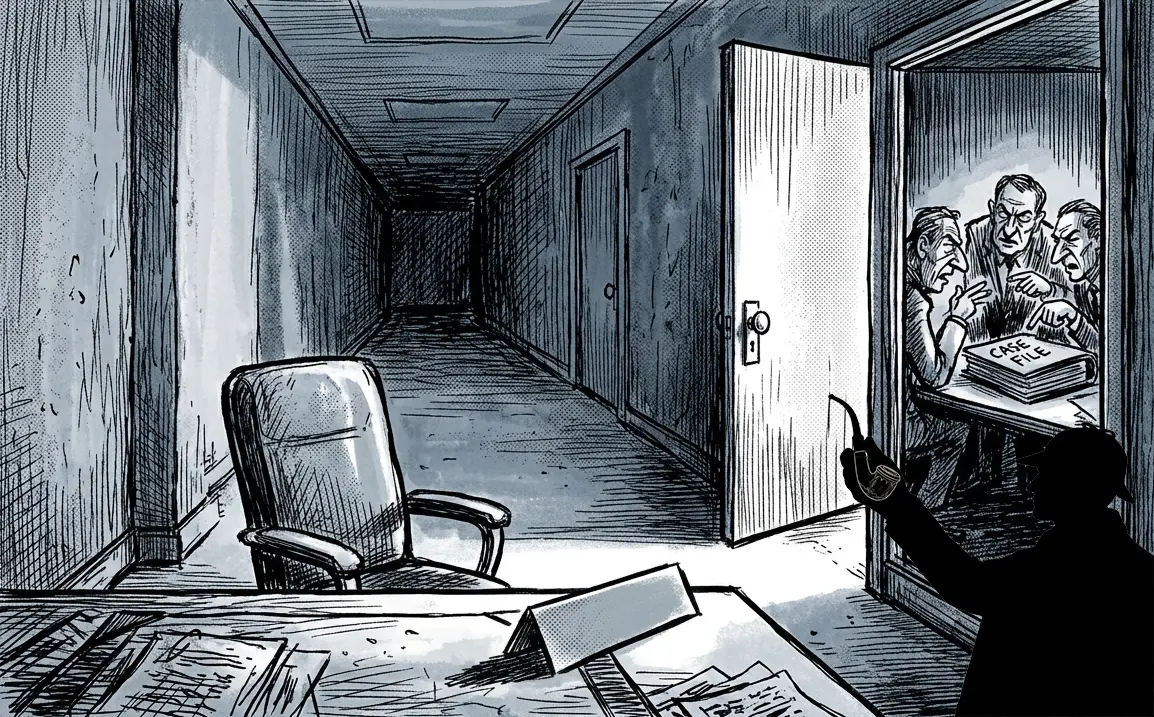
This is the mechanism Essay 3 traces to its oldest form: an institution asked to investigate itself, staffed with the people who decide who gets protected. The Professional Standards Bureau’s job was to hold deputies accountable regardless of rank. Its commander did that job, on a case involving a superior’s preferred outcome, and was removed for it. The monitor exists because in 2013, self-policing already failed once. This month’s finding is the same test, run again, thirteen years later, on the same office, with a different name on the door.
The captain who investigated is gone from that post. The sheriff who wanted the case reopened is still in his. In two weeks, a judge decides whether that office still needs someone watching.
Essay 03 — The People in the Room
(Broken Frames — Block 9: The Darkened Room — not yet published)
Sources: ProPublica, “Maricopa County Sheriff’s Department Undermined Efforts to Reform Deputy Oversight, Court Inquiry Alleges,” June 25, 2026. Arizona Luminaria, “Court inquiry denounces ‘disturbing pattern’ of violations at Arizona’s largest sheriff’s office,” June 25, 2026. Phoenix New Times, “Judge seems skeptical of ending oversight of Maricopa County Sheriff,” June 2026. ABC15, “Federal monitor slams Maricopa County Sheriff’s Office over internal affairs handling,” June 18, 2026.
Leave a Reply