Category: Broken Frames

  • The Call Center

    The Call Center

    Block 4, Article 3 — Your Representative’s Primary Job Is Not Representation

    © 2026 Steve Sagnotti.

    There is a building four blocks from the Capitol where members of Congress spend four to six hours a day making phone calls. You paid for the office they left to do it.

    The member of Congress you voted for arrived in Washington owing a debt. Not to you.

    The party recruited them. The party ran polling in their district. The party sent consultants. The party’s congressional campaign arm spent money on their race — targeted ad buys, voter contact, get-out-the-vote infrastructure. None of it was free. The price was not itemized. It was understood. The first campaign is an investment. The investment books an obligation. The obligation runs to the party.

    The party collected when the member arrived.

    The pricing structure

    Committee seats are not distributed by seniority, expertise, or constituent need. They are sold.

    The DCCC and NRCC publish internal dues schedules — documents that have leaked to reporters periodically and been confirmed through member accounts. The assessment varies by committee and by position, calibrated to market value. A seat on a low-profile committee costs less. A seat on Ways and Means, Financial Services, Energy and Commerce, or Natural Resources costs more — because those committees regulate industries with money to spend on access, and the party has priced the seat accordingly. Top leadership pays the most. Speaker, Majority Leader, Whip — assessments reportedly ranging from $800,000 to over $1 million per cycle.

    The member pays by making calls.

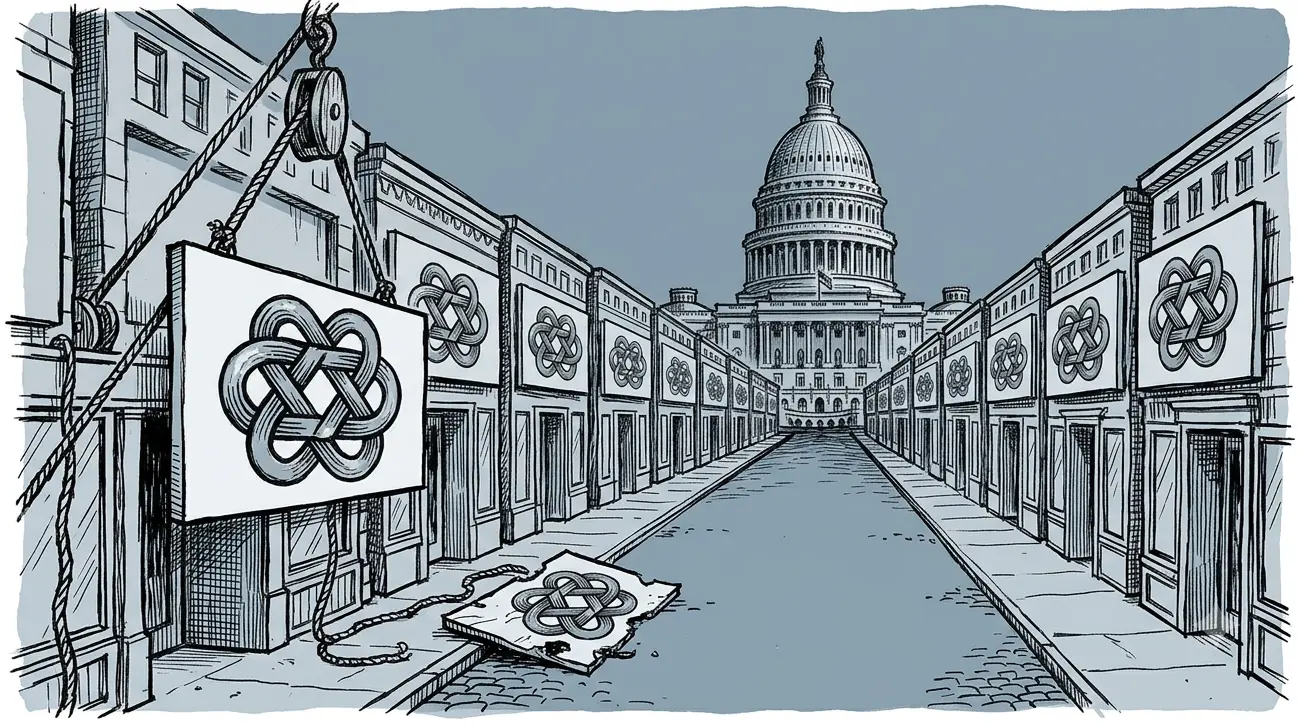
    Four to six hours a day, in party-operated call centers in rented office space across the street from the Capitol. Across the street because using official offices for fundraising would violate federal law. The member is on the public payroll while working a shift for the private organization. The public office sits vacant while the public employee works for the private party.

    The calls go to donors whose industries intersect with the member’s committee assignment. A member on Energy and Commerce calls energy and pharmaceutical donors. A member on Natural Resources calls oil, gas, mining, and timber donors. Nothing illegal is said. Nothing needs to be. The donor knows which committee the member sits on. The member knows the donor knows. The conversation proceeds.

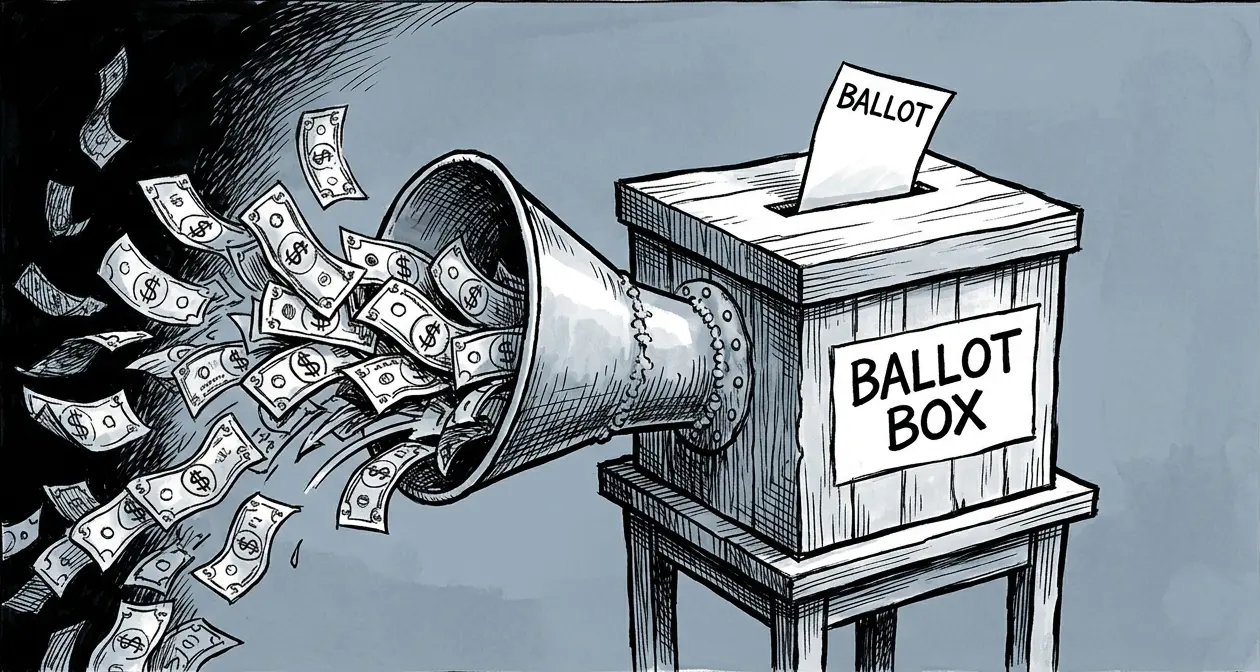
    The money goes to the DCCC or NRCC — not directly to the member’s campaign account. It is credited against the member’s dues. When the dues are met, the seat is secure. When they are not, the committee assignment is at risk. The donor is paying the member’s rent. The rent is set by the regulatory value of the seat. The constituent paid for the public office. That office sits vacant four to six hours a day while the member is across the street dialing for the party.

    The member’s call went to staff. The lobbyist’s call went through. The member’s Washington hours were framed as public service. The calls that defined them had to be made from a private phone across the street.

    The room where compliance is enforced

    The accountability mechanism operates inside the call center.

    In the DCCC and NRCC call centers, a whiteboard tracks every member’s progress against their dues obligation — updated in real time, visible to every member who walks in. The member who is behind can see it. The member who is ahead can see it. The peers making their numbers can see the peers who aren’t. No manager is required. No threat needs to be made. The social pressure operates automatically from the information in the room.

    The whiteboard makes a specific thing real: not the legislation, not the constituent services, not the committee work — the number. The member is not thinking about the aquifer when a pledge comes in. They are thinking about the number. The sophomore who exceeded their dues last cycle got a better committee assignment. The lesson was not lost on anyone in the room.

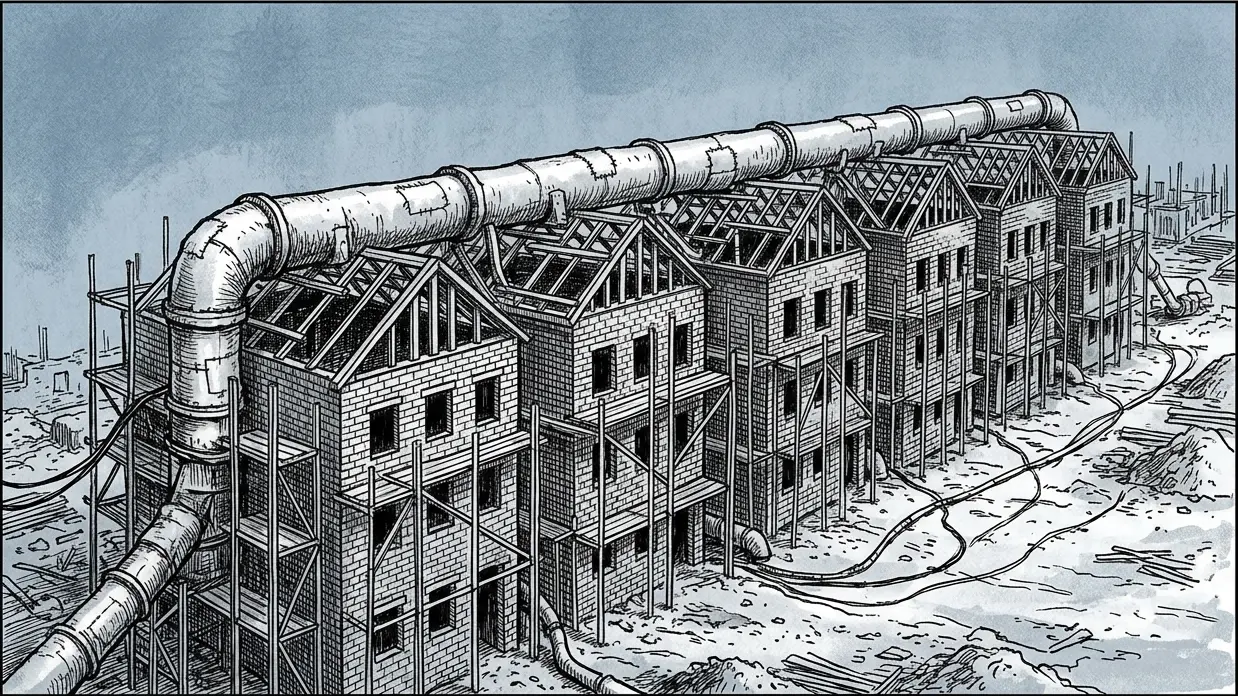
    The party’s organizational structure multiplies the ceiling. The RNC, DNC, NRCC, DCCC, NRSC, and DSCC are separate legal entities — each with its own FEC filing, its own contribution limits, its own staff. An individual donor who has maxed out to a candidate can give separately to each committee. More entities means more pipes carrying money toward the same destination. The organizational complexity that looks like accountability is the mechanism that defeats it.

    The exposure

    The Capitol Police jurisdiction ends at the Capitol complex boundary. A sitting member of Congress walking across the street to the call center leaves that jurisdiction the moment they step off federal grounds. The call center is private space — commercially leased, privately staffed, secured by whatever the building’s standard lease includes. No federal officer. No public accountability for who enters. No official record of who the member speaks to or what is promised.

    The system that demands the exposure also profits from it. The most predictable, most documented, most off-the-record moment in a federal official’s working week is when they are raising money for the private organization that helped elect them. The call center exists because official offices cannot be used for fundraising under federal law — a rule intended to protect the public from exactly the kind of access-for-money transaction the call center conducts at industrial scale four blocks away. The letter of the law was honored. The purpose of the law commutes to work across the street every morning.

    At the state level the exposure is greater and the security lesser. The state legislator making calls from a folding table in the back of party headquarters has no security detail, no building protocol, no record of attendance. At the county level there is no facility at all — a phone, a list, a member’s personal time, and an obligation that was never written down but is understood by everyone in the room. The county commissioner taking a call from the developer whose zoning variance is pending next week is doing exactly what the senior senator does in the Capitol Hill call center. The senator’s version has marble floors. The commissioner’s version has a folding table. The mechanism is identical.

    The optimization

    The member who is good at the calls faces a specific problem: the better they perform, the more they are expected to perform. The dues schedule is not a ceiling. It is a floor. Exceed the number and get a better committee assignment. The better assignment carries a higher assessment. The higher assessment requires more call time. The four hours a day in the first term becomes the organizing principle of the member’s professional life by the third.

    The hours not on the phone have to go somewhere. Legislation still has to be drafted. Constituents still have to be called back. The member delegates.

    The people doing that drafting frequently came from the industries the committee regulates — and will return to those industries when the stint ends. They draw a government paycheck. They hold a staff title. But the frame they bring to the work, the options they present to the member, the language they put in the bill — all of it was shaped by where they came from and calibrated to where they’re going. The constituent never had anyone in that room.

    The industry’s framing went into the bill.

    The money that stays in the room

    The war chest is not one thing. The official campaign committee receives contributions subject to FEC limits and reports publicly — personal use prohibited, records available. The practical opacity runs alongside it.

    The leadership PAC is a separate committee the member controls, legally distinct from their campaign account. Leadership PACs are not bound by the personal-use ban that applies to authorized campaign committees. Issue One and the Campaign Legal Center examined leadership PAC spending and found that 120 members of Congress — roughly one in five — spent less than 50 percent of their leadership PAC funds on politics between 2019 and 2020. Forty-three members spent less than 25 percent on politics. The remainder went elsewhere: Disney World, five-star resorts, private planes, Paris. These expenditures are reported as political fundraising expenses. The FEC has unanimously recommended closing this loophole five times since 2009. Congress has not acted. The only people who can change the rule are the ones who benefit from it.

    Then there is the personal portfolio. Forty-four percent of House members and 54 percent of senators own individual stocks. Congressional stock owners made approximately 11,000 trades in 2023 alone. The STOCK Act of 2012 was passed with bipartisan promises to stop trading on congressional knowledge. The penalty for a reporting violation is $200. No member of Congress has ever been prosecuted for insider trading under the Act. For committee chairs and leadership — the people with the most sensitive regulatory information — trade frequency fell after 2012 but average trade size and risk-adjusted returns remained largely intact. The $200 fine is not a deterrent. It is a processing fee.

    The full architecture: the donor funds the call center. The call center funds the dues. The dues buy the committee seat. The committee seat produces the regulatory outcome. The member holds stock in the regulated industry. The regulatory outcome moves the stock price. The leadership PAC books the resort as a fundraising expense. The constituent funded the primary that started the chain. The royalty rate that has not moved since 1920 is one outcome of this architecture. The $200 fine for late stock disclosure is another.

    Public campaign financing would end the dues system and sever the chain. The legislation to pass it must clear the committees whose chairs are most dependent on the system it would eliminate. The member holding regulated-industry stock while sitting on the committee that regulates it is doing nothing illegal — Block 8 owns the legal architecture that makes that true; this article plants the thread.

    A representative who swore to provide for the general welfare, staffed by people who came from the industries they regulate and will return to them, working four to six hours a day raising money from those same industries — is not representing the constituent. That is the word for what is not happening here. The royalty rate held at 12.5 percent since 1920. The lease mandated on 200 million acres. The aquifer drawn down. The commons priced by the people who profit from it, drafted by people who came from industry, voted on by members who needed industry money. That is how public wealth becomes private profit. Not with a crime. With a system.

    The next article shows what that system purchased — the procedural architecture that governs every bill before a single vote is cast.

    Do you know how much your representative raised last cycle — and from which industries?

    Your representative’s top donor industries and total fundraising by cyclehttps://www.opensecrets.org/members-of-congress
    Your representative’s committee assignments and the industries those committees regulatehttps://clerk.house.gov/committees
    Your representative’s stock holdings and tradeshttps://disclosures.house.gov

    Sources

    1. Call time 4–6 hours daily / dues structure. Ryan Grim and Sabrina Siddiqui. “Call Time for Congress Shows How Fundraising Dominates Bleak Work Life.” HuffPost, January 2013 (paywall).

    2. Dues schedule by committee / $800K–$1M+ leadership assessment.

    3. Federal law prohibiting official office fundraising. 2 U.S.C. § 439a. https://uscode.house.gov/view.xhtml?req=granuleid:USC-prelim-title2-section439a&num=0&edition=prelim

    4. Capitol Police jurisdiction boundary. https://www.uscp.gov

    5. Whiteboard / leaderboard. Tim Alberta, American Carnage (2019). Harper. WorldCat: https://search.worldcat.org/title/1088919097 — Ryan Grim and Sabrina Siddiqui, HuffPost, January 2013.

    6. Leadership PAC personal use — 120 members / 43 members. Issue One / Campaign Legal Center. https://campaignlegal.org/update/leadership-pac-loophole-members-congress-are-using-political-money-personal-use

    7. FEC five unanimous recommendations since 2009. Scripps News / Howard Center, May 2024. https://scrippsnews.com/stories/fec-has-tried-to-close-leadership-pac-loophole-for-years-congress-hasnt-let-them/

    8. Congressional stock ownership — 44% House / 54% Senate / 11,000 trades 2023. Campaign Legal Center, September 2024. https://campaignlegal.org/update/congressional-stock-trading-continues-raise-conflicts-interest-concerns

    9. STOCK Act $200 fine. Campaign Legal Center, March 2026. https://campaignlegal.org/update/congressional-stock-trading-and-stock-act

    10. Committee chair trade returns post-STOCK Act. CEPR VoxEU, December 2025. https://cepr.org/voxeu/columns/political-power-and-profitable-trades-us-congress

    11. Lobbyist-drafted legislation. Lee Drutman, The Business of America is Lobbying (2015). Oxford University Press. WorldCat: https://search.worldcat.org/title/1022846195

    12. Reverse revolving door. The Intercept, February 15, 2023. https://theintercept.com/2023/02/15/congress-bank-lobbyists-banking-committee/

    13. LegiStorm / Bloomberg Government analysis, November 2019 (paywall).

    14. Staff connection value — 18% premium. Bertram, L. Journal of Politics, Vol. 80, No. 4. University of Chicago Press, 2018 (paywall). https://www.journals.uchicago.edu/doi/10.1086/698848

    15. OpenSecrets revolving door by committee. https://www.opensecrets.org/revolving-door/congressional-committees

    Block 4, Article 3. © 2026 Steve Sagnotti.

  • The Locked Door Inside the Door

    The Locked Door Inside the Door

    Block 4, Article 2 — How 45 Percent of Americans Got Locked Out

    © 2026 Steve Sagnotti.

    Forty-five percent of American adults identify with neither major party. They are the largest single bloc in the electorate — significantly larger than either party. They have no structural home in the system they fund.

    The debate commission the parties built for themselves

    From 1976 through 1984, presidential debates were organized by the League of Women Voters — an independent civic organization with no party affiliation. In 1988, the two parties informed the League that they required control of debate format, participant selection, questioner approval, and staging. The League withdrew. Its withdrawal statement called the parties’ demands an attempt to “perpetrate a fraud on the American voter.”

    The Commission on Presidential Debates was incorporated that same year — a nonprofit founded by the DNC and RNC, governed by former party officials and campaign operatives, designed to manage every presidential debate thereafter.

    The 15% polling threshold for third-party participation was implemented in January 2000 — the cycle after Ross Perot’s 1992 debate appearances demonstrated exactly what a third-party candidate could do with a national stage. Perot polled at roughly 8 percent before the debates. He participated. He finished at 19 percent of the popular vote — the strongest third-party showing since Theodore Roosevelt in 1912.

    The threshold was set to make sure that sequence could never repeat.

    To qualify for a presidential debate, a candidate must poll at 15 percent in surveys that frequently don’t include third-party candidates by name — because those candidates haven’t been in the debates that would produce the polling. The exclusion is circular by design.

    The commission was framed as a civic institution replacing a partisan one. The League of Women Voters understood what was being asked of them in 1988 and said so plainly. The arrangement has operated without significant public challenge for thirty-seven years.

    The private club with a public bill

    Sixteen states run fully closed primaries — registered Democrats and Republicans only, no exceptions. Eleven more are semi-closed, with independents admitted only at the party’s discretion. Nationwide, 28 percent of all eligible voters live in fully closed primary states. Forty-five percent of them identify as independent. They fund the selection. They are barred from it.

    Democrats hold 27 percent of the electorate. Republicans hold 28. Together they represent just over half the country. The plurality they exclude from the primary that decides most general elections is larger than either of them.

    The parties’ legal defense for this arrangement is consistent and successful: the Democratic National Committee and the Republican National Committee are private organizations. The Supreme Court has confirmed it repeatedly, at the parties’ own request, in cases where they sought protection from state regulation. Parties have the right to set their own membership rules, control their own candidate selection, and exclude who they choose. These are First Amendment associational rights. The courts have been clear.

    The parties are correct. They are private organizations. The question nobody followed up with in those courtrooms: then why is the public paying for it?

    Primary elections are administered by public employees, on public property, with public equipment, funded by taxpayers. The practice was cemented by a 1972 Supreme Court ruling — Bullock v. Carter — that parties could not charge candidates excessive filing fees to appear on the primary ballot. The ruling was about candidates, not parties. The parties absorbed it as a license to have the public fund their internal selection process permanently. The parties closed the primaries, kept the public funding, and went back to court the next time someone objected to call themselves private organizations again.

    Between 2000 and 2013, New Jersey’s independent voters paid approximately $100 million to fund primaries in which they could not vote. One state. Thirteen years. The same arithmetic runs in Florida, Pennsylvania, New York, Connecticut, and Maryland — every closed primary state where 45 percent of the taxpayers fund a process designed to exclude them.

    American contract law rests on a principle so foundational it is rarely stated: a contract binds the parties who agreed to it. It cannot bind people who were never at the table. The ballot access statutes, the closed primary systems, the debate thresholds — these were written into public law by legislatures the two private organizations control, and are now enforced against the 45 percent of Americans who belong to neither organization and agreed to none of its terms. The contract was written by two parties, in their favor, without the consent of the people it most constrains. In any other domain of American law, the doctrine that would void it exists. The courthouse that would apply it is occupied by judges selected through the pipeline those same private organizations funded. The doctrine is there. The court is not.

    The closed primary ensures the committee assignments are filled by members who survived a donor-funded primary, not a constituent-responsive one. The 45 percent locked out of that primary are the voters most likely to challenge the royalty rates, the lease mandates, and the extraction subsidies those committees protect. The door that holds them out is not incidental to the commons extraction this series documents. It is load-bearing.

    Changing the terms of that arrangement requires legislation from the legislators those terms produced. Block 5 shows what the 45 percent can do instead — and what the locked door does to those attempts.

    This is not democracy

    A democracy is a system in which the people govern themselves. What the current arrangement offers is a choice between two candidates selected by private organizations the voter may not belong to, in an election the voter funded, administered by rules the organizations wrote, on a stage the organizations control.

    That is not self-governance. It is a managed menu.

    The founders warned it would come to this. It took two years to start and two centuries to complete. Washington called these organizations potent engines by which cunning and unprincipled men would usurp the reins of government. He was not describing a hypothetical. He was describing the system that was already forming around him. The system that is now complete calls itself democracy and uses the public’s money to administer the machinery of its own perpetuation.

    The realignment that pressure produces but the door prevents

    Every previous American party realignment followed the same pattern. A crisis arrived that the existing parties could not contain. Enough voters concluded the existing options were inadequate. An alternative organized, gained ballot access, and either replaced one of the existing parties or forced structural reorganization.

    The conditions for realignment are present. Sixty-two percent of Americans told Gallup in October 2025 that a major third party is needed. The 45 percent who identify as independent are the largest single bloc in the electorate — larger than either party. The 2008 financial collapse, the COVID pandemic response, and the early dislocations of AI displacement have each generated the kind of mass dissatisfaction that historically precedes structural change.

    The realignment has not come. The door built in 1888 and reinforced in 1987 is holding it out.

    A third-party candidate who cleared every ballot access threshold in all fifty states would still face a debate stage they cannot enter without polling 15 percent in surveys that don’t include their name. They would run in a presidential election where winner-take-all rules in forty-eight states ensure that votes received in a state they don’t win count toward nothing. They would compete against two parties with institutional infrastructure — donor networks, state party organizations, campaign finance pipelines — built over a century and a half.

    Where reform has succeeded — open primaries in Washington, California, Alaska, and now New Mexico — the evidence is clear. California’s approval of state government rose 20 points after top-two primaries were implemented. Alaska’s Lisa Murkowski, the only Republican senator who voted to impeach Donald Trump and won reelection, credits the open primary with her survival. As reform pressure builds, the parties are responding: in 2024, ballot measures for nonpartisan primaries were defeated in multiple states, and party-controlled legislatures are currently working to close primaries further in approximately a dozen states. The door was not built against fringe candidates. It was built against the plurality. And the parties are reinforcing it.

    The next article shows what the members who made it through that door are required to do once they arrive.

    Do you know how your representative was selected before you voted?

    Whether your state’s primary is open, closed, or semi-closed — and whether independents can participatehttps://ballotpedia.org/Primary_election_types_by_state
    How the Commission on Presidential Debates sets its participation threshold — and who funds ithttps://debates.org/about-cpd/

    Sources

    1. League of Women Voters withdrawal statement, October 3, 1988. LWV historical record. https://www.lwv.org/league-women-voters-education-fund/league-women-voters-and-presidential-debates

    2. Commission on Presidential Debates — founding 1987. https://debates.org/about-cpd/ — CPD 15% threshold established 2000: https://debates.org/about-cpd/overview/

    3. Perot 1992 — ~8% pre-debate, 18.9% final. FEC 1992 results. https://www.fec.gov/introduction-campaign-finance/election-and-voting-information/

    4. Theodore Roosevelt 1912 — 27.4%. U.S. National Archives. https://www.archives.gov/electoral-college/1912

    5. 16 closed / 11 semi-closed primary states. Movement Advancement Project. https://mapresearch.org/democracy-map/partisanship-of-state-primary-election-systems/

    6. Gallup 45% / 27% / 28% breakdown. https://news.gallup.com/poll/700499/new-high-identify-political-independents.aspx

    7. Gallup 62% want third party, October 2025. https://news.gallup.com/poll/696521/americans-need-third-party-offer-soft-support.aspx

    8. Party autonomy doctrine. Tashjian v. Republican Party of Connecticut, 479 U.S. 208 (1986). https://supreme.justia.com/cases/federal/us/479/208/ — California Democratic Party v. Jones, 530 U.S. 567 (2000). https://supreme.justia.com/cases/federal/us/530/567/

    9. Democratic Party v. Wisconsin ex rel. La Follette, 450 U.S. 107 (1981). https://supreme.justia.com/cases/federal/us/450/107/

    10. Bullock v. Carter, 405 U.S. 134 (1972). https://supreme.justia.com/cases/federal/us/405/134/

    11. New Jersey $100 million 2000–2013. Independent Voter News, 2014. https://ivn.us/posts/2014/07/23/ivn-explained-cost-holding-partisan-primaries/

    12. Washington top-two / California Prop 14 / 20-point approval increase. Unite America. https://www.uniteamerica.org/primary-problem

    13. Alaska top-four / Murkowski quote. NPR, May 30, 2026. https://www.npr.org/2026/05/30/nx-s1-5398836/single-party-primary-elections-reshaping-congress

    14. New Mexico Senate Bill 16, April 2025. MultiState Elections. https://www.multistate.us/elections/primary-types-101

    Block 4, Article 2. © 2026 Steve Sagnotti.

  • The Warning That Wasn’t Heeded

    The Warning That Wasn’t Heeded

    Block 4, Article 1 — Two Founders, Two Years, Two Hundred Years

    © 2026 Steve Sagnotti.

    The founders could see it coming. Washington named it before he left office. Madison had named it before the Constitution was ratified. Neither warning changed what happened next.

    On September 19, 1796, George Washington published his Farewell Address. He had served two terms and refused a third. He used the occasion to name what he believed would destroy the republic he had helped build.

    He was specific. Political parties — factions organized around interest or passion — would become “potent engines by which cunning, ambitious, and unprincipled men will be enabled to subvert the power of the people.” They would “distract the public councils,” “enfeeble public administration,” and render alien to each other those who should be bound together. He did not describe a hypothetical. He had watched both parties form around him during his own presidency, despite his refusal to join either. He understood what they were.

    Madison had made the same argument from theory nine years earlier. Federalist 10 is the most rigorous treatment in the founding literature of what parties actually are: factions, organized around interests or passions, dangerous not because their members are corrupt but because the organizational logic of a faction produces outcomes that serve the faction at the expense of the whole. Madison proposed scale as the remedy — a large republic would contain so many competing factions that none could dominate. He was right about the mechanism. He was wrong about the scale required to defeat it.

    The parties that formed within two years of ratification proved large enough to absorb competing factions, durable enough to outlast every crisis that should have ended them, and sophisticated enough, by 1888, to write the ballot access laws that made them permanent.

    The founders’ hostility to parties is not decorative history. It is the original statement of the problem this series documents.

    Five realignments, one frozen door

    The American party system has reorganized itself five times. Each reorganization ended an era that looked permanent and produced a new alignment its participants assumed would last. None did.

    The Federalists opposed the War of 1812 and were read as disloyal — the party collapsed. The Whigs elected a president in 1848 and ceased to exist by 1856, destroyed by their inability to hold North and South together on slavery. The Republican Party was founded in 1854 and won the presidency in 1860 — six years from founding to the White House, with Lincoln taking 39.8 percent of the popular vote in a four-way race. The New Deal ended Republican post-Civil War dominance. The Civil Rights Act forced the New Deal coalition’s internal contradiction into the open, and the fifth realignment produced the current arrangement: two geographically sorted, tribally opposed parties governing a country in which 45 percent of voters identify with neither.

    Each previous transition happened because the existing party structure failed the country badly enough that voters found a different one. The current system is the first in American history to survive multiple crises — the 2008 financial collapse, a global pandemic, the early shock of AI displacement — without producing a structural realignment.

    The crisis conditions that have historically broken party systems are present. The realignment has not come. Something is different this time. The next two sections show what.

    The reform that locked the door

    Before 1888, political parties printed their own ballots. The party ticket was a physical object — distinctive by size and color, sometimes by scent. Tammany Hall’s Tim Sullivan scented his party’s tickets so they could be tracked to the ballot box. Party operatives at polling places watched who voted and how. Vote buying was systematic. Coercion was rampant.

    The Australian ballot reform ended all of that. Government-printed, secret ballots, first adopted in Massachusetts in 1888, universal across the states by mid-century. It was a genuine democratic improvement.

    What nobody mentions: when the government took over ballot printing, state legislatures had to decide which candidates and parties would appear on the official ballot. The state legislatures were controlled by the two existing parties. They wrote the ballot access laws. They wrote them to protect themselves.

    Before the reform, a third-party candidate simply printed their own ballot and handed it to voters. After the reform, getting on the ballot required satisfying requirements the existing parties wrote. They wrote them to prevent a third option.

    The Australian ballot reform was framed as the end of machine politics. The machine that replaced it was quieter, and written into law.

    The private organization that runs public elections

    The Democratic National Committee and the Republican National Committee are private organizations — incorporated nonprofits, with no status in the Constitution. The Supreme Court has consistently protected that status: parties have the right to set their own membership rules, control their own candidate selection, and govern their own conventions without state interference. These are First Amendment associational rights. The courts have been clear.

    The primary election deciding who represents you is administered by public employees, on public property, with public funds — and controlled by a private organization that can legally exclude you from participating.

    Forty-five percent of American adults identify as independent. In closed primary states, those voters are excluded from publicly funded elections by the private organizations that designed the exclusion. The party told the court it is a private association with the right to run its own affairs. The court agreed. Nobody followed up with the next question: then why is the public paying for it?

    Either primaries are public functions open to all taxpayers who fund them, or they are private functions the parties pay for themselves. The current arrangement — private control, public funding — is not a compromise. It is a subsidy. The 45 percent excluded from that subsidy are the same voters who might otherwise challenge the committee assignments that set extraction rates on publicly owned resources. The private organization has no obligation to represent them. It has every incentive not to.

    The warning Washington issued in 1796 required actors the system was already preventing from forming. The people who might have heeded it were the people the duopoly was already producing. Block 5 shows what that self-sealing mechanism costs the 45 percent it locks out.

    The next article shows what the parties built with the architecture the ballot reform handed them.

    Do you know whether your state’s primary is open or closed?

    Whether your state uses an open, closed, or semi-closed primary — and whether independents can participatehttps://ballotpedia.org/Primary_election_types_by_state
    Your state’s ballot access requirements for third-party and independent candidateshttps://ballotpedia.org/Ballot_access_for_political_candidates

    Sources

    1. Washington, George. Farewell Address. September 19, 1796. Avalon Project, Yale Law School. https://avalon.law.yale.edu/18th_century/washing.asp

    2. Madison, James. Federalist No. 10. November 22, 1787. Avalon Project, Yale Law School. https://avalon.law.yale.edu/18th_century/fed10.asp

    3. Lincoln 39.8% four-way race, 1860. U.S. National Archives. https://www.archives.gov/electoral-college/1860

    4. Australian ballot reform — Massachusetts 1888. CRS, IN12389, 2023. https://crsreports.congress.gov/product/pdf/IN/IN12389

    5. Tammany Hall / scented tickets. Cambridge/BJPS, “Anti-Partism and Party Control of Political Reform in the United States,” 2000 (paywall).

    6. Party autonomy doctrine. Tashjian v. Republican Party of Connecticut, 479 U.S. 208 (1986). https://supreme.justia.com/cases/federal/us/479/208/ — California Democratic Party v. Jones, 530 U.S. 567 (2000). https://supreme.justia.com/cases/federal/us/530/567/

    7. Gallup. Party Affiliation, 2025 — 45% independent. https://news.gallup.com/poll/700499/new-high-identify-political-independents.aspx

    8. Bullock v. Carter, 405 U.S. 134 (1972). https://supreme.justia.com/cases/federal/us/405/134/

    9. Five party realignments. V.O. Key, “A Theory of Critical Elections,” Journal of Politics, 1955 (paywall). Walter Dean Burnham, Critical Elections and the Mainsprings of American Politics (1970). Norton. WorldCat: https://search.worldcat.org/title/98525

    Block 4, Article 1. © 2026 Steve Sagnotti.

  • Before the Map Is Drawn

    Before the Map Is Drawn

    Block 3, Article 4 — The Input Was Corrupted First

    © 2026 Steve Sagnotti.

    What do a missing census count, a closed newspaper, and a mining claim have in common?

    The previous three articles documented what happens to your representation after the map is drawn. This one shows what happened before.

    The courts that might have protected specific communities from gerrymandering are now closed — Rucho shut the partisan door, Callais shut the racial one. The communities those remedies were designed to protect are the same communities this article is about. That is not a coincidence. It is a sequence.

    The count that shapes everything

    Every ten years, the federal government counts the population of the United States. The count does two things. It determines how many congressional seats each state receives. And it determines how approximately $2.8 trillion in federal funding — for schools, hospitals, roads, housing assistance, emergency services — gets allocated across communities over the following decade. On both measures, the count is the input. Get the count wrong and everything downstream is wrong.

    The count is not accurate.

    The Census Bureau conducts its own independent post-enumeration surveys after each decennial count — separate samples used to measure how accurately the census counted specific populations. The results are consistent across decades. Black Americans, Latino Americans, Native Americans, renters, young men, and recent immigrants are systematically undercounted. White non-Hispanic homeowners are overcounted — recorded in greater numbers than actually exist in that category. The net effect is that seats and federal dollars followed a map of America that wasn’t there.

    The 2020 census undercounted the Hispanic population by 4.99 percent. It undercounted the Black population by 3.30 percent. It overcounted the white non-Hispanic population by 1.64 percent.

    These are not rounding errors. Applied across the populations of large states, they shift congressional seats. They alter district lines. They redirect federal funding away from the communities most undercounted — the same communities that will then be gerrymandered, served by fewer local newspapers, and located nearest to extraction sites.

    The federal government measures its own counting errors. It publishes them.

    The intent was documented

    For years, methodology took the blame for the differential undercount — the inherent difficulty of counting a large, mobile, diverse population once per decade with a physical form. Then Thomas Hofeller died.

    Hofeller was the Republican Party’s premier redistricting strategist for three decades. After his death in 2018, his daughter found hard drives containing working files that documented, in his own words, the actual purpose of the 2020 citizenship question. Adding a citizenship question to the census, Hofeller’s files showed, would allow drawing congressional districts based on citizen population rather than total population — concentrating representation in whiter, more rural, more Republican areas. The stated rationale offered to the courts — Voting Rights Act enforcement — was, the files showed, pretextual. The argument had been constructed after the strategic objective was identified.

    The Trump administration had framed the citizenship question as a civil rights measure. Hofeller’s own files documented what the frame excluded: the intent to engineer the input before the map was drawn.

    The Supreme Court blocked the question in Department of Commerce v. New York (2019) — but on procedural grounds only. It found the rationale pretextual. It did not rule the underlying intent unconstitutional. The intent is still available to anyone who controls the Department of Commerce. Closing that window permanently requires either continuous census methodology — which removes the decennial manipulation opportunity entirely — or congressional action to mandate it, from the chamber the corrupted count helped produce.

    The mechanism is not mysterious

    The overcounting is not random. People with two homes — a primary residence and a vacation property — get counted at both. A college student gets counted at their campus address and again when their parents list them at the family home. Duplicate forms, submitted by households uncertain whether the first one registered, slip through imperfect matching algorithms.

    The fix is not technically difficult. Cross-referencing census responses against Social Security records, IRS filings, Medicare enrollment, and USPS address databases would catch most duplicates before publication. The Census Bureau already uses administrative records partially. It has not extended that matching to full pre-publication deduplication.

    Privacy constraints and limits on cross-agency data sharing are the official explanation. The more complete answer is visible in a different program. The federal government automatically registers every 18-year-old male for the Selective Service within months of his birthday — cross-referencing Social Security records, school enrollment data, and other administrative sources in real time. The infrastructure for accurate population tracking from administrative records exists. It operates reliably for conscription. It has not been applied to representation.

    The government that can find every young man for the draft cannot deduplicate a census form. The asymmetry is not technological. It is a choice about which kind of finding empowers whom.

    The Census Bureau is a federal agency, subject to the same regulatory capture Block 8 documents in the agencies that set royalty rates and grazing fees. The money pipeline that protects below-market extraction rates has no obvious reason to fund a bureau adopting counting methods that would shift seats and federal dollars away from the districts that pipeline already controls.

    The same map

    Here is what the data shows when you overlay three separate federal datasets.

    The communities most systematically undercounted in the census are concentrated in rural tribal lands, dense urban cores, and rural areas with high concentrations of Latino agricultural workers and Black residents in the South. The communities that have lost their local newspapers — the news deserts documented by the Northwestern Medill Local News Initiative — overlap those same geographies. The communities bearing the highest costs from below-market federal mineral extraction — the royalty rates, the aquifer drawdowns, the grazing fee subsidies — are concentrated in the same areas.

    Draw the undercount map. Draw the news desert map. Draw the extraction zone map. They are not three maps. They are one map, drawn three times by three different federal data collection systems that have never been placed next to each other in a single public accounting.

    The census undercount dilutes their representation before a single district line is drawn. The gerrymander then dilutes it further. The news desert ensures their representative faces no local accountability. The extraction zone ensures that what remains of their commons is priced at rates set by the committee chairs those diluted districts could not unseat. The undercount that did this was not accidental — the communities bearing the extraction costs are the same communities the citizenship question was designed to dilute further. The count and the map were aimed at the same target.

    This is not four separate problems. It is one problem with four expressions.

    The communities bearing the cost of the commons extraction documented in Block 10 are the communities whose political weight was reduced — systematically, measurably, upstream of every other mechanism this series documents — before anyone picked up a mapping program.

    Block 10 carries the full accounting of what that cost them. The map that couldn’t be challenged in court was drawn on a canvas already tilted by a count that never got them right.

    The district produces a legislator with a specific accountability structure. The next block shows what that structure looks like from the inside.

    The Rigged Map — The Record Is Public

    2020 Post-Enumeration Survey — how accurately your community was countedhttps://www.census.gov/library/publications/2022/dec/p94-171.html
    Your district’s partisan fairness grade and efficiency gap scorehttps://gerrymander.princeton.edu
    Federal oil, gas, and mineral lease activity in your state — active vs. idlehttps://www.blm.gov/programs/energy-and-minerals/oil-and-gas/leasing
    Whether your state uses an independent redistricting commissionhttps://redistricting.lls.edu
    Your representative’s donors and committee assignmentshttps://www.opensecrets.org

    A representative operating in a broader frame could tell you how their district was drawn, by whom, and under what rules. They could tell you whether their committee assignments align with their district’s interests or their donors’. They could tell you whether they support restoring compactness requirements, an independent redistricting commission, and continuous census methodology. Ask.

    Sources

    1. 2020 Post-Enumeration Survey. U.S. Census Bureau, March 2022. https://www.census.gov/library/publications/2022/dec/p94-171.html

    2. Census Bureau press release, March 10, 2022. https://www.census.gov/newsroom/press-releases/2022/2020-census-estimates-of-undercount-and-overcount.html

    3. Federal funding allocated by census — $2.8 trillion figure.

    4. Hofeller files — citizenship question intent documented. New York Times, May 30, 2019 (paywall). “Deceased G.O.P. Strategist’s Hard Drives Reveal New Details on the Census Citizenship Question.”

    5. Department of Commerce v. New York, 588 U.S. 752 (2019). https://supreme.justia.com/cases/federal/us/588/752/

    6. Northwestern Medill Local News Initiative. https://localnewsinitiative.northwestern.edu

    7. Selective Service administrative infrastructure. 50 U.S.C. § 3802. https://uscode.house.gov/view.xhtml?req=granuleid:USC-prelim-title50-section3802&num=0&edition=prelim

    8. News desert / undercount overlap. Brennan Center for Justice. https://www.brennancenter.org

    9. Cross-agency data matching / administrative record census methodology. U.S. Census Bureau. https://www.census.gov/topics/research/linkage/administrative-records.html

    Block 3, Article 4. © 2026 Steve Sagnotti.

  • The Courthouse Door Closes

    The Courthouse Door Closes

    Block 3, Article 3 — Three Decisions, Thirteen Years, One Outcome

    © 2026 Steve Sagnotti.

    Who decides whether your district is fair?

    For fifty years after Reynolds v. Sims, the federal courts were theoretically available as a check on gerrymandering. The theory was never fully tested. The Supreme Court acknowledged the problem repeatedly and declined to solve it repeatedly — agreeing that extreme partisan maps might be constitutionally problematic, then ruling that the Court lacked a workable standard for measuring the problem. The case would be sent back. The map would stand. The next challenge would begin.

    In 2019, the Court stopped pretending.

    Door one: the partisan challenge

    Rucho v. Common Cause arrived at the Supreme Court with two maps — one drawn to disadvantage Democrats in North Carolina, one drawn to disadvantage Republicans in Maryland. Both were egregious. Both were documented. The majority opinion acknowledged as much. Chief Justice Roberts, writing for five justices, held that partisan gerrymandering claims “present political questions beyond the reach of the federal courts.” Federal judges, he wrote, have no license to reallocate political power between the two parties.

    The maps were sent back without remedy.

    Roberts acknowledged in the same opinion that partisan gerrymandering “may be incompatible with democratic principles” and “leads to results that reasonably seem unjust.” Then held that the federal courts could do nothing about it.

    The Rucho majority framed the question as one of judicial manageability — not whether the maps were wrong, but whether courts had a workable standard for saying so. That framing meant the acknowledged injustice required no remedy.

    Justice Kagan’s dissent named what the majority had done: it was “permitting politicians to entrench themselves in power against the people’s will.” The 2020 redistricting round proceeded with that ruling in place. State legislatures redrew maps that courts had previously found unconstitutional, with partisan intent openly stated, because there was no longer a federal remedy to worry about.

    Federal courthouse door on partisan gerrymandering: closed.

    Door two: the racial remedy

    The Voting Rights Act of 1965 had two primary tools. Section 5 required jurisdictions with a history of discriminatory voting practices to obtain federal approval before changing their voting laws — preclearance. Section 2 prohibited voting practices that dilute minority representation. Congress reauthorized both in 2006 with near-unanimous majorities and a 15,000-page evidentiary record of ongoing discrimination. President George W. Bush signed the reauthorization.

    Shelby County v. Holder (2013) struck down Section 4(b) — the formula that determined which jurisdictions were subject to preclearance. Without the formula, Section 5 became unenforceable. Texas implemented a voter ID law that had been blocked under preclearance within hours of the decision. North Carolina passed sweeping voting restrictions within days.

    Section 2 remained. It was the backstop.

    Brnovich v. DNC (2021) began closing it — establishing a list of extra factors a plaintiff now had to prove, factors the statute itself never required, making Section 2 cases far harder to win without formally narrowing the statute’s language.

    Louisiana v. Callais, decided April 29, 2026, finished the job. The Court did not formally strike Section 2. It rewrote it — requiring proof of intentional discrimination, a threshold the statute had never required and that the evidence standard makes nearly impossible to meet. Justice Kagan in dissent: “Today’s decision renders Section 2 all but a dead letter.”

    Rucho removed the partisan remedy. Shelby gutted preclearance. Brnovich raised the Section 2 bar. Callais closed the backstop.

    Federal courthouse door on redistricting challenges: closed.

    These are not remedies lost in the abstract. Shelby gutted the tool built specifically to protect Black and Latino voters from dilution. Callais closed the backstop for the same communities. The next article shows those are the same communities the census had already undercounted before a single line was drawn — the remedy closed for the people who needed it most specifically.

    What remains

    State courts. Some state constitutions contain independent redistricting protections that go beyond federal minimums. Pennsylvania’s Supreme Court struck down its congressional map in 2018 on state constitutional grounds — a decision Rucho explicitly could not have prevented because it was grounded in state law. California’s independent redistricting commission operates outside the legislature entirely. A handful of other states have moved in similar directions.

    In May 2026, the Virginia Supreme Court demonstrated how narrow those venues are. Its Republican-appointed majority, voting 4-3, struck down a redistricting reform amendment that 3 million Virginia voters had approved at the ballot — declared it “null and void.” Virginia Democrats appealed to the Supreme Court of the United States. The Court denied the emergency application in a one-sentence unsigned order. No justices noted a dissent. The maps drawn by the party that controls the court system stand.

    The remedy that survived is the remedy that requires everything to go right at the state level — the right constitutional language, the right judicial appointments, the right political will — in a system shaped by the same maps being challenged. Virginia had the constitutional language. Virginia had the voter approval. Virginia had the appeal. The door closed anyway.

    The bench that closed them

    Three decisions. Thirteen years. Each one shutting a specific door: Rucho closed the federal partisan challenge. Shelby gutted preclearance. Callais closed the racial remedy.

    The same Supreme Court issued all three.

    That Court did not decline jurisdiction across the board. It found money in politics justiciable in Buckley v. Valeo and Citizens United. It found a presidential election justiciable in Bush v. Gore. It found partisan map-drawing — the mechanism that determines who controls the rooms where the commons is priced — beyond judicial management. The political question doctrine — the label the Court uses to say a dispute is for elected officials, not judges, to settle — is not a neutral principle. The Court applies it selectively. The pattern of selection is legible.

    The same apparatus that drew the maps also shaped the institution that ruled the maps couldn’t be reviewed. Block 7 examines how that Court was built — the forty-year project that produced the bench capable of these decisions.

    That is not a coincidence. It is a system.

    The next article shows what was wrong with the map before anyone drew a single line.

    Do you know whether your state has an independent redistricting commission — and whether it has survived legal challenge?

    Whether your state uses an independent redistricting commission or legislature-controlled mapmaking, and the current legal status of your maphttps://redistricting.lls.edu
    Your state’s current congressional map and its legislative and court historyhttps://ballotpedia.org/Redistricting
    Virginia redistricting amendment case — Democracy Docket coveragehttps://democracydocket.com

    Sources

    1. Rucho v. Common Cause, 588 U.S. 684 (2019). Roberts majority / Kagan dissent. https://supreme.justia.com/cases/federal/us/588/18-422

    2. Davis v. Bandemer, 478 U.S. 109 (1986). https://supreme.justia.com/cases/federal/us/478/109/

    3. Vieth v. Jubelirer, 541 U.S. 267 (2004). https://supreme.justia.com/cases/federal/us/541/267/

    4. Shelby County v. Holder, 570 U.S. 529 (2013). https://supreme.justia.com/cases/federal/us/570/529/ — Texas voter ID within hours: Texas Tribune, June 25, 2013. https://www.texastribune.org/2013/06/25/texas-immediately-enacts-voter-id-law-after-ruling/

    5. Brnovich v. Democratic National Committee, 594 U.S. 647 (2021). https://supreme.justia.com/cases/federal/us/594/647/

    6. Louisiana v. Callais, 608 U.S. ___ (2026). Decided April 29, 2026. https://www.supremecourt.gov/opinions/25pdf/23-978_4g15.pdf

    7. VRA reauthorization 2006 — 98-0 Senate, 390-33 House, Bush signature. https://www.congress.gov/bill/109th-congress/senate-bill/2703

    8. Pennsylvania Supreme Court map strike 2018. League of Women Voters of Pennsylvania v. Commonwealth of Pennsylvania, 178 A.3d 737 (Pa. 2018). https://www.pacourts.us/courts/supreme-court/supreme-court-opinions

    9. California redistricting commission. California Constitution, Article XXI, § 2. https://leginfo.legislature.ca.gov/faces/codes_displaySection.xhtml?sectionNum=2.&lawCode=CONS&article=XXI

    10. Virginia Supreme Court redistricting amendment, May 2026. Virginia Mercury. https://virginiamercury.com/2026/05/08/supreme-court-of-virginia-strikes-down-redistricting-amendment-keeps-current-maps-in-place/

    11. SCOTUS emergency application denied, May 2026. Democracy Docket. https://democracydocket.com/news-alerts/supreme-court-refuses-to-restore-virginia-redistricting-plan-approved-by-voters/

    12. Buckley v. Valeo, 424 U.S. 1 (1976). https://supreme.justia.com/cases/federal/us/424/1/ — Citizens United v. FEC, 558 U.S. 310 (2010). https://supreme.justia.com/cases/federal/us/558/310/ — Bush v. Gore, 531 U.S. 98 (2000). https://supreme.justia.com/cases/federal/us/531/98/

    Block 3, Article 3. © 2026 Steve Sagnotti..

  • The Architects of the Map

    The Architects of the Map

    Block 3, Article 2 —The Precision Instrument Deployed

    © 2026 Steve Sagnotti

    In early 2010, Republican strategist Karl Rove published a column in the Wall Street Journal stating the case plainly: “He who controls redistricting can control Congress.” The column was not a warning. It was a blueprint.

    The project that followed had a name: REDMAP — the Redistricting Majority Project. The Republican State Leadership Committee ran it, funded with $30 million from donors including Reynolds American, Altria, and Walmart. The strategy was straightforward. State legislatures draw congressional maps after every census. Win the state legislatures in 2010 — a census year — and you control the maps for a decade.

    REDMAP targeted swing-state chambers where a handful of races could flip the balance. By winning 117 targeted state legislative races, Republicans gained control of the map-drawing process in Pennsylvania, Michigan, Wisconsin, Ohio, North Carolina, and Florida. Then they drew the maps.

    What the maps produced

    The results were structural, not electoral. In 2012, Democratic House candidates received 1.4 million more votes than Republican candidates nationally. Republicans won a 33-seat majority in the House.

    1.4 million more votes. 33 fewer seats.

    A House majority is not an abstraction. It is a specific set of committee assignments, committee chairs, and the legislative agenda those chairs control. The 33-seat majority REDMAP produced controlled the House Natural Resources Committee, the Agriculture Committee, the Energy and Commerce Committee, and the Interior appropriations subcommittee — the four bodies that set royalty rates on federal minerals, write farm bills, approve extraction permits, and fund or defund the agencies that manage public land.

    For a decade, the map drawn in a Wisconsin law firm determined who chaired the rooms where the commons was priced.

    The 2010 election was framed as a wave. The majority it produced was an extraction instrument.

    What the committee produced

    In March 2025, Representative Bruce Westerman of Arkansas — Chair of the House Natural Resources Committee — made his first stock purchases since entering Congress in 2015. Ten years in office. No individual stock trades on record. Then, in a single month, he bought approximately $1.6 million in shares across BP, ConocoPhillips, ExxonMobil, Shell, and a dozen mining companies including Freeport-McMoRan and BHP.

    His committee regulates all of them.

    When confronted at markup by Rep. Yassamin Ansari, Westerman told reporters the purchases had been made by an investment adviser without his knowledge and that he was in the process of divesting. He added: “There was nothing wrong with what happened.”

    Two months after the purchases, his committee advanced the budget bill — passed via reconciliation, the fast-track process that avoids a Senate filibuster — that became the One Big Beautiful Bill Act, signed July 4, 2025. The bill did three distinct things. It cut coal royalty rates from 12.5 percent to 7 percent through 2034. It rolled back oil and gas royalty rates from 16.67 percent back to 12.5 percent — the rate set in 1920. And it mandated quarterly oil and gas lease sales across more than 200 million acres of federal land in nine western states, while simultaneously eliminating the anti-speculation rules that had been the only check on what those leases could be used for.

    Under the mandate, when an energy company nominates a parcel, the Bureau of Land Management must make at least half available within three months and the remainder within eighteen months. The agency has no discretion to decline. Previously, BLM could weigh competing uses — wildlife habitat, water protection, grazing, recreation — before deciding whether to lease. That discretion is gone.

    What the mandate doesn’t require is that any of the leased land actually get developed. Companies currently hold more than 24 million acres under federal onshore lease. Historically, close to half sits idle — neither producing nor under active exploration. In Nevada, the government has issued 22,000 leases; 70 have ever reached production. Of leases issued between 1996 and 2003 — all now past their initial ten-year exploration window — only 10 percent of competitively issued leases ever entered production. Three percent of noncompetitively issued leases did. Companies acquire leases not only to extract but to hold — banking public acreage as a corporate balance sheet asset, inflating reserve figures for investors, positioning for when prices rise. The land is committed. The public is locked out. The royalty clock doesn’t start until production begins.

    The same bill eliminated the anti-speculation reforms the Biden-era BLM had put in place — the first comprehensive update to federal onshore leasing rules since 1988, specifically designed to prevent idle land-banking. Gone.

    The STOCK Act requires members of Congress to disclose stock trades. The fine for late disclosure: $200.

    What Wyoming did about it

    Wyoming produces the majority of the nation’s federal coal and receives approximately half of federal coal royalty payments. A week before the bill was signed, the co-chairs of Wyoming’s Joint Appropriations Committee wrote to the state’s congressional delegation asking them to amend the bill or bring future legislation to avoid a $50 million annual revenue loss.

    All three of Wyoming’s Washington representatives voted for the bill anyway, without seeking revisions.

    Wyoming lawmakers then proposed a workaround: shift the royalty revenue split from its traditional 50-50 division between state and federal government to 87.5 percent for Wyoming and 12.5 percent for the federal government. Make the state whole by having the federal government surrender nearly all of its remaining share.

    The proposal is still floating. If extended to every coal, oil, gas, and mineral-producing state with the same grievance, the federal government will have cut the royalty rate, lost the state revenue, and absorbed the loss entirely — while the extraction industry books the difference.

    Fixing any part of this requires simultaneous action in three places at once: in the courts, which closed the door on partisan gerrymandering challenges in Rucho v. Common Cause; in Congress, which the map controls; and in state legislatures, where the same REDMAP-drawn majorities will draw the next map. Each lock was installed by the body it protects.

    This is how the commons gets priced — not by the public that owns it, but by the industry that wants it, at a rate the public’s representatives set while holding the industry’s stock. The map produced the majority. The majority produced the committee. The committee cut the rate, mandated the leases, and eliminated the rules that prevented speculation. The same members who built that outcome will stand at the same podium and cite the federal deficit as the reason there is no money left for anything else.

    The deficit is not something that happened to them. It is something they built.

    Block 10 carries the full accounting — what 150 years of below-market extraction, idle land-banking, and surrendered royalties have cost the commons.The next article shows what happened when someone tried to challenge the map in court — and which doors were closed, one by one, to make sure it couldn’t happen again.

    Do you know who funds your representative — and what public land sits idle in your state?

    Your representative’s financial disclosures, including all stock trades and holdingshttps://disclosures.house.gov
    Your representative’s top donors by industry, and their committee assignmentshttps://www.opensecrets.org
    Federal oil and gas leases in your state — active vs. idle acreagehttps://www.blm.gov/programs/energy-and-minerals/oil-and-gas/leasing

    Sources

    1. Karl Rove. “He Who Controls Redistricting Can Control Congress.” Wall Street Journal, 2010 (paywall). Cited in David Daley, Ratf**ked (2016).

    2. David Daley. Ratf**ked: The True Story Behind the Secret Plan to Steal America’s Democracy. Liveright, 2016. WorldCat: https://search.worldcat.org/title/923794434

    3. REDMAP funding / state outcomes. National Democratic Redistricting Committee. https://democraticredistricting.com/resources/project-redmap/

    4. 2012 House vote totals vs. seat count. Cook Political Report. https://www.cookpolitical.com

    5. Westerman stock purchases. Arkansas Times, May 9, 2025 (paywall). HuffPost/Public Domain, May 12, 2025. https://publicdomain.media/p/bruce-westerman-stocks

    6. One Big Beautiful Bill Act. H.R. 1, P.L. 119-21. Signed July 4, 2025. BLM press release July 22, 2025: https://www.blm.gov/press-release/interior-department-announces-actions-implement-one-big-beautiful-bill

    7. 200+ million acres / 50% within 3 months / 18-month remainder. Deseret News, September 22, 2025 (paywall).

    8. 24 million acres under lease / Nevada 22,000 leases / 70 in production. Missoula Current, February 14, 2025. https://missoulacurrent.com

    9. 10% competitive / 3% noncompetitive ever reached production (1996–2003 cohort). Center for American Progress, August 2018. https://www.americanprogress.org/article/idle-federal-oil-gas-leases/

    10. Speculative leasing / balance sheet / investor inflation. Taxpayers for Common Sense, “Locked Out,” October 2018. https://www.taxpayer.net/energy-natural-resources/locked-out/

    11. OBBBA rolled back Biden-era BLM leasing rule (first update since 1988). NRDC, August 6, 2025. https://www.nrdc.org/bio/bobby-magill/big-beautiful-bill-hands-public-lands-fossil-fuel-industry — Taxpayers for Common Sense, July 8, 2025: https://www.taxpayer.net

    12. STOCK Act disclosure fine $200. 5 U.S.C. app. § 101 et seq. https://www.congress.gov/bill/112th-congress/senate-bill/2038

    13. Wyoming $50M annual revenue loss / Joint Appropriations letter, June 25, 2025. WyoFile, August 9, 2025. https://wyofile.com

    14. Wyoming representatives voted without seeking revisions. Wyoming News, September 16, 2025. https://wyomingnews.com

    15. Wyoming 87.5/12.5 split proposal. Wyoming Public Media, August 15, 2025. https://www.wyomingpublicmedia.org

    16. [S-18] Rucho v. Common Cause, 588 U.S. 684 (2019). https://supreme.justia.com/cases/federal/us/588/18-422

    17. Rep. Ansari statement. Arkansas Times — https://publicdomain.media/p/bruce-westerman-stocks.

    Block 3, Article 2. © 2026 Steve Sagnotti.

  • The Precision Instrument

    The Precision Instrument

    Block 3, Article 1 — One Person, One Vote Made It Worse

    © 2026 Steve Sagnotti.

    How are the lines around your district drawn — and by whom?

    Before 1964, the map was already broken — just broken differently.

    State legislatures drew district lines and then didn’t redraw them. For decades. Alabama ran on its 1900 census districts until 1964. Rural counties with a few thousand voters sent the same number of representatives to the state legislature as urban counties with hundreds of thousands. A vote cast in the country outweighed a vote cast in the city by a factor of ten or twenty or more, depending on the state. The distortion wasn’t hidden — it was the point. Rural legislative majorities protected rural legislative majorities by refusing to redraw the maps that produced them.

    The cities were growing. The maps didn’t change. The room was already a fiction.

    The reform that handed over the instrument

    The Warren Court fixed it. Reynolds v. Sims (1964) established the principle in a phrase that still sounds self-evident: legislators represent people, not trees or acres. Equal-population districts, required after every census. The rural bloc that had ignored the urban majority for generations lost its legal anchor. Malapportionment was over.

    Justice John Marshall Harlan II dissented. He predicted what would follow: states that couldn’t draw lines by geography would gerrymander by party instead, producing the same distortion through a different door. He was right — though even he likely didn’t anticipate how right.

    Equal-population districts didn’t constrain the gerrymander. They enabled a more precise version of it.

    Here is what Reynolds actually did: it set a mathematical requirement — every district must contain approximately the same number of people — and then left everything else to the states. Which people go in which district remained entirely up to whoever drew the map. And when every district must contain the same number of people, the only remaining variable is which people. Pack your opponent’s voters into as few districts as possible. Crack the remainder into thin minorities spread across adjacent districts. The constraint wasn’t a check on manipulation. It was a specification for it.

    Reynolds handed mapmakers a precision requirement. It did not give the public any say in how that precision was used.

    Reynolds didn’t strip away a compactness requirement — a rule that a district has to be a reasonably regular shape, not one gerrymandered to grab specific voters — because there wasn’t one left to strip. Congress had already dropped federal compactness and contiguity standards — the requirement that a district be one connected shape, not several separate pieces stitched together — in 1929, the same legislative moment The Frozen Room documents freezing the House at 435 seats — one repeal that left the chamber unable to grow, the other that left the map under no obligation to make sense.

    The Reynolds decision was framed as the guarantee of equal representation. The optimization it enabled was never part of that frame.

    The instrument gets built

    For twenty years after Reynolds, the gerrymander was still a manual operation. A consultant working with paper maps, census tables, and pencil calculations could produce a distorted district — Elbridge Gerry had managed that in 1812 with a salamander-shaped district in Massachusetts — but the distortion had friction. A human draftsman could only draw and compare so many maps in a single redistricting cycle. You could engineer a district. You couldn’t engineer a state.

    The friction disappeared in stages.

    During the 1980s, redistricting moved from paper to computerized databases. Demographic data, voter registration records, past electoral results — all of it digitized, all of it sortable. By the 1990s, Geographic Information Systems software — GIS — running on desktop computers could layer all of that information over census geography and reconfigure it in real time. Racial composition, income levels, party registration, precinct-level vote history: visible, sortable, mappable at the city-block level.

    The software that became the industry standard was called Maptitude for Redistricting, built by Caliper Corporation. It turned what had been a drafting problem into an optimization problem. A redistricting consultant could now generate thousands of legally compliant maps — every one meeting the Reynolds equal-population standard — and select the most advantageous one from the pool.

    The precision Reynolds required, GIS delivered. The reform and the instrument arrived together.

    The room where it happened

    By the time the 2010 redistricting cycle arrived, the setup was complete. Thirty years of GIS development had produced software capable of engineering a map at the census-block level — the smallest unit of population data the federal government produces, sometimes fewer than a hundred people. Reynolds had made equal population the floor. Maptitude had made everything above the floor available for manipulation.

    The people who used it knew exactly what they were doing. In 2011, Republican redistricting operatives in Wisconsin barricaded themselves in a law firm — they called it the Map Room — with Maptitude running on their laptops and non-disclosure agreements signed before anyone walked in. Legislators were brought in one at a time to see their new districts. They were not allowed to take the maps with them when they left.

    That is not politics as usual. That is a precision instrument operated in secret. The variable being optimized was never just which party wins. It was which specific incumbents would sit on which specific committees — Natural Resources, Agriculture, Energy and Commerce, the Interior appropriations subcommittee — and what those committees would do with a decade of uncontested control.

    Reynolds v. Sims established that your vote has to count equally. It did not establish that the lines around your district have to be drawn fairly. That gap — between the principle and the enforcement — is where the precision instrument lives.

    The next article shows what happened when someone picked it up at industrial scale.

    Your district has a score. Most people have never seen it.

    Your district’s partisan fairness grade, efficiency gap score, and competitiveness ratinghttps://gerrymander.princeton.edu
    An interactive map showing the demographic and partisan composition of your district, with tools to draw alternativeshttps://davesredistricting.org

    Sources

    1. Reynolds v. Sims, 377 U.S. 533 (1964). https://supreme.justia.com/cases/federal/us/377/533/

    2. Wesberry v. Sanders, 376 U.S. 1 (1964). https://supreme.justia.com/cases/federal/us/376/1/

    3. Justice Harlan dissent. Reynolds v. Sims at 589–625. https://supreme.justia.com/cases/federal/us/377/533/

    4. Alabama 1900 districts in use until 1964. Baker v. Carr, 369 U.S. 186 (1962). https://supreme.justia.com/cases/federal/us/369/186/

    5. Maptitude for Redistricting. Caliper Corporation. https://www.caliper.com/maptitude-for-redistricting/

    6. GIS adoption in redistricting 1980s–1990s. David Daley, Ratf**ked (2016). Liveright. Chapter 3. WorldCat: https://search.worldcat.org/title/923794434

    7. Wisconsin Map Room / NDA. David Daley, Ratf**ked (2016). Chapter 4.

    8. Gerrymandering origin — Elbridge Gerry 1812 Massachusetts. Boston Gazette, March 26, 1812. Library of Congress. https://www.loc.gov/resource/sn83045240/1812-03-26/

    Block 3, Article 1. © 2026 Steve Sagnotti.

  • What the Frozen Rooms Produced

    What the Frozen Rooms Produced

    Block 2, Article 4

    © 2026 Steve Sagnotti.

    The previous three articles documented two frozen rooms — how they were built, how the locks were installed, why neither can fix itself. The question this article answers is simpler: what were they protecting?

    The room that already knew

    The people who froze the House in 1929 were not operating in ignorance. The conservation argument had been made, published, and institutionalized for thirty years before they voted.

    By the 1890s the evidence of depletion was already visible. Wild turkey populations had fallen from approximately 10 million to 200,000. Elk from 10 million to 100,000. Theodore Roosevelt and Gifford Pinchot spent the first decade of the 20th century building a federal conservation apparatus — the Forest Service, the national parks, the Antiquities Act — explicitly premised on the recognition that the old abundance frame was wrong.

    Pinchot named it directly in 1910, in The Fight for Conservation: “As a people, we have been in the habit of declaring certain of our resources to be inexhaustible. To no other resource more frequently than coal has this stupidly false adjective been applied.” He was not speaking only of coal. The same chapter named soil waste, forest denudation, and water loss as compounding crises in progress.

    The members of Congress who voted to freeze the House nineteen years later had lived through all of it. The finite nature of the commons was not a secret. The freeze did not happen because the political class still believed the continent was inexhaustible. It happened because a reapportioned, urban-majority House would eventually revisit the legal architecture that protected below-market extraction rates — and the people in the room in 1929 knew it.

    The freeze was not ignorance. It was a decision made by people who already knew what Pinchot had said and chose to protect the arrangement anyway.

    What a frozen room will not do

    The record of what the frozen room protects is not theoretical. It is current and specific.

    In March 2025, Representative Bruce Westerman of Arkansas — Chair of the House Natural Resources Committee — made his first stock purchases since entering Congress in 2015. He bought approximately $1.6 million in oil and gas company shares: BP, ConocoPhillips, ExxonMobil, Shell.

    Two months later, his committee advanced the reconciliation package that became the One Big Beautiful Bill Act, signed July 4, 2025. The bill cut coal royalty rates from 12.5 percent to 7 percent through 2034. It rolled back oil and gas royalty rates from 16.67 percent back to 12.5 percent — the rate set in 1920. It mandated quarterly lease sales on federal lands. It rescinded old-growth forest protection funding.

    Wyoming produces the majority of the nation’s federal coal and receives approximately half of federal coal royalty payments. The royalty rate cut will cost Wyoming an estimated $50 million annually. State lawmakers said they were blindsided. One noted: “If in fact this Big Beautiful Bill is going to cost us $50 million, I know that was not the intent.”

    It was the intent. The room that voted for it is composed of 435 members serving an average of 747,000 constituents each, drawn into districts by legislatures that had no compactness requirements to follow, funded by industries whose rates the committee chairs are simultaneously trading. The mining royalty has stood at zero since 1872. The grazing fee is frozen at 1966 levels. The oil royalty just went back to 1920. The room will not revisit these arrangements. Not cannot. Will not.

    Westerman disclosed the trades under the STOCK Act. The fine for late disclosure: $200. Less than a good dinner out. The trade: $1.6 million.

    The federal deficit in 2025 was $1.8 trillion. The Congressional Budget Office projects the national debt will reach $56 trillion by 2036. When that debt is invoked as the reason nothing can be funded — no infrastructure, no social programs, no investment in what the public needs — the answer is not complicated. The deficit is framed as a spending problem: programs to cut, benefits to trim, entitlements to means-test. The revenue the government never charged for the public’s own resources doesn’t show up in that frame. The 1872 Mining Law charges zero royalty on federal hardrock minerals. The oil and gas royalty just went back to 12.5 percent, half of what Texas charges on its own state lands and less than what Alaska charges on North Slope production. Texas and Alaska are the two largest oil-producing states in the country. Both charge more than the federal government for extracting resources from land they own. The comparison is not ideological. It is accounting. The grazing fee is $1.69 per animal unit month against a market rate of over $23. The spectrum given to broadcasters at no charge for sixty-five years was worth an estimated $200 billion. Charge market rates on the public’s resources and the revenue exists. The room will not do it. The room that created the deficit by protecting the giveaways is the same room that points at the deficit to justify not fixing them.

    The nail

    The chain from 1929 to 2025 is not a series of coincidences. It is a single mechanism running forward.

    Benjamin Franklin published the verse in Poor Richard’s Almanack in 1758: For want of a nail the shoe was lost. For want of a shoe the horse was lost. For want of a horse the rider was lost. For want of a rider the battle was lost. For want of a battle the kingdom was lost. And all for the want of a horseshoe nail.

    The compactness requirements dropped in the same 1929 act that froze the House — barely noticed, never debated separately, never restored — compounded into ninety-five years of engineered maps. The maps compounded into locked committees. The locked committees compounded into royalty rates that have not been revised in over a century. The royalty rates compounded into the depletion documented in Block 10. The aquifer dropping a foot a year compounded into the communities already drilling deeper and finding less.

    Each link looked manageable at the time. The compactness requirements were procedural housekeeping. Congress set the 1920 royalty rate at what seemed like a reasonable number. The first congressional hearing on reapportionment went nowhere, and then the next one, and then the question stopped being asked for sixty years.

    The shoe was not lost when the nail fell out. The shoe was lost after the horse had traveled some distance on a shoe working itself loose. By the time anyone noticed, the sequence was already running. Pinchot had named it in 1910. The people in the room had read him. They froze the room nineteen years later.

    That is what the frozen rooms produced: not dysfunction. A result. Specific, compounding, and — for the people the room was built to serve — entirely predictable.

    The Frozen Room — Verification

    These questions can be answered with public records. The links are live.

    The royalty rate the federal government charges for coal, oil, and gas extracted from public landhttps://www.blm.gov/programs/energy-and-mineralsWhy is the federal rate lower than what Texas and Alaska charge on their own state land?
    Your representative’s stock holdings and recent tradeshttps://disclosures.house.govDid they hold energy industry positions when they voted on the One Big Beautiful Bill royalty provisions?
    The size of your congressional district versus the founding standardhttps://www.census.gov/topics/public-sector/congressional-apportionment.htmlDo they support the Wyoming Rule — expanding the House so no district exceeds the population of the smallest state?

    Sources

    1. Gifford Pinchot. The Fight for Conservation. 1910. Chapter I. https://www.gutenberg.org/files/11238/11238-h/11238-h.htm — Verified primary source.

    2. Wildlife population figures — wild turkey 10M → 200K; elk 10M → 100K by 1890. PERC, June 2019. https://www.perc.org/2019/06/06/the-north-american-model-of-wildlife-conservation/

    3. Westerman stock purchases — $1.6M in BP, ConocoPhillips, ExxonMobil, Shell, March 2025. Arkansas Times, May 9, 2025 (paywall). HuffPost/Public Domain, May 12, 2025. https://publicdomain.media/p/bruce-westerman-stocks

    4. One Big Beautiful Bill Act. H.R. 1, P.L. 119-21. Signed July 4, 2025. BLM press release July 22, 2025: https://www.blm.gov/press-release/interior-department-announces-actions-implement-one-big-beautiful-bill

    5. Wyoming $50M annual coal royalty revenue loss. Wyoming Public Media, August 15, 2025. https://www.wyomingpublicmedia.org

    6. STOCK Act $200 fine. 5 U.S.C. app. § 101 et seq. https://www.congress.gov/bill/112th-congress/senate-bill/2038

    7. Federal deficit FY2025 — $1.8 trillion. CBO Monthly Budget Review: Summary for Fiscal Year 2025, November 2025. https://www.cbo.gov/publication/61307

    8. CBO national debt — $56 trillion by 2036. CBO, “The Budget and Economic Outlook: 2026 to 2036,” February 11, 2026. https://www.cbo.gov/publication/62105

    9. Texas oil royalty rate on state land — 25%. Texas GLO Oil & Gas Royalty Reporting Manual. https://rrac.glo.texas.gov/assets/forms/instructions/oil-and-gas-reporting-manual.pdf

    10. Alaska North Slope royalty rate — 16.67% (Beaufort Sea / North Slope North Sub-Region). Alaska DNR, Division of Oil & Gas, 2025 Areawide Lease Sale Notice. https://aws.state.ak.us/OnlinePublicNotices/Notices/View.aspx?id=221056

    11. General Mining Law of 1872 — zero royalty on hardrock minerals. 30 U.S.C. § 21 et seq. https://uscode.house.gov/view.xhtml?path=/prelim@title30/chapter2&edition=prelim

    12. BLM Grazing Fee 2026 — $1.69/AUM. https://www.blm.gov/press-release/blm-usda-forest-service-announce-2026-grazing-fees — USDA NASS private rate $23+: https://www.nass.usda.gov/Statistics_by_Subject/index.php?sector=ECONOMICS

    13. Spectrum $200B estimate. CTIA / Broadband Breakfast, February 8, 2024. https://broadbandbreakfast.com/potential-200-billion-loss-for-u-s-economy-without-global-spectrum-harmonization-report/ — Note: figure represents projected economic cost of spectrum misalignment, not historical valuation of broadcaster licenses.

    14. Franklin, Benjamin. Poor Richard’s Almanack, 1758. Historical record.

    Block 2, Article 4. © 2026 Steve Sagnotti.

  • The Other Frozen Room

    The Other Frozen Room

    Block 2, Article 3

    © 2026 Steve Sagnotti.

    The House freeze was a statute. Congress passed it in 1929 and could repeal it tomorrow with a simple majority vote. What the previous two articles documented is a political problem — a room that will not fix itself because the people who benefit from the problem are the people who would have to fix it.

    The Senate is something else. The Senate’s malapportionment is not a statute. It is not a rule or a regulation or a procedure that a majority can change. It is in the Constitution. And the mechanism that would allow it to be changed is controlled by the states whose power depends on it staying broken.

    Same mechanism. Different origin. Neither moves.

    The founders’ bad compromise

    Wyoming has 587,000 residents and two United States Senators. California has 39 million residents and two United States Senators. The ratio is 66 to 1. Both states have equal weight in the chamber that confirms Supreme Court justices, ratifies treaties, and must pass every law before it reaches the president’s desk.

    Madison knew this was wrong before the Constitution was ratified. He called equal Senate representation “an evil” that the large states had accepted as the price of union. He was not being rhetorical. The Senate structure violated the fundamental democratic principle he had spent the convention arguing for — that legislators represent people, not states, not trees, not acres. He lost the argument by one vote. The Connecticut Compromise passed on July 16, 1787, fixing the Senate at two seats per state regardless of population. The union would not have formed otherwise. That is the honest account. The price was permanent minority veto over majority will in the upper chamber of the national legislature.

    In 1964, the Warren Court fixed this everywhere it legally could. Reynolds v. Sims held that both chambers of every state legislature had to be apportioned by population — one person, one vote. California’s state senate went from representing six million people with one senator to thirty-nine districts of equal population. The principle was clear, and every state applied it. The federal Senate was explicitly carved out. The Court could not touch it. The same democratic principle that restructured every other deliberative body in America was constitutionally prohibited from reaching the one whose structure is written into Article V with its own protection clause: no state shall be deprived of its equal suffrage in the Senate without its consent.

    A constitutional amendment requires ratification by three-fourths of states. Small states will not vote to dilute their own amplification. The founders’ bad compromise is the only founding compromise with a self-perpetuating protection clause built in.

    Equal Senate suffrage is framed as protection for small states against large ones. Which small states would end up holding that protection, and what industries they’d be protecting along with themselves, was never part of the frame.

    How the lock was built

    That protection clause did not end up in the Constitution by accident. Roger Sherman of Connecticut proposed the Great Compromise on July 16, 1787. The large states accepted it as the price of union, by a single vote. What they did not fully reckon with was what Sherman did next.

    During the debate on Article V — the amendment process — Sherman immediately moved to make equal Senate representation permanently unamendable. Madison recorded his words: Sherman “expressed his fears that three fourths of the States might be brought to do things fatal to particular States, as abolishing them altogether or depriving them of their equality in the Senate.” The protection clause was inserted. No state, without its own consent, could ever be deprived of its equal suffrage in the Senate.

    The same man who designed the compromise also locked it against reversal in the same convention. The large states thought they were compromising on the Senate to secure the proportional House. The small states got the equal Senate, got it constitutionalized, got it made unamendable, and got the amendment process itself structured to require their consent before anything could change. Delaware had arrived at the convention having already been instructed by its state commissioners not to agree to any deviation from equal state suffrage under any circumstances. They were not negotiating. They were collecting.

    The rabbit proposed the brier patch, got the bear to agree to it, and built a fence around it while the bear was still congratulating himself on the deal.

    What was built on top

    The Senate’s malapportionment was the original defect. The filibuster is what was built on top of it.

    The filibuster is not in the Constitution. Hamilton argued explicitly against supermajority requirements for ordinary legislation in Federalist No. 22 — such a rule, he wrote, gives a minority a negative over the majority, inverts the principle of majority rule, and “tends to subject the sense of the greater number to that of the lesser.” The Senate’s original rules required only a simple majority to close debate. In 1806, the Senate accidentally removed its majority-cloture rule during a housecleaning of procedures deemed redundant. No one noticed for decades. Extended obstruction emerged slowly and was used rarely through the first half of the twentieth century. In 1917 the Senate adopted Rule XXII — the first formal cloture rule — requiring a two-thirds supermajority to close debate. In 1975 it was reduced to three-fifths, the current 60-vote threshold.

    What happened next is in the numbers. From 1917 to 1970 — fifty-three years — the Senate filed cloture motions a total of 58 times. From 2010 to 2020 alone: over 600. The filibuster evolved from a rare procedural exception into the de facto operating requirement for all major legislation. The malapportioned chamber became a 60-vote supermajority lock. A minority of senators representing a minority of the American population can now block any legislation indefinitely, without speaking, without holding the floor, without doing anything at all except signaling the intent to obstruct.

    The two defects compound each other. The senators who most reliably deploy the filibuster represent states whose combined population is smaller than some individual cities. The chamber that Hamilton warned against has become precisely what he warned against — a constitutional instrument for minority veto over majority will, enforced by a procedural rule no one voted for, in a room no amendment can reach without the consent of the states who benefit most from leaving it exactly as it is.

    The Senate’s malapportionment doesn’t just dilute population — it overweights the exact states whose economies depend most directly on extraction. Wyoming’s 587,000 residents already carry the same two votes as California’s 39 million. Montana (1.14 million), North Dakota (811,000), and Alaska (740,000) carry the same two votes too — and all four are home to the mining, oil, and gas operations the Mining Law’s five-dollar-an-acre claims and the federal government’s unrevised royalty formulas protect. Combined, the four states hold about 3.3 million people — fewer than live in Los Angeles County alone. Hardrock mining royalty reform has been introduced in nearly every Congress since the early 1990s and has never once cleared the Senate; the House actually passed a version in 2007, 244 to 116, and it still died there. The chamber doesn’t need fifty-one votes against it. It needs forty-one senators, from those four states and a handful of others, willing to let the filibuster do the rest.

    The tautology

    The Permanent Apportionment Act is a statute. Repeal it with a simple majority. Restore the compactness requirements in the same bill. The Senate’s equal suffrage is in the Constitution, but the filibuster is a Senate rule — it has been changed twice already, in 2013 and 2017, and could be changed again by a simple majority of senators present and voting. The same Senate that can’t pass royalty reform installs the judges who interpret the laws protecting it — and removed its own supermajority requirement to do exactly that, for judicial nominees in 2013 and for the Supreme Court in 2017. Block 7 documents what the Senate built once the filibuster stopped being in its way.

    On paper, the frozen rooms are fixable. On paper.

    The repair requires a majority vote in the House — the body whose members drew the districts that guarantee their own incumbency and have no structural incentive to redraw them. The repair requires a majority vote in the Senate — the body whose malapportionment gives small states veto power over any reform that would dilute their amplification. The repair requires a president willing to sign it. The repair requires that the people who benefit from the problem are willing to vote against their own interest to fix it.

    The mechanism that created ninety-five years of compounding damage is, on paper, the easiest kind of thing to fix.

    None of this was put to a public vote. The 1929 Act passed with no recorded public debate. The same bill dropped the compactness requirements without a separate vote or public notice. The filibuster evolved through procedural drift and was intensified by political calculation. The fence Sherman built in 1787 has no gate.

    The repair is a majority vote. The majority is composed of the people whose power depends on the problem staying in place.

    This is not dysfunction. It is the system working as designed.

    Sources

    1. Wyoming / California / Montana / North Dakota / Alaska population. U.S. Census Bureau, Vintage 2025. https://www.census.gov/programs-surveys/popest.html — FRED: https://fred.stlouisfed.org

    2. Los Angeles County population 2025. U.S. Census Bureau. https://data.census.gov/table/DECENNIALPL2020.P1

    3. Madison “evil” quote on Senate equality. Notes on the Constitutional Convention / Farrand, Records Vol. 1. https://founders.archives.gov/documents/Madison/01-10-02-0044

    4. Reynolds v. Sims, 377 U.S. 533 (1964). https://supreme.justia.com/cases/federal/us/377/533/

    5. Article V equal suffrage protection. U.S. Constitution. https://constitution.congress.gov/constitution/article-5/

    6. Sherman Connecticut Compromise / Article V motion. Founders Archives / Madison Papers. https://founders.archives.gov/ — Delaware instructions: Farrand, The Framing of the Constitution (1913). Congress.gov Constitution Annotated: https://constitution.congress.gov/browse/article-1/section-3/clause-1/

    7. Hamilton on supermajority requirements. Federalist No. 22. Avalon Project. https://avalon.law.yale.edu/18th_century/fed22.asp

    8. Senate Rule XXII / filibuster history. Senate Historical Office. https://www.senate.gov/about/powers-procedures/filibusters-cloture.htm

    9. Cloture motion counts — 58 in 53 years (1917–1970); 600+ in decade 2010–2020. U.S. Senate. https://www.senate.gov/legislative/cloture/clotureCounts.htm

    10. Hardrock mining royalty reform — H.R. 2262, 110th Congress, passed House 244–116, died in Senate. https://www.congress.gov/bill/110th-congress/house-bill/2262

    11. Filibuster changed 2013 (judicial nominees), 2017 (Supreme Court nominees). Senate Historical Office.

    Block 2, Article 3. © 2026 Steve Sagnotti.

  • One Act, Two Moves

    One Act, Two Moves

    © 2026 Steve Sagnotti.

    The 1929 Act is remembered as the moment Congress froze the House at 435. That is true. It is also the smaller part of what happened.

    The room had been arranged before

    The people who froze the House in 1929 had been arranging the room for forty years. In 1888, with Democrats controlling the House and the presidency, four territories sat waiting for statehood: Dakota, Montana, Washington, and New Mexico. Democrats proposed admitting all four together — the math would balance, since two were expected to vote Republican and two Democratic. Then Republicans won the 1888 election. The compromise disappeared.

    What happened next took nine months. Republicans admitted six states in a single accelerated push. Republicans split the Dakota Territory in two. North Dakota, South Dakota, Montana, Washington, Idaho, and Wyoming were all admitted between 1889 and 1890, sending twelve Republican senators to the 51st Congress. New Mexico — expected to produce Democratic senators — waited 23 more years. Arizona waited with it. Republicans held both out until 1912, then admitted them as a matched pair that neutralized each other’s partisan effect.

    The people who froze the House in 1929 had watched their predecessors pack the Senate with six states in nine months to lock in a majority. They understood what a room looked like when it was arranged in your favor. They arranged one.

    What the 1929 Act actually did

    The fight over reapportionment ran for the entire decade of the 1920s. Rural members introduced bills to expand the House enough that no state would lose a seat. Urban members wanted proportional growth. Neither side could agree. The decade ended with both sides exhausted — and with one side holding more leverage than the other.

    The Permanent Apportionment Act passed in June 1929. It did two things. The first was visible: it froze the House at 435 and created an automatic reapportionment mechanism so the census fight would never happen again. The second was quiet.

    Every apportionment statute from 1842 through 1911 — every one, without exception, for 87 years — had required that congressional districts be contiguous, compact, and equally populated. Contiguous meant a district had to be a single connected piece of geography. Compact meant it had to be roughly proportional in shape — no salamanders, no tentacles reaching across counties to pick up a favorable precinct. Equal population meant districts within a state had to be roughly the same size. These three requirements were the structural constraints that made extreme district manipulation difficult. You cannot effectively gerrymander a district required to be compact.

    The 1929 Act dropped all three. Not inadvertently — the legislative record makes clear it was deliberate. Congress in 1929 did not simply decide to stop growing the House. In the same session, it removed the rules that had constrained how the existing House would be drawn. The freeze and the removal of guardrails were the same legislative act, passed by the same people in the same room, with the same vested interest in the outcome.

    Congress framed the 1929 Act publicly as a population-counting fix — a technical reapportionment formula, settled and procedural. The repeal of compactness, contiguity, and equal-population requirements rode through in the same bill, framed as nothing in particular. It was never debated as its own question, because raising it as one would have required admitting what it was for.

    The freeze is the story everyone tells. The dropped requirements are the mechanism that let the freeze compound into something worse.

    Ninety-five years of gerrymandering — the salamanders, the packing and cracking, the maps that convert minority popular votes into supermajority legislative control — flows from that second, quieter decision.

    The 1959 exception that proved the rule

    The freeze was not absolute. In 1959, when Alaska and Hawaii achieved statehood, Congress temporarily expanded the House to 437 to provide the new states with representation. The expansion was explicit and intentional. It was also explicitly temporary.

    The 1929 Act’s automatic reapportionment mechanism was still running. After the 1960 census, the math recalculated. The two new seats disappeared into the algorithm, and the House settled back to 435 in 1963. Congress had not repealed the 1929 framework. The framework had simply done what it was designed to do: absorb the exception and restore the cap. The room closed around the new members and went back to its permanent number.

    The question that was never answered

    The Permanent Apportionment Act has never been fully tested against Article I, Section 2 of the Constitution, which requires that apportionment reflect population. In 2024, a constitutional challenge — Schroeder v. United States — reached the Supreme Court making exactly that argument. The Court denied certiorari in October 2024. Not on the merits. On jurisdiction. The constitutional question whether the 1929 Act violates the Constitution’s apportionment requirement remains formally unresolved.

    The case did not fail. It was not heard. The difference matters. A case that fails on the merits produces a ruling. A case denied on jurisdiction produces silence. The argument that the frozen House violates the document it was built to serve has not been answered. It has been deferred.

    What the two moves produced together

    The freeze made every seat more valuable. A House that cannot grow means any seat gained is a seat taken from someone else — which means the stakes of drawing the map go up every decade. The removal of compactness requirements made aggressive map-drawing legally available. Together: higher stakes, no rules. The result was not a coincidence. It was geometry.

    The Mining Law of 1872 still charges zero royalty on federal minerals. The grazing fee frozen at 1966 levels still runs at $1.35 per animal unit month against a market rate of $23. The spectrum licenses given to broadcasters for six decades were never billed. These arrangements survived because the room that would have revised them was too diluted to act, drawn into districts that guaranteed the votes of the members who set and protected the rates. The freeze and the rigged map are one mechanism. The rates they protected are still running.

    The dropped compactness requirement is also the direct ancestor of the engineered maps that follow. Block 3 shows what got drawn once the only rule constraining the shape of a district disappeared.

    The same 1929 act that froze the House also eliminated the 87-year-old rules that prevented extreme gerrymandering — in the same session, by the same people, without public debate.

    Sources

    1. North/South Dakota, Montana, Washington, Idaho, Wyoming admitted 1889–1890. U.S. Senate Historical Office. https://www.senate.gov/artandhistory/history/minute/Admission_of_New_States.htm

    2. Permanent Apportionment Act of 1929. Pub.L. 71-13. https://www.congress.gov/bill/71st-congress/house-bill/11

    3. Apportionment requirements 1842–1911. Act of June 25, 1842, Ch. 47 — contiguity, compactness, equal population required; dropped in 1929 Act. https://www.congress.gov/bill/27th-congress/house-bill/9

    4. Wood v. Broom, 287 U.S. 1 (1932) — confirmed 1929 Act’s requirements governed existing districts. https://supreme.justia.com/cases/federal/us/287/1/

    5. Alaska/Hawaii statehood 1959 / temporary expansion to 437. U.S. House Historical Highlights. https://history.house.gov/Historical-Highlights/1951-2000/Alaska-and-Hawaii-Statehood/

    6. Schroeder v. United States, No. 23-1331. Certiorari denied October 7, 2024. https://www.supremecourt.gov/search.aspx?filename=/docket/docketfiles/html/public/23-1331.html

    7. Montana disputed election — Senate voted 32–26 to seat Republican credentials. U.S. Senate Historical Office — Montana State Timeline. https://www.senate.gov/states/MT/timeline.shtml — Confirmed from Senate.gov: “On April 16, the Senate voted 32 to 26 to seat the Republicans.”

    8. General Mining Law of 1872 — zero royalty on hardrock minerals. https://uscode.house.gov/view.xhtml?path=/prelim@title30/chapter2&edition=prelim

    9. BLM Grazing Fee 2026 — $1.69/AUM. https://www.blm.gov/press-release/blm-usda-forest-service-announce-2026-grazing-fees — USDA NASS private rate $23+: https://www.nass.usda.gov/Statistics_by_Subject/index.php?sector=ECONOMICS

    Block 2, Article 2. © 2026 Steve Sagnotti.