Notes from the Field — July 30, 2026
Congress gave itself a clock in 1973. It runs sixty days. If a president sends troops into hostilities without a declaration of war, the clock starts, and when it runs out, the troops are supposed to come home unless Congress says otherwise. That’s the whole idea. Not a suggestion — a deadline.
Last week, the Pentagon found a way to stop the clock without stopping the war.
I. The database that split in two
The Defense Casualty Analysis System is the government’s official ledger of who dies in America’s wars, dating back to World War I. On July 26, reporters noticed it had quietly split the Iran war’s casualties into two separate accounts. Fourteen troops killed and 417 wounded stayed under the war’s original name, Operation Epic Fury. A brand-new category — “Overseas Operations,” no war named, no explanation offered — picked up four more killed and 207 more wounded, all dated from July 7 forward.
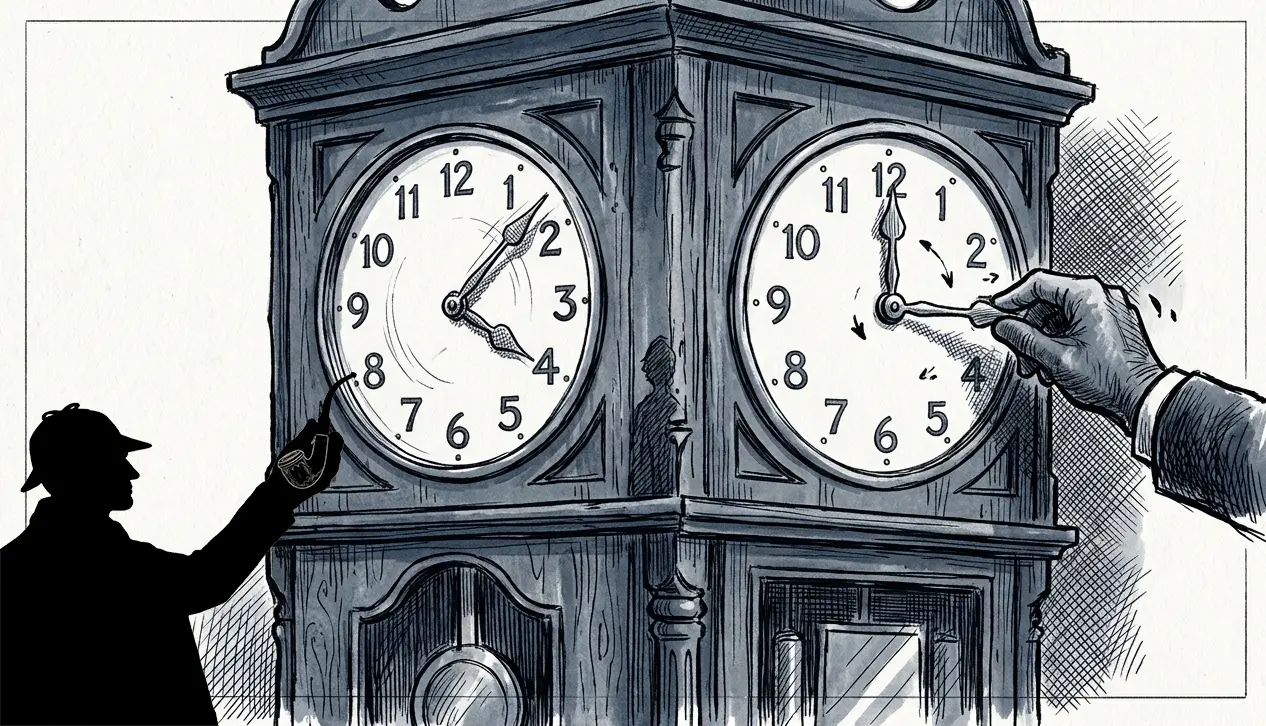
July 7 is not a random date. It’s the day the ceasefire with Iran collapsed and the fighting resumed. It’s also the date lawmakers say the administration is using to argue that the sixty-day clock reset — that the war which started in February is, for legal purposes, a different war now, one that just began.
Pentagon officials called the earlier numbers a “temporary data disruption.” A retired rear admiral called the relabeling what it looked like: a way to obscure accountability. Eighteen dead either way. The ledger just stopped agreeing with itself about when.
II. The clock was built for exactly this
Congress didn’t invent the sixty-day rule by accident. It wrote the War Powers Resolution in 1973, after learning that Richard Nixon had bombed Cambodia for over a year without telling anyone. Nixon vetoed it. Congress overrode him — one of the only successful veto overrides of his presidency. The idea was simple: a president can act fast in a crisis, but he can’t keep a war running indefinitely on his own signature. The clock exists so Congress has to look at the war and vote, not just watch it happen.
That was the theory. In practice, the History Channel’s own retrospective on the law puts it plainly: every president since has either sidestepped it or called it unconstitutional. Reagan sent troops into El Salvador without filing the required report. The pattern the Pentagon just repeated — reset the clock, redraw the category, change the name — is not new. It’s the same workaround, run again, with a spreadsheet instead of a press conference.
III. The vote that keeps failing
Four days after the relabeling made headlines, the Senate had its chance to use the other half of the mechanism: it can vote at any time to order troops home. On July 30, a resolution from Senator Kirsten Gillibrand to do exactly that failed, 49–50. It was the second such vote in two weeks and the thirteenth this year.
The margin is the story. Three Republicans — Susan Collins, Lisa Murkowski, Rand Paul — have voted with Democrats before. One Democrat, John Fetterman, voted against it. Senator Bill Cassidy, who’d broken ranks to demand a classified briefing on the war, flipped back after he got one, describing the situation as “a gradation, a murkiness.” Nobody in that room is hiding anything. They’re voting their own read of the politics, in public, on the record. That’s the part worth sitting with: no meeting produced this outcome. Thirteen individual decisions did.
IV. What the two failures have in common
A ledger that won’t hold still and a Senate that won’t act are not two separate stories about the Iran war. They’re the same story from two directions. The executive branch controls the only record of what the war costs. The legislative branch controls the only vote that could end it. Neither lever is broken. Both are simply not being pulled — not by force, not by conspiracy, just by enough people in each room deciding, individually, that it isn’t yet the moment.
The pattern is the same. The speed is not. In 1973, it took a year of secret bombing before anyone built a clock. In 2026, the clock already exists — it just quietly resets itself.
The dependency that protects this arrangement is simple: as long as recording the cost of a war and voting to end it are two separate acts, performed by two separate rooms that don’t have to answer to each other in real time, the war doesn’t need anyone’s permission to continue. It only needs everyone’s silence to stay routine.
Essay 11 — Out of Frame
(see also: Essay 3 — The People in the Room)
Copyright 2026 — Steve Sagnotti
Sources: CNN, “Iran war casualty count eclipses 600 as Pentagon quietly changes accounting,” July 26, 2026. ABC News, “Pentagon quietly updates how it categorizes Iran war casualties,” July 2026. The Hill, “Pentagon’s Iran war casualty count tops 600 amid transparency questions,” July 2026. History.com, “War Powers Act – 1973, Definition & Purpose.” Roll Call, “Iran war powers resolution blocked in Senate as conflict heats up,” July 30, 2026. CBS News, “Senate fails to advance latest attempt to limit Trump’s Iran war powers.”
Leave a Reply