Block 7, Article 4 — The Door That Doesn’t Require the Bench
Steve Sagnotti · thebrokenframes.substack.com
Citizens United v. FEC asked one question: can the government restrict how corporations spend money on elections?
The Court answered no.
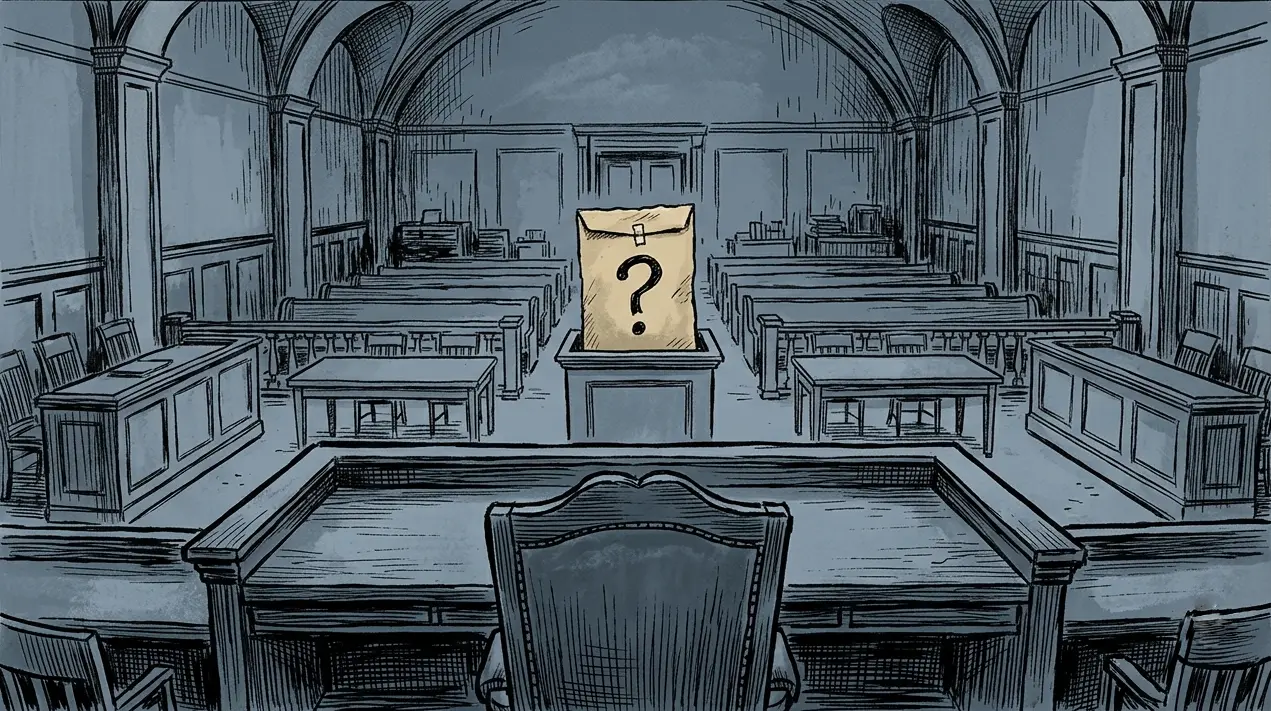
It never asked the prior question: where does a corporation get the authority to spend money on elections in the first place?
Those are not the same question. The first assumes the authority exists and asks whether government can limit it. The second asks where the authority came from. The Roberts Court answered the first question with a ruling that has reshaped American politics. It left the second question untouched.
A 200-year-old Supreme Court ruling has the answer. And several states have started using it.
What corporations actually are
In 1819 Chief Justice John Marshall wrote the opinion in Dartmouth College v. Woodward. The case was about a college charter, not corporate power. But Marshall’s reasoning established a principle that has sat largely dormant for two centuries: a corporation is an artificial being, invisible, intangible, existing only in contemplation of law. It possesses only those properties which the charter of its creation confers upon it.
That sentence means something specific. A corporation exists because a state created it. It has authority because a state granted it. The authority it has is exactly the authority the state chose to confer — no more. What the state grants, the state can decline to grant, or withdraw.
The antebellum corporation operated on exactly this logic. Block 1 documented it: before the Civil War, corporations were specific grants of public authority for specific public purposes. A bridge. A canal. A bank. The charter was limited in duration and scope. The legislature retained the power to amend or revoke it if the corporation acted against the public interest. The corporation derived its existence from the public. That grant carried conditions. The public retained sovereignty over what it had created.
Santa Clara’s headnote changed what corporations could claim under the 14th Amendment. Delaware’s general incorporation law — which let anyone form a corporation through a standard registration process, no legislature required, no individualized public-interest conditions attached — changed what conditions applied to them. Citizens United completed the transformation by giving the entity corporations had become — unlimited in duration, unconditioned by charter, constitutionally protected — unlimited political spending rights.
But none of those developments changed the foundational fact Marshall named in 1819: corporations are creatures of state law. They possess only the authority their charter confers.
Citizens United asked whether government can restrict authority it assumed corporations had. It never asked whether states — the governments that created corporations — had granted that authority in the first place.
Citizens United was framed as a ruling about campaign finance. The question of whether corporations have the authority to spend — prior to any First Amendment analysis — was not in the frame.
Hawaii’s answer
In May 2026 Hawaii Governor Josh Green signed SB 2471 into law. The bill is straightforward. Hawaii declines to grant corporations chartered or doing business in the state the authority to spend money on elections or ballot measures. Super PACs can still operate in Hawaii — but only on money raised from human beings whose names must be disclosed. The anonymous corporate fuel source is cut off at the point of origin.
The mechanism is not a restriction on existing corporate speech. It is a definition of what authority corporations operating in Hawaii possess. The state that created the corporation never granted it the authority to spend on elections. Therefore — under Marshall’s 1819 reasoning, which the Roberts Court never overturned — it doesn’t have that authority. Citizens United said government cannot restrict corporate election spending. It said nothing about whether states must grant that authority when they create corporations.
The drafters of Hawaii’s law understood a second implication. A challenge to SB 2471 will require the Court to explain exactly where corporate election spending authority comes from. The only available answer runs through the 14th Amendment personhood that subsequent courts built on Santa Clara’s headnote — a prefatory remark recorded by a former railroad executive before oral argument began, never voted on, never included in any majority opinion, never a holding of the Court. Defending Citizens United against the Corporate Power Reset requires defending that citation chain as legitimate. The headnote was never a decision. It was treated as one for 138 years. A court asked to protect corporate election spending from state chartering conditions will have to explain, in a written opinion, why a court reporter’s summary of a remark constitutes the legal foundation for one of the most consequential doctrines in American constitutional law. For the first time in 138 years, the foundation will have to be named in open court and held up to scrutiny.
Violations of Hawaii’s law carry consequences proportionate to the stakes: loss of tax privileges, suspension of the right to sell to state government, potential loss of the right to do business in Hawaii entirely. These are not fines. They are conditions on the charter.
The trap the doing-business provision sets
The Roberts Court’s most likely response is to route around the chartering question entirely. A Delaware-incorporated corporation doing business in Hawaii is not a creature of Hawaiian law, the argument goes — Hawaii didn’t grant its authority, Delaware did, therefore Hawaii cannot condition what it never conferred. Strike the “doing business” provision, limit the damage, and leave the chartering principle intact but toothless — since virtually every major corporation operating in America is chartered in Delaware, not Hawaii.
States routinely regulate foreign corporations as a condition of market access. That is settled law. But the Court could attempt to carve out an exception where the condition touches First Amendment speech rights — essentially asserting that Citizens United preempts state market-access authority when the condition involves political spending. That argument avoids the headnote question. It guts the practical effect of the law while leaving the theoretical chartering principle intact but empty.
The “doing business” provision is where the forcing function operates. If Hawaii alone enacts it, the Court can strike the provision and limit the damage. If a critical mass of states enact it — if California and New York are among them — the Court cannot strike it without issuing a nationwide ruling that explicitly preempts state market-access authority over corporate political spending. To do that on First Amendment grounds, the majority must explain in a published opinion where corporate First Amendment rights come from. The only available answer runs through 14th Amendment personhood. The only foundation for that personhood is a court reporter’s headnote from 1886, written before oral argument, never voted on, never a holding of the Court.
The Roberts Court has assumed that foundation since 2010, without ever having to defend it in writing. The Corporate Power Reset asks it to do exactly that. Either the headnote becomes a holding — exposed, examined, and challengeable on its own terms — or the Court finds a different foundation that doesn’t exist in 200 years of written opinions. The majority can also attempt to assert corporate speech rights without explaining their source — a ruling that protects the architecture without defending it, which is legally incoherent but has the practical effect of extending Citizens United indefinitely.
Stare decisis, we have established, is sturdier in some directions than others. The question is whether it can hold a headnote.
Fourteen states and a ballot
Hawaii is not alone. Fourteen other states have introduced legislation on the same framework. California, New York, Maryland, Vermont, Georgia, Minnesota among them. If California and New York adopt it, a substantial portion of the American corporate economy operates under charters that decline to confer election spending authority.
Montana has taken the mechanism directly to voters. Initiative 194 — a citizen-led ballot measure — cleared a unanimous Montana Supreme Court dismissal of a business coalition challenge in April 2026, then cleared the signature threshold in June with nearly 50,000 signatures submitted against the 30,121 required. Official certification is still pending, but the margin makes it a formality. Montana voters will decide in November whether corporations doing business in their state possess the authority to spend on their elections.
If it passes, the question the Court never asked will have been answered — not by the Court, but by voters acting directly, without waiting for a legislature that answers to the same donors the measure targets. Block 12’s repair argument depends on this thread being planted here: a bench that closes every remedy running through it still cannot reach a door that was never on its floor to begin with.
A Politico/Public First poll published in May 2026 found that 72 percent of Americans — not just voters, the general public, including people who don’t vote at all — believe there is too much money in politics. Only 5 percent disagreed. The agreement crossed party lines: 80 percent of 2024 Harris voters, 77 percent of 2024 Trump voters.
What that looks like in practice showed up two years earlier, in a different state’s ballot fight entirely. When Alaska voters considered repealing their ranked-choice voting system in 2024, the side defending the existing system outraised the repeal effort by nearly 100 to one — $14 million to $150,000 — and the large majority of that $14 million came from outside Alaska. The money wasn’t representing Alaskans’ preferences about their own election system. It was representing whoever could afford to have an opinion about Alaska’s elections from somewhere else. The imbalance the poll respondents were describing in the abstract is what it looks like once it’s actually spent. Citizens United is why there’s no limit on how much of it there can be.
The door that doesn’t require the bench
Three articles into Block 7 the reader has watched the bench close every remedy documented in the prior six blocks. Federal gerrymandering challenge — gone. Voting Rights Act preclearance — gutted. Agency deference — eliminated. The apparatus that built the bench funded it through the same corporate spending Citizens United protected.
The Corporate Power Reset doesn’t require the bench to act. It doesn’t require Congress to pass legislation. It doesn’t require a constitutional amendment. It operates where corporations are born — in state capitols, in the offices of secretaries of state, in the charter conditions that define what a corporation is permitted to do.
The bench may yet reach this mechanism. If it does, it will have to answer the question it avoided in 2010. And the answer will require defending, or demolishing, a headnote.
The bench closed the doors. The states created the corporations that paid to close them. The states can decide what they created.
Block 7 is the lock on every other lock. Block 8 shows who paid to install it — who funded the pipeline, what they built, and what fifty years of that investment purchased. The money that bought the bench is the same money the Corporate Power Reset cuts off at the source. It is also the same money financing the campaigns that keep royalty rates below market, spectrum allocations undervalued, and agency rules favorable to the industries paying for them — the specific commons arrangements this series has documented block by block. Cut off the spending at its source, and the rates, the leases, and the rules it currently protects lose the campaign that keeps them unchallenged.
Before you close this block
Four doors, verified separately across four articles: the Federalist Society’s donor disclosures, the corporate-personhood citation chain running back to a single headnote, the four Supreme Court rulings that closed federal remedy after federal remedy, and the state chartering statutes now moving through fourteen legislatures. Each was public record on its own. Together, they are the pipeline, named end to end.
Your senator took an oath to provide for the general welfare of the United States. Ask them to explain how a bench built by a single donor-funded pipeline — one that closed every federal remedy this block has documented — advances the general welfare of their constituents rather than the specific welfare of the industries that funded their confirmation votes. Then look up the Federalist Society’s donor disclosures for the judges your own state’s senators confirmed. Both answers are already public. They have just never been asked in the same sentence.
The legislation is public. Read it.
| Dartmouth College v. Woodward (1819) — Marshall on corporations as creatures of state law | supreme.justia.com/cases/federal/us/17/518 |
| Hawaii SB 2471 — Corporate Power Reset, signed May 14, 2026 | capitol.hawaii.gov/sessions/session2026/bills/SB2471_CD1_.HTM |
| Center for American Progress — Corporate Power Reset framework | americanprogress.org/article/corporate-power-reset |
| Montana I-194 status — November 2026 ballot | sosmt.gov/elections/ballot-issues |
— — —
Steve Sagnotti
is a serious amateur photographer, writer, and technologist based in Oregon. With his camera he tries to capture common images not often seen, leading to common questions not often asked.
© 2026 Steve Sagnotti
— — —
Sources
1. Dartmouth College v. Woodward, 17 U.S. 518 (1819). https://supreme.justia.com/cases/federal/us/17/518/
2. Citizens United v. FEC, 558 U.S. 310 (2010). https://supreme.justia.com/cases/federal/us/558/310/
3. Santa Clara County v. Southern Pacific Railroad, 118 U.S. 394 (1886) — headnote only; not a holding. https://supreme.justia.com/cases/federal/us/118/394/
4. Hawaii SB 2471, Act 011, signed May 14, 2026. Governor Josh Green. capitol.hawaii.gov/sessions/session2026/bills/SB2471_CD1_.HTM
5. Tom Moore, Center for American Progress — Corporate Power Reset framework. americanprogress.org/article/corporate-power-reset
6. Montana Initiative 194: Montana Supreme Court unanimous dismissal of business coalition challenge, April 2, 2026; signature threshold cleared June 19, 2026 — nearly 50,000 submitted against 30,121 required. sosmt.gov/elections/ballot-issues
7. Fourteen states with introduced legislation: Ballotpedia News, “Hawaii legislators advance bill to restrict corporate political activity,” May 13, 2026.
8. Politico/Public First poll — 72% of Americans (5% disagree) say there is too much money in politics; 80% of 2024 Harris voters, 77% of 2024 Trump voters agree. Published May 2026.
9. Alaska Ballot Measure 2 (2024) campaign finance: No on 2 (anti-repeal) raised ~$14 million against Yes on 2’s ~$150,000, roughly 100-to-1, majority of No on 2 funds from out-of-state donors including Article IV and Unite America PAC. Alaska Public Offices Commission disclosures; Alaska Beacon, October 2024. https://alaskabeacon.com/briefs/alaska-ranked-choice-voting-repeal-effort-outraised-a-hundredfold-campaign-finance-filings-show/
10. Dormant Commerce Clause / state market-access authority over foreign corporations: standard constitutional law doctrine.
Leave a Reply