Notes from the Field — Dispatch, June 30, 2026
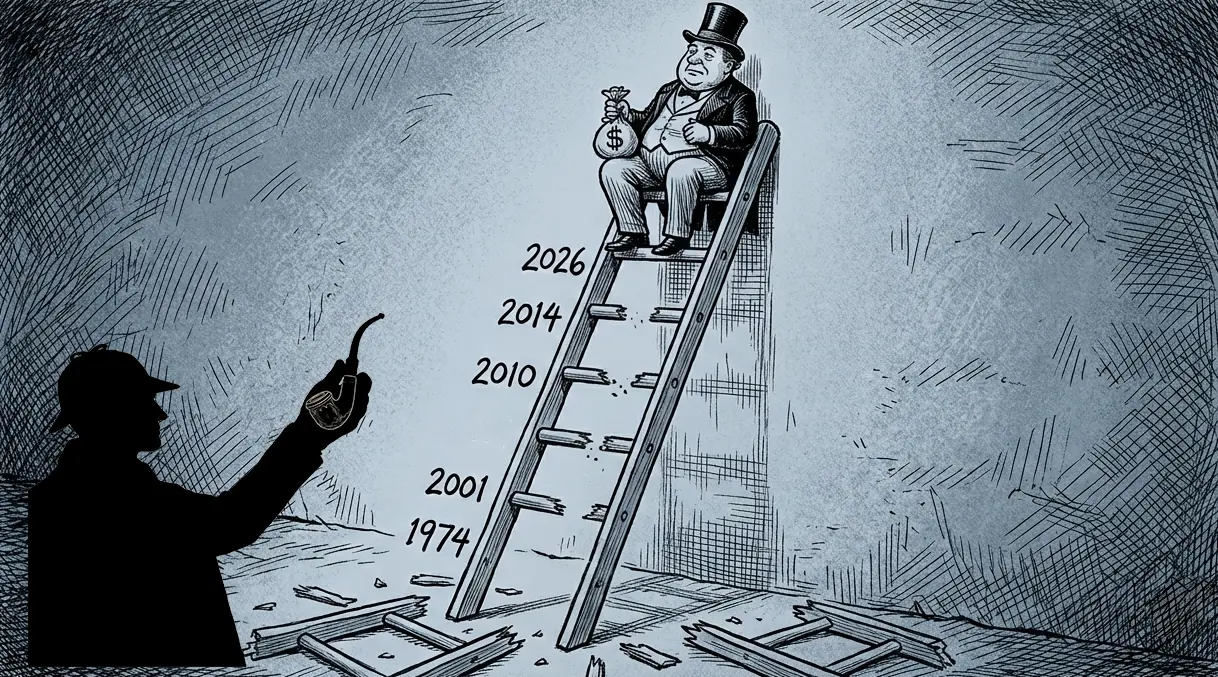
Congress built the ladder in 1974, in the wreckage of Watergate, to keep large money from walking straight into a candidate’s campaign account. On June 30, the Supreme Court removed the last rung.
The case was National Republican Senatorial Committee v. Federal Election Commission — brought by JD Vance while still a senator. At issue was a narrow-sounding provision: how much a political party can spend “in coordination” with its own candidate, meaning money spent working directly with the campaign rather than independently of it, as super PACs do. Since 1974, that number was capped — for 2026, between $65,300 and roughly $4 million depending on the race. In a 6-3 ruling written by Justice Brett Kavanaugh, the Court struck the cap down as a First Amendment violation, overruling its own 2001 precedent, FEC v. Colorado Republican Federal Campaign Committee, which had upheld the same limit by a vote of 5-4.
The Court had been sawing at this ladder for a while. In 2010, Citizens United removed limits on independent corporate spending. In 2014, McCutcheon removed the aggregate cap on what one donor could give across all federal candidates combined. In 2022, a case brought by Ted Cruz removed limits on using post-election donations to repay a candidate’s personal campaign loans. Kavanaugh’s opinion described the 2001 precedent as a “three-legged stool where all three legs have already been knocked out” — an admission, in the majority’s own words, that Tuesday’s ruling was less a new decision than a formality catching up to twenty-five years of prior ones.
What changes in practice: a donor who can give a candidate only $7,000 directly can now give a party committee half a million dollars, which the party can then spend in direct coordination with that same candidate — ads, mailers, staff, strategy. In dissent, Justice Elena Kagan named what that makes possible in ten words: “the party can serve as the candidate’s checking account.” She warned the ruling “ushers back in the same opportunities for quid pro quo corruption” the original limits were built to prevent.
The pattern here is not corruption in the sense of a bribe changing hands. It is a room built with more than one door, in which every door has now been opened by the same set of hands, over a quarter-century, one ruling at a time. Congress passed the law once. The Court has spent twenty-five years, and five separate rulings, taking it apart.
The next case is already being written. It always is.
Essay 11 — Out of Frame
(Broken Frames — Block 8: The Money Pipeline — not yet published)
Sources: SCOTUSblog, “Justices strike down campaign finance law,” June 30, 2026. NPR, “Supreme Court strikes down limits on political party spending,” June 30, 2026. The Washington Post, “Supreme Court sides with GOP, loosens campaign spending rules,” June 30, 2026. Axios, “Trump calls Supreme Court campaign finance ruling ‘win for Republicans,’” June 30, 2026. Newsweek, “Campaign Finance Ruling: Kagan Warns Supreme Court Unleashed ‘Untold Harm,’” June 30, 2026.
Leave a Reply