Notes from the Field — July 13, 2026
Since the 1940s, American science has run on one basic bargain: the government pays, and scientists — not politicians — decide what’s worth testing. Peer review is the whole mechanism. It’s not glamorous. It’s also why the system caught bad research and funded good research regardless of who was in the White House.
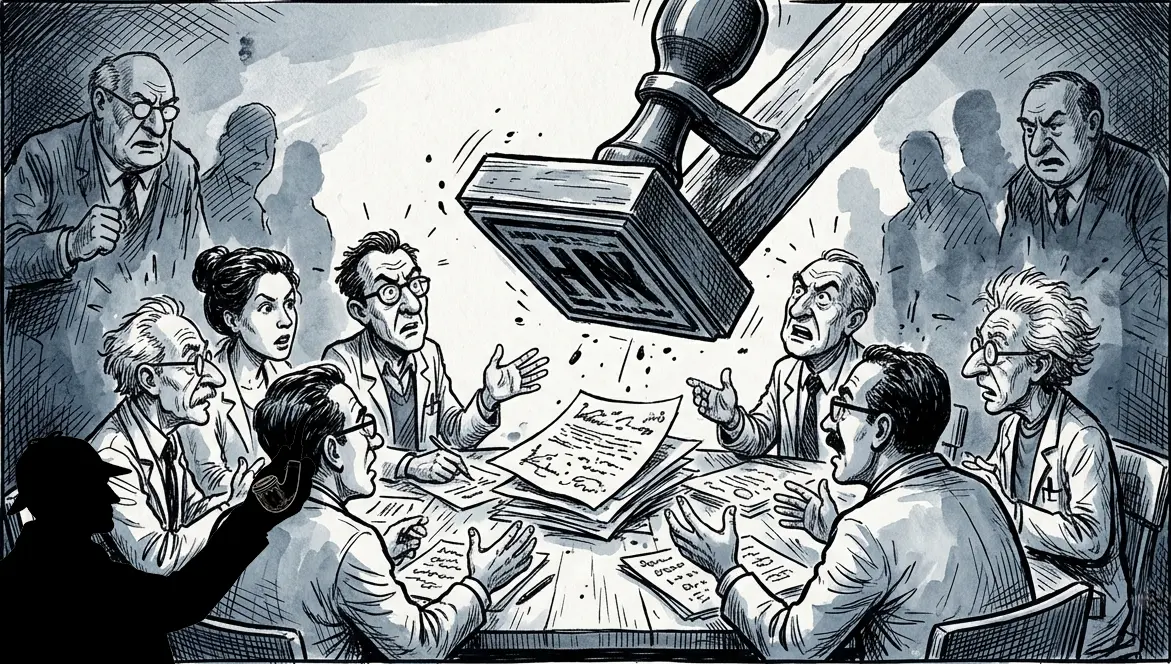
On May 29, 2026, the Office of Management and Budget proposed ending that bargain. The rule requires political appointees to conduct “pre-issuance review” of federal discretionary grants — over a trillion dollars a year — and states that awards must “demonstrably advance the President’s policy priorities.” Peer review, the proposal says explicitly, “remains advisory and does not replace agency discretion.” Not weakened. Made optional.
The administration’s own executive summary names what it’s screening for: grants that fund “non-replicable and highly misleading studies,” “anti-American ideologies,” research it calls insufficiently “Gold Standard.” Those are judgment calls, and under the new rule, political appointees — not scientists — get to make them, with courts asked to defer to that judgment rather than review it.
Ninety thousand public comments came in before the window closed July 13. A watchdog group called it “a recipe for corruption on a never-before-seen scale.” The professional read from inside the field: researchers will learn quickly to propose only work likely to survive ideological screening, and the program officers reviewing them, many now stripped of civil service protections, will face pressure to approve the safe answer rather than the true one.
This is the same mechanism The Narrow Gate has been tracking through AI training data — a curation decision dressed up as neutral process, deciding in advance which conclusions are allowed to exist. The room is the same room. The instrument changed from a training corpus to a grant approval form. The function didn’t change at all.
The gear stops turning only if a court is willing to treat “does not demonstrably advance the President’s policy priorities” as arbitrary and capricious — the same legal question now sitting under three separate fights this administration is having with its own agencies.
This is Essay 10’s argument, documented in real time.
Essay 10 — The Next Council of Constantinople
Copyright 2026 — Steve Sagnotti
Sources: Inside Higher Ed, “Comments Flood OMB Proposal on Political Control of Grants,” July 7, 2026. Common Dreams, “Watchdog Says Rule Change for Federal Grants a ‘Recipe for Corruption,’” July 2026. TIME, “How the Trump Administration Plans to Politicize Federal Grants,” June 3, 2026. American Physical Society, “OMB proposed rule for federal financial assistance,” 2026. Union of Concerned Scientists, “Science Is Under Attack. But Scientists Are Speaking Up,” 2026.
Leave a Reply