Notes from the Field — July 7, 2026
In 1934, Congress passed a law to stop ranchers from destroying the public range. Ninety-two years later, the agency that law created is rewriting its own rules — and the rewrite removes the public from the room.
This is Broken Frames Block 9’s argument, documented in real time.
I.
The Bureau of Land Management oversees livestock grazing on 155 million acres of public land in the American West — an area twice the size of New Mexico. It is undertaking its first overhaul of those rules since 1995. The proposal would expand how much grazing is allowed even as rangeland scientists say overgrazing has already degraded the land it governs. And it would strip out the mechanisms that let anyone but ranchers object.
The new rule eliminates the agency’s mandate to include the public in what it calls “consultation, cooperation and coordination” — the standard process for gathering feedback before authorizing grazing. It narrows who is permitted to weigh in on permit decisions, effectively limiting standing to those with a direct business interest in the outcome. It ends non-commercial grazing arrangements, including the ones some Tribes use to run bison herds for cultural reasons. And if a rancher appeals an unfavorable decision, the appeal automatically pauses enforcement — meaning the practice a regulator just found harmful continues by default while the paperwork proceeds. One law professor who studies natural resources called that provision an invitation for every rancher to appeal, whether or not the appeal has merit.
A BLM employee, granted anonymity because they still work at the agency, put it plainly: the changes are designed to reduce involvement from anyone other than ranchers.
II.
None of this is new. It’s the completion of something.
The Taylor Grazing Act of 1934 was written to end fifty years of unregulated destruction — overgrazing so severe it helped produce Dust Bowl-era erosion across the West. But the law didn’t hand oversight to a neutral referee. It created local grazing advisory boards, and those boards were staffed by the same ranchers whose herds the law was meant to restrain. Scholars studying the Act’s implementation found the boards were “often dominated by the same ranchers and cattlemen whose activities were supposed to be regulated” — a structure that raised, from the very beginning, the question of whether the regulation was regulating anyone at all.
That arrangement never fully went away. Last year, ProPublica and High Country News found the federal government charges ranchers $284 million a year below market rate for the use of that same land — a subsidy embedded in a system nearly a century old.
The 2026 rule doesn’t invent capture. It removes what little counterweight was left.
III.
The frame the coverage uses is regulatory burden: the agency says the rule “reflects the priority to reduce unnecessary regulatory burdens, promote productive working lands and strengthen local economies.” That frame answers one question — is this good for ranching operations — and by design excludes another: who loses standing to object when the land in question belongs to the public, not to the people grazing it.
That’s the excluded half of the story. Conservation groups, Tribal nations, hunters, hikers, and rangeland scientists aren’t stakeholders in this rule. Under the new definition, they’re not in the room to begin with.
IV.
First it was the public comment period that shrank. Then it was who counted as “the public.” Then it was the Tribes whose bison herds didn’t count as commercial enough to protect. Then it was the appeals process itself, rewritten so that losing an argument costs the winner nothing.
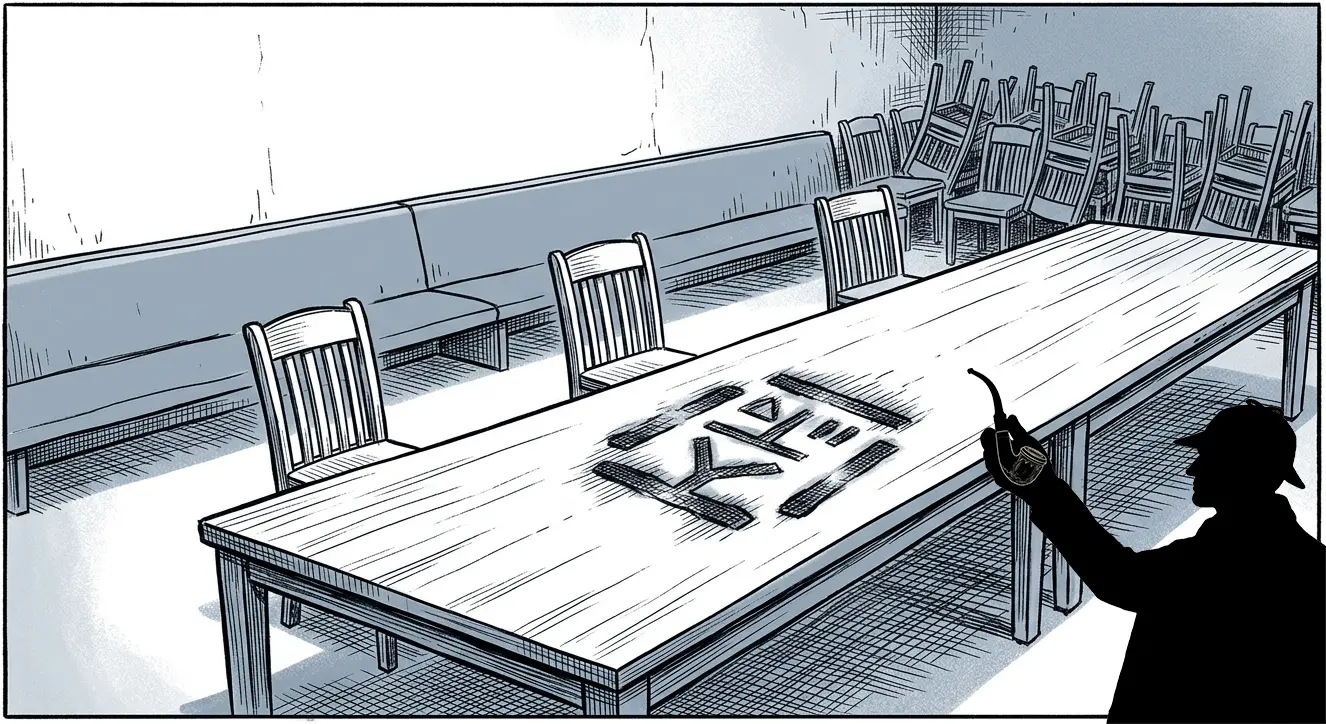
Power does not require conspiracy. It only requires that the people in the room share a common interest in the outcome. In 1934, the room was built with the regulated industry already inside it. In 2026, the room is being finished by removing everyone else.
The dependency this mechanism runs on: an agency whose own advisory structure was never separated from the industry it oversees, and ninety-two years in, still isn’t.
Essay 3 — The People in the Room
Broken Frames — Block 9: The Darkened Room (not yet published — thebrokenframes.substack.com/s/broken-frames)
Copyright 2026 — Steve Sagnotti
Sources:
ProPublica and High Country News (Jimmy Tobias and Mark Olalde), “The First Major Overhaul of Public Lands Grazing Regulations in a Generation Looks to Cut Out Public Involvement,” July 7, 2026.
Center for Western Priorities, “BLM’s Grazing Rule Overhaul Cuts the Public Out of Public Lands,” July 2026.
Western Watersheds Project, “The History of Public Lands Grazing.”
EBSCO Research Starters, “Taylor Grazing Act.”
ICT, “The First Major Overhaul of Public Lands Grazing Regulations in a Generation Looks to Cut Out Public Involvement,” July 2026.
Leave a Reply