Notes from the Field — August 21, 2026
Stars and Stripes has covered the American military since the Civil War. Federal law guarantees its editorial independence — half its funding comes from the Pentagon, and the statute exists specifically so that funding relationship never becomes an editorial one. On Friday, the Pentagon fired its publisher, its editor-in-chief, and one of its reporters. The stated reason was insubordination. The actual sequence started with a story.
Weeks earlier, Stars and Stripes reported on conditions aboard the USS Abraham Lincoln, an aircraft carrier that had been deployed for nine months — well past a normal rotation, spanning the outbreak of the war with Iran. The paper’s sourcing described sailors expressing suicidal ideation and, in some cases, attempting to jump overboard. The Pentagon called the coverage overblown. It did not call it inaccurate.
What followed was not a correction. Publisher Max Lederer, nineteen years in the job, announced his retirement — then wrote to staff that his “philosophy of leadership” no longer matched where the department’s leadership wanted the paper to go. Days later, both he and editor-in-chief Erik Slavin received termination notices instead of the transition Lederer had planned. Reporter Lara Korte, who covered the carrier story, was fired too — for telling a CBS reporter, on the record, that she works “for Stars and Stripes — not the Pentagon, not any administration, and not any policy maker.” That sentence was the insubordination.
This didn’t start with the firings. In April, the paper’s internal ombudsman was dismissed after criticizing Pentagon interference with coverage — a move that’s since become its own First Amendment lawsuit. Around the same time, an active-duty Navy captain was installed as the publisher’s military deputy, a position with no precedent in the paper’s structure, widely read at the time as a supervisory seat over editorial decisions rather than beside them. Secretary of Defense Pete Hegseth has been open about wanting the paper to return to what his office calls its “original mission” — reporting for the people who wear the uniform, not about the people who command them. Slavin said the plainest version of the line himself, months before he crossed it: a red line would be an order to run a Pentagon-written story instead of an accurate one.
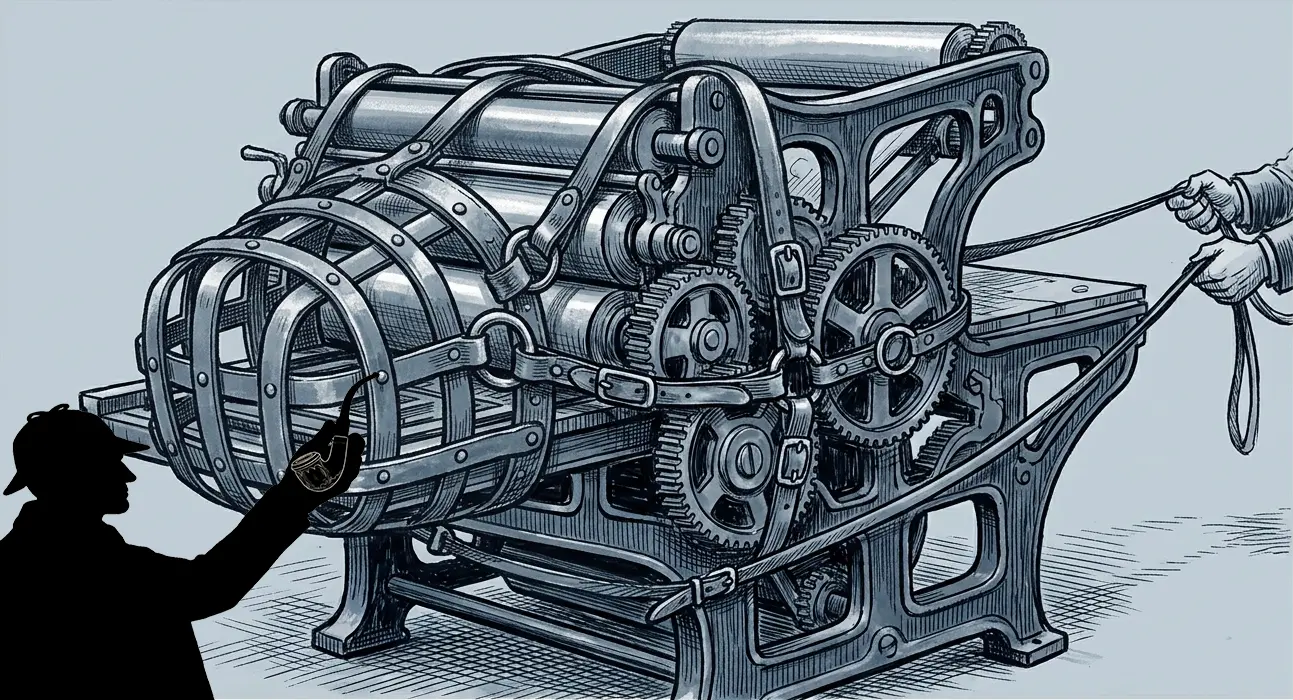
The pattern here isn’t subtle, and it isn’t new — the Pentagon tried to shut Stars and Stripes down outright in 2020, reversing course only after the story became public and the president intervened. What’s different now is the method. Nobody has to order a story spiked. You only have to make it professionally fatal to write the true one. A validating channel doesn’t need to be revoked by decree to stop working. It only needs the people who’d use it to understand what happens if they do.
What would have to change for that channel to reopen isn’t a new law — the statute protecting Stars and Stripes’ independence from the Pentagon that funds it is already on the books. What would have to change is an institution’s willingness to let that independence cost it something it doesn’t want to pay.
Two Warnings — Broken Frames (The Broken Gauge)
Origin case: TNG Essay 6 — The Evidence They Won’t Answer
Copyright 2026 — Steve Sagnotti
Sources: The Japan Times / Al Jazeera, “Pentagon fires Stars and Stripes leaders after they criticize interference,” Aug. 22, 2026 (wire-duplicated coverage of AP reporting). CBS News, “Pentagon moves to fire publisher and editor of Stars and Stripes.” The Manila Times, same AP thread. Reporting on the 2020 shutdown attempt and reversal, AP/Yahoo News archive.
Leave a Reply