Notes from the Field — October 4, 2026
An outlet whose job is checking claims has been charged with spreading false ones.
Matsadaash means, literally, “don’t believe.” It is the name of an independent Egyptian fact-checking and investigative outlet. In late September authorities arrested six of its journalists. Days later, one was charged with joining a terrorist group.
What the state says
According to the Guardian, the authorities said in a statement that the six were unlicensed and were publishing false news on behalf of the outlawed Muslim Brotherhood. Rights groups call the arrests a crackdown on press freedom and have asked for the six to be released.
What the lawyers say
The Egyptian Initiative for Personal Rights, which represents the journalists, gives more detail. It says Mohamed Ashraf Abu Emeira was questioned for ten hours by the Supreme State Security Prosecution, from 10 p.m. Saturday to 8 a.m. Sunday, Oct. 4. He was ordered held for 15 days. He faces charges of joining a terrorist group, spreading false news, and using a social media site for that purpose, under Supreme State Security Case No. 8083 of 2026.
EIPR also says the journalists were held for five days with no word of where they were, that security forces refused to show their families the arrest warrants, and that Abu Emeira was held at a National Security Agency facility under a counterterrorism law that bars the Interior Ministry from keeping a detainee from telling family and lawyers where he is. These are EIPR’s claims. No government response to them appears in the coverage reviewed here.
What the questions were about
EIPR says the prosecutors’ questions focused only on Matsadaash’s published material, how it chose its topics and sources, and why it published. The EIPR statement reviewed here does not name any specific item the prosecutors say is false.
The measuring problem
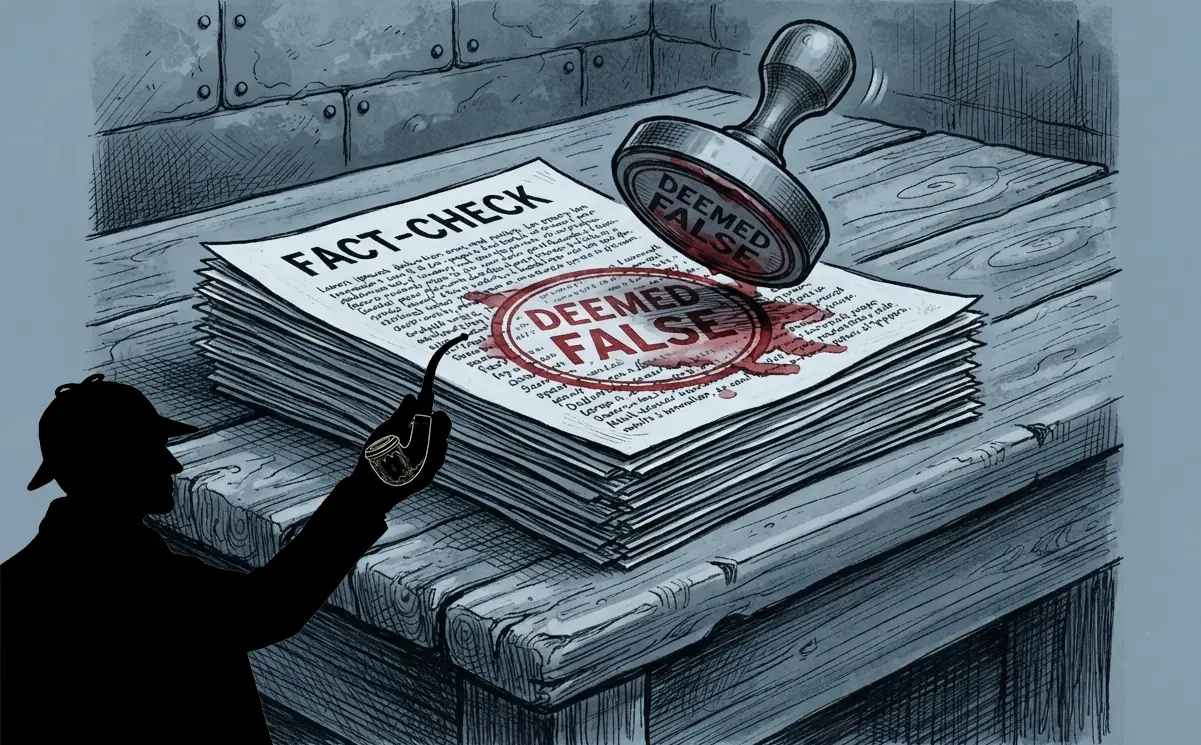
A fact-checker is a kind of gauge. It tells readers whether a claim holds up. The charge here is that this gauge reads wrong, and the party deciding that is the state whose claims such outlets are in a position to check.
That is this dispatch’s reading, and it is an inference. The facts are narrower. An outlet that checks claims has been accused of publishing false ones, and the accuser is the state that arrested the journalists and is prosecuting them.
What the court will be asked is not only whether any one article was wrong. It is who holds the authority to say so.
Six people are in custody. The whereabouts of five were unknown as of the Guardian’s report, and EIPR says prosecutors told its lawyer those five would be questioned later the same day. The outlet’s name means “don’t believe.” The case will turn on who gets to say what is false.
Origin case: TNG Essay 6 — The Evidence They Won’t Answer
Copyright 2026 — Steve Sagnotti
Sources: Guardian (Oct. 4) on the arrests, the authorities’ statement and the terrorism charge; Egyptian Initiative for Personal Rights (Oct. 2026) on Abu Emeira’s interrogation, detention order, charges, case number and the prosecutors’ questions.
Leave a Reply