Notes from the Field — July 15, 2026
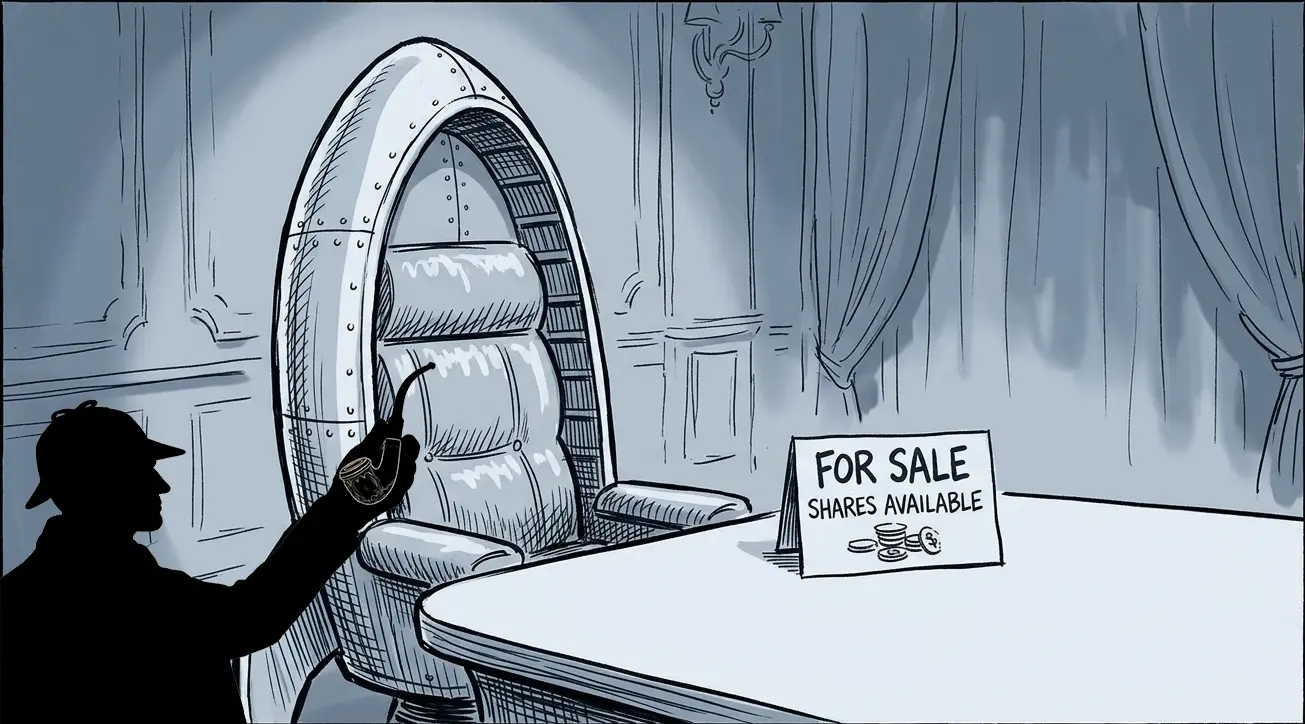
SpaceX went public this year at a valuation north of a trillion dollars. Elon Musk owns 42 percent of the company. He controls 79 percent of the vote. The bylaws are written so that removing him as CEO requires his own consent — meaning, functionally, the only person who can fire Elon Musk is Elon Musk.
That structure isn’t hidden in fine print. It’s the headline feature. Public shareholders get economic exposure to one of the most valuable companies on earth and almost no power over how it’s run: mandatory arbitration blocks class-action securities claims, a friendly board hasn’t run an independent compensation review, and a pattern of related-party transactions — SpaceX buying $131 million of Tesla Cybertrucks, accounting for 6 percent of that vehicle’s annual sales — moves money between Musk’s companies without the scrutiny an outside board would normally apply.
None of this happened by accident of timing. In 2024, a Delaware court voided Musk’s Tesla pay package on fiduciary grounds. Musk’s response was to move Tesla’s incorporation to Texas, where shareholder challenges are harder to bring. SpaceX’s board followed the same design from the start. And in September 2025, the SEC issued new guidance concluding that mandatory arbitration clauses don’t conflict with federal securities law — guidance its chairman described as making “IPOs great again.” SpaceX became the first major offering to actually use it.
MSCI gave SpaceX a governance score of 3.2 out of 10, the lowest rating on its scale. A Danish pension fund blacklisted the stock outright, calling the governance “catastrophic.” The IPO sold out anyway, and the stock jumped 67 percent in three days.
The company Musk just took public isn’t only a rocket company anymore. In February, SpaceX absorbed xAI in an all-stock deal valuing the combined entity at $1.25 trillion — folding a frontier AI company into the same ownership structure that answers to no independent board. The infrastructure that trains the models and the infrastructure that launches the satellites now sit inside one balance sheet, controlled by one vote.
The gear keeps turning as long as capital keeps showing up for a deal that every independent rating agency has already flagged as unaccountable by design.
This is the Converging Frames’ argument, documented in real time.
Essay 12 — The Converging Frames
Copyright 2026 — Steve Sagnotti
Sources: Governance Intelligence, “Shareholder advocacy group challenges SpaceX governance ahead of blockbuster $1.75trn IPO,” May 2026. Forbes, “SpaceX: Can A Trillionaire Own A Public Company?,” June 20, 2026. National Law Review, “SpaceX IPO Raises Major Governance and Investor-Protection Risks,” June 24, 2026. New York City Comptroller, letter to SpaceX re: IPO, May 2026. MarketWise, “SpaceX’s ‘Catastrophic’ Governance,” June 3, 2026. Project Syndicate, “How the Tech Lords Hacked the Firm,” July 15, 2026.
Leave a Reply