Notes from the Field — Dispatch, July 8, 2026
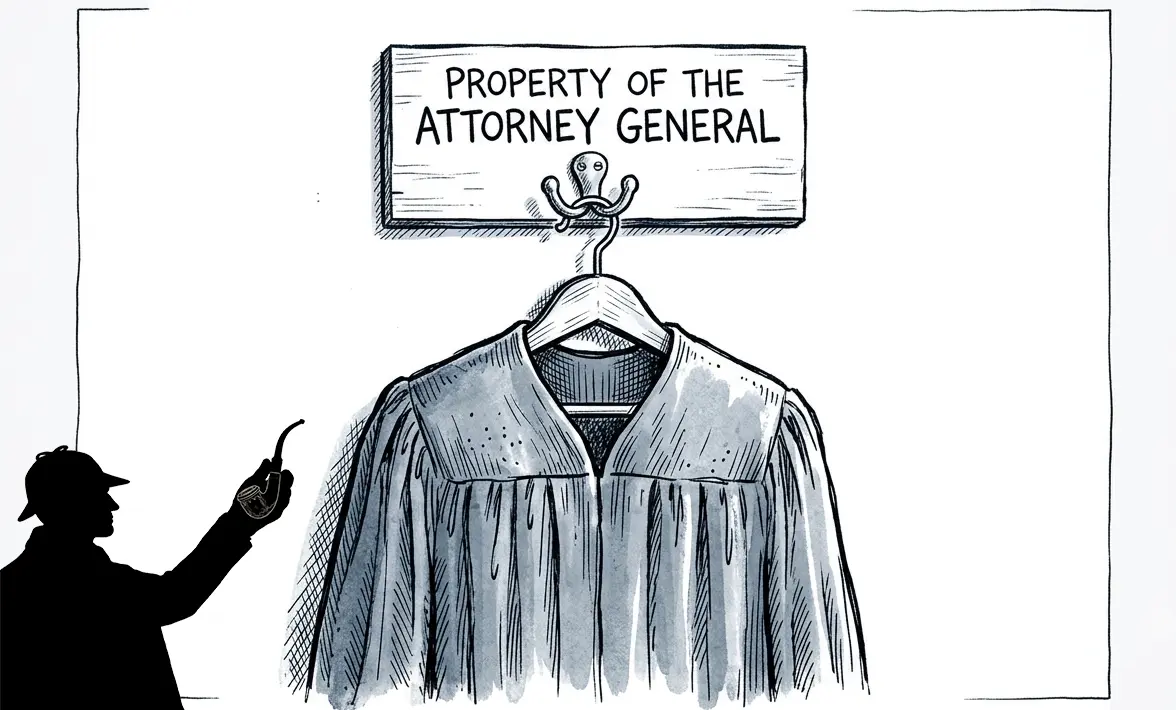
The story arrived as a backlog problem. The Department of Justice needed cases moving faster, so it added judges, tightened timelines, and told the ones already on the bench to stop giving children the extra months their cases used to take. What the coverage did not spend much time on is the more basic fact underneath the backlog: the people making these rulings are not judges in any sense the word usually carries. They are Department of Justice employees, hired by the Attorney General, supervised by the Attorney General, and — as this spring has made unmistakable — removable by the Attorney General whenever their rulings stop matching what the Attorney General wants.
More than 100 immigration judges have been fired or pushed out since January 2025, dropping the bench from roughly 700 to around 600. Several of them say they were never told why. One, a judge named Sponzo who had been instructing courtrooms not to rush minors’ cases along, was let go without explanation not long after. The pattern reported by former judges is not subtle: the firings run in both directions, removing judges seen as insufficiently tough and judges seen as insufficiently fast, until what is left is a bench that reliably produces the volume the administration wants. A ProPublica analysis of Executive Office for Immigration Review data found immigration judges issuing more than 10,000 removal or voluntary-departure orders a month for minors — a rate nearly four times what it was during the first Trump term. Deportations of unaccompanied minors have roughly tripled. The majority of the children removed have no criminal history.
This is not a court being corrupted. It is a court operating exactly as it was built. The Executive Office for Immigration Review was created inside the Department of Justice in 1983, not under Article I or Article III, but as a component of the executive branch’s own law-enforcement apparatus. Legal scholarship on the system has been blunt about what that means in practice: immigration judges are, functionally, “the attorney general’s attorneys” who decide the government’s own cases. The Department of Homeland Security prosecutes. The Department of Justice adjudicates. The same executive branch employs both sides of the courtroom and can remove the referee at will. In 2003, Attorney General John Ashcroft’s move to slash the Board of Immigration Appeals and reassign judges triggered a genuine scandal — congressional letters, an inspector general investigation into politicized hiring, sustained press coverage. That was the version of this mechanism operating at a fraction of today’s scale, and it was treated as a crisis. Advocates now describe the same maneuver, run harder and faster, as “commonplace.”
The frame the coverage used was efficiency: a backlog, a solution, a faster docket. What that frame excludes is the question of what “faster” costs when the people being processed are children without lawyers, and the people accelerating their cases can be removed for slowing down. More than 425,000 children are currently navigating immigration court, many without representation, some too young to understand the questions being asked of them. Advocates describe hearings where a two- or three-year-old is nominally a party to the proceeding. The continuances that used to give minors two or three months to find a lawyer or complete a special-visa application now run two or three weeks. None of this required new legislation. It required only that the people running the agency understand, correctly, that nothing stops them.
First it was efficiency. Then it was the judges who slowed efficiency down. Then it was the children who had nothing to do with either. The pattern is the same. The speed is not.
Congress has had the authority to move immigration adjudication into an independent Article I court — the way it did for tax disputes — since at least the 1980s, when the current structure was built. It has never done so. That is the dependency the mechanism runs on: not a secret, not a conspiracy, just a design decision from four decades ago that nobody with the power to change it has been willing to touch.
—
Essay 3 — The People in the Room
Copyright 2026 — Steve Sagnotti
Sources:
The New Yorker, “How the Trump Administration Pushed Judges to Deport Children,” June 20, 2026.
ProPublica, “Deportations of Unaccompanied Minors Have Tripled Under Trump,” July 7, 2026.
Minnesota Reformer, “Under Trump, Deportations of Once-Protected Immigrant Kids Have Tripled,” July 8, 2026.
El Paso Matters, “Inside El Paso’s Fast-Tracked Immigration Court for Unaccompanied Children,” July 6, 2026.
Drop Site News, “Over 425,000 Kids in U.S. Face Deportation Hearings Without Lawyers,” June 25, 2026.
Mitchell Hamline Law Review, “The Immigration Judiciary’s Need for Independence: Breaking Free from the Shackles of the Attorney General,” Daniel R. Buteyn, 2020.
American Immigration Lawyers Association, “Think Immigration: Our Immigration ‘Courts’ Need a New Boss,” October 16, 2025.
Leave a Reply