Notes from the Field — September 28, 2026
The weekly report is still published. The check on it is not.
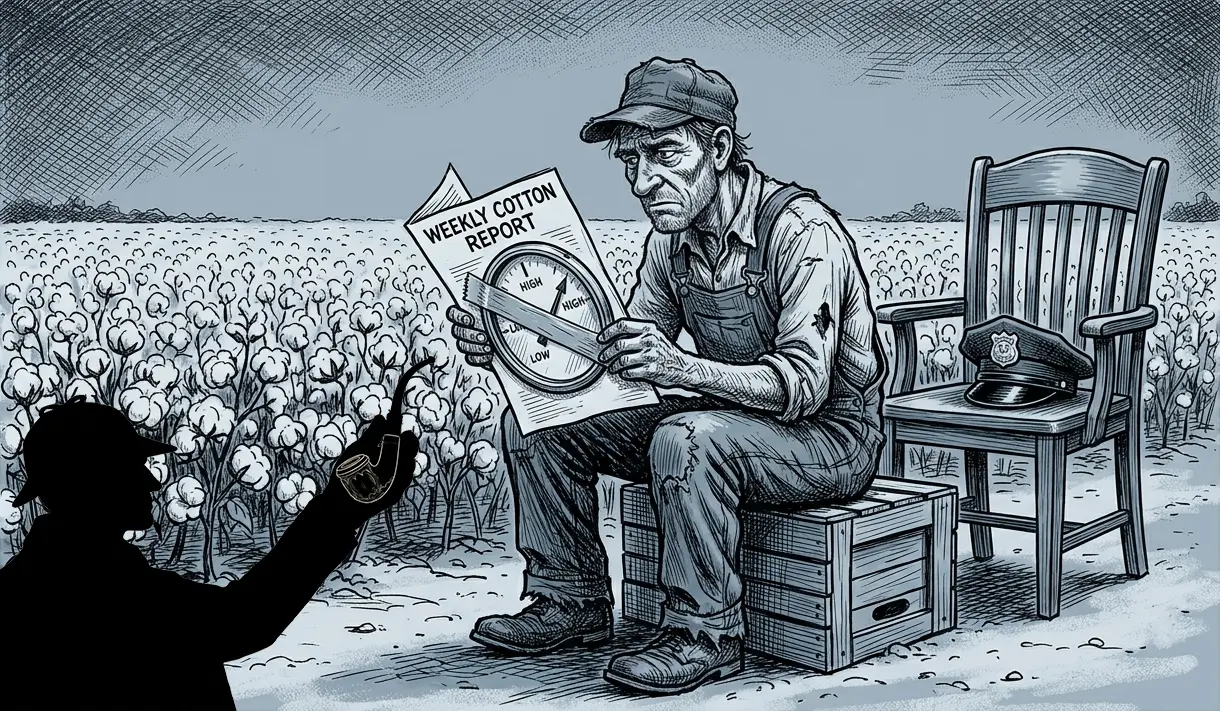
Cotton farmers price their crop off a report. Every week the Agriculture Department publishes how much American cotton has been sold overseas, and a farmer deciding what to ask for a bale reads it the way a driver reads a fuel gauge. A gauge only works if the people feeding it report honestly. Honest reporting has always depended on someone being able to catch the ones who don’t.
The law requires the big trading companies to report their export contracts to the department. A company that delays the report makes demand look weaker than it is, and farmers set their prices lower. On a major deal, the New York Times notes, a few pennies a pound can mean millions of dollars.
In 2021, a whistleblower told the Commodity Futures Trading Commission, the federal agency that has policed commodity markets since 1974, that two of the biggest cotton traders were doing exactly that. Investigators opened a case. In September 2024 the agency fined one of them, Olam Group, $3.25 million for deliberately delaying reports on about 375,000 bales worth more than $190 million. Olam did not admit guilt.
The other company, Louis Dreyfus, was next. According to the Times, which cites more than half a dozen people familiar with the inquiry, agency lawyers and an investigator had matched months of the company’s exports against its government reports and found sales in internal records that never reached the government. Staff were on the verge of recommending civil charges. Then, in April 2025, the agency’s new acting chairwoman, Caroline Pham, shut the investigation down, before the company had been told charges were possible. A person familiar with her view told the Times she doubted the agency could meet its burden of proof. Career staff wrote a detailed case for continuing. It failed. An effort inside the enforcement division to revive the case late last year failed too. Louis Dreyfus and Pham did not respond to the Times.
That one file is the smallest part of the change. Under the current administration, the Times reports, the agency has filed an average of one new complaint a month, one-fifth the Biden-era pace. Penalties from newly settled cases total $11 million this year, against more than $380 million at the same point in 2024. Sen. Jack Reed’s office says the enforcement division’s headcount fell 25 percent since 2024, from 140 to 105, and its budget 27 percent. Chairman Michael Selig, sworn in in December, promised vigorous oversight. He then hired an enforcement chief partly, he said, for a record of protecting companies from “overzealous regulators.”
The agency’s answer: spokeswoman Brooke Nethercott says the Biden administration fined industries billions of dollars for minor, administrative offenses, and that Selig’s agency is focused on insider trading, fraud, and manipulation. Its biggest case so far, announced Friday, accuses fraudsters posing as currency traders of stealing more than $400 million from customers. The Times also notes that the swing runs both ways: one chair settled with Olam, and the next closed the matching case against Louis Dreyfus.
Look at what didn’t change. The reporting law is still on the books. The Agriculture Department still publishes its weekly numbers. What changed is the odds that anyone checks them. A rule nobody checks works like a speed limit on a road where the police have stopped coming: it is still posted, and everyone can read it.
A whistleblower came forward in 2021. Investigators built a case and fined one company in 2024. They were on the verge of charging a second when the file closed in 2025. The staff who would have worked the next one shrank by a quarter. New cases slowed to one a month. The report farmers price their crops by still arrives every week.
The reporting rule is still the law. Whether anyone enforces it now depends on who is running the agency.
The Ground We Are Spending — Broken Frames (The Broken Gauge)
Origin case: TNG Essay 6 — The Evidence They Won’t Answer
Copyright 2026 — Steve Sagnotti
Sources: The New York Times, “Watchdog Agency Pulls Back on Markets Enforcement Under Trump,” Sept. 28, 2026. Sen. Jack Reed, “Reed Presses CFTC Chair on Lack of Enforcement Action,” 2026. Banking Dive, report on Sen. Elizabeth Warren’s request for a GAO review of CFTC staffing, 2026.
Leave a Reply