Notes from the Field — September 18, 2026
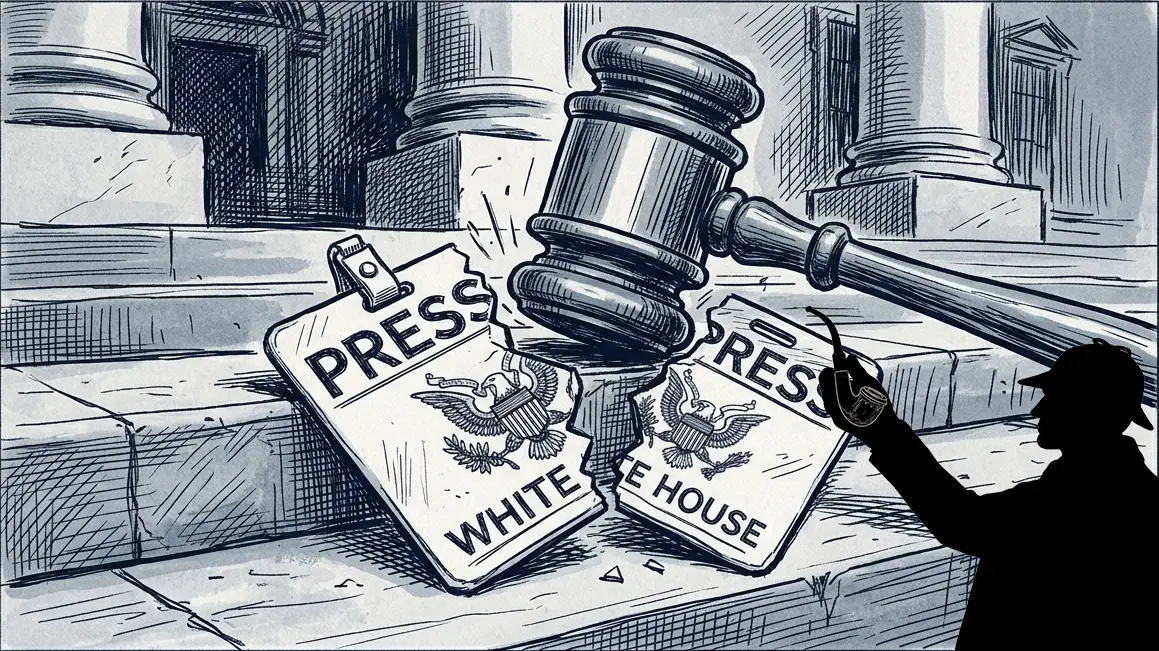
Eight years before he revoked three newsrooms’ access to the White House grounds, Donald Trump revoked one man’s. A federal judge — one of his own appointees — ordered the credential returned within a week. The mechanism this month is not new. Only the number of names on it is.
In November 2018, the White House pulled CNN correspondent Jim Acosta’s hard pass after a testy press-conference exchange. CNN sued. Judge Timothy J. Kelly, appointed to the D.C. federal bench by Trump himself, ruled that once the White House opens its grounds to reporters, the Constitution follows them in — and that yanking a pass with no notice and no chance to contest it violates due process regardless. He ordered Acosta’s access restored. The White House complied.
On September 18, 2026, Trump announced he was banning CNN, MS NOW, and Politico from the White House outright, calling their coverage “FICTION and LIES” and citing “cumulative stories over the last two years.” The next day, Secret Service officers turned away reporters from all three outlets and confiscated their credentials. The restrictions reached further than 2018’s — not one journalist’s badge, but three newsrooms’ standing access to briefings, workspaces, and the shared television pool that carries White House coverage to every other outlet in the country.
What happened next is the part worth sitting with. The other networks in that pool — ABC, CBS, Fox News, NBC — didn’t fill the gap CNN’s absence created. They refused to. When CNN’s turn came to run pool coverage on September 22, the whole consortium declined to record or transmit White House video, leaving the president’s own remarks at the UN General Assembly effectively unbroadcast on television. Reporters not directly targeted by the ban chose to go dark rather than normalize the exclusion of colleagues who were.
CNN, MS NOW, and Politico filed suit September 21, alleging First Amendment retaliation and viewpoint discrimination, plus a Fifth Amendment due-process claim nearly identical to Acosta’s. The Justice Department’s defense, laid out in court filings September 23, leaned on national security — arguing that the outlets’ reporting on the White House ballroom project and Iran war casualties posed a threat serious enough to justify the exclusion. That is the government’s own characterization of ordinary accountability journalism, not a finding any court has made; what the ban actually followed, on the administration’s own account, was coverage it disliked.
On September 24, Judge Kelly — the same judge, the same courtroom, the same underlying claim — ordered the administration to temporarily restore access, finding the ban likely unconstitutional. The pool resumed filming the following day.
Trace the arrow underneath both rulings and the shape is identical: a channel that would report on the president’s conduct is disabled, in retaliation, only after it produces coverage he objects to. Nothing here is subtle enough to need a discriminator built for a different era — it is the same instrument, tested on a wider target, in front of the same kind of judge who struck it down the first time.
First a hard pass was pulled from one reporter, and he went to court, and the pass came back within a week. Eight years later, three newsrooms’ badges were pulled at once, and they went to the same building, in front of the same kind of judge, and the badges came back too — this time within six days. The tool worked exactly as long as it ever does when it’s tried: about as long as a lawsuit takes to file.
What neither ruling supplied was a rule the next attempt can’t simply route around by trying it on a wider target, or in front of a different judge.
The Evidence They Won’t Answer — TNG Essay 6 (The Broken Gauge)
Copyright 2026 — Steve Sagnotti
Sources: NBC News, The New York Times, BBC, and The Guardian (Sept. 18–19) on the ban’s announcement and credential confiscations; Axios, NPR, and Roll Call (Sept. 21) on the lawsuit and the TV pool’s suspension of coverage; The New York Times and CNN (Sept. 23) on the administration’s court defense; The Guardian, NPR, HuffPost, and PBS NewsHour (Sept. 24–25) on Judge Kelly’s ruling and the pool’s resumption; contemporaneous 2018 coverage (Ballard Spahr, Above the Law, Cheddar) on Judge Kelly’s ruling in Acosta v. Trump.
Leave a Reply