Notes from the Field — September 22, 2026
The FBI does not usually publish who it was about to charge. It publishes who it did. The file on Susan Collins never got that far — not because agents ran out of evidence, but because the people building the case were reassigned before they could finish it.
In late 2019, according to a ProPublica investigation published September 22, the head of a pro-Collins super PAC met three executives from the Hawaii defense contractor Navatek at a Washington bakery and asked for a $500,000 donation. Navatek’s CEO, Martin Kao, countered: his company would give generously if Collins would guarantee it tens of millions more in federal contracts. Weeks later, Navatek routed $150,000 to the super PAC through a shell company set up for that purpose. That same year, Collins’s office had already helped steer an $8 million Navy research contract to Navatek — a fact she publicly credited to her seat on the Defense Appropriations Subcommittee.
Kao pleaded guilty to campaign-finance and loan fraud in 2022. Cooperating with prosecutors, he handed FBI agents a fifty-page document naming lobbyists, staffers, and members of Congress he said had traded cash for contracts — and, per ProPublica, described Collins as Navatek’s “most important patron.” The bureau’s public-corruption squad at its Washington field office spent the Biden years building on that cooperation.
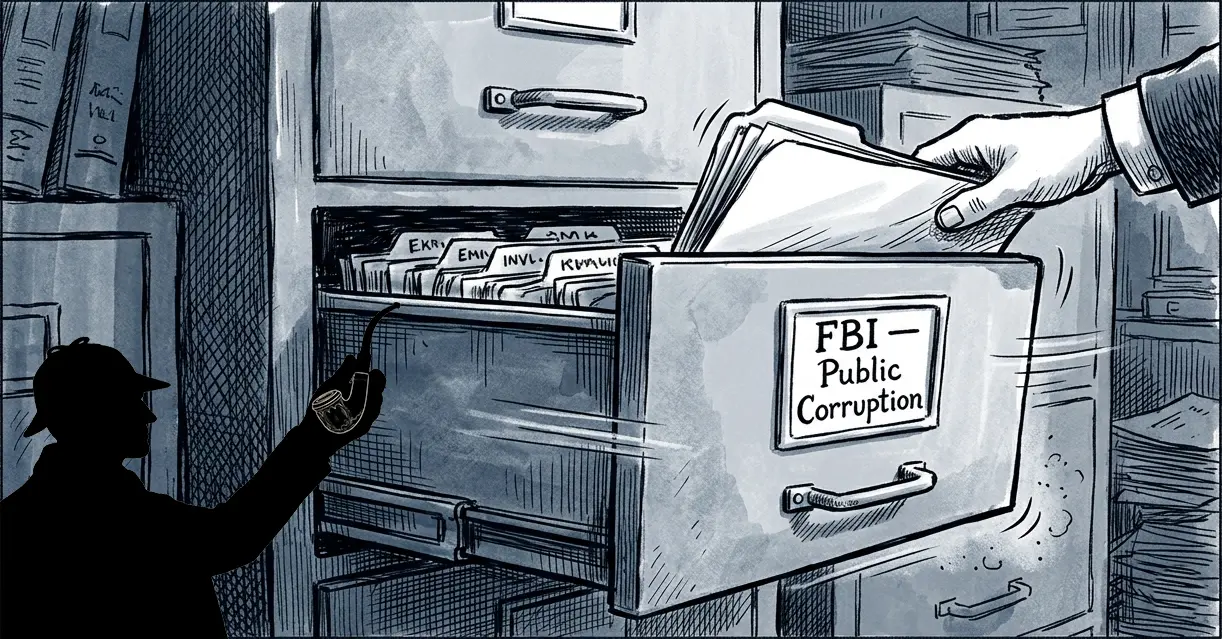
Then, per New York Times reporting, FBI Director Kash Patel fired a wave of agents in that same public-corruption unit — investigators who had also gone on to assist special counsel Jack Smith’s probes of Trump. The Collins inquiry, still in its early stages, ended with them. No charges were filed. No public accounting was made. The case simply stopped having anyone assigned to it.
Collins is seeking a sixth term this November in a race Democrats consider their best pickup opportunity for control of the Senate. Her campaign has called Kao’s allegations “outlandish” and told ProPublica the matter was “resolved in 2021” when her campaign returned the disputed funds. ProPublica’s own follow-up reporting, published two days later, found several of those specific claims did not hold up against the bureau’s own account of what its investigation had and hadn’t concluded — an attribution worth keeping distinct from ProPublica’s underlying documentary findings, which rest on internal emails, court records, and Kao’s sworn cooperation rather than on anyone’s characterization of them.
This is not an isolated firing. It sits alongside a now-familiar list from this same administration: a Pentagon whistleblower’s newspaper losing its editors after unfavorable reporting, a measles death quietly pulled from a federal tally after a public dispute over the number, a prosecutor fired days after objecting in writing to a downgraded charge. Each time, the channel built to validate a finding — a newsroom, a case file, a count — went quiet only after it was on the verge of producing an answer someone in power needed it not to produce.
First there was a squad, working a file for three years, closing in on a sitting senator whose vote her party cannot spare. Then there was an administration, and the agents who’d built the file were gone, and so was the file’s momentum. Nobody dropped the charges. There were never any charges to drop — only a case that stopped, at the exact moment the president whose Senate majority depends on that senator’s seat gained the authority to stop it.
The Evidence They Won’t Answer — TNG Essay 6 (The Broken Gauge)
Copyright 2026 — Steve Sagnotti
Sources: ProPublica (Sept. 22) on the Navatek investigation and its collapse; The New York Times (Sept. 22) on the FBI’s public-corruption-unit firings; The Guardian, the New Republic, and the Daily Beast (Sept. 22–23) on the political fallout; ProPublica (Sept. 24) debunking specific claims in Collins’s public defense; contemporaneous 2021 AP and Defense News reporting on the original FBI warrant application against Martin Kao.
Leave a Reply