Notes from the Field — September 3, 2026
A federal agent shot a man through a closed door in Minneapolis in January. By September, the government had built two different cases about what happened that night — one against the man who got shot, and one against the agent who shot him. Only one of those cases survived.
The agent, Christian Castro, was working Operation Metro Surge, the immigration sweep that sent thousands of federal officers into the Twin Cities this year. He and another officer chased a man named Alfredo Aljorna to a duplex where Aljorna lived with his cousin, Julio Cesar Sosa-Celis. Castro fired through the closed door and hit Sosa-Celis in the leg. The government’s first account said Castro fired in self-defense, after the two men attacked him with a broom handle and a snow shovel.
That account did not survive contact with the evidence. Photographs entered at a hearing showed bullet holes through the front door and an interior wall — not the pattern of a man defending himself from an attacker standing over him. The state’s own prosecutor moved to drop the assault charges against Aljorna and Sosa-Celis outright, writing that newly discovered evidence was flatly inconsistent with what the government had alleged. The case was dismissed with prejudice — it cannot be brought again.
That left the question of what happened to Castro. Federal prosecutors in Minnesota had been building a civil-rights case against him — deprivation of rights under color of law, the same statute used against the Minneapolis police officers convicted in George Floyd’s killing. It is not a symbolic charge. It carries real prison time, and it exists specifically for the moment when a government agent’s own account of a use of force turns out not to be true.
That case did not survive either. This week, the assistant U.S. attorney handling it, Matthew Evans, told lawyers for Sosa-Celis to expect Castro to face only a false-statements charge instead — a far lighter count. Evans said the decision came from Main Justice in Washington, not from his office. He put his own position in writing, telling the victims’ lawyers he had objected in the strongest possible terms and fought the downgrade as hard as he could. It wasn’t enough.
Three days later, Evans was fired. He is now under investigation himself, for alleged obstruction of a grand jury proceeding — the same week his objection to the charging decision became public. A person familiar with the matter told the Associated Press that the civil-rights investigation into Castro is technically still open and that no final charging decision has been made; that is worth holding alongside everything above, since it is the government’s own account and Phase 0 could not independently confirm which read — Evans’s or the anonymous pushback — will turn out to be the operative one. What is documented, not inferred, is this: the prosecutor who put his objection on paper is gone, and the paper trail he built is what triggered the investigation now aimed at him.
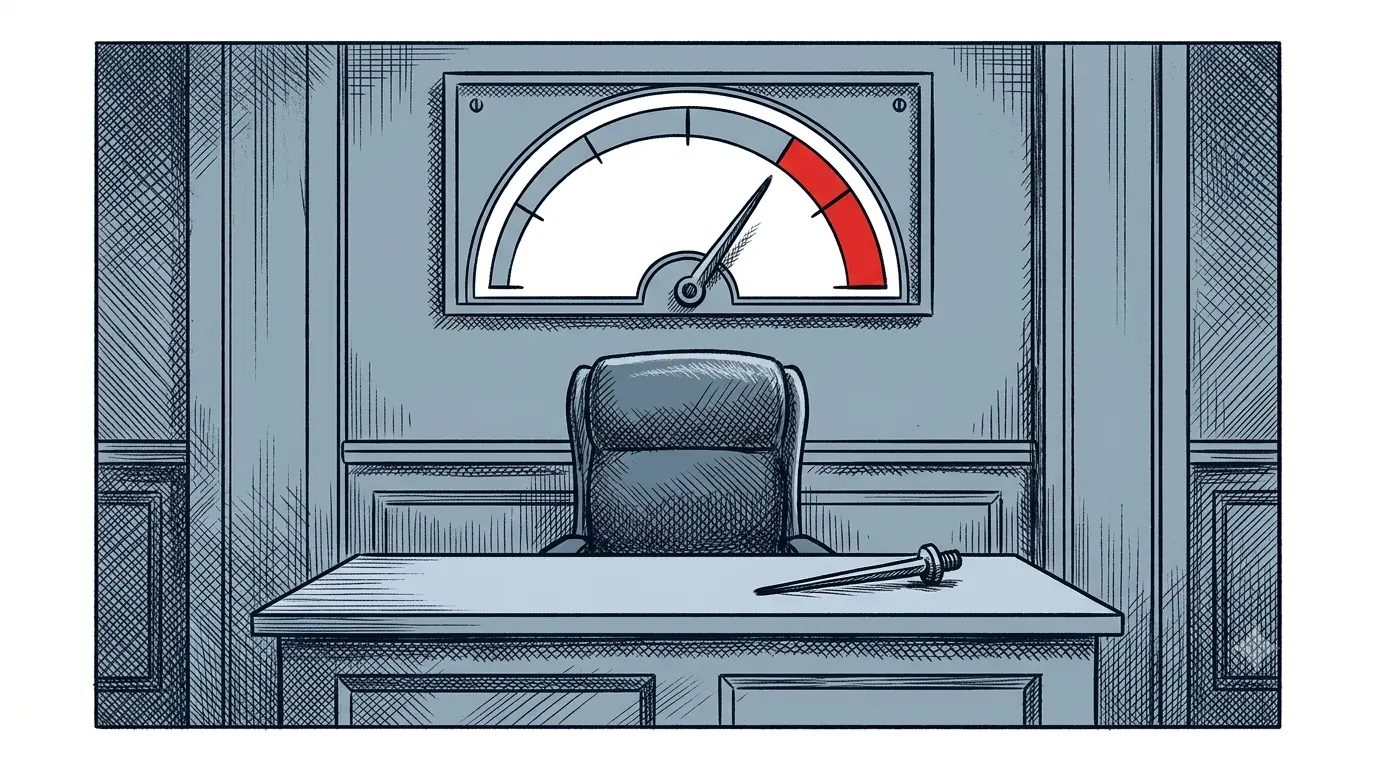
This is what The Broken Gauge looks like when the gauge is a person instead of an instrument. The pattern’s other instances in this project have been about disabled channels — an advisory board eliminated, a licensing requirement quietly removed, a research field made too costly to touch. This one adds a variation: sometimes the validating channel isn’t defunded or repealed. It’s reassigned, then fired, then investigated, for the specific act of writing down that he objected.
The presidency, under the doctrine that lets any agency answer only to itself, has now disabled three separate accountability channels in the space of two weeks — the reporting mechanism inside a military newspaper, the tracking program built to count civilian harm, and now the prosecutor charged with holding a federal agent to the law he swore to enforce. The tool changed with the century. The problem being solved did not.
What would have to change for this gear to stop turning is simple to name and hard to build: a prosecutor’s charging decision on a case like this one would have to be insulated from the political chain of command it currently answers to.
Origin case: TNG Essay 6 — The Evidence They Won’t Answer (The Broken Gauge — no confirmed BF member yet; candidate new discriminator: a validating channel disabled by removing the specific person who used it, after he used it. Flagged for the taxonomy project.)
Copyright 2026 — Steve Sagnotti
Sources: ProPublica and the Minnesota Reformer (Sept. 3) on the Justice Department’s charging decision and Matthew Evans’s firing; the Associated Press (Sept. 3–4) on Evans’s dismissal and the pending obstruction investigation; Reuters (Feb. 2026, via Yahoo News) and the Minnesota Star Tribune reporting on the dismissal of the state charges against Sosa-Celis and Aljorna.
Leave a Reply