Notes from the Field — August 19, 2026
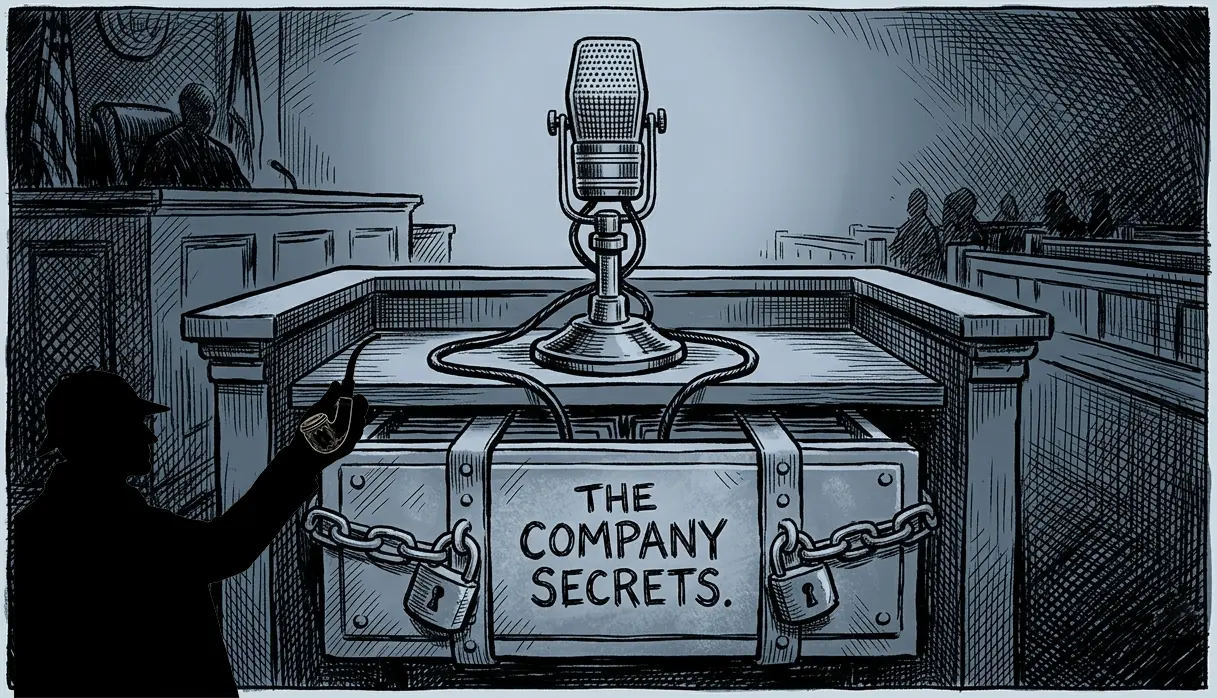
In a Los Angeles courtroom this week, Mark Zuckerberg was shown a 2015 email he wrote to himself: a goal to raise the time users spend on Meta’s products by twelve percent within three years. He was shown a 2019 internal report, commissioned by his own company, that found teenagers felt “hooked despite how it makes them feel” and had, in the researchers’ words, “an addicts’ narrative about their Instagram use.” He was shown a 2019 message from his own head of global affairs, warning that the company’s unenforced age limits made it “difficult to claim we’re doing all we can.” And when a lawyer asked him, under oath, whether users have told his company for fifteen years that its products are addictive, Zuckerberg objected to the word.
“I think people sometimes use that word colloquially,” he said. “That’s not what we’re trying to do with the products, and it’s not how I think they work.”
This is the shape of manufactured doubt: not a flat denial, but a company disputing the vocabulary of a question its own research answered years earlier. Meta’s internal data isn’t ambiguous on this point. Whistleblower Arturo Béjar, a former Facebook executive, testified that internal figures showed more than half of Instagram users report a bad or harmful weekly experience, and that a quarter of young teenagers reported unwanted sexual advances on the platform — findings Béjar says he personally brought to Zuckerberg and other senior executives years before this trial began. Zuckerberg’s deposition testimony in a separate, parallel case out of New Mexico shows the same pattern: internal emails and user complaints reaching back to 2008, and a CEO still declining, in 2026, to accept a word his own researchers used about his own product.
The company’s public defense in court is that harm is undocumented — that “there won’t be hard data to prove causal harm for many years, if ever.” That claim is doing something specific: treating an open scientific question what internal Meta research had already, years earlier, described in plain language to the people running the company. The debate being staged in the courtroom is not the same debate Meta’s own researchers already had internally and lost.
This is not a new company tactic, and it’s not being deployed only here — it’s the same playbook that kept a settled scientific question looking unsettled in public for decades in other industries, run by whoever benefits most from the appearance of an open question outliving the actual one. What’s notable about this instance is how short the gap was between knowing and denying: not decades, but years, some of it inside the same email thread.
Two other platforms named in the same lawsuit, TikTok and Snapchat, settled before trial rather than defend the same claims in front of a jury. Meta didn’t.
What would have to change is not a new finding — the finding was made, inside the company, more than once, starting in 2019 if not earlier. What would have to change is whether an institution’s own knowledge of a harm is allowed to matter less than its interest in denying it out loud.
The Manufactured Doubt — Broken Frames (Manufactured Doubt)
Copyright 2026 — Steve Sagnotti
Sources: AP / Barchart, “Meta CEO Mark Zuckerberg says at consumer protection trial that he resisted censoring platforms,” Aug. 2026. Yahoo News / AFP, “Zuckerberg defends Meta in landmark social media addiction trial.” Rolling Stone AU/CA, trial coverage, Aug. 2026. Fortune, “Mark Zuckerberg deposition: Facebook and Instagram addictive, New Mexico social media trial,” March 2026. Sen. Blumenthal and Sen. Durbin, joint press release on Béjar testimony (background/context, prior Congressional record).
Leave a Reply