Notes from the Field — August 18, 2026
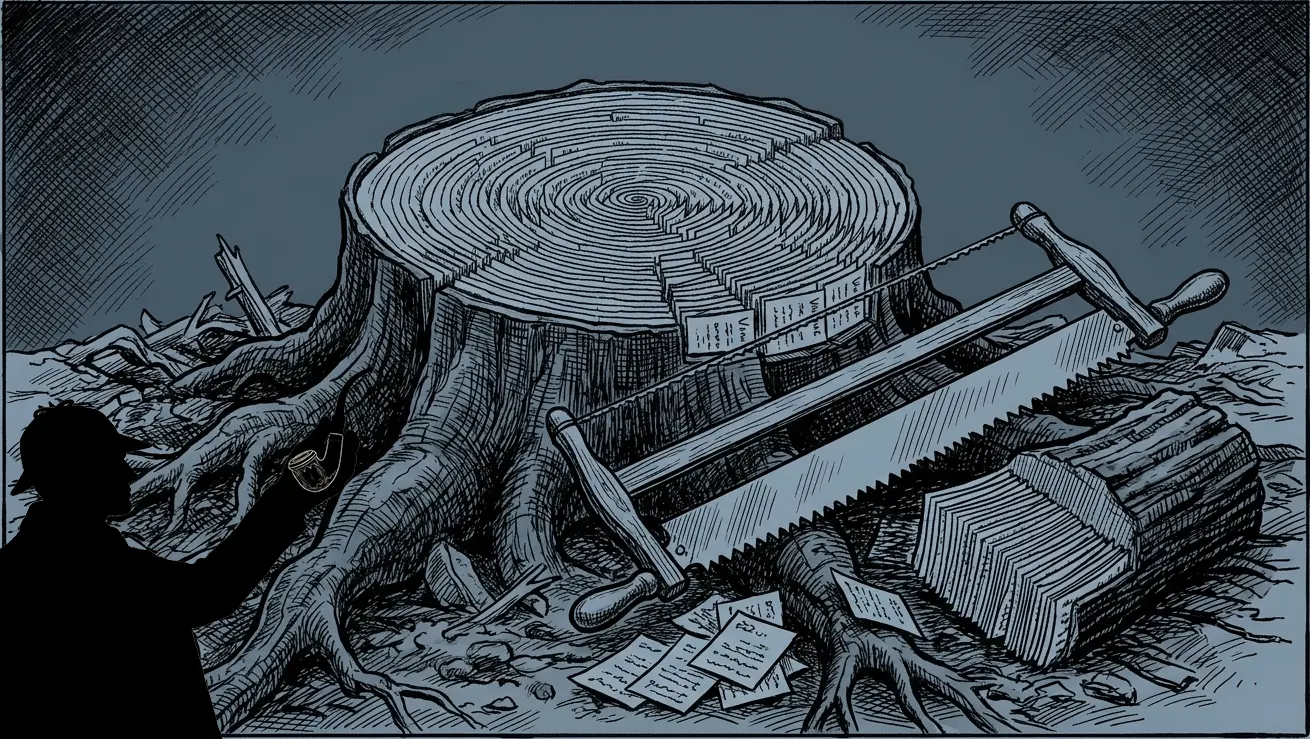
Last fall, the government asked the public what it thought of opening forty-five million acres of national forest — a third of the entire National Forest System — to logging, mining, and new roads. More than 625,000 people answered. Ninety-nine percent said no. A Pew survey found the same rule commanded support from roughly three-quarters of voters nationally, across party lines. The U.S. Department of Agriculture is repealing it anyway.
The rule in question, the 2001 Roadless Area Conservation Rule, has for a quarter-century kept logging equipment and access roads out of the last untouched stretches of federal forest — land that supplies drinking water to 180 million Americans through 354 municipal watersheds, and that shelters critical habitat for more than half the country’s species of conservation concern. On August 19, the USDA filed a proposed rule to rescind it, opening a new thirty-day comment period on a decision Agriculture Secretary Brooke Rollins first announced more than a year ago, at a Western governors’ meeting, long before this comment period existed to solicit anyone’s input.
The administration’s stated case is wildfire management — that roadless land can’t be thinned or accessed to reduce fire risk. Forest Service Chief Tom Schultz says active management “is not an option, it’s essential.” What that framing leaves out: the Forest Service already carries a $6.4 billion backlog just maintaining the 380,000 miles of road it has. Timber sales on federal land have fallen by two-thirds since the early 1990s, in large part because they lose money — logging companies have to be paid, in effect, to take the wood, since building roads into remote terrain routinely costs more than the timber is worth. Taxpayers for Common Sense, hardly an environmental group, has said as much for years: repeal isn’t a fire strategy. It’s a subsidized handoff.
This is the same sequence that put a price on federal grazing land at $1.35 an animal unit month while the private market charges $23.40 for the same thing, and that let extraction industries fix their terms once, decades ago, and never revisit them no matter how much the resource went on to produce. A commons gets priced — or, here, opened — in a room the public doesn’t actually control, dressed in whatever procedural language makes the outcome look like it was decided by the people it affects. A comment period ran. A public spoke, overwhelmingly, in one direction. The rule is being repealed in the other.
None of the fourteen mechanisms this project has catalogued so far quite names this specific move — a shared resource with a formal public process attached, where the process runs, delivers a clear and lopsided answer, and gets treated as advisory rather than binding. That’s worth flagging on its own, because it’s a gap, not a stretch: the taxonomy has plenty of members for terms set once and never revisited, and plenty for “can’t” standing in for “won’t” — but not yet one built for a process that asked, heard the answer, and proceeded as though it hadn’t.
What would have to change isn’t the comment period — that machinery already exists and already worked exactly as designed, gathering the public’s answer in enormous, lopsided numbers. What would have to change is whether that answer counts for anything once it’s been collected.
Origin case: TNG Essay 11 — Out of Frame (Public Investment, Private Capture)
Copyright 2026 — Steve Sagnotti
Sources: NBC News / Reuters, “Trump administration moves to rescind rule that protects millions of acres of national forest,” Aug. 18, 2026. NRDC press release, Aug. 2026. NPR, “Trump administration to open untouched national forests to logging,” Aug. 18, 2026. ABC News, “Trump admin moves to allow logging and construction in national forests.” Montana Free Press / Grist, Aug. 18, 2026. Taxpayers for Common Sense, cited via NPR.
Leave a Reply