Notes from the Field — August 7, 2026
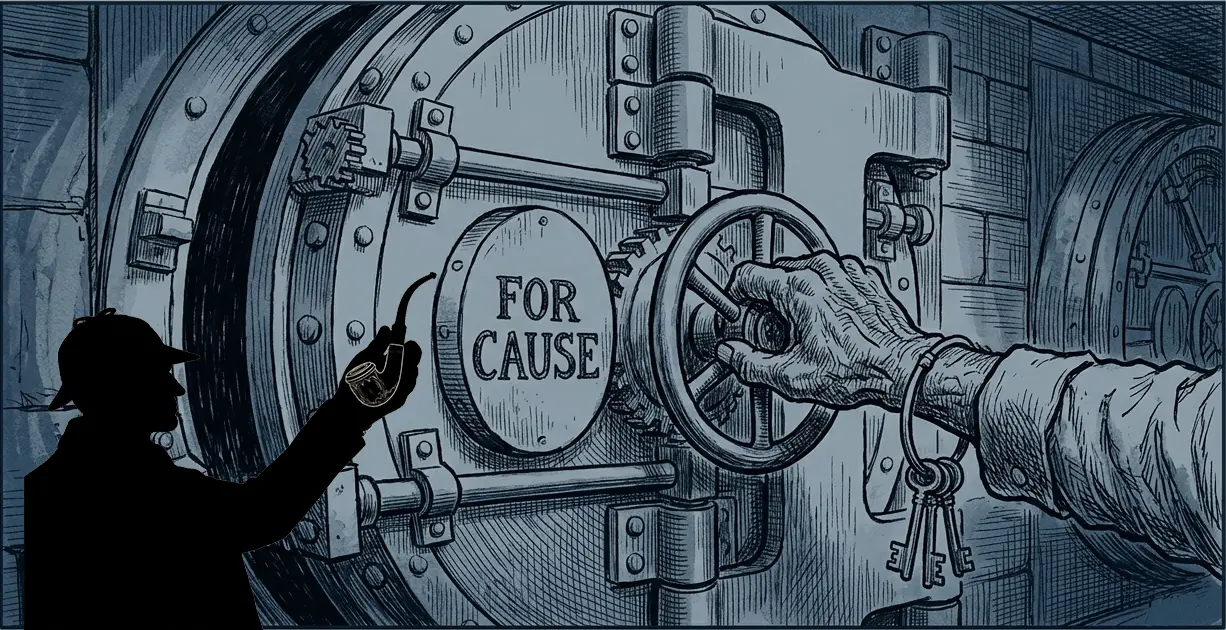
A president cannot fire a Federal Reserve governor because he dislikes her decisions. That protection has a name — “for cause” — and for most of a century it has meant one specific thing: proven misconduct, not policy disagreement. In June, the Supreme Court confirmed the protection still holds. Chief Justice Roberts ruled 5–4 that Governor Lisa Cook is entitled to notice and a real chance to answer the charges against her before any removal “for cause” can proceed. The ruling read, at the time, like a stop sign. It turned out to be a set of instructions.
On August 7, the White House sent Cook a letter. Three weeks to respond, it said, to allegations of “gross negligence” tied to mortgage paperwork from 2021 — a year before she ever joined the Fed board. Solicitor General D. John Sauer’s own framing of the claim is that Cook listed two properties as “primary residences” to secure better interest rates for herself. Documents obtained by the Associated Press cut the other way: her loan estimate from that period describes the Atlanta property as a “vacation home.” A security-clearance form filed around the same time calls it a “second home.” Neither document matches the fraud the administration says it found.
This is what makes the mechanism worth naming plainly. The for-cause standard exists because the country decided, decades ago, that interest rates shouldn’t move with election cycles — that a Fed governor should be removable for real misconduct, not for making a decision a president doesn’t like. The safeguard was built to make that second thing impossible without dressing it up as the first. What’s happening now is that dressing-up, worked in reverse: take a contested, unproven, pre-employment paperwork dispute, call it “cause,” and the same rule that was built to block a political removal becomes the exact permission slip for one.
Cook’s attorney, Abbe Lowell, calls the allegations “as baseless now as they were a year ago” and frames the whole effort as retaliation for her independent rate decisions — his characterization, not a settled finding, and worth holding at that distance until more than a letter and a three-week clock exist to test it. What is settled is the shape of the maneuver: lose at the Court on the merits of whether Cook can be removed, win on the procedure for trying again, and use that procedural win to restart the same removal on a claim the underlying paperwork doesn’t obviously support.
None of this required a new rule. That’s the part worth sitting with. The Fed’s independence didn’t get repealed, weakened, or voted away. It got answered on its own terms — a “for cause” process, followed to the letter, aimed at a cause nobody outside the West Wing has yet been able to verify.
Where this stops is not up to Cook, and as of this writing it hasn’t stopped: her response is due in late August, and nothing about the outcome is decided. The gear keeps turning as long as “cause” is something the removing party gets to define, document, and clock — with a court checking only whether the paperwork of due process was followed, not whether the reason behind it is true.
The Mountain That Isn’t There Anymore — Broken Frames (Same Rule, Reversed)
Copyright 2026 — Steve Sagnotti
Sources: CNBC, August 7, 2026. The Washington Post, August 7, 2026. PBS NewsHour. ABC News. Law.com, August 10, 2026.
Leave a Reply