Notes from the Field — July 31, 2026
I. The rush
Bankers have a phrase for what’s happening right now: “now or never.” A $67 billion utility merger between NextEra Energy and Dominion Energy. A $53 billion bid for PayPal. A $29 billion restaurant-supply acquisition. All moving at a pace that would have been unthinkable two years ago, and all moving because the people whose job is to say no have mostly stopped saying it.
The Justice Department announced this month it would fast-track merger reviews and ask fewer questions upfront. Antitrust staff attorneys have told reporters, anonymously, that political appointees are overruling their recommendations to sue or investigate — including, in at least one case, a proposed aerospace-parts merger career staff wanted to challenge. The mechanism isn’t a new law. It’s a choice, renewed daily, not to enforce the one that already exists.
II. The part that isn’t just deregulation
Here’s what makes this different from an ordinary swing toward looser antitrust enforcement, which the country has seen before: the government isn’t just stepping back from these deals. In roughly thirty separate transactions over the past eighteen months, it has quietly become a shareholder in them — an estimated $27 billion in equity stakes, anchored by a 9.9 percent position in Intel bought by converting CHIPS Act grants into stock. The President floated the government taking 15 percent of a proposed $85 billion railroad merger just to help wave it through.
For most of the last century, a merger review asked one question: does this concentrate enough power to hurt the public. Since the early 1980s, when the Reagan Justice Department rewrote the guidelines around “consumer welfare” — did prices go down, not did power concentrate — that question already got narrower. Now it’s acquired a second, quieter question sitting next to the first: does the government’s own cut show up in the deal.
III. What that changes
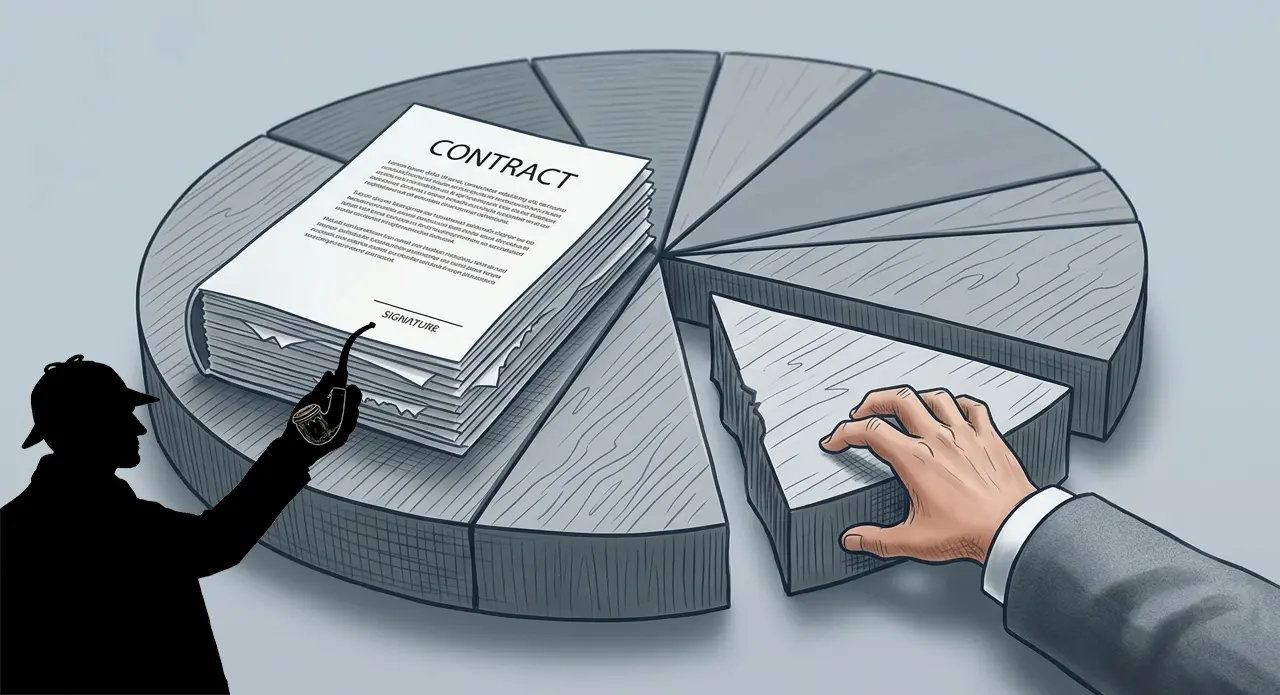
A regulator that owns a piece of the company it’s supposed to be checking has a reason not to check it too hard. That’s not a conspiracy — nobody needs to meet in a room to arrange it. It only requires that the people approving the merger and the people benefiting from its equity stake have, for the length of one transaction, the same interest in it closing. The tool changed. Antitrust law used to be about keeping any single set of hands off too much of the pie. Now some of those hands belong to the government reviewing the deal.
The dependency worth naming is this: as long as the state’s cut depends on the deal closing rather than on the deal being fair, there’s no version of “faster reviews” that isn’t also “friendlier reviews.” Nobody has to decide to look away. They just have to notice which way their own return is pointing.
Essay 12 — The Converging Frames
(see also: Essay 13 — The False Frame)
Copyright 2026 — Steve Sagnotti
Sources: New York Times, “Companies Rush to Close Daring Deals Under Trump,” July 31, 2026. MS NOW, “Trump appointees are overruling DOJ lawyers scrutinizing corporate mergers,” July 9, 2026. Business Model Analyst, “The Merger Boom Has a New Price Tag: A Government Stake.” Political Wire, “Justice Department to Speed Up Merger Reviews,” July 23, 2026.
Leave a Reply