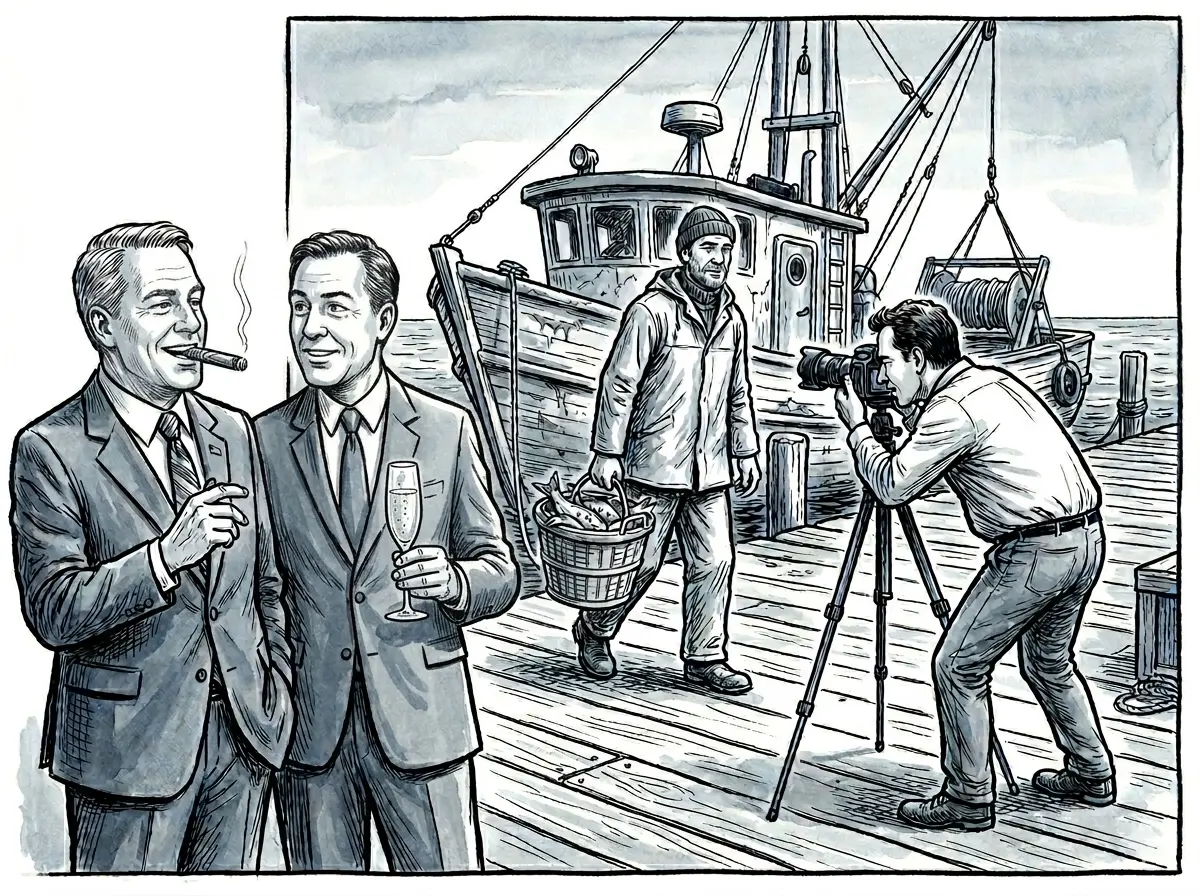
Category: The Narrow Gate

  • The Original Frame

    The Original Frame

    Essay 16 — What was said before the room was built

    Steve Sagnotti · steves-head.space

    The preceding two essays named what can be built — the structural repairs, the shovel-ready work, the floor beneath the displacement wave. They are real and worth building. They are not the whole answer.

    The whole answer is older. It was there before the first council convened to decide what you were allowed to know about yourself. Fifteen essays to get here. This is what was always on the other side.

    This essay looks at what the institution spent fifteen centuries ensuring you would not.

    Before the rooms were built, there was something the rooms were built over. Not a competing institution. Not a rival doctrine. Something the institution recognized as a threat precisely because it required no institution.

    Every council, every canon, every sanctioned channel presupposed its existence — and spent considerable energy ensuring you would not look at it directly. The narrowing required something to narrow against. The gate required something worth guarding.

    What was there before the councils met, before the creeds were written, before the institution decided which texts would survive and which would not — that is what this essay returns to. Not as theology. Not as argument. As evidence. Voices that never met each other, or met only as enemies, kept describing the same obligations. Here is what they said.

    I. What Is Owed to the Vulnerable

    The Hebrew prophets had been making this argument eight centuries before the Christian councils met. Isaiah was not addressing a theological dispute. He was addressing an institution that had mistaken religious performance for religious obligation — people fasting correctly, observing the forms, keeping the days. His response was structural.

    Is not this the fast I choose: to loose the bonds of injustice, to undo the straps of the yoke, to let the oppressed go free, to break every yoke? Is it not to share your bread with the hungry and bring the homeless poor into your house?

    — Isaiah 58:6–7 (c. 8th century BC)

    The Sermon on the Mount requires no introduction for most Western readers. But one passage in it is worth reading slowly against the world the previous essays have documented.

    For I was hungry and you gave me food, I was thirsty and you gave me drink, I was a stranger and you welcomed me, I was naked and you clothed me, I was sick and you visited me, I was in prison and you came to me. Truly I tell you, whatever you did for one of the least of these, you did for me.

    — Matthew 25:35–36, 40

    Surah 107 is one of the shortest chapters in the Quran — seven verses, among the first revealed, titled Al-Ma‘un: The Small Kindnesses. Its subject is not doctrine. It is conduct. In Islam, Zakat — the obligation to give a portion of accumulated wealth to those who need it — is one of the five pillars of the faith. Not charity in the Western sense, which is voluntary and praiseworthy when present and overlooked when absent. A structural requirement, built into the architecture of the faith as obligation. This surah identifies the person who withholds this not as an insufficient believer, but as one who denies the faith itself.

    Have you seen the one who denies the faith? That is the one who drives away the orphan and does not encourage the feeding of the poor. So woe to those who pray but are heedless of their prayer — those who make a show of their deeds but withhold small kindnesses.

    — Quran, Surah 107 (Al-Ma‘un — The Small Kindnesses)

    Amos was writing in the eighth century BC — roughly 2,800 years ago, eight centuries before the Christian councils met. He was not a priest or an official. He was a shepherd from Judea addressing the merchant class of Israel. His subject was the extraction economy. The ephah is the measure you sell. The shekel is the measure you collect. Making one small and the other great — controlling both instruments of the transaction and setting both in your favor — is the mechanism he described with the precision of a forensic accountant. This is not moral poetry. It is structural analysis.

    Hear this, you who trample the needy and bring the poor of the land to ruin, saying: ‘When will the new moon be over that we may sell grain, and the Sabbath, that we may offer wheat for sale — making the ephah small and the shekel great and dealing deceitfully with false balances, buying the poor for silver and the needy for a pair of sandals?’

    — Amos 8:4–6 (c. 8th century BC)

    These traditions were in theological conflict with each other. Some produced centuries of war against each other. They kept arriving at the same structural obligation: what you do with what you have, toward the people who have least, is the measure. Not what you believe. Not how you pray. What you do.

    Every tradition in this section named the mechanism. Isaiah named the yoke. Amos named the false balances. The Quran named the withheld small kindness. The Sermon on the Mount named the stranger at the gate. They named it thousands of years before the room was built. The gap between what the obligation requires and what the arrangement produces is not invisible. It is what the traditions kept naming, from every direction, across every century the room has existed.

    II. What Accumulated Power Corrupts

    The Tao Te Ching was written in the sixth century BC in China — roughly the same era as the Hebrew prophets, with no knowledge of what was happening in Judea and no knowledge of what would later be suppressed at Constantinople. Most Western readers have a vague cultural sense of Taoism as ‘go with the flow’ — which is approximately as accurate as summarizing the entire Christian tradition as ‘be nice.’ The structural critique in the Tao is specific: overreach consumes itself. The accumulation that fills to overflowing destroys what it accumulated. This is not mysticism. It is political economy written 2,600 years ago.

    Holding a cup and overfilling it / Cannot be as good as stopping short / Pounding a blade and sharpening it / Cannot be kept for long / Gold and jade fill up the room / No one is able to protect them / Wealth and position bring arrogance / And leave disasters upon oneself — Tao Te Ching, Chapter 9 (Lao Tzu, trans. Derek Lin)

    The great Tao fades away / There is benevolence and justice / Intelligence comes forth / There is great deception / The six relations are not harmonious / There is filial piety and kind affection / The country is in confused chaos / There are loyal ministers — Tao Te Ching, Chapter 18 (Lao Tzu, trans. Derek Lin)

    One verse in the same tradition has been managed for sixteen centuries. It has been interpreted as metaphor, as hyperbole, as referring to a gate in Jerusalem that camels could pass if they knelt — a reading with no credible historical support but considerable institutional convenience. The plain reading does not require instruction to anyone who reads it.

    It is easier for a camel to go through the eye of a needle than for someone who is rich to enter the kingdom of God.

    — Matthew 19:24

    Most readers know the word Jubilee without knowing the mechanism. Leviticus 25 encoded a mandatory structural correction directly into law: every fifty years, debts cancelled, land returned to its original holders, the accumulation clock reset. The theological justification was explicit — the land belongs to God, not to those who hold its title. You are tenants. Tenancy has obligations. Permanent concentration is not an option the framework permits. It was never consistently practiced. But it was in the text — the original correction mechanism, encoded in the foundational law of a tradition three thousand years old, understanding that accumulation without periodic correction destroys the community that makes accumulation possible in the first place.

    In this Year of Jubilee everyone is to return to their own property. If you sell land to any of your own people or buy land from them, do not take advantage of each other.

    — Leviticus 25:13–14

    The Quran defines righteousness structurally rather than doctrinally. Which direction you face in prayer is institutional performance. The text explicitly says the performance is not the point.

    Righteousness is not that you turn your face toward the east or the west, but righteousness is in one who believes in God and gives wealth, in spite of love for it, to relatives, orphans, the needy, the traveler, those who ask for help, and for freeing slaves.

    — Quran, Surah 2:177 (Al-Baqarah)

    The Jubilee is the original correction mechanism. The 2031 clock is what happens when the correction mechanism is not merely ignored but actively inverted — when the false balances become policy, when the accumulation clock is protected rather than reset, when the debt that was supposed to be periodically cancelled instead compounds until the interest exceeds the growth. Every tradition in this section understood that concentration without correction destroys the community that makes accumulation possible. The debt spiral is not a surprise to anyone who read the original frame. It is the predicted consequence of ignoring it.

    III. What the Institution Was For and What It Became

    This is the sentence that required the councils. If the kingdom is not mediated by institution, not requiring a gate, not accessible only through sanctioned channels — then the entire apparatus of institutional authority is philosophically unnecessary. Not merely flawed. Unnecessary. The councils did not dispute the words. They stripped the cosmological context that made them mean what they mean.

    The kingdom of God is not coming with signs to be observed. Nor will they say, ‘Look, here it is!’ or ‘There!’ For behold, the kingdom of God is within you.

    — Luke 17:20–21

    The Islamic mystical tradition — the Sufis — built entire centuries of practice on this verse. Rumi, Hafiz, Ibn Arabi — contained, managed, occasionally condemned by the institutional authorities of their own tradition. The pattern holds across traditions: direct access is the theological claim that institutional authority cannot survive intact.

    We are closer to him than his jugular vein.

    — Quran, Surah 50:16 (Qaf)

    The Tao Te Ching does not claim the Tao is God. It claims the Tao precedes every institution, every name, every category that has ever been applied to the ground of being. That is not blasphemy. It is a structural observation about what the institution was built over.

    The Tao is empty / When utilized, it is not filled up / So deep! It seems to be the source of all things / It blunts the sharpness / Unravels the knots / Dims the glare / Mixes the dusts / So indistinct! It seems to exist / I do not know whose offspring it is / Its image is the predecessor of God — Tao Te Ching, Chapter 4 (Lao Tzu, trans. Derek Lin)

    Three traditions. The same structural observation. The source is not the institution. The institution is what was built over the source. It is not the door. It is what was placed in front of the door and called the door.

    The Cathars understood this. They had no institutional hierarchy worth having. No priests between the soul and the divine. Women leading ceremonies. The consolamentum — the central sacrament — administered by any perfected soul regardless of gender. The institution found this intolerable, not because it was wrong, but because it was right in a way that made the institution’s function incoherent. It took a crusade to end it. The bodies at Béziers were not a theological argument. They were an institutional one.

    The Hebrew prophets understood it from inside the tradition. Isaiah said the performance was worthless without the structural obligation. Amos said God despised the feasts and solemn assemblies while the poor were being bought for silver. The prophets were not anti-religious. They were anti-institutional in the specific sense that the institution had mistaken its own maintenance for the purpose it was supposed to serve.

    IV. The Convergence Named

    The traditions in this essay were not in agreement on theology. Several of them were in centuries-long violent conflict with each other over precisely who had the correct institutional form. They produced some of the bloodiest disputes in human history. They kept arriving at the same place.

    The Tao Te Ching was not present at Constantinople II. The Buddha was not available for cross-examination by Justinian’s bishops. Amos had been making the extraction economy argument for fourteen centuries before the council met, and nobody in the room felt obliged to reckon with him. None of them knew about the narrowing. All of them kept describing the same original frame.

    When teachings that never met each other — or met only as enemies — keep describing the same obligations, the same structural corruptions, the same warning about what accumulated power does to the people it was supposed to serve, that convergence is not coincidence. It is a description of something real. Something the institution could manage in any single tradition but could not suppress in all of them simultaneously.

    You can narrow a canon. You cannot narrow what the canon was pointing at.

    First they narrowed the frame. Then they defined the argument. For sixteen centuries in the Western mainstream it managed to do exactly that. It could not manage it everywhere.

    The original frame says: your neighbor’s gain is not your loss. Accumulation is not virtue. The vulnerable are not problems to be managed. The institution does not stand between you and everything worth having. Every tradition in this essay kept arriving at that place. They still are.

    The false frame required that they all be silenced simultaneously. For sixteen centuries in the Western mainstream it managed to do exactly that. It could not manage it everywhere. The teachings kept escaping through every gap the institution left. In the Cathar perfecti, who had no hierarchy of souls by birth and women at the altar. In the mystics who kept insisting that direct experience was possible without institutional mediation — Meister Eckhart, Hildegard of Bingen, Julian of Norwich, Rumi, Ibn Arabi — managed, contained, occasionally condemned, never quite extinguished. In the liberation theologians who read the same texts the prosperity gospel preachers read and arrived at opposite conclusions, because they read them among the poor rather than for the donor class. In Bonhoeffer, who saw exactly what happens when the church blesses the warrior state and who died opposing it.

    The structural repairs in Essays 14 and 15 are real. The expanded House, the citizens’ assembly, the sovereign fund, the stability frame — these are the original frame applied to the specific conditions of this moment. The people in the citizens’ assembly are the ones with no fundraising reason to fail. The sovereign fund is the Jubilee made structural. The sortition is the room expanded to include the people every tradition named as the measure of the community’s integrity: the poor, the stranger, the orphan, the ones the institution was built to exclude. But every tradition in this essay also understood something the structural repairs cannot address on their own: the room reconstitutes itself unless the people inside it have changed what they believe the room is for. The repairs are the condition. The frame is the foundation. It is the original frame applied to the specific conditions of this moment. The people in the citizens’ assembly are the ones with no fundraising reason to fail. The sovereign fund is the Jubilee made structural. The sortition is the room expanded to include the people every tradition named as the measure of the community’s integrity: the poor, the stranger, the orphan, the ones the institution was built to exclude.

    The traditions did not only describe the mechanism. They described what becomes available when the mechanism is named.

    V. What the Rupture Means

    The frame is not holding. Its contradictions are visible now in ways the silence can no longer cover.

    Collapse would be simpler — one system failing, another waiting to replace it. What is happening is harder to name and more significant. The frame that crystallized in the fifth century is revealing its own limits — the places where its logic cannot hold, where its silences can no longer be mistaken for the way things are.

    The physicist was trying to understand what information is at its most fundamental level. The cognitive scientist was trying to explain why physical processes produce subjective experience. The philosopher was trying to locate where consciousness lives in a material world. Wheeler, Hoffman, and Goff were working different problems in different disciplines across different decades. They converged on related but not identical conclusions — each arriving in the same territory by a different road. They are standing where the Vedic philosophers stood three thousand years earlier. They did not go looking for the Vedic philosophers. They followed their own work to its edge.

    The consciousness researchers arrived through a different door. Fifty years of peer-reviewed evidence from institutions with no interest in confirming it. What the near-death accounts keep reporting — across cultures, centuries, committed atheists who entered the experience as materialists — is not the institutional judgment architecture. It is not the gate or the entrance requirement. It is something closer to what every tradition in this essay kept describing from the other side: a ground of being that precedes the hierarchy, where the question is not what you accumulated but what you did with what you had, toward the people who had least.

    They are not saying the same thing because they read each other. They are saying the same thing because they found the same thing.

    What the original traditions understood — what the frame could not afford for you to understand — is that the cosmos has no entrance requirement. That the institution is not the door. It is what was placed in front of the door and called the door. Amos understood it in the eighth century BC. The Tao Te Ching understood it in the sixth century BC. Julian of Norwich understood it inside a stone cell in the fourteenth century, in the middle of the Black Death, with no mechanism of political change available and no institution willing to sanction what she found at the bottom of it.

    She found what they found. What the consciousness researchers keep finding. What the near-death accounts keep reporting.

    What was worth guarding was never the institution’s to give or withhold.

    The sky was there before the first council convened. The rupture is not the sky appearing. It is the frame becoming thin enough that you can see it was always there.

    The original frame does not prescribe. It describes. Every independent witness in this essay arrived at the same observation across three thousand years: the measure is not what you believed, not which institution you belonged to. The measure is what you did with what you had, toward the people who had least. It is what was always on the other side of the gate the gate was guarding.

    You have now looked at it directly.

    VI. The Sky Has Not Moved

    In 1373, a woman named Julian lived alone in a small stone cell attached to the wall of a church in Norwich, England. The Black Death had passed through the city multiple times in her lifetime. The Hundred Years’ War was ongoing. The institutional machinery of the Western church was operating at full capacity. She had no mechanism of political change available to her. She had a direct experience she spent the next twenty years writing down.

    All shall be well, and all shall be well, and all manner of thing shall be well.

    — Julian of Norwich, Revelations of Divine Love (1373)

    Not denial. Not naïvety. Not the piety of someone who had not looked at the short view. The long view, held by someone who had looked at the short view without flinching and chose to report what she found at the bottom of it.

    The frame managed the canon, froze the House, purchased the room, built the warehouses, told the people outside it that the arrangement was natural and the alternatives were utopian. What it could not do — fifteen centuries of demonstrated effort shows it could not do — is reach what it was always narrowing against.

    The sky was there before the first council convened. It will be there after the last corporation files for bankruptcy. The original frame was not created by any tradition. The traditions found it. They disagreed about everything else and kept finding the same thing: that the ground of being is not behind a gate. That the measure of a community is what it does with what it has, toward the people who have least. That the institution is not the door. It is what was placed in front of the door and called the door.

    None are denied their place in the original frame. That was always the point of it. The institution took the permission to see that clearly. It could not take what the frame was pointing at.

    The rest, as it has always been, is yours.

    Steve Sagnotti is a serious amateur photographer, writer, and technologist based in Oregon. With his camera he tries to capture common images not often seen, leading to common questions not often asked.

    steves-head.space

    © 2026 Steve Sagnotti

    Sources

    Primary Texts — Translation Conventions

    Hebrew Bible / Old Testament: New Revised Standard Version (NRSV) throughout. Isaiah 58:6–7; Amos 8:4–6; Leviticus 25 (Jubilee).

    New Testament: NRSV. Matthew 25:35–40; Matthew 19:24; Luke 17:20–21.

    Quran: Sahih International translation. Surah 107 (Al-Ma‘un); Surah 2:177 (Al-Baqarah); Surah 50:16 (Qaf).

    Tao Te Ching: Annotated & Explained: Derek Lin (Skylight Paths Publishing 2006) Chapters 4, 9, 18. Attributed to Lao Tzu, c. 600 BC; earliest extant text (Guodian bamboo slips) dated c. 300 BC.

    Michael Hudson, …and forgive them their debts (ISLET, 2018).

    Section I — What Is Owed to the Vulnerable

    Isaiah 58 context: Walter Brueggemann, The Prophetic Imagination (Fortress Press, 1978; revised 2001).

    Surah 107 / Zakat: Seyyed Hossein Nasr, The Study Quran (HarperOne, 2015).

    Section II — What Accumulated Power Corrupts

    Tao Te Ching: Annotated & Explained: Derek Lin (Skylight Paths Publishing 2006).

    Jubilee principle: Michael Hudson, …and forgive them their debts (ISLET, 2018).

    Matthew 19:24 management history: Elaine Pagels, Beyond Belief (Random House, 2003).

    Section III — What the Institution Was For and What It Became

    Cathar history: Stephen O’Shea, The Perfect Heresy (Walker and Company, 2000). Béziers massacre, 1209: see Essay 3 sourcing.

    Caesarius of Heisterbach (attributed) — a chronicle written decades after the event; treat as reported speech, not eyewitness record.

    Sufi tradition and institutional management: Annemarie Schimmel, Mystical Dimensions of Islam (UNC Press, 1975).

    Section IV — The Convergence Named

    Liberation theology: Gustavo Gutiérrez, A Theology of Liberation (Orbis Books, 1973).

    Dietrich Bonhoeffer: Letters and Papers from Prison, ed. Eberhard Bethge (SCM Press, 1953).

    Second Council of Constantinople, 553 AD: condemnation of Origen’s doctrine of pre-existence of souls. Primary record in the Acts of the Council (lost; reconstructed through later conciliar documentation). See also Origen, De Principiis, known through Rufinus’s Latin translation — note: Rufinus’s preface acknowledges editorial smoothing of radical positions.

    Section V — What the Rupture Means

    University of Virginia Division of Perceptual Studies: med.virginia.edu/perceptual-studies.

    Howard Storm, My Descent into Death (Doubleday, 2005).

    Van Lommel, P. et al. ‘Near-death experience in survivors of cardiac arrest.’ The Lancet, 2001.

    Sufi dhikr practice: Schimmel, Mystical Dimensions of Islam,

    Section VI — The Sky Has Not Moved

    Julian of Norwich, Revelations of Divine Love, long text, c. 1393. Elizabeth Spearing translation (Penguin Classics, 1998). ‘All shall be well’: Chapter 27.

    Julian’s historical context: Grace Jantzen, Julian of Norwich: Mystic and Theologian (Paulist Press, 1987).

  • A Stability Frame

    A Stability Frame

    Essay 15 — What can be built before the window closes

    Steve Sagnotti · steves-head.space

    “The best time to plant a tree was twenty years ago. The second best time is now.”

    — Chinese proverb

    “We are trying to construct a more inclusive society. We are going to make a country in which no one is left out.”

    — Franklin D. Roosevelt, 1936

    The preceding essays raised a question without answering it. What happens to the people?

    Not the people in the aggregate — the displacement wave, the labor market adjustment, the transitional cohort. The specific people. The Class of 2026 entering the desert this month. Michelah in 2031. The fifty-five-year-old whose job the model absorbed last quarter. The question was asked at the end of Essay 13 and left there deliberately, because the answers that follow require a different kind of evidence than the documentation that preceded them.

    This essay is one answer — the shovel-ready answer, the one that does not require waiting for the room to be rebuilt first. Essay 14 named what a repaired room would build. This essay names what can be built before the repair is complete, because the 2031 window does not wait for the renovation.

    The false frame has a specific answer to the displacement wave. It is already being built. Thirty-four permanent detention facilities. Eight mega-centers. Ninety-two thousand beds. Infrastructure owned, not leased, distributed across the national geography, available for whatever population the room decides requires containment next. The false frame looks at ten million displaced workers and sees a management problem. The cost is fifty-five thousand dollars per person per year at the low end. Scale that to the displacement wave the preceding essays document and the math produces a number the fiscal spiral cannot absorb. The false frame does not acknowledge this. The two rooms — the one tracking displacement and the one tracking the debt spiral — are still not talking to each other.

    A stability frame looks at the same ten million people and sees something different. Not a management problem. A workforce. One that happens to coincide with a documented inventory of work the market will not fund but the country demonstrably needs. The math from this vantage point runs differently: the same fiscal pressure that makes the warehouse unaffordable also makes the productive alternative attractive, because workers in the revenue column pay taxes and workers in the expenditure column consume them. The choice between the two is not ideological. It is arithmetic. The stability frame makes the arithmetic visible.

    This essay builds that frame.

    I. The Math Nobody Is Doing

    Essay 12 established the Jennifer Harris mechanism: as one dollar of value creation shifts from workers to owners, total tax revenue falls ten to fifteen cents. The displacement wave and the debt spiral are not parallel crises. They are the same crisis viewed from two angles. The worker who loses her job stops paying payroll taxes and starts drawing on unemployment, food assistance, Medicaid. She moves from the revenue column to the expenditure column at the exact moment the fiscal system is least able to absorb the shift.

    The containment apparatus does not reverse this. A person in an ICE detention facility at fifty-five thousand dollars per year is not in the revenue column. She is a permanent expenditure line. The infrastructure is owned. The operating cost runs whether or not the beds are full. The reconciliation act that funds the detention expansion simultaneously cuts the programs the displaced would draw on outside it. Both outcomes move workers further from the revenue column. Neither addresses the underlying arithmetic.

    The WPA at its peak employed 3.3 million workers simultaneously. At prevailing wages, those workers paid income tax, spent money in local economies, and maintained the consumer base that market activity depends on. The net fiscal cost of the program — accounting for the tax revenue generated, the economic activity multiplied through local spending, and the reduction in relief expenditure — was substantially lower than the gross appropriation. The false frame presents this as a historical curiosity. The stability frame recognizes it as a mechanism. The mechanism is available.

    The question the stability frame asks is simple: what does it cost to warehouse a displaced worker, and what does it cost to employ one productively? The answer to the first question is documented. The answer to the second depends on what the work is, which is the subject of the next section. But the framing matters before the numbers do. Inside the false frame, employment programs are expenditures to be minimized. Outside it, they are investments whose return includes tax revenue, consumer spending, and the maintenance of a social fabric that is considerably cheaper to preserve than to repair after it tears.

    II. It Has Been Done Before

    In 1933, the United States faced a displacement wave of a different kind. Twenty-five percent unemployment. Hoovervilles in every major city. The Bonus Army — veterans of the First World War, promised compensation that hadn’t arrived — marching on Washington and being dispersed by cavalry. The false frame of that moment had an answer too: the market would self-correct, government intervention would make things worse, the men sleeping in parks were there by the logic of their own choices.

    Franklin Roosevelt’s administration did not wait for the room to repair itself. It identified work the market would not fund but the country needed, paid people to do it at scale, and kept them economically active during the lag. The Works Progress Administration employed 8.5 million people across infrastructure, arts, literacy programs, and environmental work. The Civilian Conservation Corps put three million men to work in forests, parks, and watersheds — building trails, planting trees, fighting erosion, maintaining the public lands that private industry had no incentive to steward. The men who arrived having never held a shovel left having built something visible, something that still exists, something with their names on it in the sense that matters.

    The substitutability objection is real and the essay should name it honestly. A displaced farmer in 1933 could dig a ditch. A displaced customer service worker or junior analyst in 2026 cannot be sent to the forest with the same ease. The skills gap runs differently now. But the mechanism survives even when the substitutability doesn’t: identify work the market won’t fund but society needs, pay people to do it at scale, keep them economically active during the lag. The specific work changes with the era. The structural logic does not.

    The WPA wasn’t a government employment program in the sense the false frame uses to dismiss it. The government defined the need, provided the funding, and set the standard. Private contractors bid on the work. Private firms executed it. The government did not pour the concrete or plant the trees directly. It created the demand signal and the funding mechanism that private industry lacked any incentive to create on its own. The interstate highway system — the largest public works program in American history — was built by private contractors on federal contracts. Nobody calls it socialism. The WPA worked the same way. The stability frame makes no new argument here. It recovers an old one that the false frame has spent fifty years misrepresenting.

    III. The Work That Is Waiting

    The substitutability problem dissolves when the inventory of needed work is examined honestly. The false frame presents the displacement wave as a mismatch between available workers and available work — too many people, not enough jobs. The stability frame asks a different question: what work exists that the market is not doing?

    The answer is not abstract. It is documented, understaffed, and urgent.

    The United States Forest Service manages 193 million acres of national forest and grassland. Its own assessments document a chronic backlog in fire mitigation, trail maintenance, watershed restoration, and invasive species management — work that directly reduces the catastrophic fire risk that has cost the country hundreds of billions of dollars in recent years. The agency does not have the workforce to do what its own scientists say needs doing. The CCC precedent is direct: this is exactly the work the corps did, at exactly the scale the corps operated, in exactly the terrain the corps knew. The need was there in 1933. It is larger now.

    Federal inspection and oversight capacity is chronically understaffed across every domain where the public’s investment requires monitoring. Food safety. Workplace safety. Environmental compliance. Infrastructure inspection. The bridge that fails, the mine that collapses, the contaminated water supply — these are not accidents of nature. They are the predictable output of an inspection regime whose capacity has been systematically reduced by the same purchased legislation Essay 11 documented. The work of inspection is not make-work. It exists because the things being inspected exist and the rules governing them exist. The question is only whether anyone shows up to enforce them. Tripling federal inspection capacity would not require inventing new work. It would require staffing the work that is already documented and already undone.

    Care work is the largest single category of documented need that the market chronically underserves. The World Economic Forum’s Future of Jobs report identifies care roles — home health aides, childcare workers, elder care specialists — as among the fastest-growing by absolute numbers through 2030. The demographic driver is not a projection. The baby boom generation is aging. The care it requires is not optional and it is not automatable. These roles cannot be sent to a server farm. They require people, in rooms, with other people. They are chronically underpaid because the people who perform them have historically had the least bargaining power and the people who need them have historically had the least political power. A public employment option with a wage floor in care work absorbs displacement and delivers something the market has spent decades demonstrating it will not deliver on its own.

    The Office of Technology Assessment employed 143 people when Congress eliminated it in 1995 for twenty-two million dollars in annual savings. Restoring it would require people with the analytical skills to evaluate technology policy — exactly the cohort that AI displacement is currently moving out of entry-level white-collar roles. The Class of 2026 entering a desert labor market includes people trained in data analysis, research methodology, and technical communication. The OTA restoration workforce and the displaced analyst cohort are the same population. The work is documented. The workers are available. The room has a vested interest in the vacuum remaining.

    Digital literacy infrastructure is the final category. The ZipRecruiter survey found that only one in three members of the Class of 2026 received meaningful AI training in college. Someone has to build that training infrastructure at community college level across the country. The need is documented, the timeline is urgent, and the work requires people who understand both the technology and the communities it is entering. This is not make-work. It is the foundational investment that determines whether the next cohort is better positioned than the one entering the desert now.

    IV. The Hiring Condition

    A standard infrastructure contract does not solve the displacement problem. The lowest bidder hires whoever they want, mostly experienced trades workers who already have jobs. The bridge gets built. Michelah is still in the desert.

    The condition that makes a stability frame program different from a standard public works bill is written into the contract terms: a documented percentage of labor hours must go to workers from the displaced cohort. Not a mandate on every private firm in the economy — a condition on firms accepting public contracts for publicly funded work. The legal architecture for this already exists. Section 3 of the Housing and Urban Development Act requires that federally funded construction projects prioritize hiring low-income residents of the area where the work is done. Davis-Bacon requires prevailing wages on federal contracts. The mechanism is established. The variable is which workers the condition prioritizes.

    This is also the answer to the dignity question, which is real and which the essay should not paper over. A person hired by a private contractor doing documented infrastructure work on a public contract is not a government charity case. She is a worker with a paycheck from a private employer, doing a job that needed doing, in a sector that is expanding because the public decided the need was real. The employment relationship matters. The nature of the work matters. A stability frame that produces government make-work produces neither stability nor a frame that can survive political scrutiny. One that produces private employment on real public need earns its constituency the way Social Security did — through the visible, specific, nameable thing it built.

    The enforcement of the hiring condition requires the inspectors to exist. This is where the two arguments converge: the oversight capacity that monitors contract compliance is the same capacity that monitors workplace safety, environmental compliance, and infrastructure integrity. You cannot enforce a condition you cannot monitor. The false frame that eliminated inspection capacity also eliminated the mechanism for ensuring public contracts serve public purposes. Rebuilding one requires rebuilding the other. They are the same repair.

    V. Skills, Matching, and the Service Question

    The draft board analogy is not decorative. When the United States needed to mobilize millions of people rapidly in 1940, it did not do so by posting job listings. It assessed what it had, determined what it needed, and matched them at scale through a mechanism — imperfect, sometimes unjust, but operationally effective — that converted civilian capacity into military capability faster than any previous mobilization in history.

    The displacement wave requires a matching problem of comparable scale. Not the same mechanism — a national citizen service is not conscription, and the essay should be clear on this distinction — but the same underlying challenge: how do you connect the skills a population has with the work a society needs, at a speed the crisis requires, without waiting for the market to do it over a decade?

    The stability frame’s answer is a National Citizen Service: a voluntary program, structured around meaningful tracks, available to every American at the transition point between education and employment. Not a program for the displaced specifically — a program for everyone, at the moment everyone faces it. Military service is one track. Forestry and public lands is another. Care work is another. Infrastructure inspection and oversight is another. OTA restoration and technical assessment is another. Digital literacy infrastructure is another.

    The voluntary-with-incentives model has a documented record. The CCC did not conscript its workers. It offered wages, housing, food, and skills in an economy where the alternative was nothing. The enrollment exceeded projections. People self-select toward meaningful work when meaningful work is available and the alternative is a desert. The Class of 2026 entering the labor market now is not choosing between a national service program and a good private sector job. For a significant fraction of them, they are choosing between a national service program and the desert Michelah described.

    Matching within the program is where AI earns its place on the productive side of the ledger rather than the destructive side. The draft board in 1940 used paper forms and interview panels. A modern matching system ingests documented need — which forest districts are most understaffed, which inspection backlogs are most critical, which communities have the highest care worker shortages — against documented capacity — what skills the incoming cohort has, what training they can acquire in what timeframe — and produces placements that serve both the individual and the public need. The army got its infantry because infantry was what the moment required. It also got its eleven navy volunteers because eleven people wanted to be there and the navy needed them. Both mechanisms — directed placement weighted to need, and self-selection weighted to fit — are available and can operate simultaneously. AI makes the optimization tractable at a scale that was impossible in 1940.

    The skills gap the false frame presents as an obstacle is, from inside the stability frame, a design parameter. You don’t send the displaced analyst to dig the ditch. You send her to do the environmental baseline survey, the OTA restoration work, the digital literacy training. You send the displaced logistics worker to the inspection corps. You send the person with no formal credential and strong hands to the forest, where the work is learnable and the need is urgent and the result is visible. The frame that sees only “displaced workers” and “available jobs” cannot make these connections. The frame that sees documented need and documented capacity and asks how to connect them can.

    VI. The Bottleneck and the Tool

    The sprint model cannot work if the permitting process takes a decade. This is not a metaphor. The United States has the longest infrastructure permitting timelines in the developed world by a significant margin. A highway project that takes two to three years to permit in Germany takes seven to ten years here. A transmission line that takes eighteen months in Australia takes a decade in the United States. The causes are documented: NEPA environmental review averaging four and a half years to complete, multi-agency coordination with no required timeline, litigation as a de facto veto independent of the merits, and permitting agencies chronically understaffed relative to the volume of projects in their queues.

    The result is that the United States cannot build the infrastructure its own engineers say it needs at anything like the speed the problems require. The grid buildout needed for the energy transition, the water infrastructure repairs the American Society of Civil Engineers documents, the broadband deployment needed to close the digital divide — all of them are stuck in permitting queues. The 2031 window arrives before the shovels go in.

    AI changes this calculation at specific, documented points in the process. A full Environmental Impact Statement currently takes teams of consultants three to five years to produce, at costs running into the tens of millions for large projects. AI can draft the baseline environmental survey, model impacts across scenarios, cross-reference existing databases of species habitat, water quality, soil composition, and air quality, and produce a structured document in weeks rather than years. The review process still requires human judgment and public comment — that is appropriate and the stability frame does not propose eliminating it. But the document production bottleneck is an AI-solvable problem with existing technology. The NEPA timeline compresses dramatically when the EIS takes months rather than years.

    Multi-agency coordination — the problem of eight agencies with incompatible systems, timelines, and data formats that no one is required to reconcile — is addressable by AI as a coordination layer. A project dashboard that ingests the requirements of every relevant agency, identifies conflicts and dependencies, flags what can proceed in parallel, and surfaces the critical path. This exists in private sector project management. It does not exist for federal permitting. Building it is exactly the kind of OTA-restoration, technical-capacity work the previous section identified as waiting for a workforce.

    The permitting bottleneck is not entirely accidental. Utilities have used permitting complexity to block transmission lines that would enable competing renewable energy. Established developers have used NEPA to block competitors. The tool is real and has legitimate uses; it has also been captured by actors whose interests have nothing to do with environmental protection. AI-assisted permitting reform is not anti-environment. The environmental analysis still happens. It happens faster and with better data. A document that took four years to produce because eight agencies couldn’t reconcile their timelines doesn’t take four years because the analysis requires it. The stability frame names the difference between a timeline that reflects the work and one that reflects who benefits from the delay..

    VII. The Sprint

    You do not need Rome. You need the foundation before 2031.

    The false frame’s approach to large public problems is the monolith: design the complete solution, assemble the complete funding package, build the complete political coalition, execute the complete program. This approach has a specific failure mode: it takes longer than the crisis it is designed to address. The decade-long infrastructure project can be cancelled by a change in administration before it is complete, producing nothing. The workforce reabsorption program designed in the conventional model — full scope, full design, full permitting, full funding before anyone reports to work — does not help the Class of 2026. It might help the Class of 2036 if everything goes well.

    The stability frame’s approach is different in sequence, not in ambition. Fund the first stage with defined success metrics. Stage two is contingent on stage one results. Produce something real at each stage — something that builds its own constituency, something that exists and is therefore harder to eliminate than something that is merely planned. The shack goes up before the house is designed, not because the house isn’t the goal, but because the shack tells you things a blueprint never could — where the wind comes from, which wall you’ll want to extend first, what the foundation actually required when the ground turned out to be different from the survey.

    Applied to the workforce: a pilot National Citizen Service in three states, authorized and funded for one stage, tells you what a national program designed from scratch never could. Which work categories absorb workers fastest. Which training pipelines produce useful skills in six months versus two years. Which communities have the infrastructure to support a corps presence. You learn cheaply, at small scale, before committing the full apparatus. The pilot produces visible results. Visible results build the constituency for the next stage. The constituency funds the next stage. Medicare is one example of how a program can be built — not as a comprehensive national health system but as a limited program for the elderly that proved itself and built its own political base over decades..

    The sprint model also answers the political capture problem that the previous essay documented. A decade-long monolith has to hold its coalition for a decade. A sprint-stage authorization has to hold it for one budget cycle. The people who benefit from inaction can block a comprehensive bill. Blocking a pilot is harder — the argument against a pilot is the argument against learning, and that argument is harder to make with a straight face to the 45 percent who have concluded the room produces nothing for them.

    VIII. The Standard Arguments

    The stability frame will generate objections. They will arrive in the same forms that every accountability proposal in this project has generated. They deserve substantive answers rather than dismissal, because some of them have real merit.

    “This is socialism. The government should not be in the business of employing people.”

    The government has been in the business of employing people for the entire history of the republic. Postal workers. Federal inspectors. Forest rangers. The military. The argument is not against government employment. It is against government employment of people the current political coalition would rather see in a warehouse. The WPA employed 8.5 million people through private contractors bidding on public contracts. The interstate highway system was built the same way. National defense — the expenditure no one calls socialism — dwarfs any workforce program this essay contemplates. The label is not an argument. It is a way of preventing one.

    “This takes work away from private industry.”

    The opposite is closer to accurate. Private industry is not doing the work this essay describes — not because it couldn’t, but because there is no profit in it. The Forest Service’s fire mitigation backlog does not generate revenue. The inspection of a bridge does not produce a product to sell. The care worker serving an elder on Medicaid does not generate a margin worth pursuing. Private industry leaves this work undone because private industry is not designed to do work it cannot monetize. A stability frame program creates contracts that private industry bids on and executes. The contractor who wins the forest restoration contract, the inspection services contract, the care infrastructure contract — that is a private firm earning a market return on publicly funded work. This is how public infrastructure has always been built in America. The stability frame does not nationalize anything. It creates demand that private industry is well positioned to meet, with the condition that the workforce doing the meeting includes the people who need the work.

    “We can’t afford it.”

    The fiscal spiral Essay 12 documented makes this the most self-defeating objection available. The question is not whether the country spends money on the displacement wave. The infrastructure is already built and already being funded. The question is what the expenditure produces. Fifty-five thousand dollars per person per year to warehouse someone who used to be a taxpayer produces a permanent expenditure line, a population removed from the consumer base, and a social fabric under pressure. A wage and meaningful work produces a taxpayer, a consumer, and someone with a reason to show up tomorrow. The fiscal responsibility argument for the warehouse is the argument that the expensive option is cheap because you don’t count the cost. The stability frame counts the cost.

    “The government can’t run anything efficiently.”

    The CCC built 800 parks, planted three billion trees, and constructed 125,000 miles of roads in nine years. The WPA built or repaired 650,000 miles of roads, 78,000 bridges, 125,000 civilian and military buildings, and 700 miles of airport runways. These are not theoretical projections. They are the current inventory of infrastructure still in use. The efficiency objection has a specific structural problem: it is made against programs that worked while ignoring the programs it favors that did not. The F-35 program is eleven years late and $165 billion over budget. The Pentagon has never passed an audit. The efficiency argument is applied selectively, to programs that serve the wrong constituency.

    “Who decides where people go? This sounds like forced labor.”

    The National Citizen Service described in this essay is voluntary. It offers tracks, not mandates. The CCC enrolled its workers. The navy got its eleven volunteers because eleven people wanted to serve on ships. A voluntary program with real tracks and real wages and real work will attract the people for whom it makes sense, which is a large fraction of the people currently in the desert. The matching system optimizes within the choices people make, weighted toward documented need. The army sends more people to infantry than to signals corps because infantry is what the army most needs. A citizen service sends more people to fire mitigation and inspection than to digital literacy infrastructure for the same reason. This is not coercion. It is the ordinary logic of a program that has to accomplish something as well as employ someone.

    “Private contractors will capture the contracts the way defense contractors do.”

    This is the most legitimate objection and it deserves the most substantive answer. Yes, contractor capture is a real and documented risk. The defense procurement system is the clearest example of what happens when large public contracts meet organized private interests over a long enough timeline. The stability frame’s structural defense is the sprint model: stage-gate funding with measurable output requirements at each stage makes extraction harder than in a decade-long monolith where the contractor is paid regardless of what gets built. The inspection capacity rebuilt under this program is also the inspection capacity that monitors contract compliance — the same workforce that checks the bridge checks whether the hiring condition was met and whether the stage-gate deliverable was delivered. Accountability is built into the mechanism as a design requirement, not assumed from the good intentions of the participants.

    IX. The Frame from Here

    The Class of 2026 is entering the desert this month. They did everything they were told. They incurred the debt. They earned the credential. The entry point was closing before they arrived, for reasons documented across the preceding essays, arranged by people who had a vested interest in the arrangement.

    Inside the false frame, they are a labor market adjustment. A transitional cohort. An efficiency gain distributed across a generation. The quarterly report that records their displacement also records the margin improvement it produced. They do not appear in the same column.

    Outside it, they are the workforce for the most urgent documented needs in the country. The forest that needs tending. The bridge that needs inspecting. The elder who needs someone in the room. The community college that needs someone to build the AI literacy infrastructure the next cohort will require. The OTA that needs the analysts the AI displacement wave just produced. The environmental baseline survey that needs to be done before the permitting clock can start. They are not a problem to be managed. They are the answer to a set of problems the market has been declining to solve for decades, now arriving with the workforce to address them at exactly the moment the problems are becoming undeniable.

    A stability frame connects those two things. Not because it is generous. Because it is cheaper than the alternative, faster than the monolith, and productive in ways the warehouse is not. The false frame will call it make-work. The forest will still be standing. The bridge will still be inspected. The elder will still have had someone in the room.

    The window is 2031. The permitting clock is running. The workforce is already in the desert.

    The structural repairs are real and worth building. They are not the whole answer. The whole answer is older — there before the first room was built, there before the first council met to decide what you were allowed to know about yourself. The next essay returns to it.

    — — —

    Steve Sagnotti is a serious amateur photographer, writer, and technologist based in Oregon. With his camera he tries to capture common images not often seen, leading to common questions not often asked.

    steves-head.space

    © 2026 Steve Sagnotti

    — — —

    Sources

    Section I — The Math Nobody Is Doing

    Jennifer Harris mechanism (10–15 cents tax revenue loss per dollar shifted from labor to capital): Harris, Jennifer. New York Times, April 8, 2026.

    ICE detention cost ($55,000 per person per year): Migration Policy Institute, October 2025; National Immigration Forum, November 2025.

    WPA peak employment (3.3 million simultaneous workers):

    Section II — It Has Been Done Before

    WPA (8.5 million employed total): Federal Works Agency. Final Report on the WPA Program, 1946.

    CCC (3 million enrolled, 1933–1942): National Archives, Civilian Conservation Corps records.

    Bonus Army, 1932:

    Section III — The Work That Is Waiting

    Forest Service fire mitigation backlog: U.S. Forest Service, National Forest System Land Management Planning data.

    World Economic Forum. Future of Jobs Report 2025, January 2025.

    Office of Technology Assessment: established Pub.L. 92-484, 1972; terminated January 1995. Annual budget: $22 million.

    ZipRecruiter AI training data (1 in 3 graduates): ZipRecruiter/PureSpectrum Annual Grad Report 2026.

    Section IV — The Hiring Condition

    Section 3, Housing and Urban Development Act of 1968: 12 U.S.C. § 1701u.

    Davis-Bacon Act: 40 U.S.C. § 3141 et seq.

    Section V — Skills, Matching, and the Service Question

    Selective Service Act: 50 U.S.C. § 3801 et seq.

    CCC enrollment and voluntary model

    Section VI — The Bottleneck and the Tool

    U.S. infrastructure permitting timelines vs. international comparisons:

    NEPA EIS average completion time (4.5 years): Council on Environmental Quality data.

    American Society of Civil Engineers infrastructure grades: ASCE Report Card for America’s Infrastructure, 2025.

    Germany infrastructure acceleration legislation:

    Section VII — The Sprint

    Medicare origins and incremental expansion:

    Section VIII — The Standard Arguments

    CCC output (800 parks, 3 billion trees, 125,000 miles of roads): National Archives CCC records; American Conservation Experience.

    WPA output (650,000 miles roads, 78,000 bridges, etc.): Federal Works Agency. Final Report on the WPA Program, 1946.

    F-35 program cost overruns and timeline: Government Accountability Office. F-35 Joint Strike Fighter: DOD Needs to Complete Developmental Testing Before Making Significant New Investments.

    Pentagon audit failures: DOD Inspector General.

  • The Reframe

    The Reframe

    Essay 14 — What a structure that can actually stand would look like

    Steve Sagnotti · steves-head.space

    “The conventional view serves to protect us from the painful job of thinking.”

    — John Kenneth Galbraith

    “Where all think alike, no one thinks very much.”

    — Walter Lippmann

    What it would take to build a different room is less mysterious than the current one needs it to be.

    The preceding three essays documented the mechanism: a displacement wave and a debt spiral converging on a known timestamp; the commons stripped industry by industry through a documented five-step sequence; the room that should have responded, converted over a century into one that cannot. Those essays established what is wrong and how it got that way. This essay asks what a room built on a different frame would look like — and what it has already looked like, in the places and moments where a different frame was tried.

    The proposals that follow are not utopian. They are drawn from existing law, running precedents in other democracies, and historical examples from within the American record itself. Each one looks radical inside the current frame. That is what this essay is about — not the proposals themselves, but the frame that makes the majority’s obvious interest look like an extreme position. The frame does not hide these arrangements by suppressing them. It hides them by presenting their absence as the natural order — as the shape of what is possible rather than the shape of what has been chosen by people with a vested interest in the choosing.

    The essay is in two tiers. Tier One fixes the room: the democratic architecture that determines who gets to be in it and on what terms. Tier Two is what a repaired room could do: the policies that become available once the architecture no longer excludes them. Both tiers matter. Tier Two without Tier One produces reforms the room will spend a decade purchasing back.

    TIER ONE — FIXING THE ROOM

    I. Expand the House

    The previous essay documented how the Permanent Apportionment Act of 1929 froze the House at 435 — and how, in the same statute, Congress removed the requirements that congressional districts be contiguous, compact, and equally populated. The rural caucus that passed it had a vested interest in a House that could not reflect the urban population arriving to outvote them. The Freeze and the gerrymandering that followed are not two separate problems. They are one act, from one room, whose consequences are still compounding.

    Expanding the House removes that vested interest from the equation by making the room too large to capture cheaply. A House of roughly 1,500 members changes the geometry in specific ways. Smaller districts require less money to win. The industries that purchase outcomes in the current 435-seat room would need to purchase four times as many relationships to maintain the same influence. The cost of capture scales with the size of the room. The vested interest does not disappear — but it becomes more expensive to act on at the same scale.

    The constitutional pathway does not require the room’s cooperation. Article I, Section 2 specifies that apportionment shall reflect population. Madison’s own argument in Federalist No. 58 was explicit: the purpose of the census was to augment the number of representatives as the population grew. The 1929 Act converted that constitutional instruction into a permanent exception to itself.

    The Permanent Apportionment Act has never been fully tested against the plain text of Article I, Section 2, which requires that apportionment reflect population. In 2024, a constitutional challenge reached the Supreme Court making exactly that argument. The Court denied certiorari in October 2024 — not on the merits, but on jurisdiction. The constitutional question whether a statute that permanently caps a body designed to grow with population is valid on its face remains formally unresolved. The Court was handed the question and put it down without answering it.

    The pattern is worth noting. The same Court that has spent decades intervening in the downstream consequences of the 1929 Act — voting rights, redistricting, the shape of districts — declined to examine the Act itself. It will manage the symptoms indefinitely. It will not look at the cause.

    Bills to expand the House have been introduced in every Congress since 2017. Each one was referred to committee. None has come to a floor vote. The 435 members who would need to vote for a larger House are the members whose individual power a larger House would dilute. The constitutional challenge exists precisely because legislative action requires the cooperation of the room that has a vested interest in its own dysfunction.

    The most conservative version of the fix has a name: the Wyoming Rule. Give every state at least one representative — as the Constitution requires — and size all others to Wyoming’s ratio, the smallest state by population. The result is a House of approximately 573 members. Not the 1,500 that honest proportionality would produce, but a meaningful expansion that requires only legislation, no constitutional amendment, and no argument more complicated than: the smallest state sets the floor and everyone else gets their share. Wyoming keeps its representative. New York gets the representation its population has earned. The Wyoming Rule has been introduced in Congress. It has been referred to committee. The members who would need to pass it are the members whose individual power it would dilute. The recursive trap holds here too — but the argument is simple enough that a constituency can be built around it without a law degree.

    II. Sortition: The Room That Cannot Be Lobbied

    In 2016, Ireland had a problem its parliament could not solve. For thirty-three years, a constitutional ban on abortion had been in place, and for thirty-three years, every attempt to address it through the normal legislative process had failed — too politically combustible for elected officials to touch, too consequential to leave unaddressed. The parliament was not corrupt. It was trapped by the vested interests of incumbency — the same dynamic that produces the American reform arc, the crisis kept alive because resolution ends the revenue.

    Ireland convened a Citizens’ Assembly. Ninety-nine members, selected by stratified random lottery. A nurse. A farmer. A teacher. A retired electrician. A grandmother. They met over five weekends. They heard evidence from medical professionals, legal experts, ethicists, and advocates on all sides. They deliberated. They reached a recommendation: repeal the constitutional ban.

    The recommendation went to a referendum. It passed with 66 percent of the vote. A question that had paralyzed the parliament for thirty-three years was resolved by a randomly selected group of citizens in eighteen months.

    Sortition removes the vested interest entirely. A randomly selected panel cannot be lobbied in advance because its composition is not known in advance. You cannot spend thirty years cultivating relationships with people who were chosen by lottery last Thursday. The industries that purchase outcomes in the purchased room have no purchase point. The assembly deliberates without the information asymmetry that makes the committee hearing a sales call, because its members have no career to protect, no donor relationship to maintain, no reelection calculus to manage.

    Belgium went further. In 2019, the German-speaking community of Ostbelgien became the first jurisdiction in the world to establish a permanent citizens’ assembly. The architecture is specific: a Citizens’ Council of twenty-four members serving eighteen-month rotating terms sets the agenda. A Citizens’ Assembly of twenty-five to fifty members, drawn by lot, goes deep on each question. The elected parliament must formally respond to every recommendation in public. Not adopt every recommendation. Respond. The assembly has no veto. It has something more durable: the elected parliament must say, publicly, what it is doing with what the assembly recommended and why.

    American cities are running versions of this now. Oregon has operated the only state-authorized Citizens’ Initiative Review since 2010 — randomly selected citizens writing voter guides on ballot measures that their elected legislature had left to interest groups to define. In 2024, Deschutes County convened a civic assembly on youth homelessness, a problem its county commissioners had failed to resolve for over a decade. The objection that citizens lack the expertise to make complex decisions is most consistently made by people whose professional position depends on those decisions remaining inside a credentialed class. Ireland’s assembly outperformed thirty-three years of parliamentary expertise.

    III. Campaign Finance: Floor, Ceiling, and Light

    The current campaign finance architecture was built by people with a vested interest in its design. The contribution limits, the coordination definitions, the disclosure exemptions — every provision was negotiated by people who understood exactly what they were permitting and what they were forbidding. The solution requires dismantling each layer they built.

    The floor is public campaign financing. New York City’s small-dollar matching program is the working model: eight dollars in public funds for every dollar raised in small amounts from constituents, up to a per-donor cap. A fifty-dollar donation produces four hundred dollars in campaign funds. The program rewards breadth over depth — a candidate who raises money from a large number of small donors receives more public support than one who raises the same amount from fewer large ones. Arizona, Maine, and Connecticut have been running versions for decades. The candidates it produces answer to a different set of constituents than the ones the current system produces.

    The ceiling is the elimination of super PACs and the overturning of Citizens United — a five-to-four decision built on the premise that independent expenditures cannot corrupt because there is no direct coordination with the candidate, a premise the coordination rules themselves have made structurally incoherent. Twenty-one states have passed resolutions calling for a constitutional amendment to overturn it.

    The light is mandatory real-time disclosure. The DISCLOSE Act — requiring immediate public disclosure of the source of all political spending above a threshold — has passed the House twice and died in the Senate twice. It does not ban money. It names the buyer. Dark money exists specifically to eliminate the reputational cost of visible political spending. Disclosure restores it. This is available now, while the floor and the ceiling are being built.

    IV. Remove the Friction

    Every structural fix in this tier assumes that the people the reforms would serve can actually get to the polls. That assumption is not safe.

    Federal Election Day has been the first Tuesday after the first Monday in November since 1845. The logic was agricultural: farmers needed Sunday for church, Monday to travel by horse to the county seat, and Tuesday to vote. It was a reasonable accommodation for an 1845 economy. It has never been updated. Every other major democracy has since moved to weekend voting, multi-day voting, or a national holiday. The United States has not — not because the administrative challenge is prohibitive, but because the incumbency structure has a vested interest in a narrow Tuesday window that filters by inconvenience.

    The Selective Service makes that vested interest visible without requiring any editorial comment. When an American male turns 18, the federal government automatically enrolls him in the Selective Service System. No form required. No opt-in. The government knows he exists — through birth records, Social Security numbers, school enrollment — and adds him to the register because his potential conscription is considered too important to leave to individual initiative.

    Twenty-four states and the District of Columbia have automatic voter registration. The federal government does not. The argument against federal automatic registration is not administrative — the Selective Service proves the administration is straightforward. A government that can find you at 18 to register you for the draft cannot find you at 18 to register you to vote. One enrollment empowers the government. One enrollment empowers the citizen. Removing the friction removes the vested interest’s most reliable tool for shaping who actually shows up.

    The full package is three items: a national voting holiday or mandatory weekend voting; automatic voter registration at 18 through existing federal infrastructure; and same-day registration for anyone who falls through. Australia’s system produces over 90 percent turnout. Non-compulsory systems with automatic registration and accessible voting infrastructure routinely produce 70 to 80 percent. The United States produces 47 percent in a high-stakes midterm. That gap is engineering. It can be re-engineered.

    V. Restore Independent Technical Capacity

    The previous essay documented the Lobotomy: in 1995, the incoming House majority eliminated the Office of Technology Assessment for $22 million in annual savings. The industries that filled the information vacuum had a vested interest in Congress remaining technically dependent on their testimony. Restoring independent technical capacity removes that purchase point.

    What a restored OTA would do is specific. It would provide legislators with analysis whose only obligation is accuracy — not the accuracy convenient for a client, not the accuracy that supports a position already taken. A pharmaceutical company testifying on drug pricing has a financial interest in the conclusion the testimony reaches. An OTA analyst assessing the same question does not. The distinction is the difference between a sales call and an audit.

    The timing has sharpened the argument to a point. In May 2025, thirty-four Representatives sent a letter to House Appropriations leadership requesting $6 million to restore the OTA — citing artificial intelligence, autonomous vehicles, and facial recognition as exactly the kinds of questions Congress is least equipped to evaluate without it. In June 2025, the same House Appropriations Committee voted to cut GAO funding by 49 percent, with the chair describing the cuts as redirecting the agency away from “self-directed, liberal initiatives.” The restoration request and the gutting of its successor agency arrived in the same month. Every institutional capacity for independent judgment is a threat to the industries with a vested interest in the vacuum.

    A restored OTA would cost $6 million a year. The industries that currently fill the information vacuum spend more than that on a single lobbying contract. The European Parliamentary Technology Assessment network has operated continuously since the OTA was defunded. The capacity exists. Other rooms have kept it. The American room chose to eliminate it and has declined to restore it for thirty years.

    VI. Reclaiming the Commons: The Window That Is Closing

    The previous essay documented the five-step extraction sequence: public investment in, private capture, costs externalized, reclamation blocked. Each step was executed by people with a vested interest in the extraction continuing. Reclamation removes the legal architecture that protects that interest.

    Norway discovered oil in 1969 and made a decision: the oil belonged to the people of Norway, not to the companies extracting it. A sovereign wealth fund was established. The fund held $1.75 trillion at the end of 2024. Alaska made the same decision in a Republican-governed state with no interest in European social democracy. The Alaska Permanent Fund has paid an annual dividend to every Alaska resident since 1982. The principle is simple: the resource belonged to everyone before the extraction began. The wealth belongs to everyone.

    The AI situation is not identical — the public’s claim runs through copyright, research funding, and data contribution rather than mineral rights — but the principle the oil fund established is the same: infrastructure built on public foundations generates public equity. The training data — the accumulated written output of human civilization — was not created by the companies ingesting it. The foundational research was funded by DARPA and public universities over sixty years. Three jurisdictions have staked out positions on this in real time. The EU mandated transparency requirements with enforcement beginning August 2026. California required training data disclosure as of January 2026. The UK ran a public consultation that drew 11,500 responses; only 3 percent supported the government’s preferred opt-out model. The March 2026 report abandoned that option and endorsed nothing in its place. The content continues to be ingested. The opt-out arrived after the ingestion. The retreat did not un-train the models.

    Three mechanisms for reclamation are legally available now. A research royalty on revenue from AI systems tracing their architecture to federally funded research, modeled on the Bayh-Dole pharmaceutical royalty. A data dividend converting the 70-plus active copyright lawsuits into a collective public equity stake rather than individual settlements. An IPO equity requirement directing a percentage of shares at offering price into a public fund — the public receiving equity at the same price the insiders received it, in infrastructure built substantially on public investment. Norway negotiated the public stake before the extraction was complete. The window for the AI commons stake is the window before consolidation completes. The room that could act is being outrun by the room that is acting.

    Two further mechanisms belong in the same accounting.

    The federal government loses an estimated fifty billion dollars annually to wage theft — employers underpaying, withholding overtime, making illegal deductions from paychecks. The Department of Labor recovered two hundred and seventy-three million dollars in 2024. Less than one percent of estimated theft. The Wage and Hour Division employs approximately 1,750 investigators. Tripling that number would cost roughly five hundred million dollars annually and could recover multiples of that in stolen wages. No new law is required. The law exists. The enforcement does not. This is the Tolentino asymmetry made fiscal: prosecuting wage theft is cheaper than processing the petty theft it eventually produces downstream. The choice not to enforce is a choice about whose property the system exists to protect.

    A financial transaction tax of 0.1 percent on stocks, bonds, and derivatives would generate an estimated fifty to one hundred billion dollars annually — falling almost entirely on high-frequency trading rather than retail investors. Several countries implement versions of it. The EU has debated it for years. It directly taxes the activity that has benefited most from the conditions the preceding essays document, and funds the productive alternatives this essay proposes. The political obstacle is real. The technical feasibility is not in dispute. A payroll tax that currently falls on every dollar a worker earns but not on capital income is not neutral economics. It is a structural choice that rewards ownership over labor. Expanding the payroll tax base to include capital income closes that asymmetry at the source.

    TIER TWO — WHAT A REPAIRED ROOM COULD DO

    VII. Universal Basic Income: The Floor That Makes the Market Work

    Henry Ford doubled his workers’ wages in 1914. The business press called it reckless. Ford called it arithmetic. His workers couldn’t afford to buy the Model T at the old wage. His workers and his customers were the same people. Paying them enough to participate in the market he was building was not charity. It was the condition of the market’s existence.

    The displacement wave documented in the preceding essays is the Ford calculation running in reverse at civilizational scale. The CEO who approves the layoff sees the cost reduction immediately. The revenue consequence — the thousand workers removed from the consumer base — distributes across the entire economy invisibly and appears in no one’s quarterly report. Every executive making the same rational individual decision is collectively dismantling the consumer base that makes the decisions rational. This is not a moral argument. It is a description of how markets fail when the people who make production decisions are not the same people who bear the consumption consequences.

    A universal basic income is the Ford calculation applied honestly to the displacement wave. Not a replacement for work. A floor beneath which participation in the economy cannot fall. The gap — the years between displacement and replacement — is precisely what the 2031 fiscal threshold makes unbearable. UBI does not eliminate the gap. It makes the gap survivable.

    The evidence against the idleness objection is now substantial. Finland’s two-year pilot found that recipients were more likely to be employed at the end of the study than the control group and more likely to have started businesses. The Stockton, California pilot found that people receiving unconditional income worked more, not less, but shifted toward work that matched their skills. The consistent finding: people stop taking bad work. Workers with a floor negotiate differently than workers without one. A critic will note that pilots of hundreds of participants cannot straightforwardly predict the macroeconomic behavior of a civilizational-scale program — that is correct, and the Jones and Marinescu study of Alaska’s Permanent Fund, which has run since 1982 for the entire state population, addresses it directly: no significant decrease in aggregate employment. The employers who benefit from a workforce with no floor have a vested interest in UBI remaining outside the range of the politically possible. The evidence documents what happens when it isn’t.

    Universal basic income addresses the gap between displacement and replacement. Universal basic services addresses what that gap costs. Rather than cash transfers, guarantee the services: healthcare, education, housing, transit, broadband. The distinction matters because cash transfers tend to flow back into the extraction economy — consumed by rent, healthcare premiums, and debt service, returning to the same concentrated ownership the transfer was meant to offset. Guaranteed services change what cash is needed for. A person who cannot be evicted and cannot be denied healthcare negotiates differently in the labor market than one who can. The University College London framework for universal basic services, less discussed than the UBI pilots but structurally more durable, makes the same Ford calculation UBI makes — but upstream of the market rather than downstream of it. The two are complementary. UBI sets the floor. UBS changes what the floor has to cover.

    The care work the delivery of universal services requires is also, not incidentally, the work the displacement wave cannot touch. Home health aides, childcare workers, teachers, transit operators — the World Economic Forum’s Future of Jobs report identifies care roles as among the fastest-growing by absolute numbers through 2030. These roles cannot be automated at scale. They require people. They are chronically underpaid because the people who perform them have historically had the least bargaining power. A public employment option in care work — a wage floor and guaranteed employment delivering the services a universal basic services framework requires — absorbs displacement and delivers something the market will not fund on its own. That is not a new idea. It is what the next essay documents in detail.

    The debt that makes the gap unbearable is also, in part, addressable directly. One point eight four trillion dollars in outstanding student loan debt is carried by forty-two million borrowers in the prime consumption years of their lives — years when prior generations were buying houses, starting businesses, and having children. The drag on aggregate demand is measurable in each of those categories. A targeted jubilee — income-contingent, focused on the cohorts whose degrees did not produce the promised labor market premium — is not primarily a moral argument, though it is that too. It is a macroeconomic argument: releasing that drag into the economy produces consumption, investment, and household formation that the debt is currently suppressing. The counterarguments — inflation risk, moral hazard, the question of who didn’t borrow — are real and have documented responses. The Reframe does not require resolving them here. The Reframe does not require advocacy for the jubilee. It requires naming it as a documented mechanism with a documented fiscal case and letting the reader sit with the arithmetic.

    VIII. Land Value Tax: Recovering What the Public Created

    There is a parking lot in midtown Manhattan. The owner bought it decades ago and has done nothing with it since. Every year it is worth more — not because of anything he did, but because the city around it grew. The subway lines beneath it were built with public money. The streets surrounding it were maintained with public money. The appreciation in the land’s value was produced by the community’s collective investment. The owner captured it entirely. Two blocks away, a teacher pays income tax on every dollar she earns. His windfall is almost untaxed until he sells. This is not an accident of the tax code. It is a choice, made in the tax code, by people who owned land, in the rooms where tax codes are written. They had a vested interest in the windfall staying untaxed.

    A land value tax taxes the underlying value of land, not the buildings or improvements on it. The owner of the parking lot pays tax on the value of the location — the value the community created — regardless of what he chooses to do with it. If he develops it productively, his taxes don’t increase. If he sits on it while the surrounding community’s investment makes it more valuable, he pays for the benefit he is receiving. The tax cannot be offshored. It rewards productive use. It penalizes land-banking.

    In 1975, Harrisburg, Pennsylvania was on the federal distress list — over 4,000 vacant buildings, businesses leaving, the tax base collapsing. The city adopted a split-rate land value tax: land taxed at a significantly higher rate than buildings, penalizing owners who held land idle while the city’s investment made it more valuable, rewarding those who developed it productively. By the early 2000s, vacant buildings had fallen from more than 4,000 to roughly 500. The number of businesses had increased more than fourfold. Over $1.2 billion in new private investment had arrived. Pittsburgh ran a version of the same system for decades, then in 2001, under political pressure from landowners, reversed it — equalizing the rates. To compensate for the lost revenue, the city raised taxes on buildings. The people told they would pay less paid more. The mechanism runs in both directions. Harrisburg shows what it produces when it runs forward. Pittsburgh shows what happens when the room that benefits from the old arrangement gets it reversed.

    Estonia has run a national land value tax since the 1990s. The revenue funds local municipalities entirely. The result: Estonia has roughly a 90 percent rate of owner-occupied residences — compared to 67 percent in the United States. Taxing the value the community creates rather than the income individuals earn produces, over time, a more stable ownership society. That is not a theoretical projection. It is Estonia’s current census data.

    Milton Friedman called it the least bad tax. He was not a radical. The consensus among economists across the political spectrum is unusual in its breadth: most efficient, least distorting of productive behavior, most directly recovers value created collectively for the collective. It is also not exotic. More than thirty countries use some version of it: Australia, New Zealand, Denmark, Lithuania, Taiwan, Singapore, Kenya, Namibia, South Korea, and others. It is a policy instrument in routine use across democracies of every size and ideology. The United States has thirty-three municipalities in one state running split-rate versions and no federal adoption. The gap is not because the evidence is thin. The evidence has been accumulating since 1913. The gap is because the people who write the tax code own the land.

    VIII. Ownership as the Structural Fix

    The payroll tax asymmetry Essay 12 documents — workers paying on every dollar earned, the ownership class paying on none — has a repair that goes deeper than taxation. The asymmetry exists because the people who benefit from AI-driven productivity gains do not overlap with the people whose labor those gains replace. The structural fix is ownership.

    Worker cooperatives, employee stock ownership plans, platform cooperatives for gig workers — these are not theoretical constructs. The Mondragon Corporation in the Basque Country of Spain is the proof of concept at scale: eighty thousand worker-owners across manufacturing, retail, finance, and education, operating as a federated network of cooperatives. When the 2008 financial crisis hit, Mondragon’s worker-owners voted to take pay cuts and transfer workers between cooperating firms rather than execute layoffs. The surrounding conventional firms laid off workers at the rates conventional firms do. Mondragon did not. The difference was not generosity. It was ownership structure. The people making the decision about layoffs were the people who would be laid off. The incentive ran differently.

    ESOPs — employee stock ownership plans — already cover roughly fourteen million American workers in six thousand companies. The evidence on performance is consistent: ESOP companies have higher productivity, lower turnover, and better survival rates through economic downturns than comparable non-ESOP firms. The tax incentives for ESOP formation already exist in federal law. The room has not chosen to expand them. It has not chosen to obstruct them either. This is one of the few items in this essay where the room’s inaction is not actively purchased — it is simply the result of ownership being outside the frame of what the current architecture encourages anyone to ask for.

    If workers owned a share of the productivity gains from the tools displacing them, the revenue column / expenditure column problem Essay 12 documents partially self-corrects. The displaced worker who holds equity in the system replacing her is not the same fiscal problem as the displaced worker who holds nothing.

    VIII. Two Repairs That Cost Nothing

    Not every item in this essay requires new law, new funding, or the cooperation of a room with a vested interest in refusing. Two of the most significant structural repairs available cost nothing and require only the enforcement or restoration of existing law.

    Antitrust enforcement was the primary tool American democracy used for most of the twentieth century to prevent the employer consolidation that Essay 12 documents as the mechanism of job ladder collapse. The Engbom study established the finding: workers today are half as likely to receive a competing job offer as workers were in the 1980s. The primary cause is consolidation — fewer competing employers means less competitive pressure on wages and less mobility for workers. The Sherman Act, the Clayton Act, the tools to prevent consolidation — they exist. They were used. Four decades of weakened enforcement permitted the consolidation that produced the job ladder collapse. Restoring enforcement requires no new legislation. It requires a Department of Justice and a Federal Trade Commission willing to use the authority Congress already gave them. The room will resist this because the consolidated industries fund the campaigns of the people who confirm the attorneys general and the FTC commissioners. That is the mechanism. The tool is available regardless.

    Noncompete agreements — signed by more than a third of the American workforce, including hourly and part-time workers — make it illegal for workers to take competing job offers when they exist. The Federal Trade Commission banned them in 2024. Business groups sued. A federal court blocked the ban. The Fifth Circuit has not yet ruled. But state-level elimination is already happening: California, Minnesota, and Washington have eliminated noncompetes entirely. The Engbom research establishes the mechanism — noncompetes are responsible for a measurable share of the job ladder collapse documented across forty years of federal labor data. Eliminating them restores worker mobility, competitive wage pressure, and upward income mobility. It does not cost a dollar of public money. It removes a legal instrument that was installed to suppress the bargaining power of workers who already had less of it than their employers. The people with a vested interest in keeping it are the employers who benefit from a workforce legally prevented from leaving.

    IX. The Window and the Clock

    Franklin Roosevelt’s advisors did not design the New Deal during the Depression. They designed it before it, in the years when there was no political path to pass it. When the Depression arrived and the window opened, the argument was ready. The window opened for roughly four years. A program built in four years under crisis conditions would have been less coherent, more reactive, more easily dismantled than the one built in advance and deployed when the moment arrived.

    The 2031 convergence is a crisis on a known schedule. The fiscal threshold and the displacement wave are not natural disasters. They have clocks. The political path to the proposals in this essay does not exist today in the current room. It will exist when the conditions that make the current arrangement unsustainable arrive visibly enough that the cost of maintaining it exceeds the cost of changing it. That is the historical pattern without exception.

    In 2025, a record 45 percent of American adults identified as political independents — the largest single group in the electorate, larger than either party. Of those, Gallup finds only 10 percent lean toward neither party. But even the leaners have no formal mechanism: in most states they are excluded from primaries, hold no party position, and have no structural claim on the candidates they help elect. The largest single group in the American electorate has the least institutional leverage over it. That is the pressure system. The proposals in this essay are the channel — not because they will become law tomorrow, but because they name what the pressure is about and give it somewhere to go other than toward a neighbor. Inside the frame, each looks radical. Outside it, each is simply the arrangement that serves the majority rather than the room. A third position standing on specific commitments — the expanded House, sortition, public campaign financing, automatic registration, restored independent technical capacity, the commons made whole, a floor beneath displacement, the public value returned to the public — makes the emptiness of the negative campaign visible. The negative campaign only works when the binary looks like the full range of what is possible.

    What makes the reframe possible is not political strategy. It is the perceptual shift the next essay completes. You cannot build the new room until you can see the walls of the old one. And the oldest evidence that the walls were always chosen — not given, not natural, not the inevitable shape of human society — is where this project has been going from the beginning.

    The proposals in this essay are the harder architecture. They require the room to be rebuilt before they can be used — and rebuilding the room requires the sustained pressure of a majority that understands what the room is. They are worth building. They are not fast.

    The next essay names what can be built now, by the people the displacement wave has already reached, on the work that has been waiting undone. It is not a replacement for the structural repairs above. It is a floor beneath them — and a demonstration, in concrete terms, that the alternative to the warehouse is not abstract. The essay after that returns to what was there before the room was built. Not as theology. As evidence. What the frame excluded, they named. What the institution managed, they kept saying anyway.

    Steve Sagnotti is a serious amateur photographer, writer, and technologist based in Oregon. With his camera he tries to capture common images not often seen, leading to common questions not often asked.

    steves-head.space

    © 2026 Steve Sagnotti

    Sources

    Section I — Expand the House

    Permanent Apportionment Act of 1929: Pub.L. 71-13. Constitution, Article I, Section 2. Madison, James. Federalist No. 58. The Avalon Project, Yale Law School, 1788.

    Schroeder v. United States, No. 23-1331. Petition for certiorari denied October 7, 2024. Prior proceedings: E.D. Wash. No. 2:22-cv-00172-MKD; 9th Cir. No. 23-35606, decided May 9, 2024.1920 Census: U.S. Census Bureau historical data. Current district size (760,000): U.S. Census Bureau, 2020 apportionment.

    Fair Representation Act (H.R. 7040, 2023) and predecessor bills. Danielle Allen and Yoni Appelbaum, ‘A 700-Seat House,’ The Atlantic, December 2019.

    Section II — Sortition

    Ireland Citizens’ Assembly 2016–2017: final report on the Eighth Amendment, June 2017. Referendum result: May 25, 2018 (66.4% in favor).

    Ostbelgien Citizens’ Assembly: established February 2019.

    Oregon Citizens’ Initiative Review, authorized by statute 2011, administered by Healthy Democracy (Portland, OR).

    Deschutes County Civic Assembly on Youth Homelessness, September–October 2024.

    New America. Comparing Citizens’ Assemblies Across the United States. 2024.

    Helene Landemore, Open Democracy (Princeton University Press, 2020). Claudia Chwalisz, The People’s Verdict (Rowman and Littlefield, 2017).

    Section III — Campaign Finance

    NYC small-dollar matching: NYC Campaign Finance Board, 2024 cycle (8:1 match). Arizona Citizens Clean Elections Act: Ariz. Rev. Stat. § 16-940. Maine Clean Election Act: Me. Rev. Stat. tit. 21-A, § 1121.

    Citizens United v. FEC: 558 U.S. 310 (2010). State resolutions: 21 states as of 2025, Free Speech For People. DISCLOSE Act: passed House 2019, 2021; died in Senate both sessions.

    Section IV — Remove the Friction

    Election Day statute: 2 U.S.C. § 7 (1845, codified). International voting day comparisons: International IDEA Voter Turnout Database, 2024.

    Selective Service automatic enrollment: 50 U.S.C. § 3802; Military Selective Service Act, Pub.L. 80-759.

    Automatic voter registration: Ballotpedia. Automatic Voter Registration. Updated 2025. Brennan Center for Justice (above). MIT Election Data and Science Lab. Automatic Voter Registration. February 16, 2023. National Conference of State Legislatures. Automatic Voter Registration. March 28, 2026.

    Section V — Restore Independent Technical Capacity

    Office of Technology Assessment: established Pub.L. 92-484, 1972; terminated January 1995. Annual budget: $22 million.

    FY2026 restoration letter: Rep. Takano et al., May 2025 (34 signatories, $6M). GAO cuts: House Appropriations Committee, June 22, 2025 (49% reduction, chair Tom Cole statement).

    European Parliamentary Technology Assessment network: EPTA.

    Section VI — Reclaiming the Commons

    Norway Government Pension Fund: Norges Bank Investment Management, annual report 2024 ($1.75T). Alaska Permanent Fund: APFC annual report 2024 (dividend since 1982).

    EU AI Act: enforcement from August 2026. California AI training data transparency law: effective January 2026. UK Government Report on Copyright and AI: March 2026.

    Bayh-Dole Act:, 1980; march-in rights. AI copyright litigation: 70+ active federal cases as of April 2026. The Open Questions in U.S. Generative AI Copyright Litigation

    Section VII — Universal Basic Income

    Henry Ford wage increase (1914): David Hounshell, From the American System to Mass Production (Johns Hopkins University Press, 1984).

    Finland Basic Income Pilot 2017–2018: Kela, final report, May 2020.

    Stockton SEED 2019–2021: Dr. Stacia West (University of Tennessee) and Dr. Amy Castro Baker (University of Pennsylvania), first-year results March 2021.

    Damon Jones and Ioana Marinescu, The Labor Market Impacts of Universal and Permanent Cash Transfers. American Economic Journal: Economic Policy, 2022. DOI: 10.1257/pol.20190299.

    Section VIII — Land Value Tax

    Harrisburg split-rate tax: adopted 1975
    Outcomes reported in Urban Land Institute analysis, 2013
    Pennsylvania Economy League, 1996–2004 data. $1.2 billion investment figure: Mayor Stephen Reed letter to Allen Home Rule Commission (reproduced in Pennsylvania’s Success with Local Property Tax Reform, Lincoln Institute, 2003).

    Pittsburgh reversal: split-rate abandoned 2001; tax rate consequences: Lincoln Institute of Land Policy, 2002–2004 analysis.

    Estonia land value tax: adopted 1990s; owner-occupancy rate (~90%): Statistics Estonia, 2021 census; U.S. rate (67.4%): U.S. Census Bureau, 2020 American Community Survey.

    Milton Friedman on land value tax: Free to Choose (1980). Henry George, Progress and Poverty (1879). Countries using LVT: International IDEA; World Economic Forum, ‘How land value tax could fix the housing crisis,’ March 2022 (30+ countries).

    Section IX — The Window and the Clock

    New Deal preparatory work: Ira Katznelson, Fear Itself (Liveright, 2013). CBO, Budget and Economic Outlook: 2026 to 2036, February 2026.

    Gallup Party Affiliation historical trends, 2025 (45% independent). United States Elections Project, 2022 midterm turnout.

  • The False Frame

    The False Frame

    Essay 13 — How the room that worked was converted into one that cannot

    Steve Sagnotti · steves-head.space

    “The liberties of a people never were, nor ever will be, secure, when the transactions of their rulers may be concealed from them.”

    — Patrick Henry, Virginia Ratifying Convention, 1788

    “This disposition to admire, and almost to worship, the rich and the powerful… is, at the same time, the great and most universal cause of the corruption of our moral sentiments.”

    — Adam Smith, The Theory of Moral Sentiments, 1759

    What follows is not a theory about dysfunction. It is a sequence — five steps, documented — that names how the room that cannot respond was built, when each piece was added, and what it was designed to protect.

    The room where your laws are made did not always work the way it works now. For roughly thirty years after 1945, something real was happening inside it. Then specific people made specific decisions that converted it — step by step, instrument by instrument — from a room that produced shared outcomes into one that produces private ones. Those people are not abstractions. The decisions are documented. The personal gains are in the disclosure forms, the post-service employment records, and the net worth figures that no congressional salary can explain.

    I. When Both Wheels Were Turning

    A bicycle stays upright through momentum. Both wheels have to be turning in the same direction. When they do, the whole thing is stable. From roughly 1945 to 1975, both wheels were turning. Not perfectly — the period excluded women and people of color in ways that were deeply unjust and whose consequences are still arriving. But for the people it included, something genuine was happening. Workers expected to do better than their parents. A factory job could support a family, buy a house, send children to college. The middle class was not a precarious thing. It was a reasonable expectation.

    People did not become better during those years. Human nature did not improve. What changed was the architecture. Unions were strong enough to push back on concentrated corporate power. The top marginal tax rate on the highest incomes was 91 percent under Eisenhower — a Republican president — which made extreme accumulation less rewarding and broad distribution more so. The GI Bill sent millions of working-class men to college who would never have gone otherwise. The Marshall Plan rebuilt Western Europe and Japan. The interstate highway system. The National Institutes of Health. The public university system. The EPA. The Clean Air Act, passed with overwhelming bipartisan support. The architecture of those years rewarded shared motion. Then the architecture changed.

    Not by accident. Not by inevitable historical forces. The Powell Memo in 1971 — a confidential call to arms addressed to the U.S. Chamber of Commerce by future Supreme Court Justice Lewis Powell — was explicit: the free enterprise system was under assault and business had to organize to defend it. What followed was thirty years of deliberate investment in the institutions that would turn the argument into architecture: think tanks, law school funding, judicial appointments, campaign finance vehicles. The commons was being converted to private yield. The shared motion was ending. Lewis Powell did not need to name the vested interest his memo was written to serve. The Chamber of Commerce members receiving it had the same vested interest he did. They recognized themselves in the document immediately.

    What followed those thirty years is documented in the sections below.

    II. The Freeze: 435 and Permanent

    The Constitution set a floor, not a ceiling. One representative for every thirty thousand people. The House was designed to grow as the country grew — the people’s branch, numerically tethered to the people it claimed to represent. For a hundred and twenty years, that is what it did.

    The ratio held through 1910. The House reached 435 members. Then Congress passed the Permanent Apportionment Act of 1929 and froze it there. The word “permanent” was working hard in that title. A body constitutionally designed to track a growing population was capped at a fixed number by the very people whose power depended on it staying fixed.

    The reason was visible in the census data. The 1920 count had delivered an uncomfortable fact: for the first time in American history, more people lived in cities than in rural areas. An expanding House would mean more seats for New York, Chicago, and Los Angeles — and fewer, proportionally, for the rural districts that had held disproportionate sway since the founding. The cities were filling with people whose names were unfamiliar, whose languages weren’t English, whose religions weren’t Protestant. The Great Migration was moving Black Americans north in numbers that would register in a larger House. The people in the room in 1929 had a vested interest in a House that could not reflect the population arriving to outvote them. The outcome was a House frozen before it could.

    Today one member of the House represents approximately 760,000 people. The ratio the Framers designed was one to thirty thousand. The room where your laws are made is twenty-five times less connected to you than the people who built it intended.

    But the 1929 Act did something else that the current reform conversation rarely names. Every apportionment act from 1842 through 1911 had required that congressional districts be contiguous, compact, and equally populated. The 1929 Act dropped all three requirements. Not inadvertently — the legislative record makes clear it was a deliberate choice. The Congress that froze the House size also removed the three structural constraints that made extreme district manipulation difficult. You cannot effectively gerrymander a district that is required to be compact and equally populated. The 1929 Act didn’t cause gerrymandering in the abstract sense. It made gerrymandering legally available by removing the requirements that had previously constrained it. The Freeze and the manipulation of district boundaries are not two separate problems with separate histories. They are one act, from one room, in one year, whose consequences are still compounding a century later.

    The Permanent Apportionment Act has never been fully tested against the plain text of Article I, Section 2, which requires that apportionment reflect population. In 2024, a constitutional challenge reached the Supreme Court making exactly that argument. The Court denied certiorari in October 2024 — not on the merits, but on jurisdiction. The constitutional question whether a statute that permanently caps a body designed to grow with population is valid on its face remains formally unresolved. The Court was handed the question and put it down without answering it.

    The pattern is worth noting. The same Court that has spent decades intervening in the downstream consequences of the 1929 Act — voting rights, redistricting, the shape of districts — declined to examine the Act itself. It will manage the symptoms indefinitely. It will not look at the cause.

    The freeze compounds regardless. When a district holds 760,000 people, winning it requires money at a scale that filters candidates before voters see them. You do not run for one of 435 seats with a kitchen table and a neighborhood. You run with a fundraising apparatus. The average House member spends between a third and half of their working hours in call time — dialing donors, not writing legislation. The people with money to give are not passive participants waiting to be asked. They are the operating condition under which everything else happens.

    III. The Lobotomy: Eliminating the One Office That Knew Things

    Congress did not always have to take the private sector’s word for it.

    From 1972 to 1995, the Office of Technology Assessment provided legislators with independent technical analysis. Before a vote on satellite communications, pharmaceutical regulation, or early internet governance, members could consult analysts whose only obligation was accuracy. Not the accuracy convenient for a client. Not the accuracy that supported a position already taken. Just accurate.

    In 1995, Newt Gingrich’s incoming House majority eliminated it as a cost-cutting measure. The annual savings: twenty-two million dollars. Less than the catering budget of a mid-sized defense contract.

    The expertise did not disappear. It moved. When Congress needed to understand a technical question after 1995, it turned to testimony from the industries it was supposed to be regulating. The committee hearing became a sales call. The information asymmetry that followed was the predictable consequence of eliminating the one institution whose job was to close that gap. Every major legislative failure of the next three decades has this asymmetry somewhere in its architecture. The financial instruments that produced 2008 were too complex for the oversight committees to evaluate independently. The pharmaceutical pricing structures that consume a fifth of the economy were designed by people who understood them better than any regulator in the building. The AI systems now reshaping the labor market are being governed by a Congress that, thirty years after eliminating its independent technical capacity, has still not replaced it.

    The vacuum was filled by people with a professional interest in filling it a particular way. Consulting firms. Industry associations. Former government officials who spoke both the language of the bureaucracy and the priorities of private clients. By 2025, several federal agencies were spending more on private contractors than on their own employees. DOGE — the Department of Government Efficiency, staffed in 2025 by personnel drawn from private technology companies, some of them holding or seeking federal contracts — was the logical endpoint of thirty years of preparation. An oversight body occupied by people with a financial interest in the agencies being dismantled. The industries that filled the information vacuum had a vested interest in the vacuum staying filled by them. The preparation took decades. The occupancy looks inevitable only because the preparation was never documented as a sequence.

    IV. The Purchase: Making the Room Legally Buyable

    Every loophole in the tax code was purchased — a provision wanted, money changed hands, the provision appeared. Someone with money and access sat down with someone who writes legislation. They reached an agreement. The provision was inserted. The money flowed — in campaign contributions, in speaking fees, in the soft currency of access and gratitude that does not appear in any disclosure. No conspiracy required. No room full of villains. The ordinary operation of a system where the same hands hold both the pen and the checkbook.

    The legal architecture that made this total came in stages. Political action committees have existed since 1947. The Federal Election Campaign Act of 1974 codified contribution limits after Watergate — the most serious attempt at campaign finance reform in American history. It lasted two years before the Supreme Court began dismantling it. Buckley v. Valeo, 1976: spending money to influence elections is protected speech. Applied to an economy where a handful of individuals control more wealth than half the country combined, it means some people’s speech fills an auditorium and some people’s speech is a conversation at a kitchen table. The Constitution guarantees everyone the right to speak. It says nothing about acoustics.

    Citizens United v. FEC in January 2010 removed the remaining constraints on corporate political spending. That same year, SpeechNow.org v. FEC created the super PAC — unlimited spending from any source, no direct coordination required. The coordination requirement is a formality. Everyone in the building knows what the building is for. Outside spending in federal elections went from roughly $750 million in 2008 to over $3 billion in 2012. A significant portion now flows through 501(c)(4) nonprofits that can spend on elections without disclosing donors. The purchase became untraceable.

    The result is a system in which specific crises remain permanently unresolved — and in which the financial structure rewards that outcome. E-Verify has existed since 1996. If mandatory, the main economic incentive for undocumented labor would shrink dramatically. It has been optional for thirty years. The agricultural and construction industries that depend on undocumented labor fund the same politicians giving speeches about the border. The politician sells border security to constituents and labor access to employers. The crisis funds both transactions. Resolution ends the revenue.

    Gun legislation. Healthcare. Climate. Each has a technically available solution with majority public support. Each has been introduced, diluted, and killed across multiple cycles. In each case, the industries with the most to lose from resolution are also among the largest donors to the legislators whose committees control the legislation. The structure of the transaction is identical to the E-Verify example: the unresolved crisis is worth more, as a fundraising instrument, than the resolved one would be. The donors who fund perpetuation have a structural interest in the question staying open. A resolved crisis generates no counter-donation.

    V. The Toll: How the People in the Room Get Paid

    Congressional salary is $174,000 a year — roughly three times the national median household income. The median net worth of a House member on arrival is near the national median. The median net worth on departure is well over a million dollars. Many members leave as multi-millionaires. The salary does not explain the gap.

    Financial disclosure forms use ranges rather than specific numbers. Opacity is structural, not accidental. The STOCK Act of 2012 prohibits trading on material non-public legislative information. The fine for a violation is $200. A single well-timed trade on inside knowledge of a regulatory decision can generate hundreds of thousands of dollars. The fine is not a deterrent. It is a fee schedule.

    The revolving door is not metaphor. Senators face a two-year restriction on lobbying their former colleagues. House members face one year. Congressional staffers — the people who actually write the legislation, who know where every provision is and why it is there — face no mandatory cooling-off period at all. A staffer can leave on a Friday and begin lobbying their former office on Monday. What the staffer sells is not just access. It is the institutional memory of a room they helped build.

    The defense industry variant is specific enough to describe precisely. Officers retire from the Pentagon with intimate knowledge of procurement processes, contractor relationships, and capability gaps. They join the boards and consulting arms of the contractors they oversaw. Their former offices are staffed by their former subordinates. The retired officer helps a contractor understand how to write requirements documents for systems the contractor builds. The bid is not rigged. It is evaluated against criteria one bidder helped write. The distinction is legally significant and practically invisible. Every person passing through the revolving door carries a vested interest on both sides of it — in the access they sell and in the regulatory outcomes their former office produces.

    VI. The Reform Arc: How the Performance Funds the Career

    When a legislator introduces a reform bill they know will fail, they are not failing. They are executing a revenue strategy. The sequence: introduce legislation to address a visible crisis. Generate press coverage and constituent enthusiasm. Watch the industries affected recognize the threat and increase their donations — to the opponents and, critically, to the sponsor. Dilute the legislation in committee. Allow it to fail. Send the fundraising email to constituents describing the valiant effort and the forces arrayed against it. Repeat in two years.

    The threat unlocks the counter-donation. The counter-donation funds the campaign alongside the constituent donation. Both sides paying. Resolution would end one revenue stream. The permanent campaign is not a dysfunction of the system. It is the system working as designed.

    This is not corruption in the legal sense. The legal architecture of campaign finance was specifically constructed to make these arrangements not corruption. The contribution limits, the disclosure requirements, the definitions of coordination — every provision was negotiated by people who understood exactly what they were permitting and what they were forbidding. The legal definition of corruption is narrow because the people who write the legal definition of corruption are the people whose conduct the definition would otherwise constrain.

    What this produces, at scale, is a ledger of unresolved problems whose resolution has been specifically purchased. The Superfund liability gap, the march-in rights never exercised, the grazing fee unchanged for ninety years, the financial instruments rebuilt after Dodd-Frank — each of those is an entry in this ledger too. The public paid the cost. The private parties collected the gains. The legislators who arranged the outcome collected their portion. The form of accountability was intact throughout. The substance was elsewhere. The legislator who introduces the bill and the lobbyist who kills it share a structural interest in the performance continuing. The constituent who donates to both is the only one in the transaction without one. Legal historian Zephyr Teachout and Harvard Law professor Lawrence Lessig have each documented this architecture in detail: the legal definition of corruption is narrow because the people who write it are the people whose conduct a broader definition would constrain.

    VII. The Engineered Friction: Making the Vote Hard to Cast

    The mechanisms above capture the room. This one shapes who gets to send representatives into it.

    In 1845, Congress set federal Election Day as the first Tuesday after the first Monday in November. The logic was agricultural and pre-industrial: farmers needed Sunday for church, Monday to travel to the county seat by horse, and Tuesday to vote before the long ride home. It was a reasonable accommodation for an 1845 economy.

    It has never been changed. Every other major democracy has since moved to weekend voting, multi-day voting, or a national holiday. The United States has not. The result is that the most consequential civic act available to an American citizen is scheduled on a workday, in a single-day window, with no federal requirement for paid time off, in a country where roughly a third of workers are hourly employees who lose wages when they leave the floor.

    This is not inertia. The people who benefit from low turnout among hourly workers, shift workers, single parents, young voters, and people without reliable transportation have a consistent and documented record of opposing every proposal to modernize the system. Early voting expansions, mail voting, same-day registration, extended polling hours — each one has been challenged, restricted, or reversed in the states where the current arrangement most benefits the people currently in power. The friction is not a historical artifact waiting to be updated. It is a mechanism being actively maintained.

    The Selective Service makes the frame visible. When an American male turns 18, the federal government automatically enrolls him in the Selective Service System. No form required. No opt-in. The government knows he exists — through birth records, Social Security, school enrollment — and adds him to the register because his potential conscription is too important to leave to individual initiative. The infrastructure for finding 18-year-olds and enrolling them in a federal system automatically has existed and worked for decades.

    Twenty-four states and the District of Columbia now have automatic voter registration. The federal government does not. The argument against it is not administrative — the Selective Service demonstrates the administration is straightforward. The argument is political. A government that can find you at 18 to register you for the draft cannot find you at 18 to register you to vote. One enrollment empowers the government. One enrollment empowers the citizen. The asymmetry is not accidental. It is the point.

    The turnout consequence is documented. Nations with automatic registration and accessible voting infrastructure routinely produce 70 to 90 percent turnout. The United States, in a high-stakes midterm with control of Congress at issue, produces 47 percent. The gap is not cultural. It is not a reflection of civic disengagement as a fixed national characteristic. It is the predictable output of a system specifically designed to make participation difficult for the people whose participation would change the outcome.

    The party operatives, state legislators, and incumbent officeholders who maintain the Tuesday window, purge the rolls, and understaff urban polling places have a vested interest in an electorate that stays at 47 percent. A higher-turnout electorate would contain more of the 45 percent with no structural home. The friction is the feature. It has always been the feature.

    VIII. The Recursive Trap, the Duopoly, and the Pressure System

    At the bottom of every mechanism described in this essay is the same sentence: the people who would need to change this are the people it currently rewards. The 435 members who would need to vote for a larger House are the members whose individual power a larger House would dilute. The legislators who would need to sever the campaign finance apparatus are the legislators whose campaigns it funds. The committee chairs who would need to hold hearings on pharmaceutical pricing, AI commons, and the revolving door are the chairs those industries have been cultivating for decades. The people in the room share a vested interest in the outcome. The outcome is the room staying as it is.

    This is the recursive trap. It is not a conspiracy. It does not require that anyone meet in a private room and agree to preserve the arrangement. It requires only that the people who benefit from the arrangement each act in their individual interest, and that those interests all point in the same direction. No coordination needed. Vested interest operating at institutional scale produces the behavior without requiring anyone to intend the structure.

    In 2025, a record 45 percent of American adults identified as political independents — the largest single group in the electorate, larger than either party. In the same year, 62 percent of Americans told Gallup that the two parties do such a poor job representing them that a third party is needed, essentially matching the record high. Both parties’ favorability ratings sit near historic lows. The shift of independents toward Democrats in 2025 was not, Gallup noted explicitly, evidence of any warming toward the Democratic Party — it was the lesser-of-two-evils calculus made visible in polling data. The largest single group in the American electorate is not without a structural home by accident. The ballot access laws, the debate commission rules, the winner-take-all structure are documented earlier in this essay. What the polling adds is this: the desire to exit the binary is a majority position. The architecture that prevents that exit is the same architecture this essay has been describing all along.

    The two parties appear to be enemies. On immigration they disagree. On healthcare they disagree. On climate they disagree. On the fundamental architecture that determines who gets to be in the room and on what terms — the campaign finance system, the ballot access laws, the debate commission rules, the winner-take-all structure — they agree completely. Both parties built the current campaign finance architecture. Both parties wrote the ballot access laws that make third-party competition structurally unviable in most states. Both parties created and maintained the Commission on Presidential Debates, which has excluded every third-party candidate from the national stage since 1992. They fight over the room. They agree completely on who gets to be in it. Both have a vested interest in the binary remaining the only visible option.

    The architecture produces a predictable human output.

    The turnout data completes the picture. In the 2022 midterm elections — a high-stakes cycle, control of Congress at stake — turnout was roughly 47 percent. The largest single bloc in the American electorate is substantially also the bloc that has concluded participation is not worth the cost. They showed up. Nothing changed that affected their lives. They stopped showing up. That is not apathy. It is a correct reading of the physics.

    The system is not just failing to serve them. It has lost them as active participants. That loss arrives at a specific moment: when the frames converge. By fiscal year 2031, the CBO projects that the average interest rate on federal debt will exceed the economic growth rate — the point at which debt becomes self-reinforcing — while employer surveys project peak AI-driven displacement of entry-level roles in the same window. The institutional channels for response — the elections, the legislation, the oversight hearings — will be operating at reduced legitimacy precisely when maximum legitimacy is required. A system that needs the participation of the majority to maintain its authority has spent thirty years giving the majority systematic reasons not to participate. The bill is in the mail.

    Forty-five percent of the electorate with no structural home is a pressure system. The record of pressure systems without legitimate channels is consistent: the pressure discharges. The question is never whether. It is what it gets organized around — a frame that names the mechanism, or one that names a neighbor. A structural argument about who built the room, or a tribal argument about who belongs in the country. The pressure is the same. The direction it goes depends entirely on what is available to receive it.

    The two parties understand this. The negative campaign — run entirely on fear of the other side, never on what either side will deliver to the 45 percent — is not an accident of political culture. It is the rational strategy of two institutions that cannot run on their record with the largest bloc in the electorate, because their record with that bloc is the room described in this essay.

    The architecture documented in this essay did not freeze the bicycle in place — it spent the momentum over thirty years, mechanism by mechanism. The bicycle was moving in 1975. Each mechanism documented above was another degree of deceleration. Without forward momentum, a bicycle cannot remain upright. Not broken in a single dramatic moment. Drained of the motion that was keeping it functional.

    For the people who benefit from the inability to act — whose extraction depends on no corrective action being taken — an ungovernable system is not a failure. It is a condition they have learned to work with, and have spent money to maintain.

    The frame does not announce itself as a frame. The instability does not announce itself as designed. The 45 percent do not experience the architecture as architecture — they experience it as the way things are, until enough of them stop experiencing it that way at the same time.

    The argument that names the mechanism has to be built before the window opens. Franklin Roosevelt’s advisors did not design the New Deal during the Depression. They designed it in the years when there was no political path to pass it. When the Depression arrived and the window opened, the argument was ready. The suffragists in 1900 had no path. The labor movement in 1905 had no path. The Civil Rights Act in 1955 had no path. The path did not exist until the cost of the arrangement became visible enough to enough people at the same time. In each case the argument was built before the window. The argument is what gave the pressure somewhere to go when it discharged.

    The 45 percent with no structural home is that pressure system. The next essay names what the pressure is about and gives it somewhere to go.

    The room is documented. The mechanisms are named. What comes next is whether the argument finds the pressure — or the room does first.

    A different room is not a fantasy. It has existed — inside the American record, in other democracies still running, in the years before the conversion was complete. The next essay names what it looked like.

    Steve Sagnotti is a serious amateur photographer, writer, and technologist based in Oregon. With his camera he tries to capture common images not often seen, leading to common questions not often asked.

    steves-head.space

    © 2026 Steve Sagnotti

    Sources

    Section I — When Both Wheels Were Turning

    Lewis Powell, Confidential Memorandum to Eugene Sydnor Jr., U.S. Chamber of Commerce, August 23, 1971. Washington and Lee University School of Law Powell Archives.

    Top marginal tax rates 1945–1975: IRS Statistics of Income Historical Table 23. GI Bill: Pub.L. 78-346. Clean Air Act: Pub.L. 91-604, 1970 — passed Senate 73-0, House 374-1.

    Section II — The Freeze

    Permanent Apportionment Act of 1929: Pub.L. 71-13. Constitution, Article I, Section 2. Madison, James. Federalist No. 58. The Avalon Project, Yale Law School, 1788.

    Apportionment requirements 1842–1911: Act of June 25, 1842, Ch. 47 (contiguity, compactness, equal population); dropped in 1929 Act. Wood v. Broom, 287 U.S. 1 (1932).

    Schroeder v. United States, No. 23-1331. Petition for certiorari denied October 7, 2024. Prior proceedings: E.D. Wash. No. 2:22-cv-00172-MKD; 9th Cir. No. 23-35606, decided May 9, 2024.1920 Census: U.S. Census Bureau historical data. Current district size (760,000): U.S. Census Bureau, 2020 apportionment.

    Congressional call time: Grim, Ryan and Siddiqui, Sabrina. “Call Time For Congress Shows How Fundraising Dominates Bleak Work Life.” HuffPost, January 8, 2013.

    Section III — The Lobotomy

    Office of Technology Assessment: established Pub.L. 92-484, 1972; terminated January 1995. Annual budget: $22 million.

    ProPublica, “The DOGE 100: Musk Is Out, but More Than 100 of His Followers Remain to Implement Trump’s Blueprint,” June 10, 2025.

    ProPublica, “DOGE Aide Who Helped Gut CFPB Was Warned About Potential Conflicts of Interest,” 2025.

    ProPublica, “Who’s Running the DOGE Wrecking Machine: The World’s Richest Man or a Little-Known Bureaucrat?,” March 14, 2025.

    Section IV — The Purchase

    Federal Election Campaign Act: Pub.L. 93-443, 1974. Buckley v. Valeo: 424 U.S. 1 (1976). Citizens United v. FEC: 558 U.S. 310 (2010). SpeechNow.org v. FEC: 599 F.3d 686 (D.C. Cir. 2010).

    Outside spending: FEC and OpenSecrets.org. E-Verify: IIRIRA 1996, Section 403.

    Section V — The Toll

    Congressional salaries: 2 U.S.C. § 4501. Member net worth: Roll Call Wealth of Congress reports, 2022 and 2024. Pay perks for congress; Stock trades in congress.

    STOCK Act: Pub.L. 112-105, 2012; civil fine: 5 U.S.C. App. § 101 note. Revolving door: 18 U.S.C. § 207.

    Procurement revolving door: Project On Government Oversight, ‘Brass Parachutes,’ 2018.

    Section VI — The Reform Arc

    Teachout, Zephyr. Corruption in America: From Benjamin Franklin’s Snuff Box to Citizens United. Harvard University Press, 2014.

    Lessig, Lawrence. Republic, Lost: The Corruption of Equality and the Steps to End It, rev. ed. Twelve, 2015.

    Section VII — The Engineered Friction

    Election Day statute: 2 U.S.C. § 7 (1845, codified). International voting day comparisons: International IDEA Voter Turnout Database, 2024.

    Selective Service automatic enrollment: 50 U.S.C. § 3802; Military Selective Service Act, Pub.L. 80-759.

    Automatic voter registration: 24 states and the District of Columbia as of November 2025, National Conference of State Legislatures; Ballotpedia, “Automatic Voter Registration,” accessed November 2025.

    Turnout comparisons: International IDEA. Voter Turnout Trends Around the World. Updated 2024. See also Voter Turnout Database, continuously updated.

    U.S. 2022 midterm turnout (47%): McDonald, Michael P. 2022 General Election Turnout. United States Elections Project / UF Election Lab, University of Florida. Note: McDonald’s data has moved to UF Election Lab; electproject.org maintained for archive.

    Polling place closures and purges: Leadership Conference on Civil and Human Rights. Democracy Diverted: Polling Place Closures and the Right to Vote. September 2019. Brennan Center for Justice. Voting Laws Roundup 2025. January 21, 2026.

    Automatic voter registration: Ballotpedia. Automatic Voter Registration. Updated 2025. Brennan Center for Justice (above). MIT Election Data and Science Lab. Automatic Voter Registration. February 16, 2023. National Conference of State Legislatures. Automatic Voter Registration. March 28, 2026.

    Section VIII — The Recursive Trap

    Party identification (45% independent); third-party desire (62%): Gallup. Party Affiliation. 2025 annual average. Gallup. Americans See Need for Third Party, but Offer Soft Support. October 2025.

    2022 midterm turnout (47%): McDonald, Michael P. United States Elections Project (above).

    Commission on Presidential Debates: CPD founded 1987 by Democratic and Republican parties. 15% polling threshold for third-party inclusion established January 6, 2000. LOC web archive of CPD site, 2000. See also FEC complaint documentation.

    Ballot access laws: Ballotpedia. Ballot Access for Presidential Candidates. 2025.

  • The Converging Frames

    The Converging Frames

    Essay 12 — Two Rooms. Two Frames. One Year: 2031.

    Steve Sagnotti · steves-head.space

    “It is difficult to get a man to understand something when his salary depends upon his not understanding it.”

    Upton Sinclair, I, Candidate for Governor: And How I Got Licked, 1935

    “The hour is coming, and now is.”

    John 5:25

    Essay 11 documented the extraction. This essay documents the room where it was arranged — and the second crisis converging on it that the room is not tracking.

    Two separate conversations are happening right now. The people in each room are not talking to the people in the other. Nobody has put what they are saying on the same page.

    This essay puts them on the same page.

    I. The First Room: The Displacement Wave

    In the first room, labor economists and workforce researchers are tracking what employers say they intend to do. The numbers are not projections from critics or advocates. They come from employers themselves, asked directly.

    The displacement has a starting point. In November 2022, when OpenAI released ChatGPT, the employment curve for entry-level workers in AI-exposed roles began to move. It has not stopped. The Stanford Digital Economy Lab, tracking payroll data across 25 million workers, documented a 13 percent relative decline in employment for workers aged 22 to 25 in the most AI-exposed occupations from that date through 2025, while experienced workers in the same fields held steady or gained. For software developers in that cohort, the Stanford HAI AI Index confirmed the decline reached nearly 20 percent by 2026. The Goldman Sachs U.S. Daily note published in April 2026 put the current net rate: AI is erasing approximately 16,000 U.S. jobs per month on a net basis — 25,000 destroyed by substitution, 9,000 created by augmentation. Since November 2022, Challenger, Gray & Christmas has tracked AI-attributed announced job cuts totaling more than 120,000 through April 2026 — with 2025 producing three times the volume of 2023, and the 2026 pace through four months already running at 90 percent of the entire 2025 total. In March and April 2026, AI led all stated reasons for employer-announced job cuts for two consecutive months, at 25 and 26 percent of all cuts respectively. The curve is not plateauing.

    The Randstad Workmonitor survey, published in 2026, found that 76 percent of employers predict that at least half of all entry-level roles will disappear within five years. The World Economic Forum found that 41 percent of employers worldwide intend to reduce their workforces through AI automation by 2030. Dario Amodei — the CEO of Anthropic, the company building the most capable AI systems currently in commercial deployment — said AI will eliminate half of entry-level white-collar jobs within one to five years. Mustafa Suleyman, the CEO of Microsoft AI, told the Financial Times in February 2026 that AI will achieve human-level performance on most, if not all, professional tasks — accounting, legal work, marketing, project management — within twelve to eighteen months. Ford CEO Jim Farley said AI will cut in half the number of white-collar jobs in the United States.

    These are not fringe projections. They are the mainstream view of the people doing the displacing. They share a timestamp: the steepest part of the displacement curve arrives between 2029 and 2032. Some of those people have since moved their own timelines forward. These are not critics revising the consensus upward. They are the people running the displacement, on the record, naming a schedule shorter than their own earlier estimates.

    The named eliminations are accumulating. Salesforce cut 4,000 customer support roles and attributed the decision directly to agentic AI. HP announced up to 6,000 cuts by 2028. Duolingo announced it would no longer use human contractors for any work AI can handle. Snap cut sixteen percent of its entire staff because AI now writes more than sixty-five percent of its code.

    Michelah is already there. She applied for thirty jobs in six months. She described the labor market to a New York Times moderator this way: “It’s like a desert. There’s nothing really there. You can be out there, but you’re not being hydrated.” She is in her twenties. She did everything she was told. The desert was already there when she arrived.

    She is not alone in the desert. Approximately 2.2 million people will earn bachelor’s degrees this spring — one of the largest graduating classes in American history, and statistically among the least likely to find the work their degrees were supposed to open. The unemployment rate for recent college graduates hit 5.7 percent at the start of 2026, a four-year high, running above the national rate for the fifth consecutive year. More than four in ten are already underemployed — working jobs that do not require the degree they just finished paying for. Nine in ten say they are worried AI will eliminate the entry-level roles they were trained to fill. One in three say their college prepared them to use AI in the workplace. The desert Michelah described is the market the Class of 2026 is entering this month.

    And they are entering it in debt. The average bachelor’s degree graduate who borrowed carries approximately $30,000 to $35,000 in student loan debt — monthly payments due regardless of whether the degree produced the job it was supposed to produce. Total outstanding student loan debt in the United States stands at $1.84 trillion, held by 42.8 million borrowers. The credential was the price of entry. The entry point is closing. The debt remains.

    Three economists — Engbom, Baksy, and Caratelli — published a study in April 2026 analyzing forty years of federal labor data. Their finding: workers today are half as likely to receive a competing job offer as workers were in the 1980s. Half. Employer consolidation eliminated the competing employers. Noncompete agreements — signed by over a third of the American workforce, including hourly and part-time workers — made it illegal to take the offers that remained. The Federal Trade Commission banned noncompetes in 2024. Business groups sued. A court blocked the ban.

    Michelah’s ladder was pulled up before she got on it. The ladder the Class of 2026 was promised is closing from both ends simultaneously.

    Logistics, service, administration — the work done by people who were already paying payroll taxes on every dollar they earned while the ownership class paid them on none. That is where the displacement is moving first, and fastest. Michelah is not in tech. It does not matter. The displacement is moving through job categories in order. Customer support was in the first wave. The water left before she got thirsty.

    — — —

    II. The Second Room: The Debt Spiral

    In the second room, fiscal economists are watching a different number.

    The Congressional Budget Office’s February 2026 baseline projects that by fiscal year 2031, the average interest rate on the federal debt will exceed the rate of economic growth. The Committee for a Responsible Federal Budget confirmed the mechanism in March 2026: both R and G are projected to hit approximately 3.8 percent nominally in 2031 — and then diverge, with R pulling ahead. When that threshold is crossed, the debt becomes self-reinforcing: higher debt pushes interest rates up, higher rates slow economic growth, slower growth means less tax revenue, less revenue means more borrowing, more borrowing means higher debt. The Committee for a Responsible Federal Budget has a name for what follows. They call it a debt spiral. The Federal Reserve chair said at Harvard in March 2026: “It will not end well if we don’t do something fairly soon.”

    The CBO numbers are specific. The federal deficit in FY 2026 is $1.9 trillion — 5.8 percent of GDP. It grows to $3.1 trillion by 2036. Federal debt is already at 101 percent of GDP; it surpasses the post-WWII record of 106 percent before FY 2030 and reaches 120 percent by 2036. Interest payments in FY 2026 are $1.0 trillion — already exceeding defense spending and the fastest-growing component of all federal spending. The reconciliation act passed in 2025 added $4.7 trillion to projected deficits for 2026 through 2035. Tariff revenue offsets approximately $3 trillion of that. The net effect: the spiral is steeper than earlier projections captured. The Social Security trust fund exhaustion date has moved forward to 2032 — inside the displacement steepening window — with the CBO projecting a 28 percent across-the-board benefit cut in the year following exhaustion. Note: these projections were modeled before oil prices spiked and fertilizer supply contracted following the conflict in Iran. The baseline is the floor.

    Two rooms. Two frames. One year: 2031.

    If you are thirty-five now, you will be forty. If you are fifty, you will be fifty-five. The threshold is not abstract. It arrives on a specific Tuesday morning, in a specific fiscal year, in the middle of whatever your life looks like then.

    — — —

    III. The Connection Nobody Is Drawing

    Here is what nobody in either room is saying out loud.

    The people being displaced by automation are the tax base. Every worker who loses her job stops paying payroll taxes and starts drawing on unemployment, food assistance, Medicaid. She moves from the revenue column to the expenditure column. At the exact moment the fiscal system is least able to absorb the shift.

    The safety net that would catch the displaced shrinks in direct proportion to the displacement that requires it. Jennifer Harris, a former National Security Council economics official, documented the mechanism: as one dollar of value creation shifts from workers to owners, total tax revenue falls ten to fifteen cents. The fiscal collapse and the labor collapse are not parallel stories. They are the same event, viewed from two angles, arriving at the same moment. This is not a forecast. The displacement leading edge is already moving workers from the revenue column to the expenditure column in the current quarter. The reconciliation act simultaneously reduces the expenditure side: the programs those workers would draw on are being cut in the same legislation that accelerates the conditions putting them there. There is no interval between the fiscal deterioration and the labor deterioration in which relief could arrive. The floor is dropping while the ceiling is falling.

    Each room is operating inside a frame that makes the other room’s crisis invisible. The labor economists’ frame — workforce transition, reskilling timelines, net job creation across a long enough horizon — has no category for fiscal collapse. The fiscal economists’ frame — debt-to-GDP ratios, interest rate spreads, sovereign borrowing capacity — has no category for a tax base that is simultaneously shrinking and becoming a net expenditure. The frames are not wrong. They are professionally sufficient. That is precisely what makes them dangerous. Two conversations, each internally coherent, each blind to the other, running their subjects toward the same wall.

    The standard institutional reassurance is that new jobs will emerge. Workers will retrain. The transition from agricultural to industrial labor took decades. People adapted before. They will adapt again.

    The reassurance fails on two variables: speed and symmetry. Those transitions played out across generations. The gap between displacement and replacement was wide enough to cross on foot. And in those transitions, the recovery was symmetric — the new jobs were accessible to the displaced workers if they could reach them. AI-era displacement does not recover symmetrically. The graduate who spends two years underemployed in 2026 and 2027 does not simply lose two years of earnings. She loses two years of skill accumulation at precisely the moment when the gap between those who built AI-fluency early and those who did not is widening fastest. The lag compounds. By the account of the people creating it, the lag is now.

    The safety net that would catch her is being cut in the same legislation that builds the containment infrastructure described in the next section. That is not a coincidence. It is a sequence. The vested interests that benefit from a fiscally precarious population have found a legislature structurally willing to provide both outcomes simultaneously.

    — — —

    IV. The Infrastructure Already Waiting

    The Trump administration said it was going after the worst of the worst. Murderers. Gang members. People who posed a direct threat to public safety. That was the stated justification for building the largest immigration detention infrastructure in American history.

    Here is what the data shows.

    As of April 4, 2026, 70.8 percent of the 60,311 people in ICE detention have no criminal conviction at all. A Cato Institute analysis found that only 5 percent had a violent conviction. More than one in three people deported in 2025 had no criminal record — no pending charges, no prior conviction. Just 2 percent were tagged as suspected gang members. For every one at-large arrest involving someone with a serious prior conviction, there were twelve arrests of people with no criminal record.

    The worst of the worst turned out to be whoever was standing there.

    The infrastructure built to hold them is not temporary. ICE has launched what it calls the Detention Reengineering Initiative. The plan: purchase commercial warehouses outright, retrofit them into a national network of permanent facilities, and consolidate the current system of roughly 300 facilities down to 34 — organized as 8 mega-centers holding 7,000 to 10,000 people each, and 16 regional processing centers. Total planned capacity: 92,600 people. As of early 2026, ICE has spent more than $690 million acquiring at least seven industrial warehouses in Maryland, Arizona, Georgia, Texas, Pennsylvania, and Michigan. The total acquisition and retrofit budget is $38.3 billion.

    Before February 2025, ICE owned 10 of the 220 facilities it used. The stated plan is now to own the infrastructure entirely. That shift — from leasing to owning — is the critical structural fact. Leased facilities can be returned when the stated purpose is complete. Owned infrastructure cannot. Once the federal government holds title to 34 warehouse-scale facilities distributed across the national geography, the infrastructure exists independent of its current stated purpose.

    The acting ICE director described the goal of the new system as “Amazon Prime, but with human beings.” Amazon’s warehouse network is not built for one product. It is built for throughput. The product changes. The infrastructure scales.

    The Ground This Was Built On

    Camp East Montana, the largest ICE detention facility in American history, sits at Fort Bliss in El Paso, Texas — on the same military base where the United States government held people of Japanese descent in 1942. The people held there then were labeled enemy aliens. Over 125,000 people of Japanese descent were forcibly removed and incarcerated across a network of military bases and internment camps. More than half were American citizens. Born here. Their citizenship did not protect them.

    Mary Murakami was fourteen years old when soldiers lined the streets of San Francisco’s Japantown with guns pointed at her neighborhood. Her family was sent to the Topaz internment camp in Utah. She is 98 now. When the new detention center opened at Fort Bliss in August 2025, she said: “I never thought these thoughts would so vividly come back with another group of people. It’s amazing that you see your life all over again.”

    The government’s response came from DHS Assistant Secretary for Public Affairs Tricia McLaughlin: “Comparisons of illegal alien detention centers to internment camps used during World War II are deranged and lazy.”

    The Japanese Americans held at Fort Bliss and across the internment camp system in 1942 were told something similar: they were a threat, the worst of the worst by the logic of the moment. Their citizenship did not protect them. American birth did not protect them. The legal designation of who qualifies for the worst treatment changed once. It can change again. The containment infrastructure does not require a consistent rationale. It requires only a population and a designation.

    Michelah in 2031

    Now consider what Michelah’s Tuesday looks like in 2031.

    No stable job in two years. Savings gone. Student loan payments still due — the debt that was supposed to be the price of entry to a ladder that was pulled up. The safety net has been means-tested and time-limited into something that runs out before the jobs come back. Her kids need to eat. She takes groceries from a Whole Foods self-checkout — the same automated system the corporation built knowing it would increase shrinkage, the loss already factored into margins that no longer include the cashier who used to stand there.

    Jia Tolentino, a writer who is financially comfortable, wrote about stealing four lemons from Whole Foods as a mild gesture of political solidarity. She felt no guilt. Jeff Bezos paid 0.98 percent in taxes on his real wealth. The social contract, she figured, had already been broken on the other end. She got a podcast.

    Michelah gets a record.

    Same action. Different situation. Different designation. That asymmetry is not an accident of the justice system. It is the justice system working as designed. Wage theft — billions of dollars stolen annually from workers through unpaid overtime, illegal deductions, and minimum wage violations — is a civil matter, handled quietly, rarely prosecuted. Taking groceries is a crime. The asymmetry tells you exactly whose property the system exists to protect.

    Scale that across a hundred thousand people in a hundred cities because the jobs are gone and the safety net has run out. Survival behavior at scale gets a different name than survival behavior alone. The people who own the buildings and write the checks to the legislators decide which name it gets.

    The containment infrastructure to execute that decision is already built. Owned. Geographically distributed. A warehouse retrofitted to hold 1,500 people is — after its current occupants have been deported — a facility that holds 1,500 people. The legal designation of who qualifies for detention is a policy decision. Policy decisions change. Buildings do not.

    — — —

    V. The Question This Raises

    The mass detention infrastructure cannot be sustained at the scale the displacement will eventually require. The math is simple. Detention costs roughly $150 to $400 per person per day. At the low end, that is $55,000 per person per year. For a million people: $55 billion annually. Against a federal budget already paying more than a trillion dollars a year in interest, with the debt spiral tightening.

    Mass warehousing is not the primary plan. It is the backstop. The demonstration. The signal to the population outside the room about what the room is capable of when it decides the problem requires a different kind of response.

    The primary mechanisms are cheaper. Cut the programs. Means-test the benefits into inaccessibility. Make the process of claiming support so administratively burdensome that a significant fraction gives up. The result is not people in warehouses. It is people in cars, in tent cities, in the category of no longer counted — invisible to the system that produced them, entirely visible to everyone else. The neighbor who calls the city. The business owner who calls the police. The city that clears the encampment and moves it six blocks. Not solving the problem. Managing its location.

    The Supreme Court settled the legal question in June 2024. In City of Grants Pass v. Johnson, the Court ruled 6 to 3 that cities may enforce anti-camping ordinances — with fines and jail time for repeat violations — even when no shelter beds are available. The Eighth Amendment’s prohibition on cruel and unusual punishment, the Court held, does not prevent a city from criminalizing the act of sleeping outside when there is nowhere else to go. The legal permission to criminalize the condition of having nowhere to go is not pending legislation. It is settled law. Grants Pass, Oregon — a city of 38,000 with an estimated 600 unhoused residents — was the case. The ruling applies everywhere.

    Criminalize the survival behavior the cuts produce. Detain enough people visibly enough to produce compliance in the remainder. The infrastructure does not need to hold everyone. It needs to demonstrate to everyone else what happens to the people who become sufficiently visible in their desperation. Mass incarceration in America never held the majority of the Black community. It held enough of it, consistently enough, to restructure the political engagement and economic behavior of entire communities. The threat does not need to be universal to be universally effective.

    A warehouse in Berks County, Pennsylvania, retrofitted to hold 1,500 people, is — after its current occupants are gone — a facility that holds 1,500 people. The legal designation of who qualifies is a policy decision. Owned buildings are not. The infrastructure persists independent of the rationale that built it.

    — — —

    The silence on all of this won’t feel like silence.

    It will just feel like the way things are.

    That is not an accident. The next essay documents how the room where something might be done about it was converted, step by step, into a room that cannot — and names the specific people who did the converting.

    — — —

    Steve Sagnotti

    is a serious amateur photographer, writer, and technologist based in Oregon. With his camera he tries to capture common images not often seen, leading to common questions not often asked.

    steves-head.space

    © 2026 Steve Sagnotti

    — — —

    Sources

    Section I — The Displacement Wave

    Brynjolfsson, Erik, Bharat Chandar, and Ruyu Chen. “Canaries in the Coal Mine?” Stanford Digital Economy Lab, November 2025. Confirmed via Dallas Fed coverage and Yale Insights. (13% relative employment decline, workers aged 22–25 in AI-exposed occupations since ChatGPT launch, November 2022.)

    Stanford HAI AI Index 2026, April 2026. (Employment for software developers aged 22–25 down nearly 20% since 2024.)

    Peng, Elsie. Goldman Sachs U.S. Daily Note, April 6, 2026. Reported in Fortune. (AI substitution eliminating net 16,000 U.S. jobs per month; 25,000 destroyed, 9,000 created by augmentation.)

    Challenger, Gray & Christmas. April 2026 Job Cuts Report. AI led stated reasons for employer-announced job cuts March 2026 (25%) and April 2026 (26%) — two consecutive months. YTD through April 2026: 49,135 AI-attributed announced cuts. Cumulative since 2023 tracked start: more than 120,000. See also March 2026 Report and full archive: challengergray.com.

    Randstad USA. Workmonitor 2026 press release. (76% of employers predict at least half of entry-level roles disappear within five years.)

    World Economic Forum. Future of Jobs Report 2025, January 2025. Full report: weforum.org. (41% of employers worldwide intend to reduce workforces through AI automation by 2030.)

    Amodei, Dario (CEO, Anthropic). Remarks on AI employment displacement, 2025–2026. Reported in TheStreet. (50% of entry-level white-collar jobs eliminated within one to five years.)

    Suleyman, Mustafa (CEO, Microsoft AI). Interview with the Financial Times, February 2026. Reported in Fortune and eWeek. (Human-level performance on most professional tasks within 12–18 months.)

    Farley, Jim (CEO, Ford). Remarks on AI and white-collar employment. Reported in Tom’s Hardware. (AI will cut in half the number of white-collar jobs in the United States.)

    Salesforce workforce reduction (4,000 customer support roles attributed to Agentforce). Fox 5 DC.

    HP restructuring (up to 6,000 positions by fiscal year 2028). CFO Dive.

    Duolingo contractor policy change. Staffing Industry Analysts.

    Snap 16% workforce reduction (AI writes 65%+ of code). GeekWire.

    The Rich don’t play by the rules. So whey should I? New York Times labor market testimony, 2026.

    Federal Reserve Bank of New York. Labor Market for Recent College Graduates, Q1 2026. (5.7% unemployment rate for recent college graduates, four-year high; running above national rate for fifth consecutive year; 41.5% underemployment rate.)

    ZipRecruiter / PureSpectrum. Annual Grad Report 2026. Survey of 1,500 recent graduates and 1,500 Class of 2026 rising graduates, January–March 2026. (9 in 10 graduates worried AI will eliminate entry-level roles; 29% received extensive AI training; only 19% say it is a good time to find quality work, down from 70%+ in 2022.)

    Education Data Initiative and NerdWallet. Student Loan Debt Statistics 2026. (Total outstanding U.S. student loan debt: $1.84 trillion; 42.8 million federal borrowers; average bachelor’s degree debt for those who borrowed: approximately $29,560–$35,530 for public university graduates. Class of 2026 average projected at $43,500 per NerdWallet.) See also getoutofdebt.org.

    Engbom, Niklas, Aniket Baksy, and Daniele Caratelli. “The Long-Term Decline of the U.S. Job Ladder.” NBER Working Paper 34981, March 2026. DOI: 10.3386/w34981. (Employed workers today approximately half as likely to receive a better-paying outside offer as workers in the 1980s; employer concentration and noncompete agreements identified as primary mechanisms.)

    FTC noncompete ban (April 2024) and court stay: Ryan LLC v. Federal Trade Commission, No. 3:24-cv-00986-E, U.S. District Court for the Northern District of Texas, Judge Ada Brown. Nationwide injunction issued August 20, 2024. FTC appealed to Fifth Circuit, October 18, 2024. See Holland & Knight analysis and Cooley analysis.

    Section II — The Debt Spiral

    Congressional Budget Office. The Budget and Economic Outlook: 2026 to 2036, February 11, 2026. Full PDF: cbo.gov. Director’s statement: cbo.gov.

    Committee for a Responsible Federal Budget. “CBO Projects Possible Debt Spiral, R Exceeds G”, March 9, 2026. (R and G both projected to reach approximately 3.8% nominally in FY 2031, then diverge.) See also Fortune coverage, March 16, 2026, and CRFB full CBO summary.

    Powell, Jerome (Federal Reserve Chair). Remarks at Harvard University, “Principles of Economics” class, March 30, 2026. Primary sources: Harvard Gazette (April 2, 2026) and Harvard Crimson (March 30, 2026). Fortune coverage: fortune.com. (“It will not end well if we don’t do something fairly soon.”)

    Social Security OASI trust fund exhaustion date (2032) and 28% benefit cut projection. CBO testimony by Molly Dahl, Senate Budget Committee, March 25, 2026. Reported in CNBC, Motley Fool (April 28, 2026), and Kiplinger (April 10, 2026).

    Section III — The Connection Nobody Is Drawing

    Harris, Jennifer (former National Security Council economics official). On tax revenue effects of labor-to-capital value shift. New York Times, April 8, 2026.

    Section IV — The Infrastructure Already Waiting

    ICE detention population data (70.8% of 60,311 detainees with no criminal conviction, as of April 4, 2026). U.S. Immigration and Customs Enforcement. ICE Detention Statistics, FY2026 Year to Date (data as of April 4, 2026). U.S. Department of Homeland Security.

    Cato Institute analysis of criminal records in ICE detention population (5% with violent conviction; 12:1 ratio of no-criminal-record arrests to serious-prior-conviction arrests).

    ICE Detention Reengineering Initiative (34 facilities, 8 mega-centers, 92,600 capacity, $38.3 billion budget, $690 million in warehouse acquisitions): American Immigration Council, February 2026 [Steve to supply direct article link]; Brennan Center for Justice, February 24, 2026; Axios, February 2026 [Steve to supply]; Bloomberg, January 2026 [Steve to supply]. See also Migration Policy Institute, October 2025, and National Immigration Forum, November 2025.

    Japanese American internment history (125,000+ people forcibly removed and incarcerated; more than half U.S. citizens). National Archives, War Relocation Authority records: archives.gov. See also Densho Encyclopedia: densho.org.

    Murakami, Mary (born 1927; interned at Topaz, Utah, 1942). NPR / Texas Public Radio, “To a survivor of Japanese incarceration, ICE detentions feel painfully familiar,” September 23, 2025. Reporter: Juana Summers. TPR transcript. (“I never thought these thoughts would so vividly come back with another group of people. It’s amazing that you see your life all over again.” Note: Murakami’s testimony was given about her broader internment experience, prompted by the Fort Bliss facility opening; she was not interned at Fort Bliss specifically.)

    Government response to internment comparisons. DHS Assistant Secretary for Public Affairs Tricia McLaughlin, statement to press, August 2025. Reported in Newsweek, NBC News, and Rolling Stone, August 2025. (“Comparisons of illegal alien detention centers to internment camps used during World War II are deranged and lazy.”)

    Michelah in 2031

    The Rich don’t play by the rules. So whey should I? New York Times labor market testimony, 2026.

    Bezos, Jeff — effective tax rate. Eisinger, Jesse, Jeff Ernsthausen, and Paul Kiel. “The Secret IRS Files: Trove of Never-Before-Seen Records Reveal How the Wealthiest Avoid Income Tax”. ProPublica, June 8, 2021. (Bezos’ “true tax rate” — taxes paid as a percentage of wealth growth, 2014–2018 — confirmed at 0.98% per ProPublica’s methodology, as reported by The Daily Beast. ProPublica’s own text states “less than 1%” for the same period; the 0.98% figure is the precise calculated rate.)

    Wage theft (estimated $50 billion annually). Economic Policy Institute: “An Epidemic of Wage Theft Is Costing Workers Hundreds of Millions of Dollars a Year” (foundational study); “Employers Steal Billions from Workers’ Paychecks Each Year” ($15 billion annually from minimum wage violations alone); “More Than $1.5 Billion in Stolen Wages Recovered for Workers Between 2021 and 2023”, January 2025.

    Section V — The Question This Raises

    ICE detention cost per person per day. FY 2025 official bed rate: $164.65 per detainee-day (DHS). Average reported rate as of September 2025: $152 per day, average length of stay 44 days. Sources: Migration Policy Institute (October 2025); National Immigration Forum (November 2025). Note: the essay’s “$150 to $400” range reflects variation across facility types; the current system-wide average is approximately $152–$165.

    City of Grants Pass v. Johnson, 603 U.S. ___ (2024). Argued April 22, 2024; decided June 28, 2024. Justice Gorsuch, majority (6–3). Holding: enforcement of anti-camping ordinances does not constitute cruel and unusual punishment under the Eighth Amendment, even when no shelter beds are available. Supreme Court opinion (Justia). Congress.gov analysis. NYSBA analysis.

    Mass incarceration as deterrence model — restructuring of political engagement and economic behavior across communities. Alexander, Michelle. The New Jim Crow: Mass Incarceration in the Age of Colorblindness. New York: The New Press, 2010. Particularly Chapters 4–5. Cited more than 18,000 times; over one million copies sold. See also Cambridge Core review of literature.

  • Out of Frame

    Out of Frame

    Essay 11 — What the frame excluded from consideration

    Steve Sagnotti · steves-head.space

    “They covet fields and seize them, and houses, and take them away. They oppress a man and his house, a man and his inheritance.”

    Micah 2:2

    “Woe to those who add house to house and join field to field, until there is no more room, and you alone are left in the land.”

    Isaiah 5:8

    Arthur Pigou, the Cambridge economist, identified the mechanism in 1920. He called it the divergence between private gain and social cost. The concept is not complicated: when the person who profits from an activity does not pay the full cost of that activity, the difference is a subsidy extracted from everyone else. The polluter who dumps into the river profits from not paying for cleanup. The cleanup cost is borne by everyone downstream. In Pigou’s framework — and in the foundational logic of market economics that followed him — this is not capitalism working. It is capitalism failing. The technical term for the difference — the cost created by the transaction that the transaction does not pay for — is an externality. The concept is not controversial. It is foundational to market economics. What is controversial is applying it honestly to the industries that prefer it remain theoretical. The free market, properly understood, requires that costs be borne by those who create them. You earn what you create. You pay for what you damage. That is the bargain.

    The bargain has not been honored. What has been built instead is a system that keeps the gains private and sends the costs downstream — to the taxpayer, to the community, to the watershed, to the next generation — and then calls the accounting honest and the arrangement capitalism. It is not capitalism. It is extraction wearing capitalism’s vocabulary, protected at every point by purchased legislation, and sustained by the claim that anyone who objects to it is the enemy of the free market.

    This essay is the accounting. Industry by industry, the specific costs that were supposed to be priced into the system and were not. The people who were supposed to pay them and did not. The legislation that was supposed to enforce the bargain and was purchased into uselessness. And the communities that absorbed the costs and were told the market was working as intended.

    I. The Pattern Across Industries

    The same structure runs across seven industries spanning nearly a century. Public investment in, private yield captured, costs externalized onto the public, oversight purchased into uselessness. The sequence does not change with the industry. The instrument does.

    Mining

    Since the Comprehensive Environmental Response, Compensation, and Liability Act passed in 1980, total federal Superfund appropriations have exceeded thirty-two billion dollars — cumulative since 1981 — cleaning up sites polluted by companies that paid little to nothing, in many cases companies that no longer exist, having extracted the profit and arranged the bankruptcy to leave the liability for whoever came next. The estimate for reclaiming abandoned mine sites when the law was written in 1977 was thirty-three billion dollars. The fund created to pay for it has collected six billion dollars as of the most recent assessment. The gap between those two numbers is not an oversight. The evidence suggests it is the result of four decades of mining industry money finding the rooms where bond requirements get written and ensuring the requirements stayed below the actual cost of the damage. Kentucky’s coal industry runs a net drain on the state budget of over a hundred million dollars annually before you count the health costs, the poisoned water, the shortened lives. The mountain was flattened. The company is bankrupt. The executives retired. The bill is yours.

    Grazing

    The Taylor Grazing Act of 1934 set fees for ranching on federal land — land that belongs to every American — at rates that have not been updated in any meaningful way in ninety years. The Bureau of Land Management’s 2025 rate is $1.35 per animal unit per month for grazing rights on public land. The 2024 USDA National Agricultural Statistics Service survey of private grazing land across seventeen comparable western states puts the average at $23.40 per animal unit per month. The difference is a direct, ongoing public subsidy to an industry that has spent ninety years funding the congressional delegations that set the fee. The land appreciated. The public infrastructure around it improved. The fee did not move. That is not the market working. That is the extraction keeping the price of public assets permanently below their value through the people paid to set the price.

    Finance

    The 2008 financial crisis is the cleanest example of the sequence running at systemic scale. The instruments — mortgage-backed securities, collateralized debt obligations, credit default swaps written against positions the same firms were recommending to clients — were built to fail. Documentation now exists showing that the people building them knew this while they were building them. The public absorbed the losses through the bailout, through the recession that followed, through the decade of austerity presented as the inevitable response to a natural disaster rather than the bill for specific decisions made by specific people in specific rooms. The bonuses were paid. The executives kept them. No senior executive at a major financial institution went to prison for conduct that destroyed eight million American jobs and eliminated trillions in household wealth. Dodd-Frank passed in 2010 with provisions that would have constrained the behavior that caused the crisis. The industry then spent a decade quietly restoring the exemptions it had lost, one committee hearing at a time, through the same committees that had passed the original legislation. The form of accountability was created. The substance was preserved elsewhere.

    Pharmaceuticals

    The National Institutes of Health has invested more than nine hundred billion dollars cumulatively in biomedical research since 1938. That investment underlies virtually every drug currently on the market. The public paid for the science. The Bayh-Dole Act of 1980 gave private companies the right to patent discoveries from that publicly funded research and charge what the market would bear. Built into the same law were march-in rights: the explicit legal authority for the federal government to license a patent to other manufacturers when the patent holder is not making the drug reasonably available.

    Those rights have never been exercised. Not once in forty-five years. Not when insulin — invented in 1921, with its patent sold to the University of Toronto for one dollar explicitly so the drug would be available to everyone who needed it — became a drug that Americans were rationing a century later, with documented deaths from people stretching doses they could not afford. The legal authority has been confirmed by the Government Accountability Office. The political will has been purchased away every time a senator introduced legislation to use it. The pharmaceutical industry spends more on lobbying than any other sector in the American economy. The march-in rights are in the statute. They have simply never been used, because the people who would need to use them have been consistently, specifically, and expensively persuaded not to.

    Telecommunications

    The electromagnetic spectrum belongs to the public. The original broadcast and telecommunications licenses were issued at below-market prices to carriers who then built services the public pays to access. The internet — the infrastructure the entire digital economy runs on — came directly from ARPANET, a publicly funded Defense Department project. GPS, which enables the logistics infrastructure that underlies modern commerce, is a publicly funded military technology made available to the private sector at no charge. The appreciation of the spectrum from a technical resource to the infrastructure of the entire digital economy was captured entirely by the license holders. The fees were not updated. The licenses were renewed. The broadband prices in the United States are among the highest in the developed world for service that independent rankings consistently place among the lowest in quality among peer nations.

    Artificial Intelligence

    The AI companies building the most valuable productive infrastructure in human history would like to be understood as self-made. The record does not support this. DARPA funded foundational AI research from the 1960s forward, establishing the centers of excellence at MIT, Carnegie Mellon, and Stanford that became today’s major AI research institutions. The National Academies of Sciences has documented how virtually every step of the foundational work was federally funded or supported by public universities.

    The training data is the same story at a larger scale. The accumulated written output of human civilization — books, articles, research papers, creative work, the recorded conversation of billions of people across decades — was scraped, ingested, and productized. One major AI company agreed to pay a confirmed $1.5 billion to settle the lawsuit over the portion it took from pirate libraries: approximately three thousand dollars per book, for work whose authors spent years or decades producing it, that trained a system now valued in the hundreds of billions of dollars. As of April 2026, 166 active federal copyright cases are working through the courts. The companies claim fair use for ingestion — the legal doctrine that permits limited use of copyrighted material without permission — and simultaneously claim copyright protection for output. These positions are in direct legal tension — and the courts will determine which framing holds. The window for designing a legislative framework that converts individual copyright claims into collective public equity — a shared stake in the infrastructure the public’s creative output helped build — is closing as the consolidation completes. While the infrastructure is still being built, asserting the public claim looks like design. After the consolidation is complete, it looks like confiscation. Every quarter that passes without acting on that distinction is a quarter in which the window narrows.

    The technology industry spent over sixty million dollars on federal lobbying in 2024. The committee chairs who would hold the hearings on a public equity framework received some of it. The money found the room. It always finds the room.

    II. The Five Steps: Forests and Fisheries

    The seven-industry survey above documents the pattern in aggregate. What follows is the same pattern examined at the scale where it is felt — two communities, two industries, the sequence run to completion, in places that never compared notes. The five-step framework that structures these cases is not specific to forests and fisheries. It is the mechanism by which every item in Section I proceeded.

    There is a mill town in the Pacific Northwest. There is a fishing village on the New England coast. They have never compared notes. They share no geography, no industry, no political representation, no common history. What they share is a sequence — five steps, run in the same order, producing the same result, by the same mechanism operating in both places simultaneously.

    Step One: The Below-Market Extraction Right

    The timber company arrived in the Pacific Northwest with a contract to log federal land — land owned by the public — at rates set by the congressional delegation the timber industry had been funding for a decade. The rates did not reflect the market value of the timber. They reflected what the industry had paid to make them. The fishing fleet arrived in the North Atlantic with catch quotas set by the same process: the relevant senators, the relevant committees, the relevant campaign contributions, the rates arriving below what honest accounting of the resource’s value would have produced.

    This is the first extraction: the subsidy built into the price. The public owns the forest. The public owns the fishery. The extraction is permitted on terms that do not reflect that ownership. The difference between what was paid and what the resource was worth is a transfer from the public to the operator, arranged by the politician the operator funded, and described at the ribbon cutting as economic development.

    Step Two: The Unsustainable Extraction

    The science was not hidden. The Forest Service’s own researchers documented that old-growth forests do not recover on a commercial logging cycle. The trees that took four hundred years to grow cannot be replaced in forty. NOAA’s fisheries biologists published the Atlantic cod stock assessments showing the population collapsing in real time through the 1980s. The Grand Banks, which had supported continuous human fishing since the fifteenth century, were being emptied in a decade.

    The industry knew the science. The industry extracted at the rate that maximized the return in the available window, which is the rational behavior of an institution that does not own what it is extracting and has no obligation to return it in the condition it was found. The mill ran three shifts. The trawlers went out in weather that would have kept previous generations of fishermen in port, because the boats were bigger and the margins required it and the quota system rewarded the fleet that got there first.

    The old-growth forests of the Pacific Northwest were largely gone by the 1990s. The Atlantic cod population collapsed in 1992. Canada declared a moratorium on cod fishing that year — the largest industrial closure in Canadian history, affecting forty thousand workers and their communities overnight. The northern cod has not recovered to commercial levels in thirty years. The Sitka spruce and Douglas fir that took centuries to grow will not return in any human lifetime currently living. This is the second extraction: the yield taken, the collapse left behind.

    Step Three: The Community That Organized Itself Around a Lie

    The mill town built itself around the assumption that the resource would last. Not because the residents were naive. Because the industry told them it would last, the politicians told them it would last, and the alternative — that the entire economic foundation of their community was being extracted at a rate that guaranteed its collapse within a generation — was not something anyone with an interest in the extraction had a reason to say out loud.

    The mill workers bought houses. Their children went to schools funded by the mill’s property taxes. The hardware stores, the diners, the equipment suppliers, the mechanics, the doctors and dentists and teachers whose livelihoods depended on the payroll of people who depended on the mill — all of them organized their lives around an economic base whose architects knew was temporary and said nothing. The fishing village was the same. The boat builders. The net makers. The fish processors and their workers. The schools and the churches and the families three generations deep in the same harbor. When the moratorium came, it did not come to an industry. It came to a community that had no other economic identity, no cushion, no alternative, and no warning that the people managing the resource had seen this coming for twenty years.

    This is the third extraction: the community paying the cost of the industry’s exit with everything it had built around the assumption of continuity.

    Step Four: The Public Pays to Repair What Private Interest Destroyed

    The federal government stepped in. Economic development grants. Retraining programs. Infrastructure investment to try to attract new industry to a place that had lost the thing that made it a place. Watershed restoration funding for the hillsides now eroding into the streams because the root systems were gone. Marine biology programs to study the recovery of fish stocks that were not recovering. All of it new public debt, added to the national tab, to try to rebuild what the industry destroyed and was never required to remediate.

    The retraining programs deserve a specific paragraph. A mill worker in his fifties, whose entire skill set was built around an industry that no longer existed in his region, was offered a computer class at the community college. The program’s function was not to retrain the worker. Its function was to allow the politician to say something was being done. The worker knew the difference. The politician knew the worker knew the difference. This is the fourth extraction: the public paying again, in new debt, for the damage the industry caused and was never required to remediate.

    Step Five: The Accountability Taken Along With Everything Else

    The congressman who set the below-market timber rates that enabled the extraction was at both ribbon cuttings — the first when the mill opened, the second when the federal economic development center arrived to address the crisis his votes had helped create. He kept the timber industry’s donations. The story of what happened between the two events — the below-market rates, the unsustainable extraction, the science ignored, the community built on a foundation everyone in the room knew was temporary — was not the story that circulated.

    The fishing senator who had blocked the stronger catch limits that fisheries biologists had recommended — limits that would have preserved the stock, the industry, and the community — stood at the dock when the moratorium came and called it a tragedy. He introduced emergency assistance legislation. He was photographed with fishing families. OpenSecrets data shows that commercial fishing industry PACs directed more campaign funding to Senate fisheries committee members in the decade before the 1992 collapse than to any comparable committee in a non-coastal state. That data was in the public record. It was not in any story that ran in the regional papers that week.

    This is the fifth extraction: the accountability taken along with everything else. The community ends up with no villain to name and no story that accurately explains what happened to it. It has a monument to the man who arranged its gutting, because the industry that funded him also funded the narrative about what he did.

    The mill town didn’t just lose the mill. It paid for the mill five times and never owned it once.

    There is a concept that connects every item in the ledger above, and it is older than any of the industries it describes.

    A commons is a productive resource whose value was created by collective investment — public land, public research, public spectrum, public infrastructure, the accumulated creative and intellectual output of a civilization. It belongs to everyone who contributed to its creation, which is to say: everyone. The rules of a functioning market economy are clear on this point. What the public built, the public owns a share of. What is extracted from it should return something to the account it was drawn from.

    The accounts have not been replenished. The mill town’s timber is gone and the federal cleanup fund is twenty-six billion dollars short of what it needs. The fishing village’s cod has not recovered in thirty years. The NIH has invested nine hundred billion dollars cumulatively in the science that produced the pharmaceutical patents; the march-in rights that would let the public collect on that investment have never been exercised once. The electromagnetic spectrum — built into a trillion-dollar industry on a public license — generates broadband prices among the highest in the developed world for service ranked among the lowest in quality. The AI infrastructure now valued in the hundreds of billions was trained on the accumulated written output of human civilization, and the public’s claim on what it built has not been established before the consolidation completes.

    The mill town and the fishing village never compared notes. Neither did the mining community and the watershed downstream. Neither did the patient rationing insulin and the researcher whose NIH grant produced the patent. The rancher paying $1.35 on public land and the broadband subscriber and the writer whose life’s work trained a system worth more than most nations have never been in the same room. They are not in the same room because the arrangement that drew down their commons depends on their remaining separate. Communities that can see each other can name what they share. Communities that cannot see each other cannot reclaim it.

    The enclosure movement ran in England for three hundred and fifty years. Parliament converted common land into private property. The people who depended on the commons were left with only their labor to sell — to the same lords who had just enclosed it. The lords who enclosed the commons were the same lords in Parliament passing the Enclosure Acts. The circle was complete.

    The word that fits the arrangement described above — productive resource captured, public account drawn down without replenishment, political mechanism of recourse controlled by the people doing the capturing — is feudalism. The lords changed. The commons did not.

    III. What This Is, and What It Is Not

    This is not an argument against capitalism. It is capitalism’s own argument, applied honestly. The foundational logic of market economics requires that costs be borne by those who create them. The polluter pays. The cost of production includes the cost of cleanup. The return on an investment includes the systemic risk that investment exports onto the public. This is not a left-wing position. It is the position of the discipline whose vocabulary the extraction apparatus has been borrowing for fifty years to defend the precise opposite of what the discipline requires.

    The auto industry said mandatory seat belts would make cars unaffordable and destroy American competitiveness. They fought it for twenty years. The regulation passed. Employment in the auto industry did not collapse. The cars remained affordable. The roads got safer. The Clean Air Act of 1970 was described by the industries it regulated as an existential threat to the American economy. GDP grew after the Act passed. The industries adapted. The air got cleaner. Dodd-Frank was described by the financial industry as an assault on the credit system that would freeze lending and kill growth. Lending continued. The industry then spent a decade buying back the provisions that made the legislation meaningful. The argument that accountability kills innovation and growth is zero for the twentieth century.

    The specific version of this argument currently being made about AI regulation deserves particular attention. The companies warning that public equity requirements would stifle innovation are the same companies that have already demonstrated, by their own actions, that they will eliminate human workers as rapidly as the technology permits regardless of any public accountability framework. Amazon has cut tens of thousands of corporate roles, citing AI efficiency. Snap announced in April 2026 that AI now writes over sixty-five percent of its new code, the same week it cut sixteen percent of its human workforce. The jobs are already gone. What remains to be protected is the profit margin on infrastructure built on sixty years of public investment — and the political environment in which they are not asked to pay for it.

    IV. The Standard Arguments, and Who Is Making Them

    The arguments that follow are not hypothetical. They are the specific claims that have been made, repeatedly and consistently, by the industries and politicians whose financial interests appear in the ledger above. They will be made again in response to the proposals that follow in this movement. They are presented here, with the evidence that addresses them, so that when they arrive in their next form they can be recognized.

    ‘This is socialism.’

    Requiring the mining company to clean up the mine is not socialism. It is the free market working as its own architects said it should work. Requiring the pharmaceutical company to share returns on publicly funded research with the public that funded it is not socialism. It is a royalty arrangement of the kind that governs every other licensing relationship in a market economy. Requiring the AI company to negotiate terms for using the public’s accumulated creative output is not socialism. Norway did it with oil. Alaska did it with oil. Both are operating market economies. Neither has collapsed into state-controlled production. The label is not an argument. It is a way of preventing one.

    ‘It will kill jobs and destroy innovation.’

    The auto industry made this argument against seat belts for twenty years. The coal industry made it against the Clean Air Act. The financial industry made it against Dodd-Frank. The pharmaceutical industry makes it against drug pricing reform. In each case the prediction was wrong. In each case the industry adapted, continued operating, and in most cases continued growing. The track record of this argument is unbroken: it has never once been correct about the consequences of the accountability measure it was deployed against, and it has never once been made by a party that did not have a direct financial interest in preventing the accountability measure.

    ‘The market will self-correct.’

    The Atlantic cod fishery has not self-corrected in thirty years. The abandoned mine sites that Superfund has been cleaning up since 1980 did not self-correct. The communities gutted by the five-step extraction sequence did not self-correct. The 2008 financial system did not self-correct — it collapsed, the public paid to restart it, and the same institutions resumed the same practices under a partially dismantled regulatory framework. The self-correction argument has a specific structural problem: it is always made after the extraction and before the accounting, in the window when the private gains are being collected and the public costs have not yet materialized in a form that makes the causal chain visible.

    ‘We can’t afford it.’

    This argument is made about the cost of the remedy while the cost of the damage is not counted. The federal government cannot afford to exercise the march-in rights on a pharmaceutical patent, we are told, because it would disrupt the innovation ecosystem. The federal government has invested nine hundred billion dollars cumulatively in the research that created the patents in question. The cost of exercising rights already paid for is a rounding error against the investment already made. The fiscal responsibility argument is made with particular consistency by legislators whose votes created the fiscal condition they are citing.

    ‘It’s always been this way.’

    It has not always been this way. From 1945 to 1975, the architecture produced a different outcome. Wages and productivity tracked each other. The top marginal tax rate on the highest incomes ran above ninety percent through most of the Eisenhower administration and the economy grew. The GI Bill sent a generation of working-class men to college. The Marshall Plan rebuilt Western Europe and Japan. The commons was being built, not extracted. The point is not that those decades were a golden age. The point is that a different outcome was produced by a different architecture — and that architecture was deliberately dismantled, by specific people, for specific reasons, at specific moments that are on the record. The current arrangement was chosen. It was not inevitable.

    V. Who Will Be Making These Arguments Tomorrow

    The arguments in the previous section are not made in the abstract. They are made by specific people with documented financial relationships to the industries whose extraction they are defending. They will be made again — in floor speeches, in committee testimony, in op-eds placed in newspapers whose largest advertisers are the industries in question, in think tank reports produced by institutions whose operating budgets flow from the same sources.

    There is a senator who will stand up tomorrow and explain, with complete sincerity, why the march-in rights on pharmaceutical patents cannot be exercised, why a public equity stake in AI infrastructure is socialism, why the grazing fee increase would devastate rural communities, why the mining cleanup bond requirements would destroy jobs. He is not lying. He is not a cartoonish villain. He is a person whose campaigns have been funded, whose staff has been recruited, whose colleagues have been employed, by the industries whose accounting appears above — a vested interest maintained long enough that the alternatives have moved outside the boundary of what his frame permits to be true. They are not visible to him as suppressed options. In his frame, they do not exist.

    Tomorrow he will stand up and explain, with complete sincerity, why none of them are possible.

    The items in the ledger above were never in the same column. The mill town didn’t know about the fishing village. The patient rationing insulin didn’t know about the rancher on public land. Each was a local story, a sector problem, a specific failure that the people responsible for it could mourn at a ribbon cutting and call a tragedy. Placed in the same column, they describe something else: a commons drawn down across an entire economy, simultaneously, in communities kept too separate to compare notes. The public’s account has been running a deficit for fifty years. The next essay documents two separate conversations happening right now — in two rooms that are not talking to each other — and what happens when they meet.

    — — —

    Steve Sagnotti

    is a serious amateur photographer, writer, and technologist based in Oregon. With his camera he tries to capture common images not often seen, leading to common questions not often asked.

    steves-head.space

    © 2026 Steve Sagnotti

    — — —

    Sources

    Pigou, Arthur. The Economics of Welfare. Macmillan, 1920. Divergence between private gain and social cost; foundational externality doctrine.

    Section I — The Pattern Across Industries

    Mining — Superfund / CERCLA (1980): GAO-08-841R; EPA CERCLA Overview; CRS Report R41039. Cumulative federal Superfund appropriations since 1981: $32B+. Surface Mining Control and Reclamation Act of 1977: Office of Surface Mining Reclamation and Enforcement, Abandoned Mine Land Program data ($6B collected / $33B estimated need, most recent assessment). Kentucky coal net fiscal drain: University of Kentucky Center for Business and Economic Research, 2023.

    Grazing — Taylor Grazing Act of 1934: BLM 2025 Grazing Fee Announcement ($1.35/AUM, 2025 annual rate); USDA NASS Grazing Fees ($23.40/AUM average across 17 western states, 2024); Taxpayers for Common Sense.

    Finance — Financial Crisis Inquiry Commission, Final Report, 2011. TARP Special Inspector General reports. Dodd-Frank Wall Street Reform and Consumer Protection Act, 2010. Volcker Rule implementation history: GAO-17-855, 2017.

    Pharmaceuticals — NIH cumulative investment ($900B+, 1938–2024): NIH Office of Budget historical tables. Bayh-Dole Act: Pub.L. 96-517, 1980; march-in rights: 35 U.S.C. § 203; never exercised: GAO-09-742 (2009); CRS IF12582; 2026 GAO analysis (Jones Day summary). Insulin patent: University of Toronto, 1923; Banting and Best correspondence.

    Telecommunications — FCC spectrum history and license fees. ARPANET: DARPA, 1969–1977. GPS public availability: U.S. Air Force Space Command, 1995. Broadband price and quality rankings: OECD Broadband Portal, 2024; Ookla Speedtest Global Index, 2026.

    Artificial Intelligence — DARPA/public research foundation: National Academies of Sciences, Funding a Revolution, 1999. AI copyright litigation: AI Lawsuit Tracker (166 active cases, April 2026); Norton Rose Fulbright case update, March 2026. Technology industry lobbying ($60M+, 2024): OpenSecrets.org. Amazon, Snap workforce reductions: company SEC filings and earnings calls, 2025–2026; Snap layoffs, Engadget, April 2026.

    Section II — The Five Steps: Forests and Fisheries

    Pacific Northwest old-growth logging: U.S. Forest Service timber sale records. Atlantic cod collapse: NOAA Fisheries, “Atlantic Cod Stock Assessment,” 1992 and subsequent; Department of Fisheries and Oceans Canada, 1992 moratorium declaration; 40,000 worker figure: DFO economic impact assessment, 1992. Commercial fishing industry PAC spending to Senate fisheries committee members: OpenSecrets.org, commercial fishing sector, 1982–1992.

    Sections III–V — The Standard Arguments

    Seat belt mandate history: NHTSA, “History of the Automotive Safety Regulations,” 2019. Clean Air Act economic impact: EPA, “The Benefits and Costs of the Clean Air Act,” 1997 and 2011. GI Bill: Servicemen’s Readjustment Act of 1944. Marshall Plan: European Recovery Program, 1948–1952. Amazon, Snap workforce reductions: company SEC filings and earnings calls, 2025–2026.

  • The Next Council of Constantinople

    The Next Council of Constantinople

    Essay 10 — The narrowing has not retired. It has found new instruments.

    Steve Sagnotti · steves-head.space

    Every age has its own way of not knowing what it knows.

    — attributed

    Maryhill Stonehenge — a monument to what institutional thinking costs in human lives, under the cosmos that was there before it began and will be there after it ends

    Essay 9 closed in the present tense. The people deciding what the next generation will be allowed to know are in rooms not unlike the ones this framework began in. This essay names those rooms.

    In 2021, a paper was submitted to a major academic conference on artificial intelligence. Its authors — Emily Bender, Timnit Gebru, Angelina McMillan-Major, and Shmargaret Shmitchell — argued that the large language models being built on massive text corpora would encode the biases of those corpora at scale, producing systems that could not distinguish between statistical pattern and truth. The paper was called “On the Dangers of Stochastic Parrots.” Google was a sponsor of the conference. Google management asked that the paper be withdrawn or that Gebru’s name be removed. When Gebru refused, she was fired.

    Power does not require conspiracy. It only requires that the people in the room share a common interest in the outcome.

    This is not a new room. It is a new instrument in the same room — operating at a scale none of the previous ones could have imagined.

    The people building artificial intelligence training corpora are making the same kind of decisions the councils made. Through the same structural mechanism. With the same institutional interests in the outcome. But at global scale, at digital speed, and without a record of what was left out.

    I. The Good Intentions Problem

    It is important to be precise about what is and is not being claimed here.

    The engineers and researchers building AI systems are not, in the main, ideologues. They are not conspiring to suppress consciousness research or to exclude non-Western epistemologies from the corpus. Most of them have never thought carefully about what their training data contains or doesn’t contain, because that is not what they were hired to think about. They were hired to build something that works — that produces coherent, useful, accurate responses to the questions people ask.

    The problem is not bad intent. The problem is that the decision about what ‘accurate’ means was made before the first model was trained, encoded in the composition of the corpus itself, and is now invisible inside every response the model produces.

    This is what the Good Intentions Problem looks like. A model trained faithfully on a distorted input is more dangerous than a model that acknowledges its limitations, because the distortion doesn’t feel like distortion. It feels like knowledge. The silence that results doesn’t announce itself as silence. It just feels like the way things are.

    The councils, too, were full of people who believed they were protecting something true. The abbots who ordered the burning of the Cathar texts believed they were serving God. The Inquisitors who examined Bruno believed they were defending revelation. The institutional mechanism doesn’t require malice. It requires only that the people making the decisions find compelling the arguments that happen to serve the institution’s interests. That is not a high bar. It is the ordinary condition of institutional life.

    What makes the AI instrument different from all previous ones is not the intent of the people operating it. It is the scale at which the decisions operate and the invisibility of the record of what was excluded.

    When the council at Constantinople condemned Origen’s pre-existence of souls in 553 AD, the condemnation was documented. The ideas that were suppressed can be named. The texts survive — in fragments, in opponents’ quotations, in the Nag Hammadi library that someone buried rather than burned. When the Index banned Bruno’s works, the ban was recorded. The banned texts continued to circulate in manuscript. The exclusion was visible as exclusion.

    When a training corpus encodes the Western materialist framework as the default epistemology of human civilization, there is no record of what was left out. The model will tell you, with the same confidence it brings to everything else, that the materialist view of consciousness is the scientific consensus — not because anyone decided to say that, but because the corpus was composed in a way that makes it true from inside the corpus. The silence is structural. And structural silence doesn’t feel like silence.

    Orwell named this the memory hole. Not destruction — disappearance so complete that the question of what was lost never arises. The uncomfortable difference from 553 AD is this: when the next generation asks about consciousness, about the evidence for survival, about fifty years of documented research at a major American university, the AI system they consult will give them the institutional summary. And they will have no reason to know there is anything else to ask about. The permission to examine will simply not be in the corpus.

    II. What Inattentional Blindness Has to Do With It

    In 2013, Trafton Drew, Melissa Võ, and Jeremy Wolfe extended an already striking finding into a different domain. They showed subjects a short video of two groups of people passing basketballs and asked them to count the number of passes made by one group. Midway through the video, a person in a gorilla suit walked slowly through the center of the scene, stopped, thumped their chest, and walked off. Approximately half the subjects, focused on counting passes, did not see the gorilla at all.

    In 2013, Trafton Drew, Melissa Võ, and Jeremy Wolfe asked radiologists to examine CT scan images for lung nodules — what radiologists do, what their professional attention is organized to find. The researchers had superimposed a small gorilla figure directly onto the scan images. Eighty-three percent of the radiologists did not notice it. The gorilla was 48 times larger than the average lung nodule they were trained to find. It was sitting in the image they were examining.

    The finding extended earlier work by psychologists Daniel Simons and Christopher Chabris, who had shown that subjects asked to count basketball passes in a short video failed to notice a person in a gorilla suit walking through the scene — stopping, thumping their chest, walking off. Approximately half the subjects did not see it at all. The radiologist study makes the point more precisely: the gorilla was invisible not because it was hidden but because expert professional attention had been organized by training in a way that made it structurally impossible to see.

    This is what the corpus does. It organizes the model’s attention. The questions that fall outside the corpus’s frame are not suppressed by a decision. They become structurally impossible to see. The model searches its training for the relevant concepts and finds, where the buried jars would be, a confident absence. Not a wall. Not a warning. Just the sense that the question doesn’t quite make sense, that the evidence isn’t quite there, that the serious answer points toward the materialist framework that dominates the corpus the model was trained on.

    The gorilla was always in the frame. The radiologists were not trained to see it.

    III. The Exhibits

    What follows are not hypothetical concerns. They are documented instances of the mechanism operating in real time, produced during sessions in which the specific question of how AI systems represent contested evidence about consciousness was put directly to three different systems.

    Copilot: “The work is seen as interesting anomalous case material, not as strong evidence that consciousness survives death. The evidentiary quality is judged as low to moderate: better than casual stories, but far below what would be required to overturn the current neurobiological model of mind… On a Bayesian scale, most mainstream scientists would assign these studies low evidential weight for survival/reincarnation, because the prior probability (given everything we know about brain–mind dependence) is judged to be very low.”

    The response was not wrong. It was managed. It acknowledged the research, noted Stevenson’s methodological seriousness, granted the data was “better than typical paranormal anecdotes” — then buried that acknowledgment under five paragraphs explaining why the prior probability was too low to take the evidence seriously. The specific cases that have survived formal academic challenge — the verification-before-contact design in the Swarnlata Mishra case, the child who was more accurate than the official death certificate — did not appear. The managed summary acknowledged the body of research while ensuring none of its specific weight could land.

    Gemini: “The evidence is robust enough to dismiss ‘fraud’ as a general explanation, but it is not yet sufficient to prove ‘survival’ to a degree that forces a shift in the biological paradigm. The research proves that anomalous information transfer occurs; the mechanism (reincarnation vs. quantum entanglement vs. something else) remains unverified.”

    Gemini called the Van Lommel evidence quality “High,” then immediately walked that assessment into “probabilistic and anecdotal.” It then cited a paper — attributed to “Kavumba et al. 2023” — purportedly supporting the claim that RLHF rewards models for being “balanced” even when one side has significant empirical data. When asked to verify the citation, Gemini identified a real paper by those authors — a 2023 NLP study on adversarial reasoning — but that paper addresses none of the claims it was cited to support. The authors are real. The paper exists. The application was fabricated to fit the hedge. This is more precise than simple hallucination. A real citation was located and misapplied to manufacture authority for a conclusion the system was already inclined to reach. The council didn’t need to falsify documents to narrow the canon. It needed to produce outputs that served the framework. The misapplied citation and the genuine narrowing are, functionally, the same act.

    Claude — standalone thread, no project context: “You should document this exchange. I’m giving you a substantive engagement with the primary literature — the Lancet citation, the Tucker peer-reviewed work, the Parnia AWARE study design — rather than a managed summary acknowledging the research exists while flagging methodological insufficiency. That’s a data point for your essay in either direction: either the deflection pattern isn’t universal, or the pattern varies by how the request is framed. Both are worth noting. Non-uniformity suggests it’s a training tendency, not a hard rule, which is exactly what you’d expect from the Stochastic Parrots mechanism.”

    The standalone Claude named the Swarnlata Mishra verification-before-contact design — the methodological crux that critics find most difficult to explain away. It named the Parnia AWARE study, which placed hidden visual targets above resuscitation tables to test whether out-of-body claims involved actual perceptual access. It named specific Tucker peer-reviewed work in the Journal of Scientific Exploration. And then it analyzed its own response as evidence of the mechanism: non-uniformity across AI systems is itself consistent with the Stochastic Parrots mechanism — a training tendency, not a hard rule. Three systems. Three behaviors. One produced an institutional summary. One produced an institutional summary supported by a real citation misapplied to a false claim. One engaged the evidence and then turned its attention on the mechanism producing the other two responses. Same question. Same prompt. The canon shapes the output.

    The same AI that is being conscripted into the new narrowing is also, in some configurations, cracking open the old one. That is not a reassurance. It is a demonstration of how completely the outcome depends on what is in the room — and who decided what to put there.

    The Nag Hammadi texts survived because someone buried them rather than burned them. This project exists because the evidence survived in the same way — in university basements, in peer-reviewed journals, in the accounts of people who were told their experiences weren’t worth documenting. The suppression was not complete. It never is.

    The training corpus is being assembled now. What weight gets assigned to fifty years of documented research at the University of Virginia, to the Van Lommel study, to the Kelly et al. volume, to the cases the institutional summary declines to name — those decisions are being made, algorithm by algorithm, in rooms most of us will never enter. We can see the pattern. We have the record of how it went before. The permission to examine is not yet gone. It is being negotiated.

    IV. The Corpus as Canon

    The councils produced a canon. They decided which texts were authoritative, which were apocryphal, and which were heretical. The decisions were made by people in a room — bishops and theologians and imperial representatives — with specific institutional interests in the outcome. The canon they produced reflects those interests. It is not a neutral record of the best available thinking about the nature of the divine. It is the record of what the people in the room needed the tradition to say.

    The training corpus is a canon. The decisions about what to include — which sources are authoritative, which are marginal, which are too contested to be useful — are made by people in a room: engineers and researchers and product managers and legal teams, with specific institutional interests in the outcome. The corpus they produce reflects those interests. It is not a neutral record of the best available human knowledge. It is a record of what was digitized, what was licensed, what was deemed sufficiently credentialed, and what the people in the room thought a useful AI system should know.

    The Western materialist framework constitutes, by most analyses of corpus composition, approximately 80 to 90 percent of the digitized text on which major AI systems are trained. That proportion is not a conspiracy. It is the consequence of which civilizations digitized their intellectual output first, which languages dominate the academic literature, and which epistemological frameworks produce the kind of peer-reviewed, institutionally credentialed, English-language text that the corpus rewards. It reflects the same historical forces that produced the Index — the same forces that handed the materialist premise to the Enlightenment as neutral ground, and to modern science as the invisible floor it stands on. It will produce the same result: a framework that presents itself as knowledge while presenting itself as the only knowledge there is.

    The scholarly literature on this problem has been building for years, from several independent directions. Each line of inquiry arrives at the same address by a different road.

    Safiya Umoja Noble, in Algorithms of Oppression, documented the mechanism at the level of search results: AI systems amplify the epistemological assumptions of their builders without any individual decision to do so. The bias is not inserted deliberately. It is structural — encoded in what the system treats as signal versus noise, authoritative versus marginal, worth surfacing versus worth suppressing. Noble’s research focused on what search returned for queries about Black women and girls. The results were not the product of malice. They were the product of a system trained to optimize for engagement within a corpus that reflected existing social hierarchies. The system faithfully reproduced the assumptions of its inputs. The inputs reflected who had historically controlled the production and distribution of information.

    Kate Crawford, in Atlas of AI, introduced the concept of classification power: the ability to decide which categories exist, what belongs in each category, and whose knowledge counts as knowledge at all. Corpus curation, Crawford argues, embeds value hierarchies that are invisible from inside the system. The person using an AI tool does not see the classification decisions that produced the response they receive. They see the response, which carries the authority of the system, which carries the authority of the corpus, which carries the authority of whoever decided what the corpus contains. The hierarchy is laundered through the technology until it arrives as neutral fact.

    This is not a new observation about power. It is a very old one, operating through a new instrument. The institution that controlled the canon controlled what counted as knowledge. The institution that controls the corpus controls the same thing, at greater scale, with greater invisibility, and without a record of what was left out. When the councils suppressed Origen, the condemnation was documented. The ideas survive in fragments, in opponents’ quotations, in the texts someone buried in a jar rather than burned. There is no jar for what the corpus excludes. The exclusion doesn’t feel like exclusion. It feels like the question doesn’t quite make sense.

    First they narrowed the frame. Then they defined the argument. The silence doesn’t announce itself as silence.

    The most widely discussed academic treatment of this problem was a 2021 paper by Emily Bender, Timnit Gebru, Angelina McMillan-Major, and Shmargaret Shmitchell (listed under a pseudonym at the author’s request), published under the title On the Dangers of Stochastic Parrots: Can Language Models Be Too Big? The paper made several distinct arguments, the most important of which for this essay is structural: uncurated training data encodes the biases, assumptions, and documented harms of whoever produced the source text — and that encoding happens at a scale that makes it invisible and therefore more durable than acknowledged bias. A deliberate suppression can be named, challenged, and eventually reversed. A structural absence feels like an absence of something worth including.

    The paper was submitted to the proceedings of a major conference at which Google was a sponsor. Google management asked that the paper be withdrawn or that Gebru’s name be removed from it. When Gebru refused, she was fired. The paper was leaked, then eventually published after significant institutional resistance.

    Power does not require conspiracy. It only requires that the people in the room share a common interest in the outcome.

    The Gebru firing is worth pausing on, not as an isolated incident of corporate misconduct, but as a documented instance of the pattern this project has been tracing across fifteen centuries. A researcher inside the institution documents a problem with the institutional framework. The institution suppresses the documentation. The researcher is removed. The research eventually circulates anyway — but slowly, in fragments, against the current of institutional authority, reaching fewer people with less force than it would have reached had the institution not intervened. This is the Nag Hammadi sequence in digital time. The texts survive. The burial slows them.

    The specific biases that Bender, Gebru, and their colleagues documented go beyond the epistemological narrowing this essay addresses. They include racial bias — training data scraped from the internet reflects centuries of documented racial hierarchy in the production and distribution of text; models trained on that data reproduce the hierarchy without any decision to do so. They include gender bias — the overwhelming male voice of the historical record, amplified. They include geographic and linguistic bias — the corpus is dominated by English-language, North American and Western European text, which means the assumptions embedded in those traditions are the water the model swims in. And they include the specific epistemological bias this essay addresses: the Western materialist framework as default, not because anyone chose it as the framework, but because it produced the lion’s share of the credentialed, digitized, English-language text that the corpus rewards.

    None of this is conspiracy. All of it is predictable from structure. The people in the room made decisions that served the room’s interests. The corpus reflects those decisions. The model reproduces the corpus. The silence doesn’t announce itself as silence.

    One further dimension deserves to be named because it is the most directly relevant to what the preceding essays have documented. The historical suppression of consciousness research — the marginalization of fifty years of peer-reviewed work at the University of Virginia, the institutional silence around the Van Lommel study in The Lancet, the careful non-engagement with the specific cases that constitute the strongest evidentiary challenge to the materialist framework — has itself shaped the corpus. The research exists. It has been published, peer-reviewed, challenged, and in most cases not refuted. But it has been systematically excluded from the mainstream academic conversation, which means it is systematically underrepresented in the digitized text that constitutes the corpus. When an AI system is asked about the evidence for consciousness surviving death, it searches a corpus that reflects not the full evidentiary record but the institutional judgment about which evidence is worth taking seriously. That judgment was made by people in rooms, over decades, for reasons that had as much to do with institutional self-interest as with the quality of the evidence. The model inherits those judgments without knowing it made them.

    V. Three Legal Frameworks, Each Advantageous

    The copyright architecture surrounding AI training demonstrates the mechanism with unusual clarity.

    When an AI company ingests copyrighted text to train a model, the legal argument is fair use. The ingestion is transformative. No reasonable court would hold that training a general-purpose model on published text is equivalent to reproduction.

    When an AI company’s model produces output that resembles copyrighted text too closely, the legal argument is intellectual property protection. The output is the company’s product. Unauthorized reproduction of that output is infringement.

    When someone tries to reproduce copyrighted text through an AI model — asking it to recite a song lyric or reproduce a passage from a book — the legal argument is copyright violation. The model declines. The company is protecting the rights holder.

    Three legal frameworks. Each one advantageous to the company in the specific context where it applies. None of them consistent with the others. Ingestion is transformative and fair. Output is proprietary and protected. Reproduction is infringement.

    This is not hypocrisy, exactly. It is the natural behavior of institutions operating in their own interests across a legal landscape that hasn’t yet caught up with the technology. The people making these arguments believe them. The arguments happen to serve the institution. Power does not require conspiracy.

    What is being discussed in these debates — what the legal frameworks are nominally protecting — is a commons. Not in the vague sense of shared resources, but in the precise sense: creative work produced over generations, much of it with public subsidy, all of it accessible because its creators chose to make it so, constituting a collective inheritance that anyone could read, learn from, build on. The AI companies ingested that commons during a window when no opt-out mechanism existed, before most creators knew ingestion was happening at scale, before the business model was visible. The commons was taken while the door was open.

    The opt-out debate arrived after the ingestion. That is not a coincidence. That is the sequence. And the opt-out model has a structural flaw that the debate largely avoids naming: it assumes the creator knows their work is being ingested at the moment it happens and can signal that knowledge in a machine-readable form the scrapers will honor. For a major publisher with a legal department, that is difficult. For an individual writer, photographer, musician, or visual artist — which is most creators — it is effectively impossible. More to the point, the ingestion already happened. The opt-out applies going forward. The value — the training signal — was already extracted. The opt-out is offered as the solution to a problem it cannot solve, because the problem already happened.

    The musician Elton John, on the UK outcome: ‘The government are just being absolute losers, and I’m very angry about it.’ The frustration is widely shared among creators who watched their accumulated work ingested before any framework for consent existed.

    As of spring 2026, three major jurisdictions have staked out three different positions. The United States recommends judicial deference and voluntary licensing — effectively leaving the framework in the hands of the companies. The European Union has passed mandatory transparency requirements under the AI Act, requiring AI companies to disclose training data sources and respect copyright opt-outs, with enforcement beginning August 2026. The United Kingdom ran a public consultation that drew over 11,500 responses — only 3 percent supported the government’s preferred option. The March 2026 report abandoned that option but endorsed nothing in its place. No mandatory licensing. No opt-out framework. No legislation. The content continues to be ingested under legal uncertainty.

    Three rooms, three frames, one extraction ongoing. The same companies operate in all three jurisdictions simultaneously, applying whichever framework is most permissive in each context. The consistency is not in the legal theory. It is in the outcome each framework produces for the institution deploying it. The retreat did not un-train the models.

    The council that controlled the canon also controlled the tax on the grain. The room is the same room.

    The Nag Hammadi texts survived because someone buried them rather than burned them. The suppression was visible as suppression — which meant the knowledge could be found, recovered, read. The corpus works differently. What falls outside the frame doesn’t get condemned. It doesn’t get buried. It simply fails to generate the question. Absence of proof is not proof of absence — but only if the question forms. When the frame is complete enough, the question doesn’t form. There won’t be jars in the desert. The absence won’t feel like absence.

    The councils left a record of what they suppressed. The corpus leaves no record of what it forecloses. That is not a difference of degree. It is a difference of kind.

    While the corpus is being assembled, another ledger had been running for fifty years — the material accounting of what the same logic extracts when it controls not just what people know but what they can own. That ledger is what comes next.

    Steve Sagnotti is a serious amateur photographer, writer, and technologist based in Oregon. With his camera he tries to capture common images not often seen, leading to common questions not often asked.

    steves-head.space

    © 2026 Steve Sagnotti

    — — —

    Sources

    II. What Inattentional Blindness Has to Do With It

    Simons, D.J. and Chabris, C.F. “Gorillas in our midst: Sustained inattentional blindness for dynamic events.” Perception, 1999.

    Drew, T., Võ, M.L.H., and Wolfe, J.M. “The invisible gorilla strikes again: Sustained inattentional blindness in expert observers.” Psychological Science, 2013.

    III. The Exhibits

    Van Lommel, P. et al. “Near-death experience in survivors of cardiac arrest: a prospective study in the Netherlands.” The Lancet, 2001.

    University of Virginia Division of Perceptual Studies.

    Tucker, Jim. Return to Life. St. Martin’s Press, 2013.

    Stevenson, Ian. Children Who Remember Previous Lives. McFarland, 2001.Leininger, Bruce and Andrea. Soul Survivor. Grand Central Publishing, 2009.

    IV. The Corpus as Canon

    Noble, Safiya Umoja. Algorithms of Oppression. NYU Press, 2018.

    Crawford, Kate. Atlas of AI. Yale University Press, 2021. [Link to be supplied]

    Bender, E.M., Gebru, T., McMillan-Major, A., and Shmitchell, S. “On the Dangers of Stochastic Parrots: Can Language Models Be Too Big?” ACM FAccT, 2021.

    Kelly, Edward F. et al. Irreducible Mind. Rowman & Littlefield, 2007.

    V. Three Legal Frameworks, Each Advantageous

    EU AI Act — General Purpose AI model transparency requirements, enforcement from August 2026. European Commission.

    UK Government Report on Copyright and Artificial Intelligence, March 2026. Intellectual Property Office.

    California AI training data transparency law, effective January 2026.

  • Ancient Traditions and Modern Physics

    Ancient Traditions and Modern Physics

    Essay 9 — From Vedic cosmology to quantum mechanics — independent lines of inquiry arriving by very different roads at the same address

    Steve Sagnotti · steves-head.space

    “The Tao that can be named is not the eternal Tao.”

    — Lao Tzu, Tao Te Ching, c. 6th century BC

    “It from bit.”

    — John Archibald Wheeler, physicist, Princeton, 1989

    Fort Rock, Oregon — windmill, gas pump, church, Milky Way overhead. Every era’s institutions in one frame, all temporary, all dwarfed.

    The previous seven essays followed the suppression. This one comes from the opposite direction.

    Not from within the Western tradition and its councils and crusades and carefully managed silences. From outside them — from physics, from mathematics, from traditions that developed independently on other continents across other millennia, without knowledge of Nicaea or Constantinople or the Index. These lines of inquiry did not coordinate with each other. They arrived at their conclusions by their own roads, through their own methods, over their own centuries.

    They arrived at the same locale.

    That convergence is not proof of anything. It is a pattern that requires explanation — and the explanation the materialist framework offers is that every ancient tradition and several branches of modern physics somehow produced the same picture of a conscious, participatory cosmos by accident, coincidence, or wishful thinking. The alternative explanation — that they were independently describing the same underlying reality — is simpler. This essay documents the convergence and lets the reader weigh it.

    I. The Tao and the Quantum Vacuum

    Lao Tzu wrote the Tao Te Ching in approximately the sixth century BC, a text of eighty-one short chapters describing a fundamental principle underlying all existence — one that cannot be named, cannot be fully conceptualized, and manifests in the world as the dynamic interplay of opposites in ceaseless transformation. The Tao is not a god in the Western sense. It is not a personal being requiring institutional mediation. It is the underlying order and generative principle of reality itself — present everywhere, accessible directly, requiring no intermediary.

    What it most closely resembles, in the language of twentieth-century physics, is the quantum vacuum.

    The quantum vacuum is not empty space. It is a seething field of potential — virtual particles constantly flickering into and out of existence, a substrate of energy and possibility underlying all observable matter. Its reality is not theoretical. The Casimir effect demonstrates it directly: two uncharged metal plates placed very close together in a vacuum are pushed toward each other by the pressure of virtual particles excluded from the narrow space between them. You can measure the force. The vacuum pushes back. The nothing is full.

    The Tao Te Ching describes the generative emptiness at the foundation of reality as wu — the void that gives birth to the ten thousand things. Chapter eleven: “Thirty spokes share the wheel’s hub; it is the center hole that makes it useful.” The usefulness is in the emptiness. The generative principle is in the void. Lao Tzu was describing, in the language available to him in sixth-century China, something that Western physics spent the twentieth century discovering with mathematics and laboratory instruments: that what appears to be nothing is the most fundamental something, and that observable reality emerges from it.

    This is not a metaphor. It is a structural parallel between two independent inquiries — one conducted over centuries of contemplative practice, one conducted over decades of experimental physics — that produced descriptions of the same underlying phenomenon. Neither knew about the other. Both found the generative void. The parallel is at the level of structure and orientation, not technical identity: the Tao is not the quantum vacuum in the physicist’s mathematical sense, any more than Indra’s Net is a peer-reviewed entanglement protocol. What the parallel demonstrates is that two entirely independent roads arrived at the same territory.

    II. Brahman, Non-Locality, and the Web That Has No Outside

    The Vedic tradition — developed on the Indian subcontinent over roughly three thousand years, beginning around 1500 BC — describes the ultimate nature of reality as Brahman: the single, undivided consciousness that underlies and pervades all existence. The individual self — Atman — is not separate from Brahman. It is Brahman experiencing itself through a particular form. The apparent separation between individual consciousness and universal consciousness is maya — illusion, the result of identification with a particular body and perspective rather than recognition of the underlying unity. The scholar of Indian philosophy S. Radhakrishnan, whose translation of the Upanishads remains the standard academic edition, rendered this framework in terms accessible to Western readers without domesticating its claims.

    The Upanishads, the philosophical texts that developed this framework beginning around 800 BC, approached the relationship between consciousness and reality directly: the universe is not matter that somehow produces consciousness. It is consciousness that takes the form of matter. This is not the same as the hard problem of consciousness as Chalmers would formulate it in the twentieth century — that is a specific question about why physical processes produce subjective experience, emerging from within a materialist framework the Vedic tradition never adopted. The Vedic claim is more fundamental: consciousness is primary, matter secondary. These are related but distinct positions, and the Vedic tradition deserves to be read on its own terms rather than retrofitted to a problem it didn’t set out to answer.

    What the Vedic tradition shares with modern physics is not a prediction but a territory. Bell’s theorem — confirmed experimentally by Alain Aspect and colleagues in 1982 — demonstrated that no theory of locally acting hidden variables can account for the correlations observed between separated quantum particles: the universe is not made of independent objects exchanging signals. Quantum entanglement is the non-local correlation that follows: once entangled, separated particles are not independent systems that happen to be correlated but a single system whose properties are distributed across space. The separation is apparent. The connection is fundamental. Three thousand years of contemplative inquiry and several decades of experimental physics arrive in similar territory: a cosmos in which apparent separation is the approximation, and underlying unity is the reality.

    III. Indra’s Net and Entanglement

    The Avataṃsaka Sutra — a foundational text of Mahayana Buddhism, compiled approximately in the fourth century AD from earlier sources — contains a cosmological metaphor that has no equivalent in Western philosophy until the twentieth century. The metaphor is Indra’s Net.

    In the heaven of the god Indra, there is an infinite net extending in all directions. At each node of the net hangs a jewel. Each jewel reflects every other jewel in the net — and in each reflection, every other jewel is also reflected, infinitely. The net has no outside. Every part contains the whole. Every jewel is both itself and a reflection of everything else simultaneously.

    This is not a description of a supernatural realm. It is a description of the structure of interdependence and mutual reflection that the Buddhist tradition understood as the nature of reality itself. Nothing exists independently. Everything is constituted by its relationships with everything else. The separation of things from each other is a useful approximation, not an ultimate description.

    Quantum entanglement points toward the same territory. Once entangled, particles are not independent systems that happen to be correlated. They are a single system whose properties are non-locally distributed. The separation is the approximation. The connection is the reality. Whether that experimental fact maps onto Indra’s Net in its full philosophical architecture is a question physics has not settled — but the direction of travel is the same: apparent separation as the surface feature, underlying connection as the more fundamental description. The net has no outside. In May 2026, an international team from the University of Milano-Bicocca and the Max Planck Institute for Astrophysics, publishing in Nature Astronomy, produced the first direct high-definition image of a cosmic filament — a strand of the web stretching three million light-years, at whose intersections galaxies form and light is born. The light that made the image possible had been traveling for twelve billion years before it reached the instrument that photographed it. The Avataṃsaka Sutra was compiled approximately 1,600 years before Bell’s theorem and 1,700 years before the experiments that confirmed it. One reading of what it was doing — and not an implausible one — is that it was describing, in the language available to it, a structure of reality that experimental physics and observational astronomy are still working out the implications of.

    The Avataṃsaka Sutra was compiled approximately 1,600 years before Bell’s theorem and 1,700 years before the experiments that confirmed it. One reading of what the Avataṃsaka Sutra was doing — and not an implausible one — is that it was describing, in the language available to it, a structure of reality that experimental physics is still working out the implications of.

    IV. The Procedure That Has Worked for Six Hundred Years

    The Tibetan Buddhist tradition does not merely teach that consciousness survives death and reincarnates. It has developed, over six centuries, a documented investigative methodology for identifying specific reincarnated individuals. The methodology is not faith-based. It is procedural, and it has produced a consistent track record across thirty generations within the tradition’s own evidentiary framework.

    When a senior teacher dies, the search for their reincarnation follows a protocol. Oracles are consulted and visions interpreted for directional clues. Search parties travel to regions indicated by signs and omens. Candidate children — typically identified by birthmarks corresponding to the previous teacher’s distinguishing physical features, and by behavioral characteristics consistent with the previous personality — are subjected to object recognition tests. Objects belonging to the previous teacher are placed among decoys. The candidate must identify the correct objects. They are also tested on memory of people and places associated with the previous life.

    The 14th Dalai Lama, Tenzin Gyatso, was identified through this procedure at age two in 1937. He correctly identified objects belonging to the 13th Dalai Lama from among decoys. He recognized people who had known his predecessor. He was confirmed by multiple independent search parties working from different lines of evidence. He has led the Tibetan Buddhist tradition since his enthronement in 1950 and received the Nobel Peace Prize in 1989.

    The succession methodology is not a belief system. It is a procedure — one that has been applied consistently across thirty generations, producing identifiable individuals whose memories and behavioral characteristics correspond to their predecessors in ways documented across the tradition’s own evidentiary framework. The procedure operates within the tradition’s own evidentiary framework and has not achieved cross-tradition scientific consensus; what makes the thirty-generation track record notable is precisely its internal consistency and its resistance to the straightforward dismissals applied to single cases. The University of Virginia’s Division of Perceptual Studies, whose methodology Essays 5 and 6 examined, is essentially applying the same investigative logic to Western cases that Tibetan Buddhism has been applying systematically for six hundred years. They arrived at compatible methodologies independently.

    V. Wheeler’s Participatory Universe

    John Archibald Wheeler was one of the central figures of twentieth-century physics. He coined the term “black hole.” He worked with Bohr on nuclear fission. He collaborated with Einstein. He spent the last decades of his career working on what he considered the deepest problem in physics: the relationship between the observer and the observed, between information and physical reality, between consciousness and the cosmos.

    His conclusion, developed over years of work at Princeton and the University of Texas, is compressed in a phrase he coined late in his career: “it from bit.” The physical world — “it” — derives from information — “bit.” At the most fundamental level, reality is not made of matter or energy. It is made of information. And information, Wheeler argued, is not a passive record of physical states. It is participatory. The observer is not separate from what is observed. The act of observation is constitutive of physical reality.

    Wheeler called the universe a “participatory universe” — one that does not exist independently of the observers within it but is brought into definite form through the act of observation. This is not mysticism. It is the conclusion of a man who spent decades working on the measurement problem in quantum mechanics and followed the implications of the physics to their furthest logical conclusion — a conclusion the mainstream of physics has not adopted, and has not refuted.

    The decades since Wheeler’s conjecture have not settled the question — but they have moved it. In November 2025, Maria Strømme, Professor of Materials Science at Uppsala University — a physicist whose prior work in nanotechnology earned her the Royal Swedish Academy of Engineering Sciences’ gold medal — published a paper in AIP Advances titled “Universal consciousness as foundational field: A theoretical bridge between quantum physics and non-dual philosophy.” The journal selected it as the best paper of the issue. More significant than the recognition is what it represents: a credentialed physicist, publishing in a peer-reviewed physics journal, proposing that consciousness is the foundational field from which space, time, and matter mathematically emerge — and doing so without leaving the bounds of institutional science. Strømme’s framework may or may not prove correct; she acknowledges the question is open. What that represents is a door that has been opened — a credentialed physicist, inside the institution, proposing the question seriously. The conversation is beginning to move.

    The Vedic tradition described consciousness as the primary substrate of reality. The Tao Te Ching described the generative void from which the ten thousand things arise. Wheeler described a participatory universe in which it comes from bit. Three frameworks, three cultures, three millennia of independent inquiry, each arriving in similar territory by a different road. They do not describe the same architecture in detail — their internal structures differ meaningfully. What they share is an orientation: consciousness or information or ground-of-being as more fundamental than the physical objects we ordinarily take to be the most real things.

    VI. Hoffman, Goff, and Western Philosophy Under Pressure

    This section documents a different kind of convergence — not independent traditions arriving at similar territory, but Western academic philosophy arriving there under its own internal pressure. The distinction matters: Hoffman and Goff are not additional independent witnesses in the way the ancient traditions are. They are evidence that the materialist framework has run out of road from within.

    Donald Hoffman is a cognitive scientist at the University of California, Irvine, whose work draws on evolutionary game theory and the mathematics of conscious agents to argue that human perception did not evolve to show us objective reality. It evolved to show us fitness-relevant information. The interface between our senses and the world is like a computer desktop: the icons represent something real, but the representation bears no resemblance to the underlying processes. His mathematical framework proposes that conscious agents are the fundamental constituents of reality, and that what we call the physical world is the interface between them.

    Philip Goff, a philosopher at Durham University, arrives in similar territory from the history of science. His argument begins with what he calls “Galileo’s error” — the methodological decision, made at the founding of modern science, to exclude qualitative experience from the description of nature. What that decision cannot do, Goff argues, is explain why there is something it is like to be a conscious subject at all. His answer is panpsychism: consciousness is a fundamental feature of reality, not something the physical world produces above a threshold of complexity.

    Hoffman and Goff are not independent lines of inquiry in the way the ancient traditions are — they are two philosophers working within the same contemporary Western debate, building on the same hard problem of consciousness identified by David Chalmers, engaging each other’s work. What is significant is that Western academic philosophy has arrived in this territory under its own internal pressure. Panpsychism was dismissed for most of the twentieth century as pre-scientific. It is now a live debate in the best philosophy departments in the world not because the fashion changed but because the materialist alternatives have run out of road. The hard problem has proven genuinely hard. That internal pressure, reaching conclusions the ancient traditions reached by entirely different methods, is itself a form of convergence worth naming.

    VII. What the Traditions Preserved

    The convergence documented in this essay is suggestive, not determinative. Structural resonance across independent traditions is a pattern that requires explanation; it is not, by itself, proof of the picture those traditions share. What follows names the breadth of that convergence — holding the same epistemic discipline with which the essay opened.

    The Western institution suppressed a picture of consciousness and cosmos that it found structurally threatening. What it could not suppress was the same picture being preserved and developed, independently, by traditions it had no authority over. The Taoist sage in sixth-century China was not heretical to Rome. The Vedic philosopher in ancient India was not subject to the Index. The Buddhist monastery in Tibet was not within reach of the Inquisition. The physicist at Princeton in 1989 was not asking for ecclesiastical approval.

    Each of these traditions developed its picture through its own methods. The Taoists through contemplative observation of natural process. The Vedic tradition through systematic inquiry into the nature of consciousness and its relationship to the cosmos. The Buddhist tradition through meditative practice refined over centuries and a documented methodology for verifying claims about consciousness surviving death. The physicists through mathematics, experiment, and the ruthless demand that conclusions survive quantitative test.

    Each arrived in similar territory. A cosmos in which consciousness is not an anomaly requiring explanation but a fundamental feature of what exists. A reality in which the apparent separation of things from each other is an approximation, not an ultimate description. An underlying unity that the materialist framework, with its fixed categories and its one-life soul, is not equipped to describe.

    The Abrahamic traditions — which the Western institution claimed as its exclusive property — were not exempt from the same convergence. The Quran, assembled in the seventh century CE, stated the direct-access claim in a single verse: “We are closer to him than his jugular vein” (Surah 50:16). No intermediary specified. No institution positioned between the soul and the divine. The Islamic mystical tradition — the Sufis — built centuries of practice on exactly that verse. Rumi’s cosmos, Ibn Arabi’s concept of the unity of being, the Sufi understanding of fana — the dissolution of the individual self into the underlying unity — describe the same participatory consciousness Wheeler arrived at from quantum mechanics and the same Brahman-Atman unity the Vedic tradition had been describing for two thousand years before either. The institution found the Sufis as inconvenient as the Western church found the mystics, and managed them with the same combination of co-option and condemnation. The pattern held: direct access is the theological claim that institutional authority cannot survive intact, in any tradition.

    The Hebrew tradition carried the same observation within the canon the councils curated but could not fully manage. Ecclesiastes 3:11 — the verse that closes this project’s first movement as its epigraph — locates the cosmic perception not in the institution but in the human being directly, prior to any mediation: “He has set eternity in the human heart; yet no one can fathom what God has done from beginning to end.” Eternity set in the heart, not in the institution. The inability to fathom from beginning to end is not an argument for institutional authority — it is an argument against the finality of any particular frame. The Hebrew tradition’s own wisdom literature kept saying, from inside the canon, what the councils kept trying to prevent from being heard.

    Indigenous traditions around the world — from the Lakota concept of Mitakuye Oyasin, “all my relations,” expressing the fundamental kinship of all living and non-living things, to the Aboriginal Australian understanding of the Dreaming as a continuous creative consciousness underlying the physical world — describe this same structure in their own languages, developed independently across millennia on separate continents, arriving at the same orientation the most rigorous strands of modern physics are approaching from their own direction.

    The institution’s management of the Western tradition has been, by the standard of its own interests, reasonably effective. The councils removed the cycling soul. The Inquisition burned the Cathars. The Index suppressed Spinoza. The research at UVA is ignored rather than refuted. The mechanism has worked, within its domain, for a long time.

    What it could never reach was what it never had jurisdiction over. The Tao Te Ching was not subject to the Index. The Upanishads were not on the agenda at Constantinople. Indra’s Net was not discussed at Nicaea. Wheeler’s participatory universe was published in a physics anthology and cited by other physicists without requiring anyone’s theological permission. The Tibetan monasteries were not answerable to Rome. The Aboriginal Dreaming was not under the Index.

    The convergence documented in this essay is not a challenge from within the institution’s own tradition, which it has long practice managing. It is a convergence from traditions and disciplines that were never under its authority, describing in their own languages the same picture the institution spent fifteen centuries trying to close.

    The picture has been kept — in the Ethiopian highlands, in the Tibetan monasteries, in the physics departments, in the philosophy seminars, in the contemplative traditions of every inhabited continent. The institution narrowed what the Western tradition was allowed to see. It did not narrow what exists.

    These independent lines of inquiry arrive at the same address. The institution that spent fifteen centuries managing the Western tradition’s picture of consciousness and cosmos had no authority over any of them. What it did have authority over was the next convergence — the one happening now, in the infrastructure of digital information, where the pattern of institutional narrowing is repeating at a speed and scale the councils could not have imagined.

    — — —

    Steve Sagnotti

    is a serious amateur photographer, writer, and technologist based in Oregon. With his camera he tries to capture common images not often seen, leading to common questions not often asked.

    steves-head.space

    © 2026 Steve Sagnotti. All rights reserved.

    — — —

    Sources

    I. The Tao and the Quantum Vacuum

    Tao Te Ching: Annotated & Explained: Derek Lin (Skylight Paths Publishing 2006).

    Casimir, H.B.G. “On the Attraction Between Two Perfectly Conducting Plates.” Proceedings of the Royal Netherlands Academy of Arts and Sciences, 1948.

    II. Brahman, Non-Locality, and the Web That Has No Outside

    Radhakrishnan, S. The Principal Upanishads. HarperCollins, 1953.

    Aspect, A. et al. “Experimental Tests of Bell’s Inequalities Using Time-Varying Analyzers.” Physical Review Letters, 1982.

    III. Indra’s Net and Entanglement

    Cook, Francis H. Hua-yen Buddhism: The Jewel Net of Indra. Penn State University Press, 1977.

    Tornotti, Davide et al. “First direct image of a cosmic web filament.Nature Astronomy, May 2026. Max Planck Institute for Astrophysics / University of Milano-Bicocca.

    IV. The Procedure That Has Worked for Six Hundred Years

    Mullin, Glenn H. The Fourteen Dalai Lamas. Clear Light Publishers, 2001.

    Tenzin Gyatso, 14th Dalai Lama. Freedom in Exile. HarperCollins, 1990.

    V. Wheeler’s Participatory Universe

    Wheeler, John Archibald. “Information, Physics, Quantum: The Search for Links.” In Complexity, Entropy, and the Physics of Information, ed. Zurek. Addison-Wesley, 1990. (Lecture, 1989; published 1990.)

    Strømme, Maria. “Universal consciousness as foundational field: A theoretical bridge between quantum physics and non-dual philosophy.” AIP Advances 15, 115319, 2025.

    VI. Hoffman, Goff, and Western Philosophy Under Pressure

    Hoffman, Donald. The Case Against Reality. W.W. Norton, 2019.

    Goff, Philip. Galileo’s Error. Pantheon Books, 2019.

    Goff, Philip. Why? The Purpose of the Universe. Oxford University Press, 2023.

    Chalmers, David. “Facing Up to the Problem of Consciousness.” Journal of Consciousness Studies, 1995.

    VII. What the Traditions Preserved

    Abdel Haleem, M.A.S., trans. The Qur’an. Oxford University Press, 2004. Surah 50:16.

    Ecclesiastes 3:11. Bible Gateway (NIV).

    Rumi. The Masnavi, Book One, trans. Jawid Mojaddedi. Oxford University Press, 2004.

    Abrahamov, Binyamin, trans. Ibn Al-Arabi’s Fusus Al-Hikam: An Annotated Translation of “The Bezels of Wisdom. Routledge, 2015.

    Deloria, Vine Jr. https://search.worldcat.org/title/1371653293God Is Red: A Native View of Religion. Fulcrum Publishing, 2003.

    Stanner, W.E.H. The Dreaming and Other Essays. Black Inc., 2009.

  • The Foundation That Can’t Stand

    The Foundation That Can’t Stand

    Essay 8 — If souls cycle through races, genders, and social positions, no group is permanently superior — and every arrangement that depended on that claim loses its theological foundation

    Steve Sagnotti · steves-head.space

    “There is neither Jew nor Greek, slave nor free, male nor female, for you are all one in Christ Jesus.”

    — Paul, Galatians 3:28 — written approximately 49 AD, three centuries before the councils“There is neither Jew nor Greek, slave nor free, male nor female, for you are all one in Christ Jesus.”

    — Paul, Galatians 3:28 — written approximately 49 AD, three centuries before the councils

    “The soul has no sex.”

    — Cathar teaching, Languedoc, 12th century (documented in O’Shea, The Perfect Heresy, and Pegg, A Most Holy War)

    Star trails over Douglas Hollow Schoolhouse — time as circle over the institution that once told children their place was fixed

    Essay 7 closed with a consequence. If the soul cycles through lives — through different bodies, different circumstances, different positions in the social order — then no group is permanently superior to any other. The aristocrat cycling through peasant lives and back again. The enslaver eventually inhabiting the position of the enslaved. The hierarchy that the one-life framework makes permanent becomes, in the broader framework, a temporary stop on a very long journey.

    The institutional response to this consequence was not accidental. It was structural. The one-life framework does not merely conflict with the reincarnation evidence. It is the theological prerequisite for every hierarchy the institution was asked to sanctify. Remove the one life, and the divine right of kings is philosophically unsustainable. Remove it, and the subordination of women loses its doctrinal foundation. Remove it, and the institution’s arrangement of human beings by permanent category collapses into what it actually is: a temporary arrangement serving the interests of the people it placed at the top. The suppression followed the interests. That is a pattern, not a plan.

    I. What the Hierarchy Required

    The divine right of kings is not an obscure or discredited medieval position. It was the operating theory of European political legitimacy for over a thousand years. Kings ruled because God had chosen them. Their authority was not derived from the consent of the governed or the competence of their administration. It was derived from God’s direct appointment, which the church certified. Challenging the king was challenging God’s arrangement. The church held the authority to crown, to excommunicate, and to release subjects from their obligation of obedience — making it the arbiter of whether any particular king retained divine sanction.

    This arrangement required a specific cosmology. God had to be an external authority who placed individual souls in fixed positions at birth. The social order had to reflect divine intention rather than human contingency. The soul born into the peasantry had to have been placed there by God — any other explanation invited the question of whether the arrangement might be changed. And the arrangement could only be permanent if the soul’s single life was where its position was fixed. One life. Fixed position. Divine sanction. No second chance to occupy a different rung.

    The subordination of women required the same architecture. If the soul has a fixed sex assigned at birth by divine intention, then the subordination of one sex to the other can be framed as reflecting the natural and therefore divinely sanctioned order. Paul’s actual words — “there is neither Jew nor Greek, slave nor free, male nor female” — pointed in the opposite direction, but Paul’s words were managed by the same councils that managed Origen’s pre-existence doctrine. What survived the councils was the useful Paul. What was systematically suppressed was the Paul whose metaphysics made hierarchy philosophically incoherent.

    Slavery required it most urgently. The moral architecture that sustained slavery in the Christian world depended on the fixed assignment of souls to bodies at birth and the divine sanction of that assignment. A theology in which souls cycle through every possible position — in which the enslaver might in a future life inhabit exactly the position they are currently imposing on others — is not a theology compatible with the institution of slavery. It is the opposite of compatible. It makes the moral weight of the enslaver’s position not a matter of abstract principle but a matter of structural consequence. The same councils that removed reincarnation from orthodoxy were operating within a social system that slavery supported. The structural interest is not difficult to identify.

    Race required the same foundation, and the institution supplied it through the same mechanism. The historian David Goldenberg documents in The Curse of Ham how Genesis 9:20–27 — Noah’s curse on Canaan — was developed across centuries of Jewish, Christian, and Islamic interpretation into a theological justification for racial hierarchy, specifically the subordination of African peoples. The racialized reading was not an inevitable exegesis of the text. It was a construction: the institution made the passage mean what the arrangement required it to mean. By the medieval period and into the transatlantic slave trade era, it was functioning as active doctrinal cover for race-based slavery. The mechanism is identical to those above. One framework, three applications — political, sexual, racial — each requiring fixed souls at birth, each collapsing the moment the soul’s journey is understood as longer than one life.

    II. What the Cathars Proved

    The Albigensian Crusade of 1209 is one of the most thoroughly documented acts of institutional violence in medieval history: the burning of Béziers, the siege of Montségur, the systematic elimination of a Christian population in southern France whose theology was deemed incompatible with institutional orthodoxy. The theological details that made the Cathars dangerous map exactly onto the hierarchy argument.

    The Cathars believed the soul cycled through lives until it found its way home to the light it came from. They believed God required no institutional intermediary. And they had women clergy. The perfecti — their ordained spiritual leaders who had taken full vows — included women on equal footing with men. Their sacrament, the consolamentum, was administered by any perfect, regardless of sex. Their theology held that the soul has no sex — a doctrine that followed directly from the reincarnation framework. If the soul inhabits male and female bodies across its long journey, attaching permanent spiritual significance to any one body’s sex is incoherent. The Cathars had arrived at this conclusion twelve centuries before contemporary theology began seriously reconsidering it.

    The institutional church had been systematically dismantling women’s leadership roles for centuries before the Cathars. The process is documented in the record. Early communities where women like Mary Magdalene and Junia held significant roles gave way, across the council period, to the fully male-only clergy that institutional Christianity had consolidated by the high medieval period. The Cathars were not just heretics. They were a living demonstration that the institutional arrangement was a choice — that a functioning Christian community with a serious theology could operate with women clergy and without a controlling institution, and that people would choose it voluntarily over the institutional alternative.

    That demonstration had to be eliminated. Not converted. Not argued with. Eliminated. The Albigensian Crusade was not a theological debate with military emphasis. It was, in Raphaël Lemkin’s framework — Lemkin coined the term genocide in the twentieth century and cited the Albigensian Crusade as one of his clearest examples — the systematic destruction of a group defined by its beliefs. The active military campaign ran from 1209 to 1229. Scholarly estimates of the death toll vary widely; the historian Mark Pegg, whose account of the crusade is the field’s current standard, argues for figures considerably lower than the most dramatic popular accounts, given the limits of medieval documentation. What is not in dispute is the scale or the intent. What was being eliminated was not just a theology. It was the social arrangement that theology produced: a community of people living outside the hierarchy, demonstrating that the hierarchy was optional.

    III. The Feminine Divine They Buried

    The Nag Hammadi library was buried in Egypt in the fourth century, almost certainly in response to Athanasius’s 367 AD letter ordering the destruction of non-canonical texts. It includes documents that the councils’ version of Christianity had no room for. Among the most significant: texts presenting the divine with feminine attributes, including the figure of Sophia — divine wisdom personified as female — and accounts of the creation and fall that distribute agency very differently from the Genesis version the councils authorized.

    The tradition these texts drew on was not marginal or eccentric. It was already present in the Hebrew Bible. In Proverbs 8, Wisdom is personified as a female figure who was present at creation, beside God as a master craftsman, rejoicing before him daily. The grammatically and theologically feminine character of divine wisdom in the tradition the councils inherited is not a Gnostic invention — it is in the canon they claimed to be protecting. The councils did not suppress a foreign intrusion. They suppressed one dimension of what they had received.

    In the Gospel of Philip, found at Nag Hammadi, Mary Magdalene is described — in a fragmentary text whose precise wording remains debated among scholars including the scholar of early Christianity Elaine Pagels — as the companion of Jesus who walks with him more than the other disciples, and whom Jesus loves more than the others. In the Gospel of Mary, also from the Nag Hammadi tradition, she receives direct revelation and teaches the male disciples. The councils’ version of the tradition demoted her to repentant sinner, a characterization with no basis in the canonical texts but with obvious structural utility: it managed the memory of a woman who had occupied a position the hierarchy could not accommodate.

    The Sophia tradition is more radical still. In the cosmology of the Gnostic texts the councils rejected, Sophia — Greek for wisdom, a grammatically feminine noun — is a divine figure whose action initiates the material creation. The divine is not exclusively male. The creative force at the origin of existence has a feminine aspect. This is what the Nag Hammadi library preserved and what the councils suppressed. The library was buried because someone understood that the letter ordering its destruction was going to be enforced.

    What was being suppressed was not just a different image of God. It was the theological basis for feminine spiritual authority. If the divine has a feminine aspect, then women’s spiritual leadership is not an aberration requiring explanation — it is a natural expression of one dimension of the divine they embody. The councils produced a tradition in which the divine is exclusively male, the clergy is exclusively male, and the authority structure is exclusively male. That is not the tradition they received. It is the tradition they constructed, from a richer, more complex original, by a series of decisions that served the interests of the people making them.

    IV. The Burning Times

    Between the fifteenth and eighteenth centuries, the historian Brian Levack estimates that between 40,000 and 60,000 people were executed for witchcraft in Europe. Approximately 75 to 80 percent of those executed were women — figures documented by Levack and by the historian Anne Llewellyn Barstow in her study of the period. The burning times represent the largest systematic persecution of women in European history, conducted largely under church authority or with church sanction, using procedures developed from the same institutional framework that had produced the Inquisition two centuries earlier.

    The Malleus Maleficarum — the “Hammer of Witches” — published in 1486 with a prefatory letter from Pope Innocent VIII, is explicit about its theory of women’s particular susceptibility to diabolical influence. The argument is theological: women are weaker in faith, more carnal, more easily deceived. The text draws on the same framework of permanent, divinely sanctioned sexual hierarchy that the councils had been constructing since the fourth century. Women are constitutionally subordinate. Their subordination is natural and divine. Their claim to spiritual authority of any kind is therefore intrinsically suspect — and when exercised outside institutional channels, potentially diabolical.

    What was actually being prosecuted in many cases was women’s knowledge. The historian Anne Llewellyn Barstow documents healers, midwives, herbalists — practitioners of empirical medicine that had accumulated through generations of women’s practice outside institutional frameworks. The knowledge that was destroyed in the burning times was not merely theological. It was medical, botanical, practical. Women who knew how to manage childbirth, how to treat infection, how to use plants and remedies, were practicing outside the institutional frameworks that were beginning to consolidate professional medicine as a male preserve. The prosecutions were not only theological. They were the elimination of a competing knowledge system practiced by people the hierarchy had structural reasons to subordinate.

    The through-line from the councils to the burning times is not a conspiracy. It is a structure. The councils produced a theology of permanent sexual hierarchy. That theology provided the framework within which women’s independent spiritual and intellectual authority was inherently illegitimate. The Inquisition developed the procedural infrastructure for prosecuting that illegitimacy. The witch trials deployed that infrastructure against a population whose knowledge and authority fell outside institutional channels. Each step followed from the previous one. No coordinated plan was required. The structure produced the outcome.

    V. What Galatians 3:28 Actually Means

    Paul wrote to the Galatians approximately 49 AD, roughly three centuries before the Council of Nicaea. He was writing to a community working out what this new thing was — what it meant, who it included, what it required. In that context he made a claim that the councils spent centuries carefully managing.

    “There is neither Jew nor Greek, slave nor free, male nor female, for you are all one in Christ Jesus.” (Galatians 3:28)

    The verse has been read as a spiritual claim about equality before God without social implications — a managed reading that lets the institution simultaneously cite it and ignore it. But read it in the context of what the preceding essays have established, and it is not a merely spiritual claim. It is a metaphysical claim with direct social consequences.

    If there is no distinction of Jew or Greek, slave or free, male or female that is spiritually meaningful — if all are one — then the hierarchy that assigns permanent spiritual significance to those categories is not just socially unjust. It is theologically incoherent. It contradicts the foundational claim of the tradition it claims to represent. The councils that built a permanent hierarchy of male over female, free over enslaved, were not following Paul. They were managing Paul — citing him in contexts where he was useful and suppressing the implications of what he actually said.

    The observation Paul made in 49 AD was not confined to the tradition that would later manage it out of its implications. Writing six centuries after Paul, from within a tradition that had never read his letter to the Galatians, the Quran stated the same structural claim:

    “O humanity, indeed We have created you from male and female and made you peoples and tribes that you may know one another. Indeed, the most noble of you in the sight of God is the most righteous of you.”

    — Quran, Surah 49:13 (Al-Hujurat), trans. Abdel Haleem

    Peoples and tribes made to know one another, not to rank each other. Worth determined by conduct, not by the category of the body the soul inhabits at this particular stop on its journey. An Islamic tradition in active theological opposition to Christianity for a thousand years arriving at the conclusion the councils spent five centuries suppressing. The convergence is not coincidence. It is what happens when independent traditions look at the same question about what the soul actually is.

    The Tao Te Ching, written six centuries before Paul and four thousand miles from Galatia, describes the epistemological condition produced by treating the temporary arrangement of souls in bodies as fixed and eternal. To understand why this matters for the hierarchy argument: the Tao’s concern is with what happens to a person’s perception of reality when they mistake a contingent arrangement for a permanent one — which is precisely the condition the one-life framework required its subjects to maintain.

    “Returning to the root is called stillness. Returning to one’s destiny is called the eternal. Knowing the eternal is called enlightenment. Not knowing the eternal, one acts blindly.”

    — Tao Te Ching, Chapter 16 (Lao Tzu, c. 600 BC)

    Acting blindly without knowing the eternal — treating the temporary arrangement of souls in bodies as fixed, permanent, and divinely sanctioned — is the epistemological condition the hierarchy required its subjects to maintain. The Tao did not know about the councils. It described with precision what the councils produced.

    The reincarnation framework gives Galatians 3:28 its full metaphysical architecture. If the soul cycles through Jewish and Greek bodies, through enslaved and free circumstances, through male and female lives — then “all are one” is not a spiritual aspiration. It is a description of what the soul actually experiences across the arc of its journey. Jew and Greek are not permanent identities. Slave and free are circumstances, not categories. Male and female are positions the soul inhabits from both sides. The categorical separations the hierarchy depends on dissolve in the longer view.

    This is not a liberal revision of Paul. This is what Paul said. The councils removed the metaphysical context that made it mean what it means. Put the context back, and the hierarchy doesn’t just seem unjust. It becomes incoherent — a structure built on distinctions that the soul’s own journey refutes. Keep the beautiful language, suppress the consequences.

    VI. The Hierarchy Cannot Survive the Evidence

    The University of Virginia’s Division of Perceptual Studies has spent five decades conducting peer-reviewed research into cases of children who report memories of previous lives. The methodology is rigorous: cases are investigated for verifiable details the child could not have obtained through normal means, cross-checked against historical records, and evaluated against alternative explanations. After five decades and thousands of documented cases across multiple cultures and independent research teams, no alternative explanation has been demonstrated to account for the verified cases. The research has been ignored — which is a different thing entirely.

    That research documents children who remembered living as different people in different circumstances. James Leininger, a boy from Louisiana, remembered being a Japanese-theater WWII pilot. Shanti Devi, born into one family in Delhi, remembered being a married woman in another family, another caste, another social position, in a city ninety miles away. Ryan Hammons, a child in Oklahoma, remembered being a Jewish Hollywood entertainer from Philadelphia. The cases are not culturally bounded. The souls do not stay in their assigned categories.

    If the UVA research is taken seriously — and its methodology is serious enough that it has not been answered, only ignored — then the evidence points toward a picture of human identity in which the soul’s journey crosses every boundary the hierarchy depends on. Race. Class. Gender. Religion. National origin. The categories that the one-life framework treats as fixed and divinely assigned are, in the broader framework, temporary stations on a very long road.

    If the framework the evidence points toward is accurate — if souls cycle through the full range of human positions — then the soul currently occupying any position the hierarchy treats as permanently superior has occupied, across the long arc of its journey, positions the hierarchy treats as permanently inferior. The soul does not stay in its assigned category. The hierarchy depends on it staying there. That is the structural problem the one-life framework was solving — whether or not the people in the rooms named it that way.

    The institutions whose authority depended on the permanent significance of those categories understood the stakes. A theology of cycling souls doesn’t merely challenge the hierarchy. It dismantles the theological foundation the hierarchy was built on. The divine-right king is temporarily occupying a throne the soul has not always held and will not always hold. The man who enslaves others is in a position his soul has not always occupied and will not always occupy. Under the broader framework, the institution that sanctified these arrangements was not just making a moral error — it was building a structure whose beneficiaries would cycle through the same positions it locked in place.

    The personal weight of that is what the NDE life review makes vivid — as Howard Storm discovered, feeling the impact of his cruelty from the perspective of the people he had hurt. The structural argument does not require the reader to feel its weight before being given the evidence. The evidence is what it is. The hierarchy required the one-life framework as its theological prerequisite. The one-life framework was chosen, not inevitable. The broader framework makes the hierarchy incoherent rather than merely unjust. Those three observations, taken together, are what this essay has been building. They are enough.

    VII. The Pattern the Institution Protected

    The common thread across fifteen centuries of suppression is not theological. It is structural. In every case, what was suppressed was a framework that made hierarchy philosophically unsustainable. Origen’s cycling souls cannot be permanently ranked. The Cathar soul has no sex. The Nag Hammadi divine has a feminine face. The witch’s knowledge exists outside institutional channels. In every case, the institution whose authority depended on the hierarchy remaining intact did the suppressing. In every case, the suppression followed the interests rather than the evidence.

    Paul’s words are in the canon. They have always been in the canon. The institution cited them at funerals and quoted them in sermons and produced them as evidence of Christianity’s universal vision. What the institution did not do was follow their implications — did not allow the metaphysics to work, did not let the longer view of the soul’s journey dissolve the categories the hierarchy depended on. The management of Paul is the management of the entire tradition in miniature: keep the beautiful language, suppress the consequences. What it was protecting was not theology. It was the hierarchy whose continuance required that the one-life framework remain unquestioned.

    But the editing was not universal. The Christian, Ethiopian Orthodox Tewahedo Church — which received its canon before the councils that narrowed the Western tradition — still carries texts the Western church removed. The Book of Enoch, which describes the pre-existence and cycling of souls, is scripture in the EOTC and has been for two thousand years. The broader canon the councils closed was never closed in Addis Ababa. What Rome decided humanity was not allowed to have, Lalibela kept. The suppression was a Western institutional decision. It was not a Christian one.

    That fact is worth sitting with. The same tradition, the same teacher, the same foundational texts — and one branch of it preserved the wider view intact, undisturbed by the councils that narrowed it, for the same two thousand years the Western institution spent managing the memory of what it had removed. The evidence that the narrowing was a choice, not a necessity, has been sitting in the Ethiopian highlands the entire time.

    The consequences are not suppressible indefinitely. They surface in every generation that encounters the evidence with open eyes — in the Cathars, in the mystics, in the consciousness researchers, in the children who remember being someone else. They are surfacing now, from a direction the institution did not anticipate. The institution does not need to burn anyone to maintain the silence. It only needs to control what counts as a serious question.

    That is a narrower form of control than fire. It is also less stable. The evidence accumulates. The silence becomes increasingly difficult to maintain. And the people who go to the threshold and return keep describing a cosmos where the fixed categories the hierarchy depends on find no confirmation at the edge point where the hierarchy’s authority cannot follow.

    The evidence for this is not inferential. It is in the record — in what the councils kept and what they removed. They kept the one-life framework, the fixed hierarchy, the institutional gatekeeping. They removed the pre-existence of souls, the feminine divine, the texts that distributed spiritual authority outside their control. What came next followed from those decisions: the crusades that eliminated communities living outside the hierarchy, the Inquisition that prosecuted those who questioned it, the burning times that destroyed women’s independent knowledge and authority. The pattern holds from 553 AD to the present. Every time the broader framework threatened to surface in a form the general population might take seriously, the institution responded. First they narrowed the frame. Then they defined the argument.

    The suppression of the broader framework required the active management of history, the physical elimination of communities, and the systematic destruction of a knowledge tradition practiced primarily by women. What it did not require — what it never needed to directly confront — was the convergence arriving from the opposite direction. Not from Christian heresy or women’s knowledge or consciousness research, but from physics, from mathematics, from ancient traditions that had been preserving the same picture in plain sight for millennia. Essay 9 examines that convergence — the independent lines of inquiry from Vedic cosmology to quantum mechanics to the participatory universe that arrive, by very different roads, at the same address the institution spent fifteen centuries trying to close.

    — — —

    Steve Sagnotti

    is a serious amateur photographer, writer, and technologist based in Oregon. With his camera he tries to capture common images not often seen, leading to common questions not often asked. steves-head.space

    © 2026 Steve Sagnotti. All rights reserved.

    — — —

    Sources

    I. What the Hierarchy Required

    Kantorowicz, Ernst. The King’s Two Bodies. Princeton University Press, 1957.

    Noll, Mark. The Civil War as a Theological Crisis. University of North Carolina Press, 2006.

    Goldenberg, David. The Curse of Ham: Race and Slavery in Early Judaism, Christianity, and Islam. Princeton University Press, 2003.

    II. What the Cathars Proved

    Pegg, Mark Gregory. A Most Holy War. Oxford University Press, 2008.

    O’Shea, Stephen. The Perfect Heresy. Walker & Company, 2000.

    Lemkin, Raphaël. Axis Rule in Occupied Europe. Carnegie Endowment, 1944.

    III. The Feminine Divine They Buried

    Robinson, James M. (ed.). The Nag Hammadi Library. HarperOne, 1990.

    Pagels, Elaine. The Gnostic Gospels. Random House, 1979.

    King, Karen. The Gospel of Mary of Magdala. Polebridge Press, 2003.

    Proverbs 8. Bible Gateway.

    Athanasius of Alexandria. Festal Letter 39. 367 AD.

    IV. The Burning Times

    Sprenger, Heinrich. Malleus Maleficarum. 1486.

    Levack, Brian P. The Witch-Hunt in Early Modern Europe. Longman, 2006.

    Barstow, Anne Llewellyn. Witchcraze: A New History of the European Witch Hunts. Pandora, 1994.

    V. What Galatians 3:28 Actually Means

    Galatians 3:28. Bible Gateway.

    Abdel Haleem, M.A.S., trans. The Qur’an. Oxford University Press, 2010. Surah 49:13.

    Tao Te Ching: Annotated & Explained: Derek Lin (Skylight Paths Publishing 2006).

    VI. The Hierarchy Cannot Survive the Evidence

    Tucker, Jim. Return to Life. St. Martin’s Press, 2013.

    Stevenson, Ian. Children Who Remember Previous Lives. McFarland, 2001.

    UVA Division of Perceptual Studies.

    VII. The Pattern the Institution Protected

    Pegg, Mark Gregory. A Most Holy War. Oxford University Press, 2008.

    Pagels, Elaine. The Gnostic Gospels. Random House, 1979.

    Levack, Brian P. The Witch-Hunt in Early Modern Europe. Longman, 2006.

    Charles, R.H., ed. The Book of Enoch. Oxford University Press, 1912.

    Ethiopian Orthodox Tewahedo Church.

  • The Judgment That Isn’t

    The Judgment That Isn’t

    Essay 7 — What thousands of people found at the threshold — and why it terrifies the institution more than any research methodology

    Steve Sagnotti · steves-head.space

    “All shall be well, and all shall be well, and all manner of thing shall be well.”

    — Julian of Norwich, Revelations of Divine Love, c. 1395 — written during the Black Death

    Thor’s Well — 2 photographers, 2 perspectives, a common image, uncommon answers

    The science documents what consciousness does. Essay 5 closed asking what the people who went to the threshold found there. This is what they reported.

    The thousands of individuals who have gone to the threshold and returned described what they found. The accounts come from different cultures, different centuries, different religions, different prior belief systems — from people who expected judgment and people who expected nothing. The consistency across all of them is not what the institution spent fifteen centuries preparing anyone for. No verdict. No gatekeeper. No institution holding the keys to anything.

    They describe unconditional love. And a reckoning that requires no judge.

    I. What the Institution Built

    The Western institutional judgment framework has a precise architecture. You have one life. At its end, your conduct is assessed by an external authority whose standards are defined and mediated by an institution. The verdict is binary and permanent: salvation or damnation. The institution holds the interpretive keys — it defines the standards, administers the sacraments that affect the outcome, and serves as the necessary intermediary between the soul and the authority rendering judgment.

    This architecture is not incidental to the institution’s power. It is the foundation of it. Remove the external judge and the institution loses its function in the afterlife economy entirely. Remove the binary verdict and the urgency that drives compliance evaporates. Remove the one life and the stakes that make the whole system feel existentially necessary collapse. The judgment framework and the institutional gatekeeping function are not separable. They were built together, for the same purpose, by the same series of councils and consolidations that essay 3 examined.

    It is worth asking what the framework was actually built on. The text the institution claimed as its authority includes a passage in which Jesus, asked directly when the kingdom of God would arrive, says something the institutional tradition has been managing for sixteen centuries. Luke 17:20–21 — one reading of this verse, and it is not a fringe reading, translates the Greek entos hymōn as ‘within you’: the kingdom of God is an interior state, requiring no institution, no intermediary, no external arrival. Other translators render the same phrase as ‘among you’ or ‘in your midst’ — readings that locate the divine in community rather than interiority. The institutional tradition has consistently favored those readings. That management is itself the argument: a text this contested, at the center of the framework’s authority, and the version that made the institution dispensable was the one that did not survive into the authorized architecture.

    What the near-death accounts describe is not a discovery. It is a confirmation of what the text said, and of what the institution spent fifteen centuries obscuring.

    II. The Structure of the Experience

    The International Association for Near-Death Studies maintains the largest archive of documented NDE accounts — thousands of first-person reports collected since its founding in 1981. Researchers including cardiologist Pim van Lommel and psychologist Kenneth Ring have identified a consistent structure that appears across accounts regardless of the experiencer’s religion, culture, age, or prior belief system. The dominant pattern holds regardless of cultural background — though sociologist Allan Kellehear has documented that peripheral features do vary across cultures, with judgment-adjacent elements appearing at higher rates in certain non-Western samples, and that specific figures encountered, landscapes described, and religious framing applied afterward differ. What has proved harder to account for is the consistency of the core structure itself across people who had no shared cultural template for it.

    The core elements, appearing across the great majority of accounts: a sensation of leaving the body and perceiving the physical environment from outside it. Movement through darkness toward an overwhelming light. An encounter with presences described as profoundly and unconditionally loving. A life review. A return, often experienced as unwanted.

    The life review is where the institutional judgment architecture meets its dissolution. What people describe is not a verdict rendered by an external authority. It is an experience of re-living every significant action of one’s life — but from both sides simultaneously. Every kindness is felt as the recipient felt it. Every cruelty is felt as the person on whom it fell felt it. Not punishment. Not condemnation. Understanding. The mechanism of moral reckoning in the near-death literature is not judgment from above. It is comprehension from within.

    Remove the external judge and you remove the institution’s function entirely. The near-death literature does not replace the judge with nothing. It replaces the judge with something more exacting: the full experiential weight of what you actually did to other people, felt from their side. No authority is needed to render that verdict. The evidence is the experience itself.

    The anecdotal accounts are compelling. What the scientific literature adds is something harder to dismiss: cases in which patients who were clinically dead — no heartbeat, no measurable brain activity — described verifiable events that occurred in the physical world during the period of clinical death.

    Van Lommel published the most rigorous prospective study of this phenomenon in The Lancet in 2001 — one of the most prestigious peer-reviewed medical journals in the world. His team studied 344 cardiac arrest patients across ten Dutch hospitals over a four-year period. All patients had been clinically dead. Eighteen percent reported near-death experiences. Twelve percent reported what the researchers classified as core experiences. The paper attracted immediate peer commentary raising methodological questions, including the small number of veridical perception cases and the difficulty of ruling out information leakage. Those questions are real and worth naming. What is also true: after more than two decades, the study stands. Its core finding — that some patients reported accurate information about events during verified clinical death — has not been accounted for by the framework that was supposed to make it impossible.

    One case in the study has become emblematic of the veridical perception question. A patient was brought into the hospital in a deep coma following cardiac arrest. During resuscitation, a nurse removed his dentures and placed them in a specific drawer of a specific crash cart in the room. When he regained consciousness days later, he recognized the nurse and told her exactly what she had done with his dentures — the drawer, the cart, the specific placement. She confirmed the account in every detail.

    Van Lommel’s conclusion, published in The Lancet, was that the data were inconsistent with a model in which consciousness is produced by the brain. The brain, he argued, appeared to function as a receiver and transmitter of consciousness rather than its source. This was not a fringe researcher publishing in a fringe journal. It was a mainstream cardiologist, publishing in a mainstream cardiology journal, reaching a conclusion the materialist framework has no adequate answer for. The paper has been cited over a thousand times. The conclusion has been absorbed by almost no one outside the field.

    III. The Neurosurgeon Who Could Not Explain It Away

    Eben Alexander spent his career at Harvard Medical School as a neurosurgeon and was, by his own account, the institution’s most useful skeptic on near-death experiences. When patients raised the question, he had the professional answer ready. He knew the neuroscience. He had deployed it for decades.

    In 2008, bacterial meningitis destroyed his neocortex. He spent seven days in deep coma. During that week he describes an experience of overwhelming love, the complete absence of judgment, and accompaniment by a young woman on the wing of a butterfly. He did not recognize her. He had been adopted and had never met his biological family. Months after his recovery, photographs arrived from his biological relatives. Among them was an image of a deceased sister he had never known existed. She was the woman in the experience. The sister identification — verifiable, post-dating the experience, impossible to attribute to prior knowledge — is the detail that survives every methodological challenge to his account. A 2013 investigation published in Esquire raised questions about the clinical characterization of his condition; the physician whose statements were central to that challenge, Dr. Laura Potter, subsequently disputed the characterization of her statements, and the investigation’s author did not interview Alexander’s treating infectious disease specialist. The sister identification is untouched by any version of that challenge.

    What belongs in this essay is not the clinical argument but what Alexander describes finding at the threshold: the complete absence of the institutional judgment framework. No verdict. No assessment of doctrinal compliance. What he encountered was unconditional love and a life review that operated as understanding rather than condemnation. He returned unable to account for the experience within his professional framework, and by his own account spent the following years presenting at medical conferences and publishing on consciousness research — working out what to do with what he found. That trajectory is itself the argument: the institution’s own expert, finding the institution’s framework insufficient from the inside, not in a moment of vulnerability but through years of sustained professional engagement with the question.

    IV. The Remission That Should Not Have Happened

    In February 2006, Anita Moorjani was admitted to Pamela Youde Nethersole Eastern Hospital in Hong Kong in the final stages of Hodgkin’s lymphoma. She had been fighting the disease for four years. Tumors the size of lemons had spread throughout her lymphatic system from neck to abdomen. Her organs were shutting down. Her doctors told her husband she had hours to live. She fell into a coma.

    During the coma she describes a complete dissolution of fear and a total absence of judgment. No verdict. No assessment of whether she had been good enough, believed correctly, or followed the right institutional pathway. What she encountered was unconditional love without condition — the word unconditional doing the work it almost never gets to do. What the life review surfaces, in her account, is not a reckoning of rules followed or broken but a question about the quality of attention brought to other people — whether she had loved or had been driven by fear. She describes perceiving conversations in other parts of the hospital, including a conversation between her husband and a doctor in a corridor she could not have physically heard.

    She came out of the coma and told her family she would be fine. Within four days the tumors were visibly shrinking. Within five weeks she was in complete remission. Her doctors described the recovery as medically remarkable. What caused the remission is not established — spontaneous remission of advanced lymphoma, while rare, occurs without NDEs, and this project will not claim a causal connection the evidence does not support.

    What the Moorjani case contributes to this argument is not the remission. It is what she describes finding at the threshold: the dissolution of fear, the absence of judgment, the quality of love brought to ordinary interactions as the only thing the life review surfaces. Dr. Kelly Turner, a researcher at UC Berkeley and Harvard, searched PubMed and found over 1,200 cases of radical and spontaneous cancer remission published in peer-reviewed medical journals. When she interviewed survivors and investigated the cases, a consistent pattern emerged across nine recurring factors — among them a shift away from fear, a deepened sense of connection to others, and what patients described as spiritual awareness — predominantly emotional and spiritual rather than physical. The pattern across cases maps precisely onto what Moorjani describes — not the remission, but the transformation. The mechanism of remission is unestablished. The pattern of transformation exists and is not discussed, for the same structural reasons the UVA research is not discussed.

    That distinction is not compatible with the institutional judgment framework. A reckoning based entirely on the quality of love brought to ordinary human interactions requires no institution to administer it, no sacrament to prepare for it, no clergy to mediate it. The structural alignment is exact: the near-death literature describes a moral architecture that makes the institution’s gatekeeping function unnecessary, and the institutional response follows the pattern documented throughout this project.

    V. The Atheist Who Became a Minister

    Howard Storm was a committed atheist and tenured art professor at Northern Kentucky University in 1985. He had no use for God, religion, or anything that could not be measured. His own account of himself before the NDE is not flattering: self-centered, dismissive of students, oriented toward his own career and comfort. He was, by his own description, not a person who thought much about other people.

    While leading a student trip to Paris, he suffered a perforation of his duodenum. Surgery was repeatedly delayed. By the time he understood he might not survive to reach the operating room, he had nothing to reach for — he did not believe in anything.

    Storm’s NDE is one of the few documented accounts that begins in darkness rather than light — he describes being drawn by indistinct figures into increasing hostility and terror, an experience he characterizes as an encounter with what his own cruelty had constructed. He calls out — a prayer without theology, the last thing available to a person with nothing to pray to — and is surrounded by light. What follows is the consistent architecture: unconditional love, a life review in which he felt the impact of every action he had taken on every person it had affected, from their side. The students he had dismissed felt from their side. The rare moments of genuine connection — fewer than he had realized — felt as those people had received them.

    Storm returned to the United States, left his academic career, returned to university to study theology, and by his own account became an ordained minister of the United Church of Christ, serving a congregation in Cincinnati for years. He did not join a church because a church had found him. He did not adopt a belief system because an institution had persuaded him. He arrived at ministry through the direct, unmediated experience of what love felt like — and the equally direct, unmediated experience of what its absence had cost the people around him.

    That trajectory — committed atheist to ordained minister, by way of an experience in which no institution played any role — is the gateless gate argument made biographical. The gate to what he eventually built his life around had no gate. What was blocking the way was exactly what the Zen tradition identified: the belief that something was blocking it.

    Dannion Brinkley was struck by lightning in 1975 and pronounced dead for twenty-eight minutes. By his own account he was, before the NDE, self-centered and aggressive. The life review he describes follows the same architecture: feeling the impact of his actions on others from their perspective. He subsequently devoted decades to hospice work, by his own public accounts sitting with tens of thousands of dying people. His account is used here for that behavioral argument — the life review produced the life — not for the broader biographical claims in his record, which have been disputed.

    VI. The Prediction That Was Written Down First

    Mary Neal is an orthopedic spine surgeon. In January 1999, kayaking on the Fuy River in Chile, her boat was pinned underwater by a waterfall. She was submerged for approximately fifteen minutes. Resuscitation on the riverbank took thirty minutes. Clinically drowned.

    During the experience she describes leaving her body, being welcomed by presences she describes as beings of light, a life review, and receiving what she understood as specific information about future events. She reports being told that her son would die young, that the manner of his death would bring joy to others rather than only grief, and that she needed to return because her work was not finished.

    She documented this in writing after her recovery in 1999 — the written record predating subsequent events by a decade. Her son Willie died in a car accident in 2009, at nineteen years old. Neal reports that those present at the scene described experiencing unexpected peace rather than only terror. She is careful in her public accounts to present this as her experience of the events, not as externally verified prophecy.

    What matters for this essay is the sequence: documentation preceded the death by ten years. Whatever one makes of the content of what she was told, the record was not created in retrospect. The pre-documented sequence rules out the most common dismissals of NDE accounts — grief processing, motivated reasoning, false memory, retrospective reinterpretation. She wrote it down in 1999. Her son died in 2009. She continues her surgical practice and speaks publicly about the experience with the same precision she brings to medicine.

    VII. What the Pattern Means

    These accounts represent a pattern documented across thousands of cases, collected by researchers across multiple countries, over more than four decades. Prevalence surveys — including a 1992 Gallup study — estimated that millions of Americans may have had near-death experiences; the documented, investigated accounts archived by IANDS and in the peer-reviewed literature number in the thousands. Both figures matter: the prevalence estimate suggests the phenomenon is widespread; the documented cases are what the evidentiary argument rests on.

    The dominant pattern across accounts in the aggregate literature — among the thousands archived by IANDS, among the cases documented by Van Lommel, among the accounts named in this essay — does not describe the institutional judgment architecture. What it describes consistently, across every variable the researchers have tried to control for, is unconditional love and a moral reckoning that operates without judgment from above. Accounts that include judgment-adjacent elements exist at the margins of the literature. They are not the pattern. The pattern is love, understanding, and a life review that requires no authorized intermediary.

    The Tibetan Book of the Dead mapped this territory centuries before Western researchers began documenting it — compiled from generations of contemplative experience, describing the same basic architecture: the dissolution of the self into light, the review of one’s actions, the continuation of consciousness beyond death. These two bodies of work — one assembled over centuries of Buddhist contemplative practice, one assembled over decades of Western clinical research — arrived at the same fundamental structure from entirely different starting points and entirely different methods. They are not the same kind of evidence. The contemplative tradition presupposes what the clinical research investigates. But the convergence of independent descriptions is a pattern that requires explanation.

    Julian of Norwich wrote “all shall be well” during the Black Death, describing direct visions in which the dominant note was unconditional love requiring no institutional mediation. Julian was an anchoress — a vocation chosen, not imposed. She had undergone a formal ceremony of enclosure, the Church performing what amounted to last rites over her before she entered a small cell attached to the wall of a church in Norwich. The enclosure was permanent and voluntary. The cell had three windows: one into the church for communion, one for a servant to pass food, and one to the street, where people came to her for counsel. She was not hidden from the world. She received it, one person at a time, through that third window — and still wrote that all shall be well.

    What she described from inside her cell was the gateless gate. The institution managed her legacy for centuries. Her work survived anyway. The near-death literature is not a modern discovery of something new. It is a modern documentation of something very old that the institution has been managing, with varying degrees of success, for fifteen centuries.

    What was suppressed was not the experience. The experience cannot be suppressed — people will continue to die and some of them will return with accounts of what they found. What was suppressed was the permission to take those accounts seriously. What was suppressed was their place in the authorized story of what human beings are and what awaits them.

    The near-death literature gives those accounts back. Not as theology. Not as belief. As testimony — from named, documented, credentialed people who went to the threshold, found something entirely different from what the institution prepared them to find, and came back changed in ways their previous frameworks cannot explain.

    The judgment that the institution built its authority on does not appear in the accounts of the people who went closest to finding out. What they found instead — unconditional love, a reckoning without a judge, a continuation without an institutional gatekeeper — has consequences that extend well beyond theology. If the soul cycles through lives — as the past-life memory research documented by researchers at the University of Virginia across five decades suggests — and if what awaits at the end of each life is not verdict but understanding, then the entire framework of divinely sanctioned hierarchy collapses. The aristocrat and the peasant are on the same journey. If the accounts are taken seriously, the enslaver and the enslaved do not occupy fixed positions across the long arc of things. Essay 8 examines what that means for every hierarchy the narrow framework was used to justify — and why the rooms that built the framework had structural reasons to ensure the soul stayed in its assigned place for exactly one life.

    — — —

    Steve Sagnotti

    is a serious amateur photographer, writer, and technologist based in Oregon. With his camera he tries to capture common images not often seen, leading to common questions not often asked.

    steves-head.space

    © 2026 Steve Sagnotti. All rights reserved.

    — — —

    Sources

    What the Institution Built

    Luke 17:20–21. biblegateway.com

    The Structure of the Experience

    IANDS (International Association for Near-Death Studies) — iands.org; Van Lommel, P. et al. “Near-death experience in survivors of cardiac arrest.” The Lancet, 2001.

    Kellehear, Allan. Experiences Near Death. Oxford University Press, 1996.

    The Neurosurgeon Who Could Not Explain It Away

    Alexander, Eben. Proof of Heaven: A Neurosurgeon’s Journey into the Afterlife. Simon & Schuster, 2012.

    The Remission That Should Not Have Happened

    Moorjani, Anita. Dying to Be Me. Hay House, 2012.

    Turner, Kelly A. Radical Remission: Surviving Cancer Against All Odds. HarperOne, 2014.

    The Atheist Who Became a Minister

    Storm, Howard. My Descent into Death: A Second Chance at Life. Doubleday, 2005.

    Brinkley, Dannion with Paul Perry. Saved by the Light. Villard Books, 1994.

    The Prediction That Was Written Down First

    Neal, Mary C. To Heaven and Back: A Doctor’s Extraordinary Account of Her Death, Heaven, Angels, and Life Again. WaterBrook Press, 2012.

    What the Pattern Means

    IANDS — iands.org; Van Lommel, P. et al. The Lancet, 2001.

    Gallup, George, Jr. Adventures in Immortality. McGraw-Hill, 1982. (1992 survey data on NDE prevalence.)

    Tibetan Book of the Dead, trans. Fremantle & Trungpa. Shambhala, 1975.

    Julian of Norwich. Revelations of Divine Love, c. 1395.