Notes from the Field — October 3, 2026
Before the machinery failed, someone said it would.
In August, lawyers for Christa Pike told a Tennessee court she had a vein condition that would make a lethal injection hard to carry out. In May, the state had called off another execution after a physician spent more than an hour trying to place an IV line. On the evening of Sept. 30, Tennessee gave Pike two full doses of pentobarbital, the most its protocol allows, and she was still alive. Her lawyers say the physician in the room was the same one from May. Gov. Bill Lee halted the procedure. Three days later he announced that the state’s prison commissioner, Frank Strada, would resign.
This is not an argument about whether a state should carry out executions. It is about something narrower: what checks a state’s procedure before it is used, and what became of the check that was supposed to.
The warnings were specific
Kit Thomas, a federal public defender who represents Tennessee death-row prisoners, says defense lawyers warned the state about exactly these outcomes when it introduced its 2025 protocol. The concerns, she said, “were not just foreseeable, they were foreseen.” She also pointed out that the protocol’s standards for who can serve on the IV team are loose enough that a weekend phlebotomy course would technically qualify someone.
Lawyers for another prisoner, Darrell Hines, told a court that the physician, Mark Fowler, had acknowledged in his own filing that he had placed a central line about a dozen times in an emergency room, not since 2013, and holds no hospital privileges to do it. The protocol requires the execution physician to be able to place one. Those are the lawyers’ characterizations of his filing; the state has not said otherwise in anything reviewed for this piece.
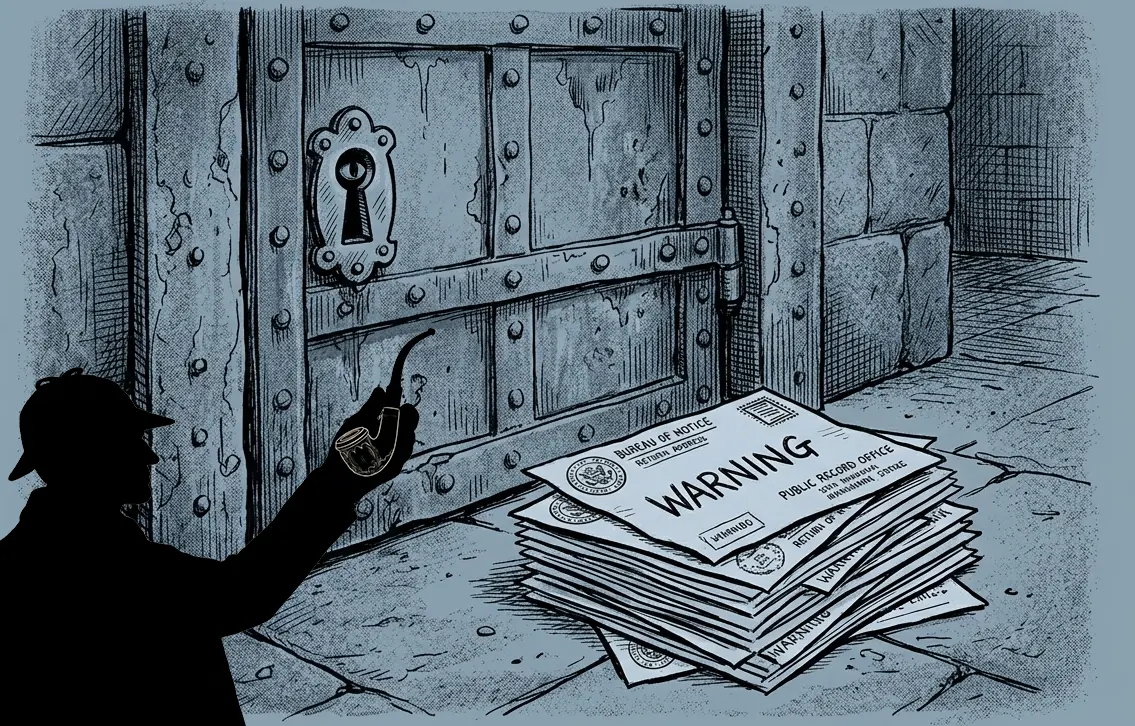
The door
Since 2013, Tennessee law has kept the identities of people involved in executions confidential. By its own text, as the Associated Press has noted, the law says confidential details are to be redacted “wherever possible” and is not supposed to limit access to information that is otherwise public.
The state has read it broadly. In January 2025 the Department of Correction declined to release its new protocol at all, saying the whole document had to stay secret to protect the executioner’s identity. In 2018 it had given the AP a redacted copy. In July, when Hines’s lawyers asked whether Fowler would take part in his execution, the state said the law let it decline to answer, though it had already named him publicly. A Davidson County judge ordered an answer and then stayed the order for review; the Tennessee Supreme Court later declined Hines’s request to compel one, according to his attorneys.
On Aug. 21, a special master declined to reopen Pike’s hearing to examine the physician’s qualifications. Her federal defenders said that day that the same physician had also taken part in Hines’s execution the week before.
Not the first time
In 2022 the state admitted it had not been following its own protocol. An outside review found that none of the drugs prepared for the seven prisoners executed since 2018 had been fully tested. The attorney general’s office told a court that two officials who oversaw the drugs “incorrectly testified” under oath that testing was happening. Lee paused executions. The state then wrote a new protocol, one drug instead of three, and kept it from the public.
After Pike’s execution failed, Lee’s office hired a reviewer: former U.S. attorney Ed Stanton, the same man who conducted the 2022 review. His assignment, according to the governor’s office, is to determine whether the protocol was followed and whether more recommendations are needed. The Department of Correction has already said it followed every step and that the protocol allows nothing beyond what was done.
What that looks like, in this dispatch’s reading, is a question that can be answered yes and still leave the larger one, whether the protocol could work at all, to someone else. It is a reading, not a finding. The review has not reported.
The sequence
In 2022 the state said it was testing its drugs. It was not, and an outside review said so. It wrote a new protocol and kept it from the public. In May a physician spent an hour looking for a vein. In August a court was asked about his qualifications and declined to reopen the question. On Sept. 30 he was in the room again.
Each check arrived after the date.
The review, a legislative inquiry promised by the House speaker, and Pike’s own medical condition all remain open as of this writing. As long as the only people allowed to test a procedure are the people who wrote it, the test comes after the failure.
Origin case: TNG Essay 6 — The Evidence They Won’t Answer
Copyright 2026 — Steve Sagnotti
Sources: Axios, Guardian (Oct. 2–3) and Guardian video (Oct. 1) on the Sept. 30 attempt and Strada’s resignation; WSMV live updates (Oct. 1–7), including the governor’s office statement on the Stanton review and Kit Thomas’s interview with WVLT; Tennessee Lookout (July 20–21) and WZTV/Fox 17 (July) on the Fowler disclosure order; WSMV (Aug. 7 and Aug. 21) on the state Supreme Court’s ruling and the special master’s ruling; Associated Press (Jan. 3, 2025), republished by the Free Speech Center at Middle Tennessee State University, on the 2022 findings and the protocol’s secrecy; WPLN on the statute’s redaction language.
Leave a Reply