Notes from the Field — August 25, 2026
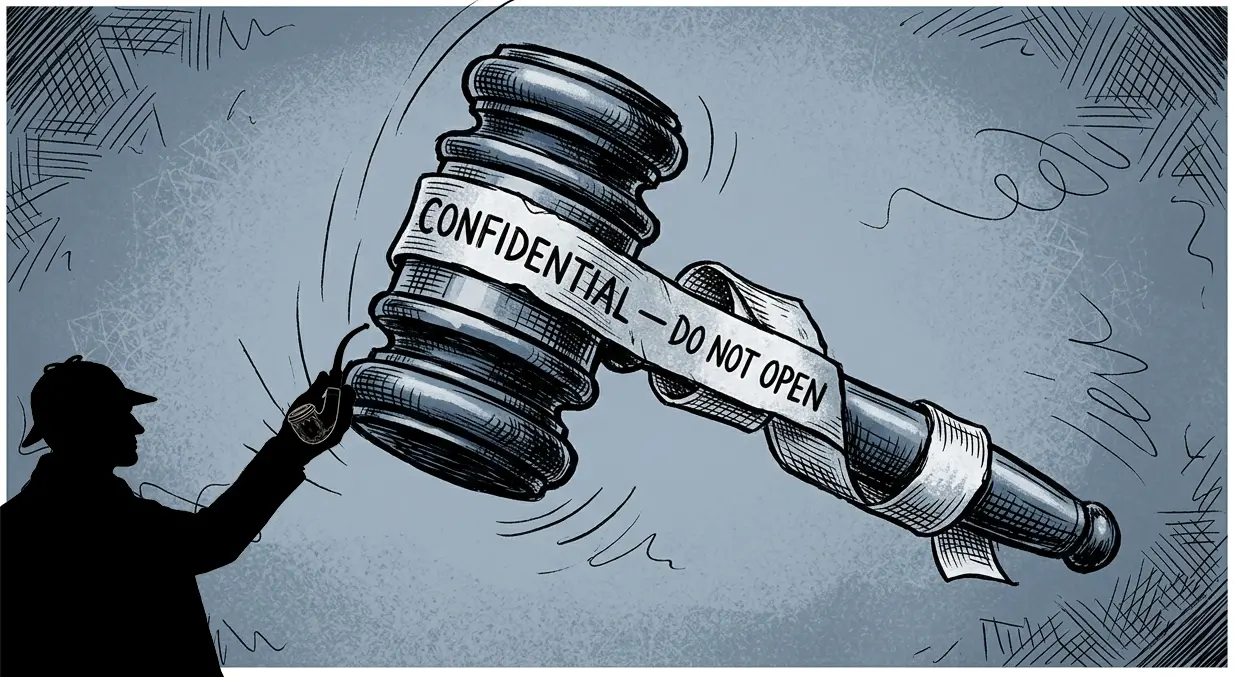
Executive privilege has always covered a narrow thing: a president’s conversations with the people inside his own government, so advisors can speak freely without every internal debate landing in a subpoena. On August 10, the Justice Department’s Office of Legal Counsel — the executive branch’s own in-house legal authority — extended that shield to cover the president’s conversations with anyone at all, government employee or not, as long as the talk touched on “official presidential decisionmaking.” A business partner. A donor. A lawyer negotiating deals on the president’s behalf who’s never held a government title. All of it now sits, per the office that answers to the president, inside the president’s own zone of confidentiality.
The office issuing this opinion is not a neutral referee. It’s part of the Justice Department, led by appointees the president can remove, interpreting how much power the president who appointed them is allowed to claim. A law professor who served in a previous administration’s OLC put the honesty of it plainly: the office has long leaned toward a broad reading of executive power, but “it’s never been stated publicly, because the office understands how extreme this is outside the world of OLC.” The opinion is already doing work — the administration is citing it right now to block a subpoena from the American Bar Association seeking testimony from the president’s personal attorney, a man who has never worked inside the government at all.
Notice the shape of what happened. No court expanded executive privilege. No statute was passed. The body that decides how far the president’s power reaches is staffed by the president’s own appointees, and it just decided the president’s power reaches further — specifically, into exactly the category of communications congressional investigators were planning to subpoena if the House changes hands this November. A Democratic senator called it “a partisan measure to insulate the president and his corrupt activities from Congressional subpoenas.” The memo doesn’t need to be right to work. It only needs to exist by the time the first subpoena lands, so the fight starts from a legal position the administration wrote for itself.
This is the oldest self-dealing there is, older than any of the actors currently running it: a room asked to rule on the limits of its own authority simply rules that the limits are wider than anyone thought. It requires no outside argument, no funded campaign, no persuasion of anyone who wasn’t already inside the room. It only requires that the people writing the opinion and the person the opinion protects share, structurally, the same interest in the outcome.
What would have to change isn’t a new statute defining executive privilege — courts have left that boundary deliberately vague for decades, which is precisely the room this opinion moved into. What would have to change is whether an internal legal office’s opinion about its own boss’s power gets treated as settled law before a single court has tested it.
Origin case: TNG Essay 3 — The People in the Room
(candidate-new-discriminator — The Self-Dealing Room: no existing BF member’s language covers an executive-branch legal office expanding its own principal’s privilege doctrine; flagged for the taxonomy project)
Copyright 2026 — Steve Sagnotti
Sources: Guardian US, Claire Finkelstein, “Trump’s justice department has found a new way for presidents to avoid accountability,” Aug. 25, 2026. Axios, “Trump DOJ says executive privilege covers private advisers from Congress’ probes,” Aug. 11, 2026. Talking Points Memo, legal-expert reaction and memo analysis, Aug. 2026. Gibson Dunn client alert, memo summary and legal analysis, Aug. 2026. The Hill, DOJ opinion coverage with direct quotes from the OLC text, Aug. 2026.
Leave a Reply