Notes from the Field — August 25, 2026
The program had one job: before a strike goes out, ask who’s standing where. After the strike, count who was actually there. It’s not a philosophical mission. It’s a targeting input, gathered by people stationed inside the regional commands whose job was to know the ground well enough to keep a general from bombing the wrong building. Every senior commander in the country told Pete Hegseth to keep it. He gutted it anyway.
The poll happened in early 2025, and it has never been reported until now. Hegseth gave his combatant commanders three choices for the Civilian Harm Mitigation and Response program, known inside the building as CHMR: cut the staff by two-thirds but keep it running, shrink it to one small office in Washington, or kill it outright. He’d bet they’d back the third option — that “maximum lethality” was the mood of the moment and civilian-harm tracking read as leftover peacetime caution. Every commander polled rejected the idea. Central Command told his staff the program made strikes “more precise” and “more lethal,” not less. He cut it anyway, stripping staff across the regional commands by more than 90 percent and pulling nearly all its funding — for a program whose entire annual budget, center included, ran about $7 million, a rounding error against the Pentagon’s trillion-dollar ledger.
What happened next is the part that makes this more than a policy dispute. The Pentagon’s own inspector general later found the cuts may violate federal law, which still requires the program to function regardless of what any secretary prefers. Two officials were told to fix it and answered only that they “partially agreed” — no concrete plan, no compliance date met. Eleven senators, led by Elizabeth Warren and Chris Van Hollen, opened a formal inquiry. The military has killed hundreds of noncombatants in the time since the gutting, and lawmakers have specifically asked whether the missing guardrails contributed to a strike on a school in Iran that killed civilians in February. One retired general put the mechanism as plainly as it can be put: “civilian harm prevention and operational effectiveness are the same thing.” The blowback has been loud enough that the Pentagon is now weighing a partial restoration — roughly 70 full-time positions, moving the program’s training-and-data center out from under the Army and onto the Joint Staff, where officials say it will carry more institutional weight.
Notice what didn’t have to happen for the mechanism to work. Nobody ordered the strikes miscounted. Nobody forged a casualty report. The tool that would have measured the harm simply wasn’t there to measure it — not disabled by a vote, not repealed by statute, just defunded and understaffed until the number it would have produced stopped existing. A gauge that’s been unplugged reads zero. That’s not the same as nothing happening.
This is the oldest version of that move: you don’t have to hide what a policy costs if you get rid of whoever was counting first. It worked in earlier decades with air quality monitors nobody wanted funded and workplace-injury logs nobody wanted filed. It works today with a fourteen-person cell inside a combatant command. The instrument changes. The logic — remove the measurement before the finding can land — doesn’t.
What would have to change isn’t a new law. Congress already has one, the statute the inspector general says these cuts may be violating. What would have to change is whether “partially agreed, no plan yet” is allowed to stand as an answer to a federal watchdog with a deadline attached.
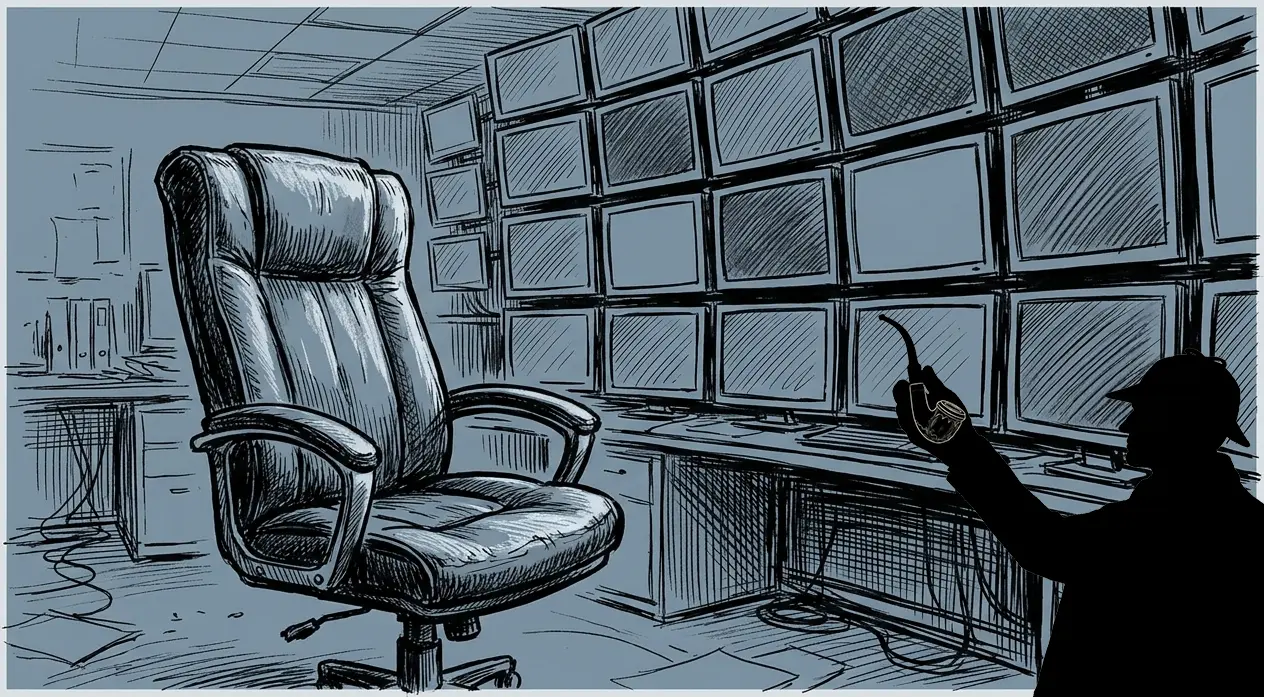
The Empty Room — Broken Frames (The Broken Gauge)
Origin case: TNG Essay 6 — The Evidence They Won’t Answer
Copyright 2026 — Steve Sagnotti
Sources: ProPublica, “Top Commanders Told Hegseth Not to Cut Civilian Protection Program, Poll Showed. He Did It Anyway,” Aug. 25, 2026. Defense One, corroborating coverage of the same investigation, Aug. 25, 2026. Raw Story, summary and additional quotes from retired commanders, Aug. 25, 2026. The Washington Times, “Pentagon cutting civilian harm mitigation program may break the law, says watchdog report,” May 16, 2026. Salon / ProPublica, Sen. Warren-led congressional letter coverage, July 2026.
Leave a Reply