Notes from the Field — Dispatch, June 12, 2026
On June 12, a federal judge did something rare: she used the government’s own conduct to define the word the government had spent a year avoiding.
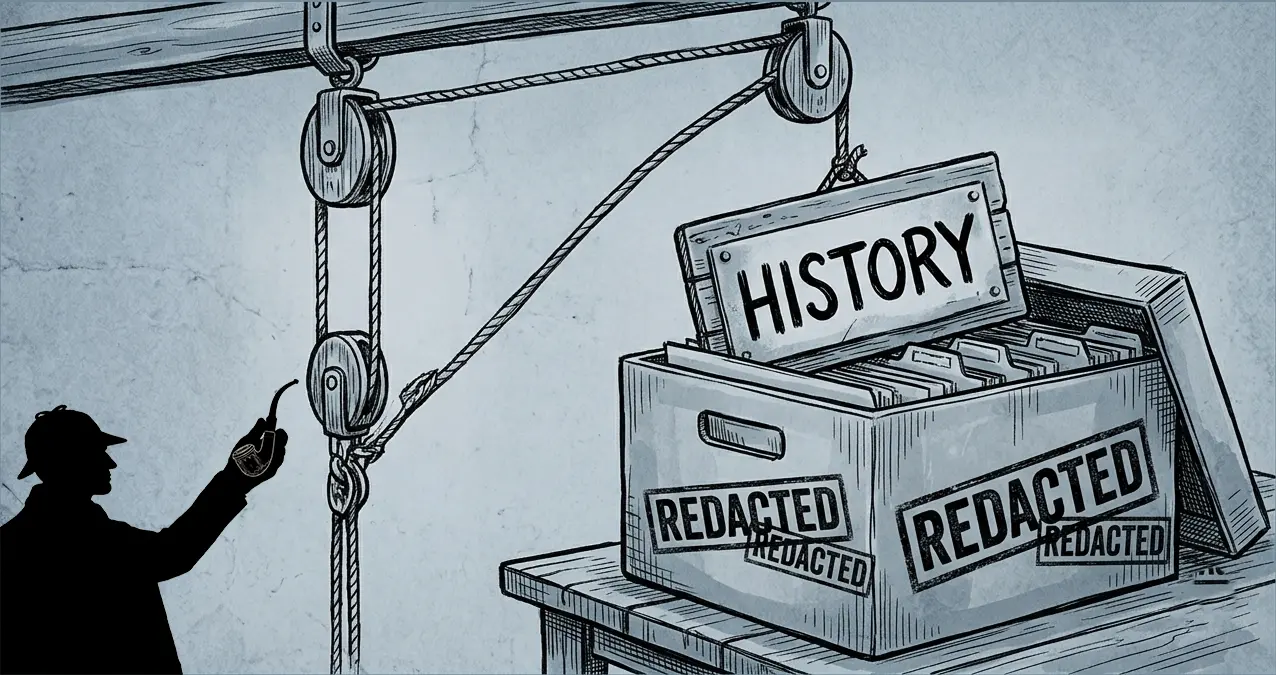
U.S. District Judge Angel Kelley of the District of Massachusetts ordered the Trump administration to restore exhibits, signs, and educational materials about slavery, civil rights, and climate change that had been removed from national parks across the country. Kelley called the removals a “dangerous precedent of censorship and sanitization.” “Under the guise of promoting American dignity, this Administration seeks to share a limited history by ordering the removal of all signs, displays, and interpretive exhibits at National Parks that do not align with its preferred narrative, thereby telling half-truths.”
I. THE MECHANISM, NAMED PLAINLY
This is not a case of a court inferring a motive the government denied. President Trump signed an executive order in March 2025 targeting what he called a “revisionist movement” that portrayed the U.S. as “inherently racist, sexist, oppressive, or otherwise irredeemably flawed,” and directed the Interior Department to correct any “false revision of history.” The stated purpose was never hidden. What counted as history was to be decided centrally, and anything that didn’t fit the preferred narrative would be removed.
At least 45 signs covering topics from climate change to Native American history were altered under the directive. A marker at Grand Teton pointing to a 19th-century explorer’s role in a massacre of at least 173 Piegan Blackfeet was removed. A sign at Fort Sumter describing how rising seas could inundate the fort’s walls was removed in its entirety. In Philadelphia, exhibits on the lives of nine people enslaved at Independence National Historical Park under George Washington were taken down. The pattern is not partisan cherry-picking by the plaintiffs. It is a consistent editorial rule: remove anything that complicates the story of an unblemished nation.
II. WHAT THE FRAME EXCLUDED
The administration’s framing throughout was about “restoring truth” and “American dignity” — a question of accuracy, corrected. The frame that coverage largely accepted was: is this sign historically accurate, and is it appropriate for a park setting? That is the question the government wanted asked.
The question the frame excluded is the one the judge answered instead: who decides what the public is permitted to know, and what happens when that decision-maker has a stated preference for the answer? “Defendants’ continued censorship of interpretive materials disfavored by this administration diminishes the public’s collective ability to engage critically and thoughtfully with these topics,” Kelley wrote. That is not a ruling about historical accuracy. It is a ruling about who holds the pen — a canon question, not a facts question.
III. THE CANON HAS BEEN CONTESTED BEFORE
The mechanism here is old. Long before national park signage, institutions have decided what counts as sanctioned knowledge and what gets quietly removed from the record — not because the removed material was false, but because it complicated a narrative the institution had a stake in maintaining. Power does not require conspiracy. It only requires that the people in the room share a common interest in the outcome. In this case, the room was small enough to identify by name, and the outcome was written into an executive order in plain language a year in advance.
What makes this dispatch different from most institutional-narrowing stories is the ending. Kelley ordered the signs and exhibits restored within 21 days — a deadline that falls just before July 4, 2026, the 250th anniversary of American independence. The government has since filed a notice of appeal with the First Circuit Court in Boston and moved to pause the decision. The narrowing was attempted. It was named. It was ordered reversed. Whether it is actually reversed depends on a court above this one, and on a timeline that keeps getting appealed one deadline at a time.
IV. THE PATTERN THAT REMAINS
The signs will likely go back up, at least for now. But the mechanism that took them down in the first place — a single office deciding, without oversight, which parts of the historical record the public is allowed to see — does not require this administration or this set of signs to operate again. It only requires the next room to want to try.
The narrowing has not retired. It has found new instruments — sometimes a printed placard at a national monument instead of a training corpus, but the decision it enforces is the same one: what counts as knowable, decided by whoever currently holds the office that gets to decide.
The silence won’t feel like silence. It will just feel like the way things are — until, this time, a judge said otherwise.
—
The Next Council of Constantinople — Essay 10
Copyright 2026 — Steve Sagnotti
Sources:
NBC News, “Judge orders Trump officials to re-install signs and exhibits at national parks,” June 2026.
PBS News, “Judge orders restoration of National Park changes made by Trump administration,” June 2026.
CNN, “Judge orders Trump administration to restore signs changed at national parks,” June 13, 2026.
Outside, “A Judge Ordered the NPS to Restore Signs About Slavery and Climate Change. The Trump Admin Is Fighting Back,” June 2026.
Expert Zoom, “Judge Kelley: National Parks Censorship Ruling,” June 2026.
Leave a Reply