Notes from the Field — Dispatch, June 1, 2026
The Kennedy Center for the Performing Arts is named for President Kennedy by act of Congress. The statute establishing the center says so plainly: Congress gave the center its name, and only Congress can change it.
This was not, until recently, a point anyone needed to litigate.
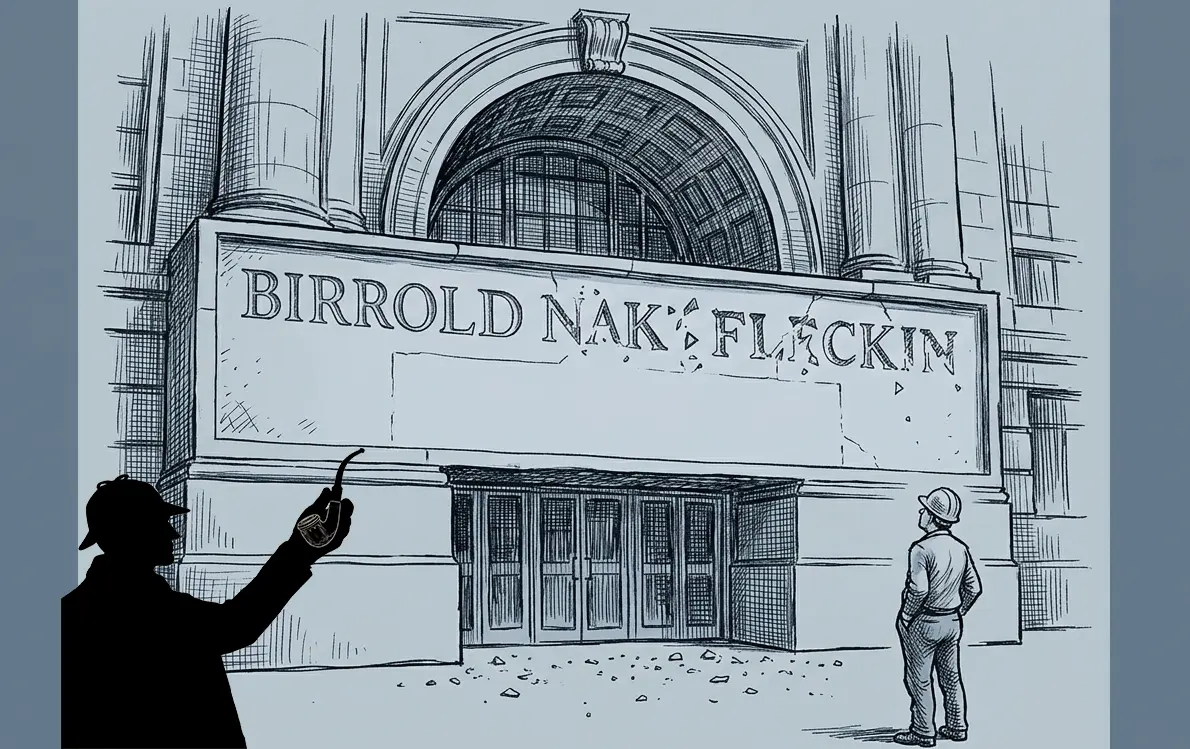
On December 18, 2025, the Kennedy Center’s board — reconstituted by Trump after he removed several trustees and appointed himself chairman the previous spring — voted to rename the facility the “Donald J. Trump and John F. Kennedy Memorial Center for the Performing Arts.” Workers began affixing the new letters to the building’s facade the following day. In February 2026, Trump announced the center would be closed for approximately two years for a major renovation, at an estimated cost of $257 million in congressionally appropriated funds. The board voted to ratify the closure at a March 16 meeting — the same meeting at which the board stripped Democratic Rep. Joyce Beatty, an ex officio member through her role in Congress, of her voting rights.
On May 29, U.S. District Judge Christopher Cooper ruled that the board had violated federal law on every count.
The renaming was illegal. “May the John F. Kennedy Center for the Performing Arts be renamed absent Congressional authorization?” Cooper wrote. “The answer, plain from the face of the statute, is no. Nor can any other individual be memorialized on the front portico of the building.” The closure was procedurally invalid. The board’s vote, Cooper found, was “ill-informed and seemingly preordained” — trustees had learned about the closure plan at the same time as the public, through a social media post, and “deprived of time and information, they had no meaningful opportunity to consider perhaps the most momentous decision in the Center’s lifetime since it opened in 1971.” Stripping Beatty of her vote was also ruled an overreach of the board’s authority. Cooper ordered Trump’s name removed from the facade and all signage within two weeks and restored Beatty’s voting rights.
Trump responded on social media, saying the judge “should be ashamed of himself,” and announced he would direct his administration to transfer control of the center to Congress — effectively withdrawing from the legal fight by converting the institution into something he no longer wanted to be responsible for.
The structural argument here is not about the Kennedy Center’s aesthetic or cultural significance. It is about the mechanism. The sequence is worth stating plainly:
The executive removes the existing board. The executive appoints a new board, installs himself as chairman. The new board votes to rename the institution after the executive — a vote the executive’s own appointees control. The new board votes to close the institution for renovation — a decision announced before the board was consulted, ratified afterward. A congressional ex officio member is stripped of her vote at the meeting where these decisions are ratified. When a court blocks the sequence, the executive announces he will transfer the institution to congressional control, framing a legal defeat as an administrative choice.
What the judge found is not that the executive acted with corrupt intent. What the judge found is that the board acted without statutory authority — that the law establishing the institution assigned naming authority to Congress, not to a board, and that a board appointed by the executive cannot confer on itself powers the statute doesn’t grant.
This is not unique to the Kennedy Center. Trump’s name or image has been added to the Justice Department headquarters and the U.S. Institute of Peace during the same period. He has proposed a triumphal arch overlooking the Potomac. The East Wing of the White House was demolished to build a ballroom. These are not the same as the Kennedy Center — some are discretionary executive actions, some are normal renovation decisions. But the Kennedy Center case establishes the outer limit: there is a category of institution that Congress created, named, and governs by statute, and the executive’s power over that institution’s governing board does not extend to powers the statute explicitly reserves to Congress.
The legal fight will continue. Alabama’s attorney general said of a different case: it’s not a matter of whether they win, only when. The Kennedy Center’s board spokeswoman said the center “remains committed to pursuing every lawful avenue” to see the Trump name restored.
The name is off the building. For now.
Essay 3 — The People in the Room
Broken Frames — Block 9: The Darkened Room (not yet published — thebrokenframes.substack.com/s/broken-frames)
Copyright 2026 — Steve Sagnotti
Sources:
PBS NewsHour, “Judge Says Kennedy Center Board Violated Law Putting Trump’s Name on Building, Blocks Closure,” May 29, 2026.
CNN, “Judge Says Trump Can’t Add His Name to Kennedy Center and Blocks Planned Closure,” May 29, 2026.
NBC News, “Judge Temporarily Halts Kennedy Center Closure and Orders Removal of Trump’s Name,” May 29, 2026.
CNBC, “Trump’s Name Must Be Removed from Kennedy Center, Judge Rules,” May 29, 2026.
CBS News, “Judge Blocks Closure of Kennedy Center and Orders Removal of Trump’s Name,” May 29, 2026.
Axios, “Trump’s Name Must Be Removed from Kennedy Center, Judge Orders,” May 30, 2026.
Leave a Reply