Notes from the Field — October 11, 2026
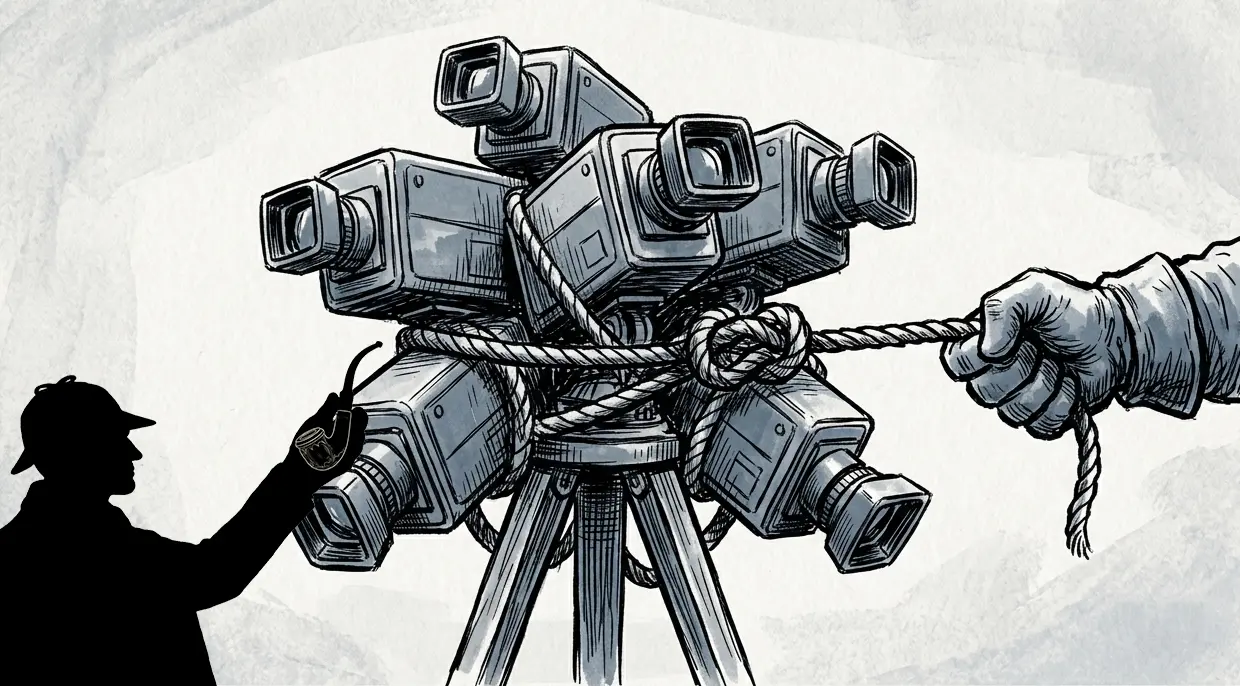
No one has revoked the press’s permission to cover the White House as a group. A government can make standing together costly enough that nobody wants to try it again.
That is TNG Essay 6’s mechanism, running in the present tense: the channel wasn’t shut by decree, it was made expensive to use. The story starts earlier. NfF’s dispatch “The Same Judge, Twice” covered the first half.
The first instrument
On September 18, the White House revoked the credentials of reporters from CNN, MS NOW and Politico. The next day it said that covering the president was “a privilege — not a right.” The five broadcasters that make up the television pool (ABC, CBS, CNN, NBC and Fox News) halted pool coverage in solidarity and refused to supply replacement coverage. The pool is a rotating arrangement in which the networks share the cost of covering the president, take turns organizing it and share the footage with outlets around the country.
On September 24, Judge Timothy Kelly, a Trump appointee, ordered the three outlets’ credentials restored. The networks resumed pool coverage after several days.
The second instrument
On Friday, October 9, Justice Department officials contacted the networks and demanded communications and materials related to the White House TV pool, according to The New York Times, which cited six people with knowledge of the action. On Saturday, a department spokesperson confirmed the Antitrust Division was investigating ABC, CBS, CNN, NBC and Fox News. “Group boycotts among commercial competitors can violate the Sherman Act,” the statement said. “The Antitrust Division is simply investigating to determine whether these news organizations have violated the antitrust laws.”
Whether a pool’s decision to stand together fits that statute is a question for antitrust lawyers and, if it comes to it, a court. This dispatch isn’t about that question. It is about what the instrument is aimed at. The first one was aimed at three outlets over their coverage. The second is aimed at five networks over what they did together after the first. Four of the five were never barred.
On October 13, Kelly issued a preliminary injunction preserving the three outlets’ access until the case is resolved. Axios reports the order does not guarantee access to areas such as the Oval Office or Air Force One, and that the White House has continued to bar CNN and Politico journalists from Air Force One pool assignments. Outlets in the pool have also declined the White House’s invitation to fill CNN’s and Politico’s slots. In earlier remarks Axios quotes, Trump justified the ban by saying of the outlets: “They purposely write negative news.”
What the question leaves out
Coverage asks whether a boycott can violate the Sherman Act. The question it skips is what the refusal was protecting. A pool works because no outlet can be quietly dropped. If one network will take the slot of a barred rival, the sorting happens one outlet at a time and nobody has to be told why. What the refusal appears to have protected is the pool’s own rule. That is the dispatch’s reading; the networks have not said so in the reporting reviewed.
An appeals court held in 1977, in Sherrill v. Knight, that the White House could not arbitrarily revoke press credentials over a reporter’s viewpoint, and legal experts Axios spoke to rely on it for the current case. The tool changed with the century. The problem being solved did not. In 1977 the instrument was the pass, and a court said no. In 2026 the instrument is a different statute, aimed at a different target, after a judge ruled on the pass.
What this looks like
Dispatch’s own reading: the effect is a price on solidarity. The news organizations learned that refusing together has a cost the White House can impose without touching a credential, a rule or a coverage decision.
Three outlets were barred over coverage. A judge ordered them back. Five networks that refused to cover without them were asked to produce their communications. None of those steps needed a rule against the coverage itself.
As of October 13, the injunction stands and the Antitrust Division’s inquiry is open. A press corps that cannot decline together can be sorted one outlet at a time, and the one thing standing in the way of that is the networks’ willingness to say no as a group, which is now the thing under investigation.
Essay 6 — The Evidence They Won’t Answer (The Broken Gauge)
Copyright 2026 — Steve Sagnotti
Sources: Reuters via KSL, “Justice Department probes TV networks over Trump pool boycott,” October 11, 2026; Al Jazeera, “US opens antitrust probe into TV networks for halting Trump coverage,” October 11, 2026; Agence France-Presse via Tribune, October 11, 2026, citing The New York Times; The Guardian, “US justice department investigating TV networks over Trump pool coverage,” October 11, 2026; Axios, “Judge orders White House to reinstate press access,” October 14, 2026.
Leave a Reply