Notes from the Field — October 14, 2026
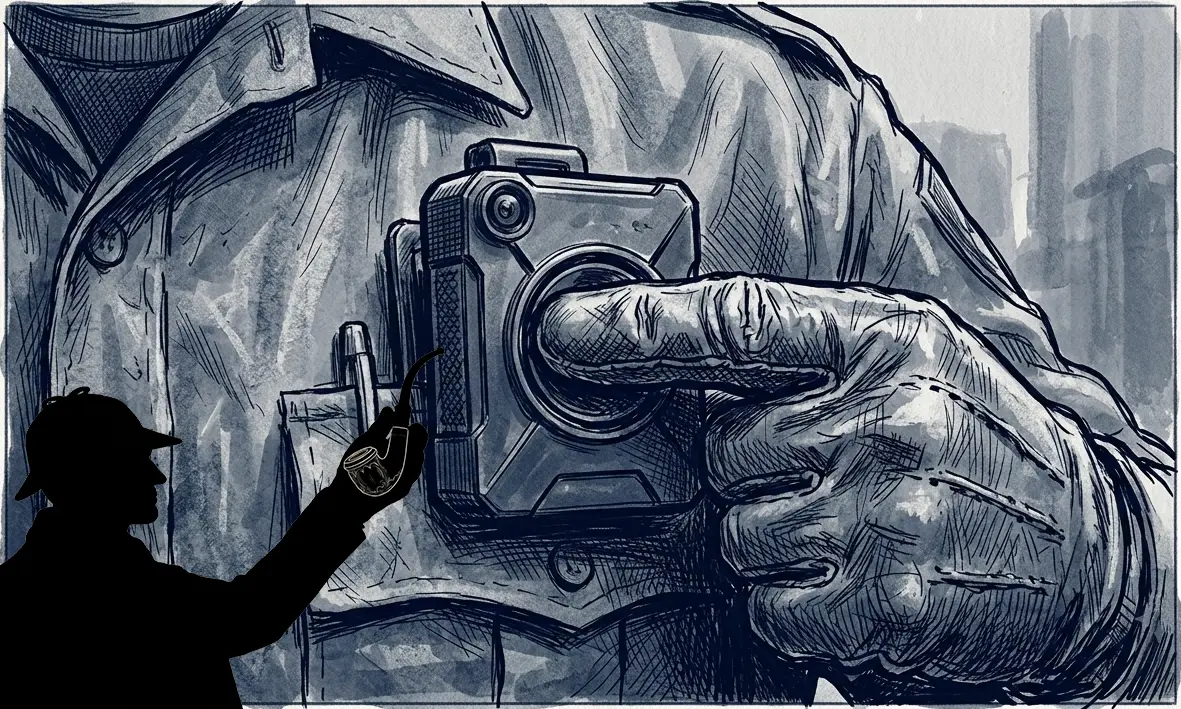
A camera that records only when the person it watches decides to turn it on is not a witness. It is a prop.
That is the finding in a new Government Accountability Office report on body cameras at Immigration and Customs Enforcement. The Broken Gauge asks whether the channel that would measure a harm was disabled, and how recently.
The report
GAO-26-108157, published September 15 and made public October 14, reviews the body-worn camera programs of Customs and Border Protection and ICE. As of this year CBP had deployed about 11,500 cameras and ICE about 4,800. GAO made seven recommendations. The Department of Homeland Security agreed to six.
The one it refused: that ICE add controls such as automated activation, so cameras turn on when a weapon is drawn or emergency lights come on. CBP already uses that technology. ICE does not. DHS told GAO that automatic activation “presents significant operational risks, including inadvertent or false activations during routine movement,” such as recording informants, victims or people exercising First Amendment rights. GAO answered that DHS offered no alternative safeguards for the encounters that would then go unrecorded.
At six of the ten locations GAO reviewed, CBP and ICE personnel said they were unsure when they had to turn their cameras on. Some described camera use as “not mandated,” “up to interpretation” and having “gray areas.” Axios, which reported on the report, adds that ICE issued no written reprimands for violating camera policies from the program’s launch through September 2025. It also reports that deployment paused in 2025 after an executive order from Trump rescinded a Biden-era federal mandate for body cameras.
The frame and the gap
The coverage asks whether ICE should have automatic cameras. The question it leaves out is who holds the on-switch when a use-of-force incident needs a witness. GAO found that ICE has supervisory controls and monthly footage reviews, but nothing that turns the camera on. That is left to the person wearing it.
Axios places the report in the context of “multiple fatal ICE shootings” and growing distrust of agent accountability. On Tuesday, the Harris County, Texas, district attorney said surveillance footage appears to show an ICE agent intentionally striking a man with a vehicle in Houston. ICE’s account was that the man “ran in front of an ICE vehicle and was struck.” The footage the prosecutor described was surveillance video.
A mandate was rescinded by order. The agency that holds the cameras then declined the one control that would not depend on the agent’s choice. Neither step required a vote.
What is shown and what is not
What the sources establish: the cameras exist, the policy exists, the recording depends on the wearer. What GAO could not find at the sites it visited was a shared understanding of when to press the button. The dispatch’s own reading goes one step past that. If gray areas are left in place, the record of any given encounter will be whatever the agent in it chose to keep. The reports do not say anyone has chosen to leave gaps on purpose. DHS says the training required to equip individual officers “remains ongoing.”
The silence won’t feel like silence. It will just feel like the way things are: an encounter, an account, and no footage that says otherwise.
The sequence runs in order. The mandate was rescinded. The rollout paused. The programs went without updated plans. The agency declined the control that would have removed discretion. The last step is the one GAO can only recommend.
The gauge exists. Whether it measures anything depends on the person it was installed to measure.
Two Warnings — Broken Frames (The Broken Gauge)
Origin case: TNG Essay 6 — The Evidence They Won’t Answer
Copyright 2026 — Steve Sagnotti
Sources: Government Accountability Office, “Federal Law Enforcement: CBP and ICE Should Improve Body-Worn Camera Program Management” (GAO-26-108157), published September 15, 2026, released October 14, 2026; Axios, “ICE says no to automatic body-cams,” October 14, 2026; Scripps/TNND and Associated Press on the Harris County district attorney’s statement, October 13–14, 2026.
Leave a Reply