Notes from the Field — September 18, 2026
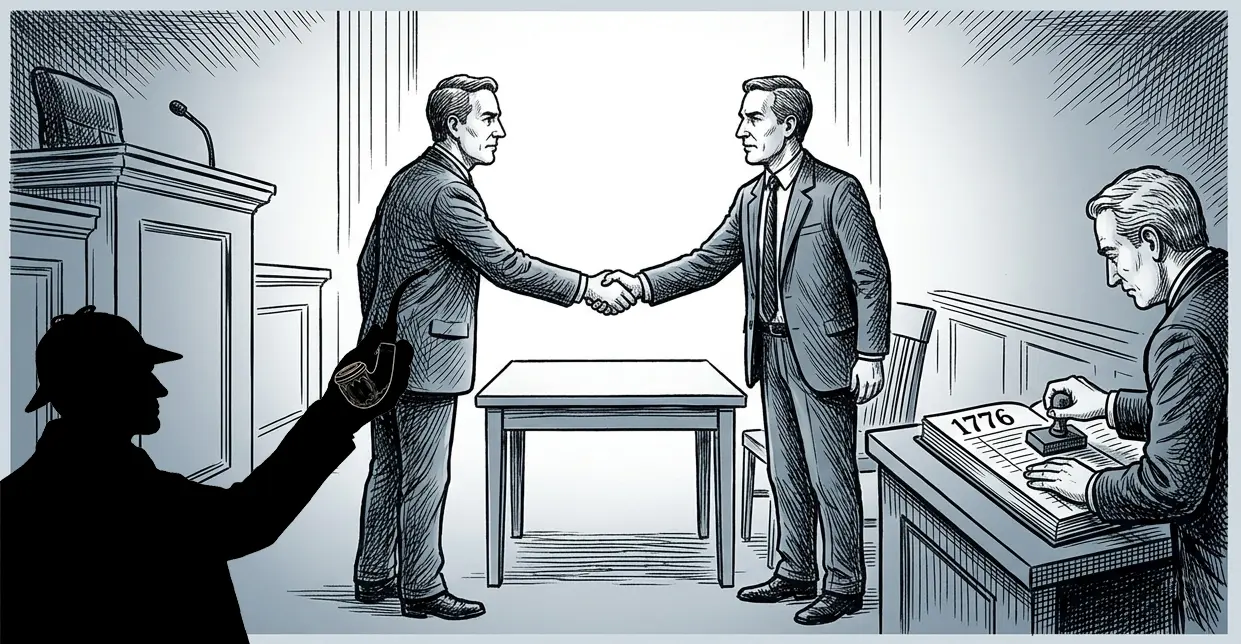
A case needs two parties. This one had a plaintiff and a mirror.
A lawsuit needs two sides that want opposite things. Without them it isn’t a lawsuit. It’s a document with a court’s stamp on it.
In January, President Trump, two of his sons and the Trump Organization sued the Internal Revenue Service and the Treasury Department for at least $10 billion over a contractor’s leak of his tax returns. The defendants were agencies that answer to the plaintiff. In May, the two sides announced a settlement. The Justice Department would create a $1.776 billion “Anti-Weaponization Fund” to pay people who said the government had wronged them. Then Todd Blanche, the acting attorney general, signed an addendum barring the IRS from auditing the Trump family’s and company’s past returns.
Republicans and Democrats both objected, in part because the fund could have paid people convicted of attacking police on January 6, 2021.
On July 13, the judge who had the case, Kathleen Williams in Miami, asked what the parties hadn’t: who was on the other side? Her 56-page order found there had never been adverseness, the legal word for two sides that genuinely oppose each other. It called the case and its settlement “the product of collusion.” She wrote that the suit was brought to give a deal with no basis in law or fact the look of a court’s approval, by “leveraging control over Defendants.” She voided the settlement, barred the parties from citing it, and referred one of Trump’s lawyers to the Florida bar.
The Justice Department said there was no collusion, that Trump sued as a private citizen, and that he received no money under the deal. The Trumps have appealed.
The fund did not survive the politics. On July 31, Trump said it was dead, then added, “I wish it weren’t.” Two days later, with his nomination for attorney general stalled, Blanche formally rescinded it and issued a second document limiting the audit protection to the named plaintiffs: Trump, his sons and the Trump Organization. That won the votes of Senators John Cornyn and Thom Tillis. CNN found loopholes in the arrangement. The second document doesn’t carry Blanche’s signature.
On Friday, in Alexandria, Virginia, a Justice Department lawyer told U.S. District Judge Leonie Brinkema, who had already blocked the fund, that the lawsuit against it is moot, a legal word for “nothing left to decide,” because the fund is dead. Brinkema didn’t rule, but she didn’t accept it. Attorney General Blanche had said under oath that the fund was finished, she noted, while the president kept saying he supported it. “They contradict themselves all the time,” she said.
The plaintiff was the president. The defendants were the agencies he runs. A judge wrote that no one had been on the other side. The plaintiff appealed. As of Friday, neither Brinkema nor the appeals court had ruled.
It works for as long as the plaintiff and the defendants answer to the same man.
Origin case: TNG Essay 3 — The People in the Room
Copyright 2026 — Steve Sagnotti
Sources: Associated Press, “Judge isn’t swayed by government’s claims that plans for an ‘anti-weaponization fund’ are dead,” September 18, 2026 (carried by PBS News, NBC News and others); ABC News, September 18, 2026; CBS News, July 14, 2026; CNBC, July 13, 2026; The Hill, July 14, 2026; NBC News, August 1 and August 2–3, 2026; CNN, August 2–4, 2026; NPR, August 3, 2026; Democracy Forward statement, July 13, 2026.
Leave a Reply