Notes from the Field — Dispatch, June 9, 2026
Two clocks. One year: 2031. That was the last dispatch’s argument. This week, one of those two clocks moved.
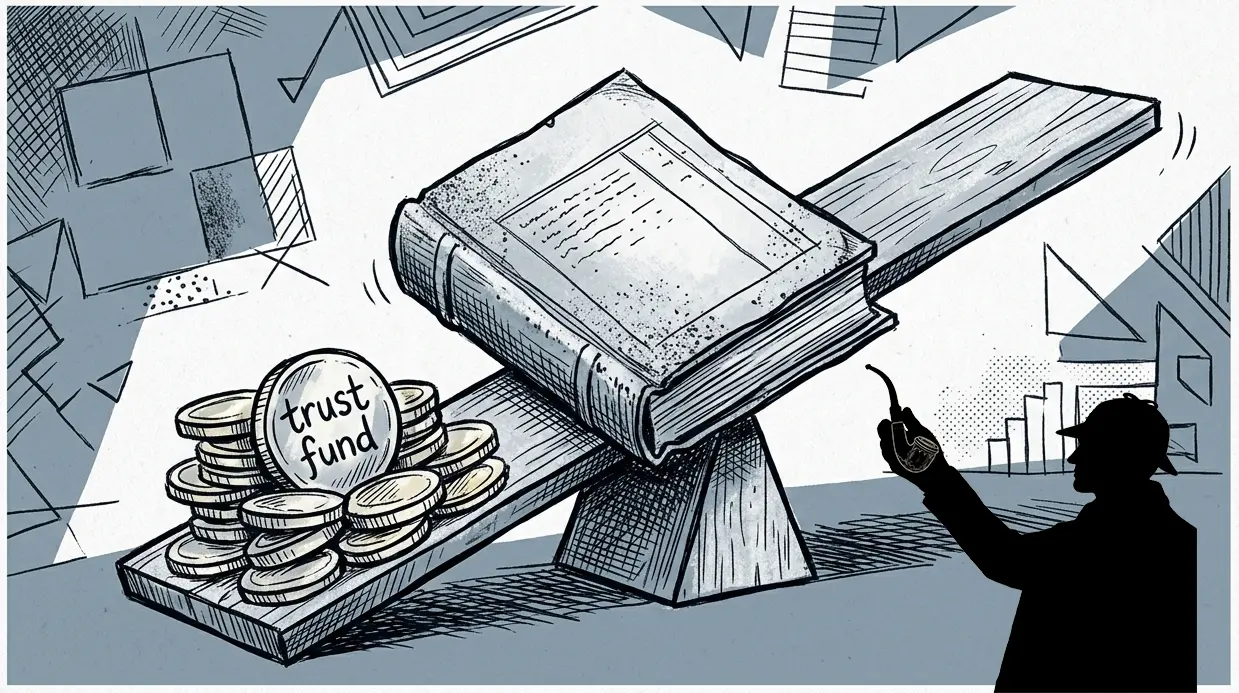
On June 9, the Social Security Trustees released their 2026 report. The program’s main retirement trust fund is now projected to run dry in late 2032, one quarter earlier than last year’s projection. When it empties, the fund will be able to pay only 78 percent of scheduled benefits — an automatic, across-the-board cut of roughly 22 percent, hitting every current and future retiree at once. The 75-year shortfall now stands at approximately $30 trillion, up from $26 trillion the year before.
The report did not blame a recession or a market crash. The deterioration is driven by deeper demographic and policy changes: fewer births, lower immigration, slower workforce growth, and reduced revenue from taxing benefits. Put plainly: fewer people are paying in, relative to the people drawing out, and a 2025 tax bill made that gap wider on purpose.
I. THE CLOCK NOBODY IS WINDING BACK
This is the second consecutive year the depletion date has moved closer instead of farther away. The projected depletion date has moved one year earlier since last year’s report — largely due to changes enacted in the “One Big Beautiful Bill Act,” which lower tax liability for Social Security beneficiaries and, as a result, reduce trust fund revenue from income taxes on benefits. A policy sold as relief for retirees today shortened the runway for retirees six years from now. Nobody in the room that wrote it will be blamed for the shortfall; whoever is in Congress in 2032 will be.
The mechanics of the drain are structural, not cyclical. The payroll taxes that fund benefits are levied on a shrinking share of earnings — just 83 percent of covered wages today, compared to 90 percent in 1983 — as higher-income Americans’ wages have grown faster than the taxable maximum. A CEO pays their whole year’s Social Security tax before they go to bed on New Year’s Day. A hedge fund partner pays the tax on a sliver of their income and pays nothing on dividends, capital gains, or carried interest. The tax base was built for a wage economy. The income that has grown fastest over the last four decades doesn’t count as wages.
II. THE SECOND CLOCK, STILL TICKING
Dispatch Nine documented the other room: the fiscal convergence point where AI displacement removes workers from the tax base at the exact moment the federal debt spiral tightens, sometime around 2031. This report is that argument’s corroboration, delivered on schedule, one year sooner than expected.
The federal government now carries a much higher debt burden, topping 100 percent of annual GDP, compared to about 35 percent in the early 1980s, and the Congressional Budget Office projects the annual budget shortfall rising from $1.9 trillion in 2026 to $3.1 trillion in 2036. Social Security’s insolvency and the federal debt spiral are not two separate emergencies arriving in the same decade by coincidence. They are drawing from the same shrinking well: wages. When wages stop being the base — because AI has moved the work, or because the wages that remain are structured to avoid the tax — both clocks accelerate together.
III. THE FIX EXISTS. THE ROOM HAS DECLINED IT.
There is a straightforward fix on the table, and it has existed for years. The Roosevelt Institute’s Stephen Nuñez wrote that the trust fund’s troubles reflect a deeper failure: “the economy is failing to support Social Security.” Proposed legislation from Senators Whitehouse and Sanders, and Representative Larson, aims to restore solvency by taxing high earners’ wages and investment income instead — leaving ordinary paychecks untouched.
A day before the report’s release, Speaker Mike Johnson said on a podcast that the country is “in trouble” because “over 74 percent of federal spending is on autopilot” — entitlement programs like Social Security, Medicare, and Medicaid that “have to be adjusted and fixed.” That is the room’s answer: adjust the benefit, not the base. Not because the alternative doesn’t exist. Because the room that would have to vote for taxing investment income is largely made up of people who hold it.
This is not the first time Social Security has faced this exact reckoning. In the early 1980s, Ronald Reagan and Tip O’Neill negotiated a bipartisan compromise that raised payroll taxes and phased in a higher retirement age, extending the program’s solvency by decades. That fix required both parties to accept short-term political cost for long-term stability. Nothing in the current room suggests that trade is available this time — not with the same urgency, not with six years left instead of a crisis already underway.
The pattern is the same. The speed is not.
Six years from now, someone drawing a Social Security check will see it arrive twenty-two percent lighter, and it won’t feel like a policy decision. It will feel like the way things are. The room that could have widened the base chose, instead, to let the clock run.
—
The Converging Frames — Essay 12
Copyright 2026 — Steve Sagnotti
Sources:
2026 Social Security Trustees Report, Social Security Administration, June 9, 2026.
Bipartisan Policy Center, “2026 Social Security Trustees Report, Explained.”
Forbes, “Social Security Trustees Report Warns of 22% Benefit Cut In 2032,” June 10, 2026.
The Conversation, “The Social Security Trust Fund Will Run Dry in 2032,” June 2026.
Yahoo News, “Social Security Faces 22% Benefit Cuts by 2032,” June 2026.
Leave a Reply